Tom Petty
His trust said his widow and his two daughters should “participate equally” in managing the catalogue. Nobody wrote down what that meant. It cost a $5 million lawsuit, a shelved Wildflowers anniversary edition, and two years of a Los Angeles docket to find out.
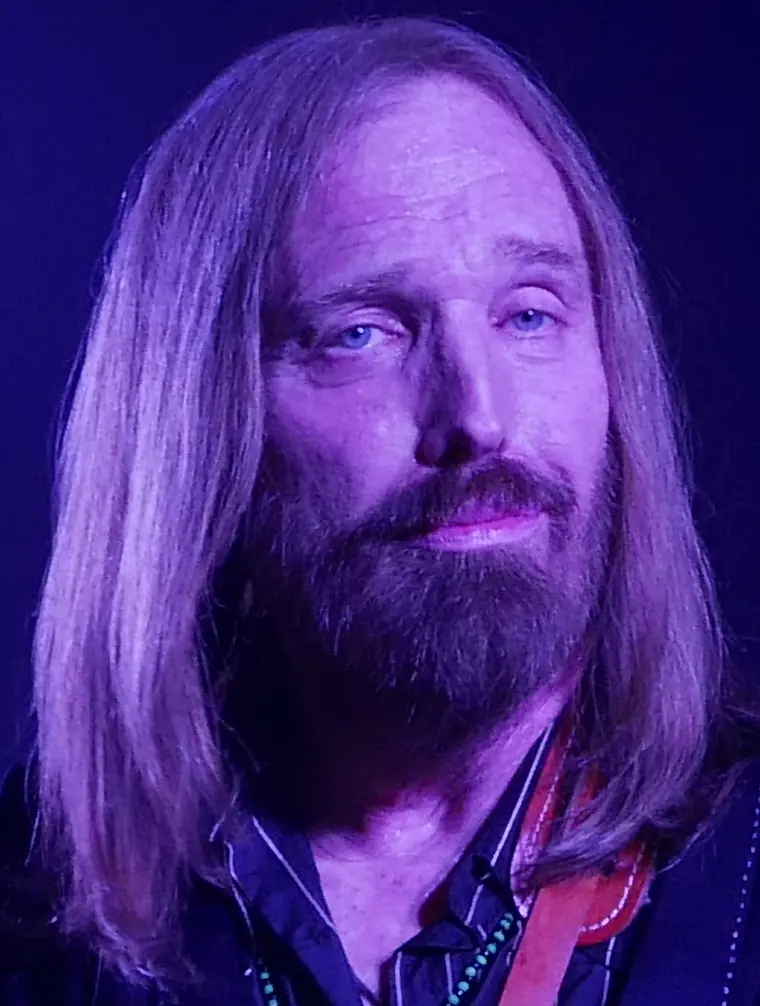
Tom Petty was born in Gainesville, Florida, in 1950, and died in Santa Monica on October 2, 2017, at 66. The Los Angeles County medical examiner ruled the death accidental, from mixed drug toxicity.
He left a plan. Not a scrap of paper, not a homemade form — an actual revocable trust, drafted by lawyers, funded, with a named trustee and a named vehicle to hold the music.
His widow, Dana York Petty, was named sole trustee. The trust directed her to move the artistic property into a new limited liability company. And then it said that Dana Petty and Petty's two daughters from his first marriage, Adria Petty and Annakim Violette, “shall be entitled to participate equally in the management of the Artistic Property Entity.”
Read that sentence twice, the way three people with different interests did.
One vote each, or two out of three
The daughters read “participate equally” as meaning what it means in every board room: three equal voices, and two of them carry a decision. On that reading, Adria Petty and Annakim Violette controlled the catalogue between them.
Dana Petty read it as three equal participants, each with one vote and none with power over the others — with her own authority as sole trustee of the trust intact above the entity.
Both readings are defensible. That is the problem. A clause that two competent lawyers can read two ways is not a clause; it is a lawsuit with a delivery date.
The practical consequence arrived immediately. Posthumous releases require someone with authority to sign. The dispute is reported to have complicated the release of the retrospective An American Treasure and stalled a planned 25th-anniversary edition of Wildflowers, Petty's 1994 album — the record his own audience most wanted expanded.
April and May 2019
In April 2019, Dana Petty filed a petition in Los Angeles Superior Court asking the court to place management of the catalogue with an outside professional manager, on the ground that the parties could not run the entity between them.
On May 15, 2019, Adria Petty and Annakim Violette filed a civil suit against her and others, alleging breach of fiduciary duty, unfair competition, and unjust enrichment, and seeking damages reported at more than $5 million along with control of the assets. Their position was that the trust gave them equal participation and that decisions had been made without it.
These were allegations, tested by no court. Nothing here was ever adjudicated.
Note what the two filings have in common: both sides went to a judge to find out what a sentence in the document meant. Neither was arguing about who Tom Petty loved. They were arguing about grammar, with a catalogue in escrow while they did it.
December 10, 2019
The parties — with Petty's longtime manager Anthony Dimitriades — reached a settlement agreement on December 10, 2019. The litigation was dismissed. Terms were not disclosed.
What was announced is the structural part: Dana Petty, Adria Petty, and Annakim Violette agreed to share equal authority over future releases and legacy projects, through a jointly held entity — Tom Petty Legacy LLC.
In other words, they settled on the arrangement the trust had described, once someone finally wrote down how it worked.
The Wildflowers & All the Rest box set, the 25th-anniversary project the dispute had stalled, was released in October 2020. Two years and roughly $5 million of claimed damages after a sentence in a trust document failed to say what a majority was.
Timeline
- Oct 2, 2017Tom Petty dies in Santa Monica at 66. The Los Angeles County medical examiner rules the death accidental, from mixed drug toxicity.
- 2017–2018The trust names Dana York Petty sole trustee and directs the artistic property into a new LLC, with Dana, Adria, and Annakim entitled to “participate equally” in its management.
- 2018Disagreement over the meaning of that phrase complicates posthumous releases, including the retrospective An American Treasure.
- Apr 2019Dana Petty petitions Los Angeles Superior Court to place management of the catalogue with an outside professional manager.
- May 15, 2019Adria Petty and Annakim Violette sue, alleging breach of fiduciary duty, unfair competition, and unjust enrichment, and seeking damages reported at more than $5 million.
- 2019A planned 25th-anniversary edition of Wildflowers is stalled while control of the catalogue is unresolved.
- Dec 10, 2019The parties reach a settlement. Terms are not disclosed; the litigation is dismissed.
- 2020Dana Petty, Adria Petty, and Annakim Violette share equal authority over releases through Tom Petty Legacy LLC.
- Oct 2020Wildflowers & All the Rest is released — three years after the death, one year after the settlement.
What actually went wrong
- A voting rule with no arithmetic. “Participate equally” describes a feeling, not a procedure. Governance language needs numbers: who votes, how many carry, and what happens at a tie.
- No deadlock provision. Three people, no tie-breaker, no independent manager, no buy-sell. The only mechanism left was a courthouse.
- Trustee and beneficiary in one person. A surviving spouse serving as sole trustee over assets that also belong to children from a first marriage is the single most common structural conflict in blended-family planning. It can work — with an independent co-trustee or a trust protector. Alone, it invites the exact claim that was filed.
- An operating business treated as an inheritance. A music catalogue is a company: it signs contracts, approves releases, and misses windows. It needed an operating agreement, not just a bequest.
- Two years of dead air. The catalogue could not transact while control was contested. In a business built on release dates, delay is its own loss, and nobody bills for it.
Would it have gone that way in Florida?
Florida supplies the missing rule by statute — and gives the surviving spouse a 30% claim California never would have.
Two Florida provisions would have shortened this case considerably, and a third would have changed the negotiation entirely.
First, the tie-breaker. Fla. Stat. §736.0703 provides that co-trustees who are unable to reach a unanimous decision may act by majority decision. Florida does not leave three fiduciaries staring at each other. Had the artistic property been held in a Florida trust with three co-trustees rather than in an LLC governed by one undefined sentence, the daughters' reading — two of three carries — would have been the statutory default, not a litigating position. The lesson is not that Florida's answer is better; it is that Florida has one.
Second, the exit. Fla. Stat. §736.0706 lets a court remove a trustee for a serious breach of trust, or where lack of cooperation among co-trustees substantially impairs the administration of the trust, or where removal serves the beneficiaries' best interests and is not inconsistent with a material purpose of the trust. That is a named, ordinary remedy for exactly this deadlock — cheaper and faster than a breach-of-fiduciary-duty suit with a damages number attached.
Third, and this is the one that reorders the whole dispute: the elective share. California is a community-property state with no elective share; a surviving spouse's rights come mainly from what the trust gives her. Florida is different. Under §732.201 and §732.2065, a Florida surviving spouse may elect 30% of the elective estate — and under §732.2035 the elective estate reaches revocable trust property, pay-on-death accounts, and jointly held assets. It is one of the broadest spousal claims in the country, and it is not defeated by careful trust drafting. It is defeated only by a written waiver under §732.702, which needs no financial disclosure at all if signed before the marriage.
So in Florida, a widow in Dana Petty's position does not have to argue about what “participate equally” means in order to have leverage. She has a statutory claim to nearly a third of the elective estate, exercisable within the window in §732.2135 — six months after notice of administration or two years after death, whichever comes first. Every negotiation in this case would have started somewhere else.
The honest caveat: an elective share is a claim on value, not on control. It would not have told anyone who gets to approve a box set. Control still has to be drafted.
The practical instruction, and it is short. If you are leaving a business, a catalogue, a rental portfolio, or a family company to a second spouse and children from a first marriage: write the operating agreement, not just the trust. Name the voting rule in numbers. Name a tie-breaker who is not related to anyone. Name a trust protector under §736.1406 with power to resolve deadlock or replace a trustee without a lawsuit. And if the plan depends on a spouse not electing against it, get the waiver signed under §732.702 while everyone is happy.
What people ask us about this.

Further reading
Third-party sites. Not ours, not endorsed, not kept current by us — just the places worth going next.
Sources
- Tom Petty's daughters file suit against widow in estate fight — Rolling Stone, May 2019
- Tom Petty's daughters sue artist's widow for control of estate and damages — Forbes, May 16 2019
- Beneficiaries fight over control of musician Tom Petty's estate — Keystone Law Group
- Tom Petty's widow, daughters settle dispute over singer's estate — Rolling Stone, Dec 2019
- Tom Petty's daughters, widow settle legal battle over estate — Variety, Dec 2019
- Tom Petty's widow and daughters reach settlement in battle over rocker's estate — Billboard, Dec 2019
- L.A. coroner: Tom Petty's death was due to an accidental overdose — NPR, Jan 19 2018
- Fla. Stat. §736.0703 — Cotrustees — The Florida Senate
If this is your situation
Free 30-minute consult. Plain English. No pressure.
Nearly every case in this archive turned on something ordinary — an unwitnessed page, a stale beneficiary line, a document nobody could find. Those are cheap to fix while you're alive and expensive to fix afterward.