The France family
NASCAR is not a league. It is a private company in Daytona Beach that has been owned and run by one family since 1948, through two deaths, one abrupt departure, and a $2 billion move to take the public half private. In April 2026 the CEO's name stopped being France.
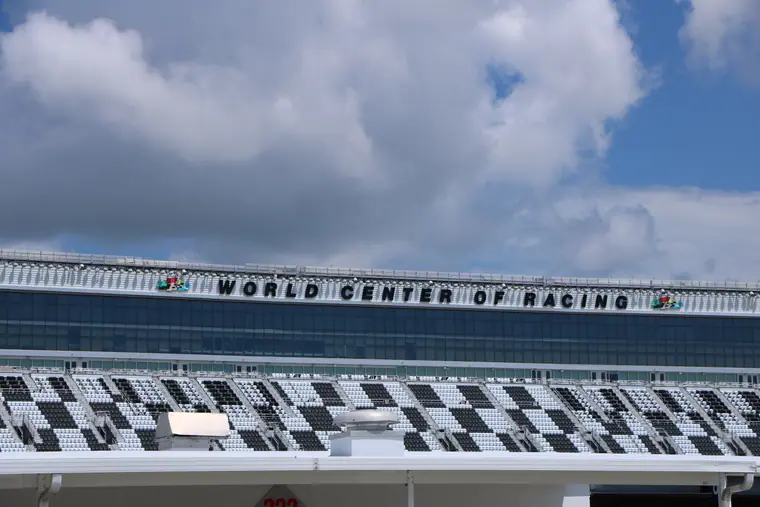
Most professional sports in America are governed by an association of team owners. NASCAR is not. It is a privately held company with a head office in Daytona Beach, Florida, and for seventy-eight years the people who owned it and the people who ran it were the same family.
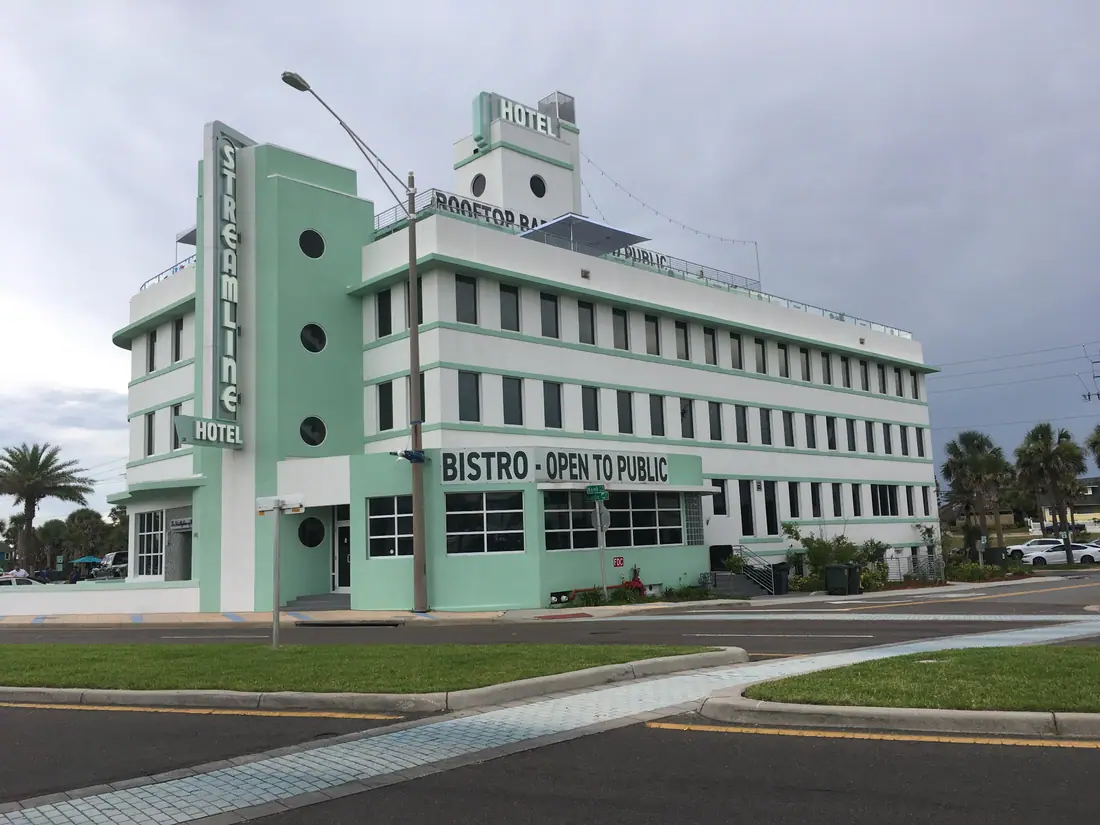
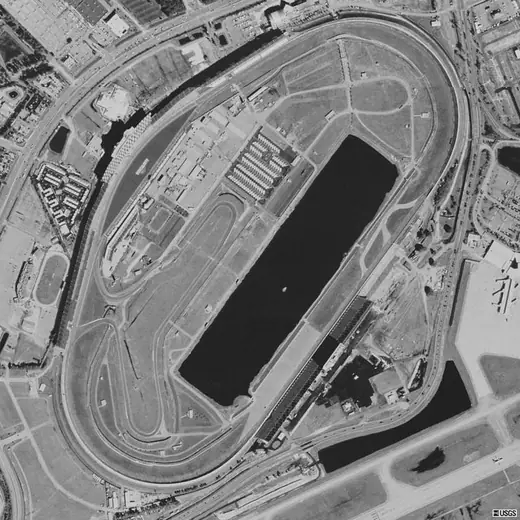
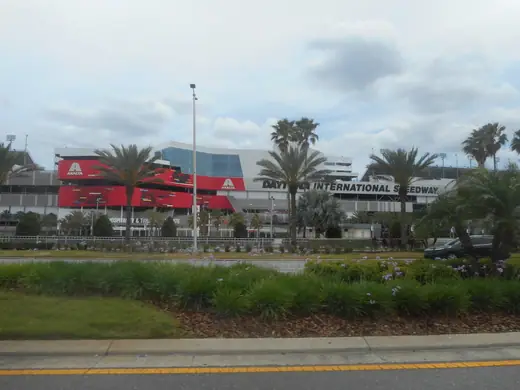
William Henry Getty France — Bill France Sr., born in Washington, D.C., on September 26, 1909 — convened the meeting that produced it at the Streamline Hotel in Daytona Beach on December 14, 1947. NASCAR was formally constituted on February 21, 1948. He built the Daytona International Speedway, which held its first Daytona 500 in 1959, and Talladega, which opened in 1969. He died in Ormond Beach, Volusia County, Florida, on June 7, 1992.
What makes this a probate case rather than a sports story is the pattern of the handovers. Every successful one happened while the previous holder was alive. Every difficult one did not.
1972: the founder resigns while he is still capable of resigning
On January 10, 1972, Bill France Sr. handed the presidency to his elder son, Bill France Jr., born April 4, 1933. He was 62. He kept an office at headquarters into the late 1980s. He lived another twenty years.
That is the single most valuable fact in this case, and it is the one most family businesses ignore. The founder transferred operating control two decades before his death, which meant the transition was tested, corrected, and complete long before anyone was grieving. When he died in 1992 of Alzheimer's disease, there was nothing to decide.
Compare the alternative, which this archive is otherwise full of: a founder who holds control until incapacity, a family that discovers the plan only after a diagnosis, and a guardianship petition filed by relatives who disagree about what he would have wanted.
Bill France Jr. ran NASCAR from 1972 to 2000. In 2000, after a cancer diagnosis, he stepped back and installed Mike Helton as president — the first person outside the family to hold that title. He remained on the six-person board. In September 2003 his son Brian France became chairman and chief executive. Bill Jr. died in Daytona Beach on June 4, 2007, at 74.
Two generations, two lifetime transfers, no litigation. The plan worked exactly as designed for fifty-five years.
The handover nobody had drafted
On August 5, 2018, Brian France was arrested in Sag Harbor, New York, and charged with driving while intoxicated and with possession of oxycodone. He took an indefinite leave of absence the same week. On June 7, 2019, he pleaded guilty to a misdemeanour driving-while-intoxicated count.
Jim France — Bill Sr.'s younger son, born 1944, then in his mid-seventies — stepped in as interim chairman and chief executive, and was confirmed permanently in February 2019. Brian France did not return; he later founded a private investment firm in Charlotte and has said publicly that he ruled out coming back.
The mechanics matter more than the incident. The family had no designated successor of the next generation ready to take the chair, so control moved sideways and backwards — to the founder's other son, a generation up. That is a workable emergency answer and a poor permanent one, and everyone involved appeared to know it.
It also demonstrates something worth stating plainly for anyone with a family company: an owner's personal crisis is a corporate event. The question is never whether it can happen. It is whether the documents say what happens next, in writing, before anybody needs to read them.
- Sideways succession buys time; it does not create a plan. A seventy-four-year-old interim chief executive is a bridge, not a destination.
- Control and ownership are different problems. Brian France's departure changed who ran the company. It did not, on the public record, change who owned it.
- The next name up was already in the building. Ben Kennedy — Lesa France Kennedy's son, the fourth generation — was inside the business and rose steadily. Successors who are already employed are the only kind that transfer smoothly.
Buying back the public half
For decades the family's holdings ran on two tracks. NASCAR sanctioned the racing and was private. International Speedway Corporation owned the circuits — Daytona, Talladega, Homestead-Miami and more — and was publicly traded, with the family holding control through a dual-class share structure.
In 2019 that ended. NASCAR acquired ISC in a transaction reported at roughly $2 billion, paying $45.00 in cash per share to holders other than the controlling shareholders, and the deal closed on October 18, 2019. ISC became a privately held company. The tracks and the sanctioning body were, for the first time, one family-owned group.
Estate planners will recognise the move immediately, because it is the same move a family makes when it takes a business private before a generational transfer: remove the outside shareholders, remove the disclosure obligations, remove the market price that a valuation dispute could be argued over, and consolidate control in one set of hands. Whether that was the intent is not something this archive will assert — the deal was announced and approved on its own commercial rationale. But the effect on the succession problem is not in doubt.
What the private structure looks like became public four years later, and from an unlikely source: a courtroom. In December 2025, testifying in the antitrust case brought by 23XI Racing and Front Row Motorsports before U.S. District Judge Kenneth Bell, Jim France put his own stake at about 54% and Lesa France Kennedy's at about 36%. NASCAR was described at a valuation of roughly $5 billion, with the family trust having received about $400 million in distributions between 2021 and 2024, and his own salary in the $3.5 million range. Other reporting describes the equity as held through two family trusts. The case settled on December 11, 2025.
The fourth handover, and the surname
On April 24, 2026, NASCAR announced that Steve O'Donnell, who joined the company in 1996 and had been president since March 2025, would become chief executive — the first person outside the France family to hold the role in the sport's seventy-eight-year history.
Jim France remains chairman of the board. Lesa France Kennedy remains executive vice chair. Ben Kennedy became chief operating officer. As of August 2026, the ownership is unchanged.
This is the ending most family businesses eventually reach, and it is not a failure. The family separated ownership from management. They kept the chair, kept the equity, kept a fourth-generation family member in the operating line — and hired the chief executive.
The three-generation statistic quoted at every succession seminar is not a curse; it is an average, and averages are made of decisions. What the France family did differently is visible in the record: transfer early, transfer while alive, keep the successor employed inside the business, and consolidate the ownership before you need to move it. They still ran out of family willing and able to run the company at the moment they needed one. Everybody does, eventually. Planning determines whether that day is a transition or a crisis.
Timeline
- Dec 14, 1947Bill France Sr. convenes the founding discussions at the Streamline Hotel in Daytona Beach.
- Feb 21, 1948NASCAR is formally constituted.
- 1959 · 1969Daytona International Speedway holds its first Daytona 500; Talladega Superspeedway opens.
- Jan 10, 1972Bill France Sr., aged 62, hands the presidency to Bill France Jr. He lives another twenty years.
- Jun 7, 1992Bill France Sr. dies in Ormond Beach, Volusia County, Florida, aged 82.
- 2000After a cancer diagnosis, Bill France Jr. steps back and installs Mike Helton as president — the first non-family member in that job.
- Sep 2003Brian France becomes chairman and chief executive.
- Jun 4, 2007Bill France Jr. dies in Daytona Beach, aged 74.
- Aug 5, 2018Brian France is arrested in Sag Harbor, New York, and takes an indefinite leave of absence. Jim France steps in, and is confirmed permanently in February 2019.
- Oct 18, 2019NASCAR closes its acquisition of International Speedway Corporation at $45.00 per share, reported at roughly $2 billion. The tracks and the sanctioning body become one private group.
- Dec 2025In the 23XI Racing and Front Row Motorsports antitrust trial, Jim France testifies to a roughly 54% stake, with Lesa France Kennedy at about 36%. The case settles on December 11.
- Apr 24, 2026Steve O'Donnell is named chief executive — the first outside the family. Jim France remains chairman; Ben Kennedy becomes chief operating officer.
What actually went wrong
- Nothing, for fifty-five years — because the transfers were made during life. Bill France Sr. resigned the presidency twenty years before he died. That single decision removed the entire category of problem this archive usually documents.
- The 2018 succession had no designated next-in-line. Control moved backwards a generation to a man in his seventies, on an emergency basis. It worked, and it should never have been the only option available.
- Ownership stayed opaque until litigation opened it. The clearest public account of who owns what came from sworn testimony in an antitrust trial in December 2025 — seven years after the leadership changed.
- Two structures ran in parallel for decades. A private sanctioning body and a public track company, with a dual-class share structure holding them together, is a great deal of machinery to keep aligned across a generational transfer. Consolidating it cost roughly $2 billion.
- The family eventually ran out of family. In April 2026 the chief executive's name stopped being France. Every multi-generational business reaches this point; the only variable is whether it arrives as a plan or as a surprise.
Would it have gone that way in Florida?
This is a Florida case throughout — a Florida company, a Florida founder, a Florida death — and Florida law is unusually well built for exactly this structure.
NASCAR has been headquartered in Daytona Beach since it was founded. Bill France Sr. died in Ormond Beach; Bill France Jr. died in Daytona Beach. Volusia County probate law governed both estates, and the planning around them is Florida planning.
The core problem in a family business is that a company does not stop while an estate is administered. Florida answers this in two places, and a well-drafted plan uses both. Fla. Stat. §733.612(22) authorises a personal representative to continue any unincorporated business or venture in which the decedent was engaged at death, within stated time limits. §733.612(10) authorises the representative to vote, or refrain from voting, stocks or other securities in person or by proxy. Together they mean an estate can keep a company running and keep its shares voted while the court file is open. But note the limits: the business-continuation power is time-bounded, and a personal representative is a temporary officeholder by design.
Which is why the shares belong in a trust, not in an estate. §736.0816(7) lets a trustee, with respect to an interest in a proprietorship, partnership, limited liability company, business trust, or corporation, continue the business and take any action that may be taken by shareholders. §736.0816(8)(a) lets the trustee vote, or give proxies to vote, or enter into or continue a voting trust agreement. A trust holding the equity does not need letters of administration, does not need a probate judge, and does not need to be reappointed every generation. Reporting describes the France holdings as sitting in family trusts, which is the ordinary and correct answer for a control block.
Florida is now one of the best jurisdictions in America for making that permanent. §689.225 — the statutory rule against perpetuities — permits a trust created on or after July 1, 2022 to run for 1,000 years. Trusts created after December 31, 2000, through June 30, 2022, got 360 years; before that, 90. A Florida dynasty trust can therefore hold a control block for a length of time that is, for practical purposes, indefinite.
The honest caveats, three of them. First, §736.0703 provides that co-trustees act by majority — which means a three-child trusteeship is a two-against-one machine, and §736.0706 allows removal where co-trustee non-cooperation substantially impairs administration. Second, §736.1406 permits a trust to confer powers to direct on a person other than the trustee, which is the statutory basis for a trust protector — the mechanism that lets a family change trustees or adapt a business trust without going to court. Third, and least discussed: §732.2035 brings a revocable trust into the elective estate for purposes of the surviving spouse's 30% elective share. A control block held in a revocable trust is not insulated from a spousal election. If the point of the structure is that the shares never have to be sold, the shares need to be somewhere a valid marital agreement under §732.702 or an irrevocable structure has already accounted for.
And a compensation footnote that matters in family companies. §733.617 sets a presumptively reasonable personal representative fee — 3% of the first $1 million, sliding down — and §736.0708 requires trustee compensation to be reasonable under the circumstances, with the court free to adjust it. A family member who runs the business and also serves as trustee is being paid twice for overlapping work, and that is precisely the fact pattern that produces fee litigation between siblings.
The practical instruction for any Florida family business. Put the voting equity in an irrevocable trust with a named successor trustee and a trust protector, sign a buy-sell agreement with a funded valuation mechanism, and move operating control while you are alive and able to correct your own mistake. Bill France Sr. did the last of those in 1972 and lived twenty more years watching it work. That is the whole case.
What people ask us about this.
Further reading
Third-party sites. Not ours, not endorsed, not kept current by us — just the places worth going next.
Sources
- Bill France Sr. — founding of NASCAR, Daytona, and the 1972 handover — Wikipedia (citing contemporaneous reporting)
- Bill France Jr. — leadership 1972–2000, death June 4, 2007 — Wikipedia (citing contemporaneous reporting)
- NASCAR at 75: the France family built U.S. racing at Daytona Beach — Associated Press / San Francisco Chronicle, 2023
- NASCAR closes merger with ISC — NASCAR.com, Oct 2019
- International Speedway Corp. accepts $2 billion NASCAR offer — Motorsport.com, 2019
- NASCAR chairman Jim France firm on charters; plaintiffs rest — ESPN, Dec 2025
- NASCAR settles federal antitrust case filed by two teams — ESPN, Dec 2025
- Steve O'Donnell named CEO, Ben Kennedy COO in NASCAR leadership change — NASCAR.com, Apr 2026
- New CEO Steve O'Donnell vows to unite NASCAR — NPR / Associated Press, Apr 2026
If this is your situation
Free 30-minute consult. Plain English. No pressure.
Nearly every case in this archive turned on something ordinary — an unwitnessed page, a stale beneficiary line, a document nobody could find. Those are cheap to fix while you're alive and expensive to fix afterward.