Jeffrey Epstein
The criminal case ended the moment he died. The civil claims did not, and there was no defendant left except an estate. What followed was years of probate in the US Virgin Islands, a compensation program built inside it, and $121 million paid to 136 claimants.
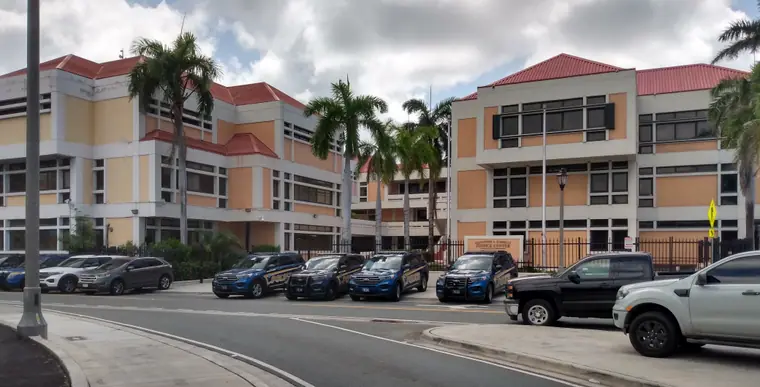
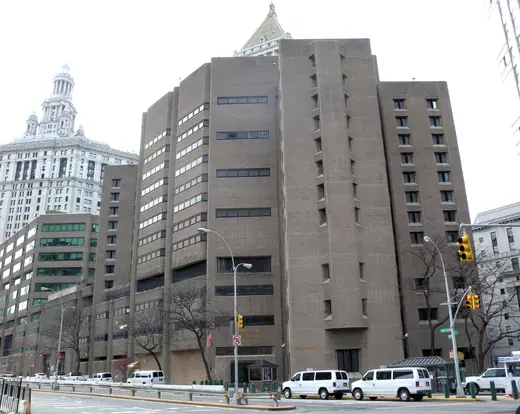
Jeffrey Epstein signed a will on August 8, 2019, inside the Metropolitan Correctional Center in Manhattan, where he was being held awaiting a federal sex-trafficking trial. He died there on August 10, 2019; the New York City medical examiner ruled the death a suicide. The federal indictment was dismissed, because a criminal case cannot proceed against a defendant who dies before judgment.
That is the hinge of this page. The prosecution ended. The civil claims did not, and from that morning the only defendant available to any claimant was an estate — a pile of property, a court file, and two executors.
The will was filed the following week with the Superior Court of the Virgin Islands, St. Thomas and St. John division, where Epstein had been resident. It declared a gross estate of $577,672,654. It named Darren Indyke, his longtime lawyer, and Richard Kahn, his accountant, as co-executors. It poured the residue into a vehicle called The 1953 Trust — a US Virgin Islands trust whose terms are not part of the public probate record.
Everything since — a territorial enforcement suit, a voluntary compensation program, the sale of two islands and a Palm Beach house, and a class settlement still awaiting final approval as of August 2026 — has happened in and around that probate.
A pour-over will and a trust nobody outside can read
The document is unremarkable in form and consequential in effect. It is a pour-over will: it directs the executors to transfer the property, real and personal, into a trust, and the trust — not the will — decides who eventually receives anything. That structure is ordinary estate planning, used by millions of people, and its ordinary purpose is privacy. A will admitted to probate is a public record. A trust generally is not.
The public consequence here was immediate. Reporters and claimants could read a will that named no beneficiaries and pointed at a trust they could not see. The 1953 Trust has never been published.
The second structural feature mattered more in practice: the executors were the decedent's own lawyer and his own accountant, both of whom had worked for him for decades. Nothing about that is unlawful, and appointing professional advisers is common. It does guarantee that every claimant will scrutinise the appointment, and every one of them did.
The Virgin Islands probate court kept supervision of the administration throughout. That is why the compensation program described below was not a private charity: it required a court order.
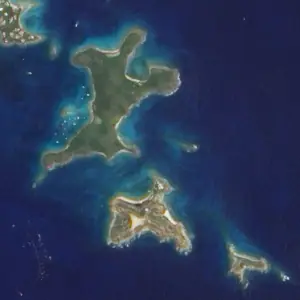
A compensation program built inside a probate
In November 2019 the co-executors asked the Virgin Islands probate court to approve a voluntary claims-resolution program funded by the estate. The Attorney General of the Virgin Islands, Denise George, objected to the first version of the protocol and negotiated changes to it; her office announced the revised terms in June 2020. The court approved the program, and it began accepting claims on June 25, 2020.
The Epstein Victims' Compensation Program was designed and administered by Jordana Feldman, who had worked on the September 11th Victim Compensation Fund. The model is familiar from that fund and from the Catholic diocesan compensation programs: confidential, non-adversarial, no deposition, no trial, an independent administrator setting awards under a published protocol.
The trade at the centre of it was explicit and disclosed up front. Participation was voluntary on both sides. A claimant could file, receive an award determination, and decline it; some did. A claimant who accepted signed a release giving up further claims against the estate and against related entities and individuals. That is what a compensation program is — certainty and privacy, exchanged for the right to litigate.
The program paused payments in early 2021 when the estate's liquid funds ran short, then resumed. It closed to new claims in August 2021. Its final accounting: roughly $121 million paid to 136 claimants, from about 225 claims filed — far more than the hundred the program had planned for — with more than 92% of those found eligible accepting the award offered.
- It was funded by estate assets. Not insurance, not a government fund. Every dollar came out of property the executors sold or liquidated.
- It required a court order. A personal representative cannot invent a claims process and start writing cheques; settling claims against an estate takes judicial authority.
- It ran alongside litigation, not instead of it. Claimants who did not file with the program kept their lawsuits, and some of those are still running.
$105 million, two islands, and a trust for local services
On January 15, 2020, the Virgin Islands Attorney General sued the estate and associated entities under the territory's Criminally Influenced and Corrupt Organizations Act — the local analogue of RICO — together with the Virgin Islands human-trafficking statute. The complaint was amended in February 2021. It sought, among other things, the two islands.
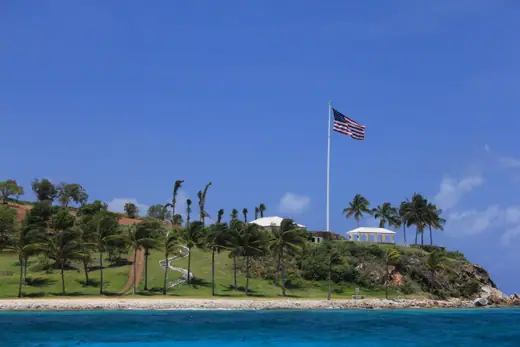
The case settled on November 30, 2022. Under the announced terms the estate agreed to pay the territorial government $105 million in cash within one year, to transfer half the proceeds of the sale of Little St. James into a trust funding services for Virgin Islands victims of sexual assault, human trafficking and child sexual abuse, to pay $450,000 toward environmental remediation on Great St. James, to sell both islands to independent third parties, to wind down its Virgin Islands business operations, and to produce documents for continuing investigations.
The islands sold in May 2023 to the investor Stephen Deckoff for $60 million. They had been listed at $110 million.
Set the two mechanisms side by side, because they are different animals. The compensation program paid individuals under a protocol, privately, in exchange for releases. The territorial suit was a government enforcement action that reached assets, imposed conditions on how they were disposed of, and directed part of the money into a trust for services rather than to individual claimants. Both were paid by the same estate.
An estate becomes a records custodian
Here is the part of this story that belongs in a probate archive rather than a news cycle, and it is the part almost nobody frames correctly.
When Epstein died, his papers did not become public property, and they did not become the government's. They became estate property — held by the co-executors, in their capacity as fiduciaries, subject to the orders of a probate court. Address books, correspondence, photographs, the contents of the houses, the recordings from the properties: all of it was, in the plainest legal sense, inventory.
That is why Congress had to serve the estate rather than simply ask for it. On August 25, 2025, the House Oversight Committee, through Chairman James Comer, issued a subpoena to the co-executors demanding more than a dozen categories of documents and communications spanning 1990 to August 2019 — including material referencing presidents and vice presidents, videos taken from Epstein's properties, and the contents of his contact and address books.
The estate produced. On September 8, 2025, the committee published what it had received, including a 238-page volume assembled for Epstein's fiftieth birthday and pages from his address book. Four months later, on January 30, 2026, the Justice Department released its own trove — Deputy Attorney General Todd Blanche put the figure at more than 3.5 million pages, 2,000 videos and 180,000 images. Committee Democrats have said they expect further production from the estate.
Note what the estate was not able to do. It could not destroy the material: once litigation and investigation were foreseeable, a preservation obligation attached, and spoliation carries its own sanctions. It could not keep it private by pointing at the trust: a subpoena reaches the custodian, whatever entity nominally owns the paper. And it could not decline on the beneficiaries' behalf, because a fiduciary's discomfort is not a privilege.
The lesson generalises past this estate, and it is one almost no one plans for. Your personal representative will inherit your filing cabinet, your hard drive, and your phone, and if anybody ever has a legal reason to want what is on them, that person is who they will serve. Most people spend their planning worrying about who gets the house. Almost nobody asks who will be reading their correspondence, under oath, and what they will be obliged to do with it.
As of August 2026
The estate's other real property went the way of the islands. The Palm Beach house at 358 El Brillo Way was sold by the estate for $18.5 million; the buyer demolished it in 2021.
Beyond the compensation program, the estate has resolved further claims reported at roughly $48–49 million covering 59 claimants.
On February 19, 2026, the estate and its co-executors agreed to settle a class action brought in the Southern District of New York on behalf of women who say they were abused or trafficked by Epstein between 1995 and the date of his death. The agreement provides $35 million if the class exceeds 40 members and $25 million if it does not. Counsel for the co-executors stated that neither man admitted wrongdoing. US District Judge Arun Subramanian granted preliminary approval on March 3, 2026, and set a final approval hearing for September 16, 2026. As of August 2026 that hearing has not been held.
Years after the death, the probate is still the room where this gets decided. Not the criminal court — that file closed in August 2019 — but a court that counts property, tests claims, and signs orders.
Timeline
- Aug 8, 2019Epstein signs a will at the Metropolitan Correctional Center, New York, declaring an estate of $577,672,654 and pouring the residue into The 1953 Trust.
- Aug 10, 2019He dies in custody. The New York City medical examiner rules the death a suicide, and the federal indictment is dismissed.
- Aug 2019The will is filed in the Superior Court of the Virgin Islands, St. Thomas and St. John. Darren Indyke and Richard Kahn qualify as co-executors.
- Nov 2019The co-executors ask the probate court to approve a voluntary victims' compensation program funded by the estate.
- Jan 15, 2020The Virgin Islands Attorney General sues the estate under the territory's Criminally Influenced and Corrupt Organizations Act.
- Jun 25, 2020The Epstein Victims' Compensation Program opens for claims under administrator Jordana Feldman, after the Attorney General negotiates changes to the protocol.
- Aug 2021The program closes. About 225 claims filed; roughly $121 million paid to 136 claimants.
- Nov 30, 2022The territorial suit settles: $105 million in cash, half the proceeds of the Little St. James sale into a victims-services trust, $450,000 in environmental remediation, and a wind-down of Virgin Islands operations.
- May 2023Little St. James and Great St. James sell to Stephen Deckoff for $60 million, against a $110 million listing.
- Feb 19 – Mar 3, 2026The estate agrees to a class settlement of up to $35 million; Judge Arun Subramanian grants preliminary approval and sets final approval for September 16, 2026.
- Aug 25, 2025The House Oversight Committee subpoenas the estate's co-executors for more than a dozen categories of documents from 1990 to August 2019, including material referencing presidents and vice presidents, videos from Epstein's properties, and his contact and address books.
- Sep 8, 2025The committee publishes records produced by the estate, including a 238-page volume assembled for Epstein's fiftieth birthday and pages from his address book.
- Jan 30, 2026The Justice Department releases its own trove — reported by Deputy Attorney General Todd Blanche as more than 3.5 million pages, 2,000 videos and 180,000 images.
What actually went wrong
- A criminal case abates; a civil claim does not. Dismissal of the indictment removed the only forum that could have produced a verdict, and left every claimant with one defendant: an estate.
- A will signed 48 hours before death is a will that gets examined. Nothing about the timing was found improper here, but proximity to death is the first thing a contestant looks at, and the cure is signing while nobody can wonder.
- A private trust does not stop claims. Pouring assets into a trust protects privacy. It does not put the assets beyond a court with jurisdiction over the estate feeding it.
- Liquidity is a real constraint on a large estate. A program backed by half a billion dollars of property still had to pause payments while real estate sold. Value on paper is not cash available to pay claims.
- Settling inside a probate takes a court order. The compensation program existed because a probate judge approved it, and the releases claimants signed are enforceable for the same reason.
Would it have gone that way in Florida?
Same claims, much shorter clock — and in Florida the compensation program would still have needed a judge's signature.
Epstein was a Virgin Islands resident and the probate was opened there, so Florida law did not govern the administration. Florida property was in it: the estate sold the Palm Beach house at 358 El Brillo Way for $18.5 million, and an out-of-state estate holding Florida real property is normally administered here through an ancillary proceeding under Fla. Stat. §734.102.
Had the domicile been Florida, the first thing to change would be the calendar. §733.702 bars a claim against the estate unless it is filed by the later of 3 months after first publication of the notice to creditors or 30 days after service on a creditor entitled to be served. Behind it sits §733.710: 2 years after the date of death, the estate, the personal representative, and the beneficiaries are not liable on any claim against the decedent. That clock runs from the death itself, it does not wait for anyone to be ready, and it is not extendable. A compensation program that opened ten months after the death and paid its last claimant two years later would have run straight into it.
The claims themselves survive. §46.021 is one sentence long and it is the whole rule: “No cause of action dies with the person. All causes of action survive and may be commenced, prosecuted, and defended in the name of the person prescribed by law.” A civil claim in Florida is not extinguished by the defendant's death. It is redirected at the estate, on the estate's timetable.
A voluntary program would also have needed the probate court. §733.708 provides that when a proposal is made to compromise any claim by or against the estate, the court may enter an order authorising it if satisfied the compromise is in the best interest of the interested persons — and that order relieves the personal representative of liability for the compromise. The statute carries a timing rule people miss: claims against the estate may not be compromised until the time for filing objections to claims has expired. That is the Florida version of the order the Virgin Islands court entered.
If an estate cannot pay everyone, §733.707 sets the order. Administration costs and fees are Class 1; funeral expenses to $6,000 are Class 2; debts and taxes with preference under federal law are Class 3; ordinary judgment creditors are Class 8, at the back of the queue with everyone else who won a lawsuit.
The uncomfortable Florida point, stated straight. Fla. Const. Art. X §4 exempts a Florida homestead from forced sale by creditors with no dollar cap — the only limits are acreage, half an acre inside a municipality or 160 acres outside — and the exemption passes to the heirs who take the property. The express exceptions are narrow: property taxes and assessments, obligations contracted for the purchase or improvement of the property, and labour performed on it. Judgment debtors have relied on that protection deliberately for well over a century, and civil claimants who win against a Florida defendant regularly find that the largest asset is the one they cannot reach. That is an accurate description of Florida law, not a recommendation. It has limits: it does not bind the federal government, whose liens attach notwithstanding a state exemption, and it protects the homestead only, not everything else the debtor owns.
What to actually do. If you may have a civil claim against someone who has died, the instruction is a date, not a theory. Find out whether an estate has been opened and when the notice to creditors was first published, and file a statement of claim in the probate — not only a lawsuit — inside the §733.702 window. If two years have passed since the death, §733.710 has probably already answered the question, whatever the merits were.
And the records. The subpoena chapter has a direct Florida analogue that almost no estate plan addresses. Under §733.607, a Florida personal representative takes possession of the decedent's property — which includes the papers, the devices, and the files. Under Ch. 740, the Florida Fiduciary Access to Digital Assets Act, that reach extends to email and online accounts, on a three-tier priority: an online tool first, then the will or trust, then the provider's terms of service. A Florida personal representative served with a subpoena is in the same seat the co-executors occupied: custodian of material they must preserve, cannot unilaterally withhold, and did not choose to hold.
What people ask us about this.
Further reading
Third-party sites. Not ours, not endorsed, not kept current by us — just the places worth going next.
Sources
- Jeffrey Epstein signed a will 2 days before his death — CNN, Aug 2019
- Jeffrey Epstein signed new will just two days before he died — NBC News, Aug 2019
- Jeffrey Epstein victims program shutting down with $121 million paid to abuse survivors — ABC News, Aug 2021
- Jeffrey Epstein's accusers can now seek compensation from fund — CNN, Jun 2020
- V.I. Attorney General secures significant changes to the Epstein estate compensation fund — Office of the Attorney General, US Virgin Islands, Jun 2020
- U.S. Virgin Islands Attorney General settles sex trafficking case against the estate of Jeffrey Epstein and co-defendants for over $105 million — Office of the Attorney General, US Virgin Islands, Dec 2022
- Billionaire Stephen Deckoff buys Jeffrey Epstein's private islands — CNBC, May 2023
- Epstein estate agrees to $35 million settlement in victim class action — NBC News, Feb 2026
- Jeffrey Epstein's Palm Beach mansion — Wikipedia
- House GOP Oversight panel subpoenas Epstein estate for 'birthday book,' other documents — CNN, Aug 25 2025
- House committee releases 'birthday book,' other records from Epstein estate — CNN, Sep 8 2025
- DOJ releases millions of pages of additional Epstein files — NBC News, Jan 30 2026
- Oversight Committee releases Epstein records provided by the Department of Justice — US House Committee on Oversight and Government Reform
If this is your situation
Free 30-minute consult. Plain English. No pressure.
Nearly every case in this archive turned on something ordinary — an unwitnessed page, a stale beneficiary line, a document nobody could find. Those are cheap to fix while you're alive and expensive to fix afterward.