Henry Flagler
Flagler built Standard Oil with Rockefeller, then built Florida — the railway, Palm Beach, Miami, Key West. In 1901 the Florida legislature made incurable insanity a ground for divorce. He was the only person ever divorced under it. It was repealed in 1905.
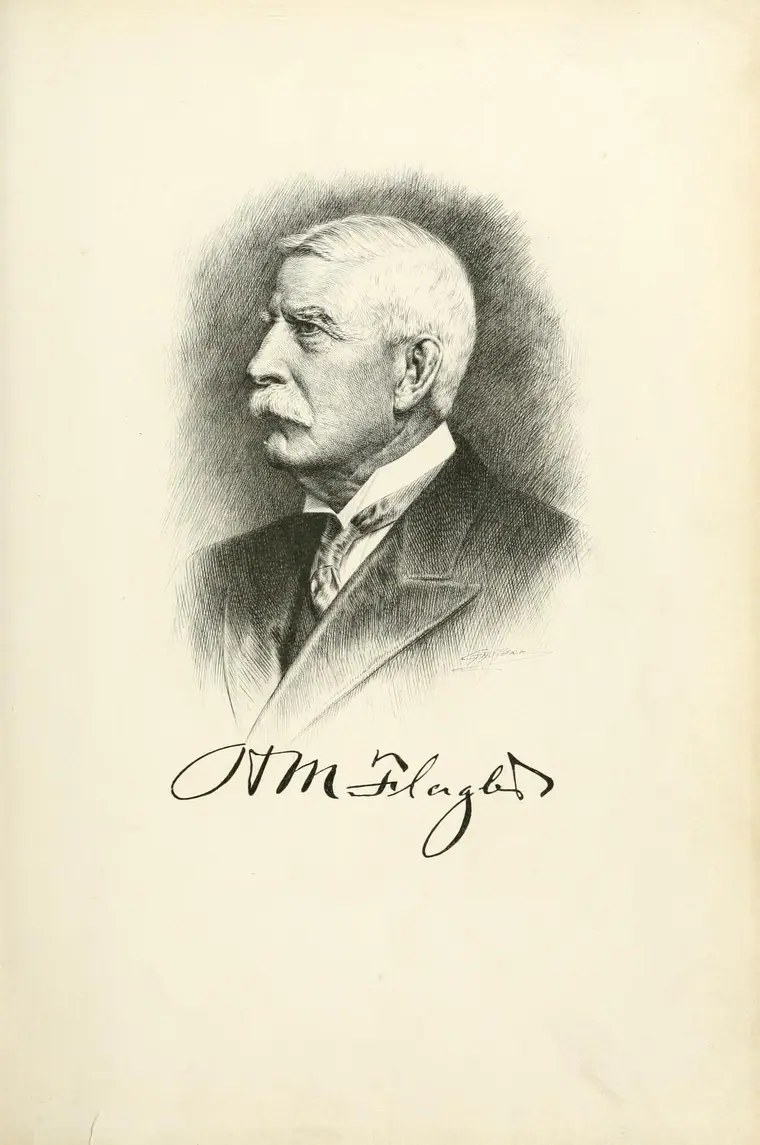
Henry Morrison Flagler was born in Hopewell, New York, in 1830, and by the 1870s he was John D. Rockefeller's partner in Standard Oil. Rockefeller, asked whose idea the company had been, is said to have answered: “It was Henry M. Flagler.”
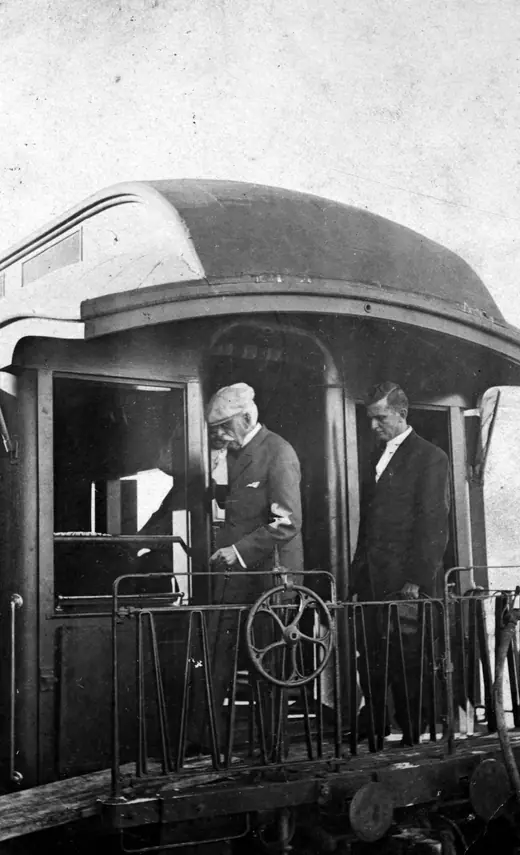
In 1883 he came to St. Augustine on his honeymoon, decided the place needed a decent hotel and a railroad to reach it, and spent the next thirty years inventing modern Florida. The Ponce de Leon. The Royal Poinciana. The Breakers. The Florida East Coast Railway, which reached Miami in 1896 and Key West in 1912.
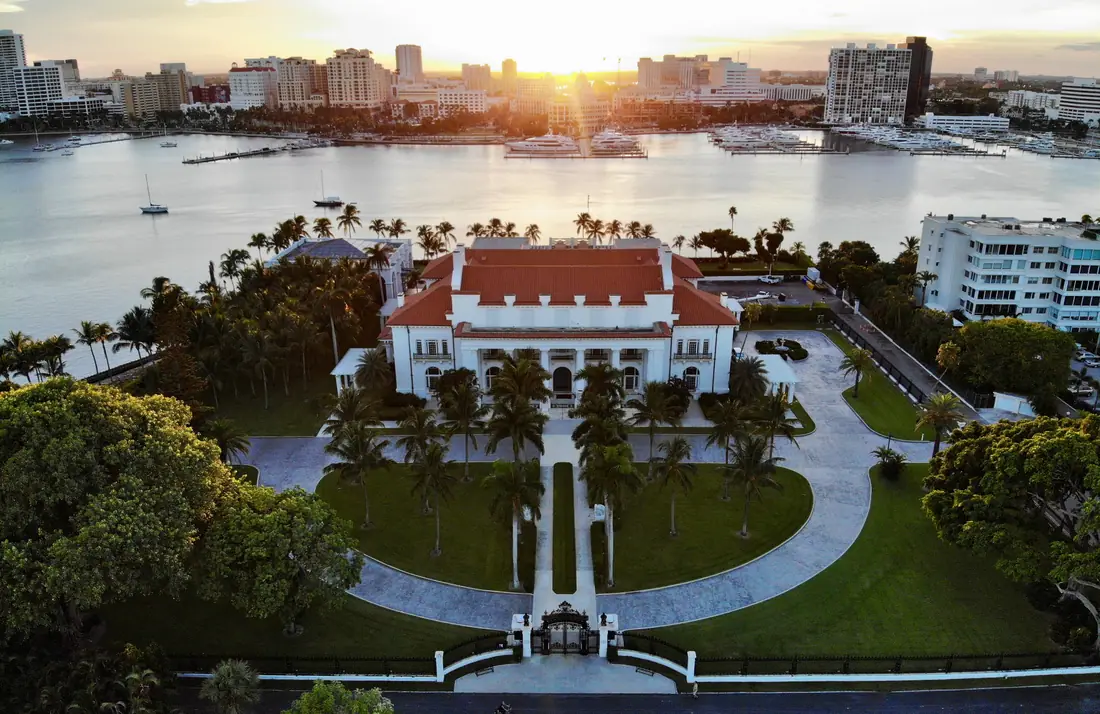
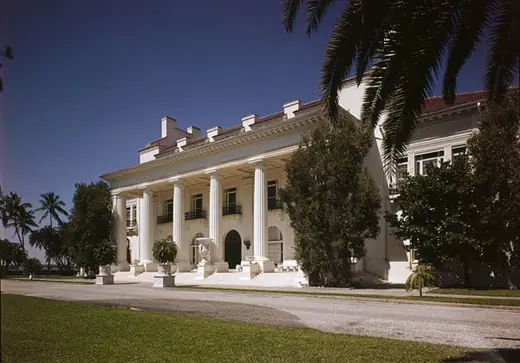
He died on May 20, 1913, at Palm Beach, at 83, after a fall at Whitehall — the 75-room marble house he had built in 1902 as a wedding present for his third wife. His fortune was estimated afterward at somewhere between $65 million and $130 million, a range wide enough to tell you nobody outside the estate really knew.
The interesting document in this file is not his will. It is a statute.
A caregiver, a marriage, and a guardianship
Flagler's first wife, Mary Harkness, married in 1853, was ill for years and died in 1881. Her caregiver during that illness was Ida Alice Shourds, and in 1883 Flagler married her. It was on their honeymoon that he first saw St. Augustine.
By the 1890s Ida Alice's mental health had deteriorated severely. She was institutionalized, and in 1897 she was formally declared insane and placed under guardianship in New York. Flagler funded her care for the rest of her life — she outlived him, dying in 1930 — but the marriage was over in every sense the law did not yet recognise.
New York would not grant a divorce on those facts. Neither would Florida. Insanity was not a ground for divorce anywhere Flagler could reach.
Passed in April, used in August, repealed in 1905
In April 1901, the Florida legislature enacted a law making incurable insanity a ground for divorce after a specified period of confinement. It moved through the legislature in near-record time and was signed on April 25, 1901.
On August 14, 1901, Henry Flagler was granted a divorce from Ida Alice in Florida. Ten days later, on August 24, he married Mary Lily Kenan of Wilmington, North Carolina. He was 71. She was 34.
He was the only person ever divorced under the statute. It was repealed in 1905.
It has been called the Flagler divorce law ever since, and it has been widely reported — then and by later historians — that money reached the legislature to secure it. Accounts differ on the evidence for that, and this file does not resolve it. What is not in dispute is the sequence: a bill for a circumstance almost nobody else was in, passed unusually quickly, used once by the wealthiest man in the state, and taken off the books four years later.
Modern Florida law reached the same policy destination by a slower and much better-guarded road. Fla. Stat. §61.052(1) today allows dissolution on the ground of a spouse's mental incapacity — but only where the spouse has been adjudged incapacitated under §744.331 for a preceding period of at least three years, with notice to the guardian and to blood relatives, and with the court empowered to order the petitioner to pay alimony. Three years, a guardianship adjudication, notice to the family, and a support obligation. That is what a legislature builds when it is not writing for one man.
What happened to the money after 1913
Flagler's will left the bulk of his fortune to Mary Lily Kenan Flagler, which made her, by contemporary accounts, the richest woman in the world. She was 46 and a widow with more money than she had any use for and no children.
In November 1916 she married Robert Worth Bingham, a Louisville judge she had known in the 1890s. Before the marriage, Bingham waived his rights to the Flagler fortune — a prenuptial waiver, and the single most consequential document in the second half of this story.
Mary Lily's health declined through the first half of 1917, and she died on July 27, 1917, at 50. A codicil to her will, signed shortly before her death, left Bingham $5 million. The waiver had said one thing; the codicil said another.
What followed was the loudest inheritance scandal of the era. In September 1917 her body was exhumed and an autopsy performed at the request of her brother-in-law, Graham Kenan — not Bingham. No criminal charges were ever brought. The autopsy findings were never publicly released. Historians have generally attributed the death to illness. The rumours never entirely stopped, which is what happens when an autopsy is performed and its results are not published.
Bingham took the $5 million, bought the Louisville Courier-Journal, and founded a newspaper dynasty. The remainder of the Flagler money went to Mary Lily's family and to the University of North Carolina at Chapel Hill, where the Kenan Professorships still carry her father's and uncles' names. Whitehall became a hotel, and then, in 1960, the Flagler Museum, which is what it is today.
Timeline
- 1853Flagler marries Mary Harkness. He joins Rockefeller in the oil business in Cleveland and becomes a founding partner of Standard Oil.
- 1881–1883Mary Harkness dies. In 1883 Flagler marries her former caregiver, Ida Alice Shourds. Their honeymoon takes them to St. Augustine.
- 1888–1912The Florida East Coast Railway and its hotels: the Ponce de Leon (1888), Palm Beach, Miami (1896), and the Key West Extension (1912).
- 1897Ida Alice Flagler is declared insane and placed under guardianship in New York. Flagler funds her care for the rest of her life.
- Apr 25, 1901Florida enacts a statute making incurable insanity a ground for divorce. It passes in near-record time.
- Aug 14, 1901Flagler is granted a divorce from Ida Alice under the new statute — the only divorce ever obtained under it.
- Aug 24, 1901Ten days later, Flagler marries Mary Lily Kenan. He builds Whitehall for her the following year at a reported cost of about $2.5 million.
- 1905The statute is repealed.
- May 20, 1913Flagler dies at Whitehall after a fall, at 83. The bulk of an estate reported between $65 million and $130 million passes to Mary Lily.
- Nov 1916Mary Lily marries Robert Worth Bingham, who has waived his rights to the Flagler fortune before the marriage.
- Jul 27, 1917Mary Lily dies at 50. A codicil signed shortly before her death leaves Bingham $5 million.
- Sep 1917Her body is exhumed and an autopsy performed at a relative's request. No charges are ever brought and the findings are not made public.
What actually went wrong
- A marriage with no exit, and no plan for one. Ida Alice's incapacity was permanent by 1897 and Flagler had no lawful way to dissolve the marriage. A century of statutory reform later, the answer is still not divorce for most families — it is a durable power of attorney and a health care surrogate signed while both spouses have capacity.
- A statute written around one set of facts is a statute that will be repealed. The 1901 law lasted four years and produced one divorce. Anything obtained that way is fragile by construction.
- The prenuptial waiver and the codicil pointed in opposite directions. Bingham waived his rights before the marriage and then received $5 million by a codicil signed weeks before his wife's death. A waiver does not stop a testator from making a later gift — but the combination guarantees the gift will be examined.
- A deathbed codicil is the highest-risk document in estate planning. Late, large, in favor of the person closest to the decedent, signed during a final illness. Whatever the truth was in 1917, the shape of the document is what produced the exhumation.
- No public record, no end to the rumours. The autopsy findings were never released. A century later people still write about it. If a family wants a question closed, the answer has to be documented and disclosed.
Would it have gone that way in Florida?
The 1901 statute is gone. The modern Florida version of that rule exists, and it is deliberately hard to use.
Flagler was a Florida resident, Whitehall was Florida property, and the divorce was a Florida decree. Every part of this story is Florida law — including the part that has been rewritten.
Fla. Stat. §61.052(1) today lists two grounds for dissolution of marriage: that the marriage is irretrievably broken, or the mental incapacity of one of the parties. The second ground carries conditions that did not exist in 1901: the spouse must have been adjudged incapacitated under §744.331 for a preceding period of at least three years, notice must go to the guardian and to the incapacitated spouse's nearest blood relatives, and the court may require the petitioner to pay alimony under §61.08. In practice almost every Florida dissolution proceeds on irretrievable breakdown instead, because irretrievable breakdown requires none of that.
The far more useful lesson is the one Flagler could not use because the documents had not been invented yet. A durable power of attorney under Ch. 709 and a health care surrogate designation under Ch. 765, signed while both spouses have capacity, do most of the work a guardianship does — without a courtroom, a public adjudication, or a guardian's fee. Florida's guardianship statute, Ch. 744, is what happens when nobody signed those. It is expensive, it is public, and it takes the decision out of the family's hands.
The second half of the story is about the waiver. Bingham waived his rights to the Flagler fortune before marrying Mary Lily. In modern Florida that is §732.702 — a spouse may waive elective share, homestead rights, exempt property, family allowance, and intestate share by a written contract signed by the waiving party. The statute is unusually favourable to prenuptial agreements: no financial disclosure is required if the agreement is signed before the marriage. After the marriage, fair disclosure is required. That difference between the day before the wedding and the day after is worth more than most people realise.
The honest caveat: a waiver does not prevent a later voluntary gift. Bingham waived his statutory rights and then received $5 million by codicil, and there is nothing inconsistent about that. What a waiver does is remove the automatic claim — the 30% elective share under §732.2035, the pretermitted spouse's intestate share under §732.301, the homestead protections. Everything after that is the testator's choice, and choices made during a final illness are the ones that get litigated.
Practical instruction: if you are marrying with significant separate wealth, sign the agreement before the wedding, not after — and put the durable power of attorney and health care surrogate in the same signing. The first document protects the money. The other two protect the person who signed it, which is the part Flagler had no answer for.
What people ask us about this.

Further reading
Third-party sites. Not ours, not endorsed, not kept current by us — just the places worth going next.
Sources
- Henry Flagler — biography and Florida development — Henry Morrison Flagler Museum
- Henry Flagler — Wikipedia (encyclopedic summary, cited sources at foot)
- Mary Lily Kenan Flagler Bingham — Wikipedia (encyclopedic summary, cited sources at foot)
- The Mary Lily Kenan conspiracy? — St. Augustine Historical Society
- Henry Flagler — the man who put Florida on the map — Florida Folk History
- Fla. Stat. §61.052 — Dissolution of marriage — The Florida Senate
- Fla. Stat. §732.702 — Waiver of spousal rights — The Florida Senate
- Fla. Stat. §744.331 — Procedures to determine incapacity — The Florida Senate
If this is your situation
Free 30-minute consult. Plain English. No pressure.
Nearly every case in this archive turned on something ordinary — an unwitnessed page, a stale beneficiary line, a document nobody could find. Those are cheap to fix while you're alive and expensive to fix afterward.