Chadwick Boseman
He died in August 2020 at 43 without a will. California split his estate three ways, a court ordered the distribution in October 2022, and in July 2026 his brothers went back to the same court on their parents' behalf saying it still had not been completed. As of August 2026 the matter is pending.
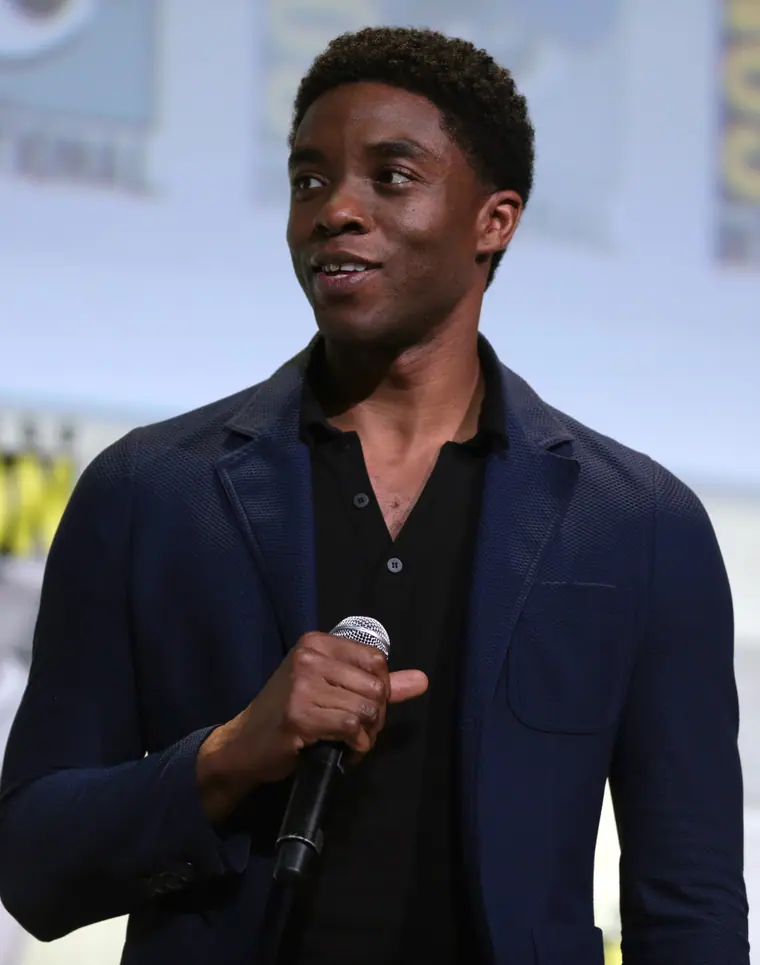
Chadwick Boseman was born in Anderson, South Carolina, on November 29, 1976. He died on August 28, 2020, at his home in Los Angeles, of complications from colon cancer. He was 43. He had been diagnosed at stage III in 2016 and had not made the illness public.
He left no will.
He had four years of warning. That sentence is not a criticism and it is not a moral. It is the fact that makes this case worth reading, because it is the ordinary human fact: people who are ill are busy being ill, and being treated, and working, and the paperwork is always something for a better week.
Six years later, the estate is still in front of a judge.
What California decided for him
In October 2020, Taylor Simone Ledward Boseman, his widow, filed a probate petition in Los Angeles Superior Court and was appointed to administer the estate. There was no document naming anyone, so somebody had to be appointed, and the widow is the ordinary appointee.
Boseman had no children. Both of his parents, Leroy and Carolyn Boseman, survived him. Under California's intestacy rules that combination produces a three-way split of separate property: the surviving spouse takes half, and the parents take the other half between them.
The estate has been reported at roughly $3.8 million gross, and about $2.3 million net of administration costs, probate expenses and taxes. Its principal asset is stock in Chadwick Boseman, Inc., the company that holds and manages his name, likeness and legacy rights, alongside cash and a retirement account.
On October 4, 2022, the court ordered the final distribution: 50 percent to the widow, 25 percent to each parent.
That is where an ordinary intestate estate ends. The order is entered, the assets move, the personal representative files the accounting and the petition for discharge, the court closes the file, and everyone goes home.
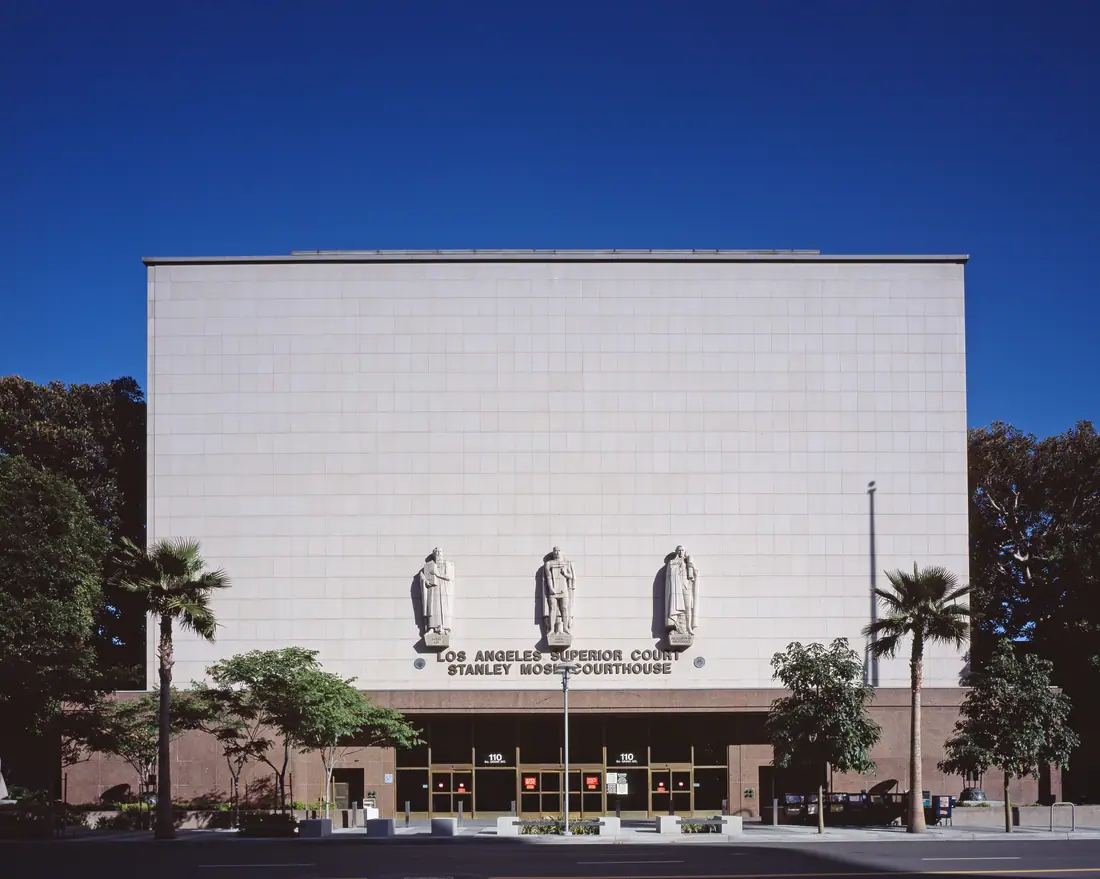
The petition
On July 17, 2026, Boseman's brothers Derrick and Kevin Boseman filed a petition in Los Angeles Superior Court on behalf of their parents. Their parents had assigned their interests in the estate to them. ABC News reported the filing on Friday, July 18; accounts differ by a day on the docket date.
The petition's central assertion is a single sentence: nearly four years after the October 2022 order, the estate has still not been fully distributed, and no petition for discharge with receipts has been filed.
The relief it asks for is specific:
- An order to show cause why the administrator should not be held in contempt of the 2022 distribution order.
- Full distribution of the remaining assets, said in the petition to include royalties and residuals, image and intellectual property rights, real property, and a bank account the petition describes as previously undisclosed.
- A complete accounting with receipts, the petition asserting that the accounting provided was incomplete.
- Removal of the administrator, and appointment in her place of a professional fiduciary with forensic accounting expertise.
- An injunction against entering further agreements over estate property without disclosure to the other interests, and a shareholder meeting of Chadwick Boseman, Inc. within 30 days — the widow holding 50 percent of the shares and the parents the other 50.
Every item on that list is a request. None of it is a finding. As of the sources available in August 2026, no ruling has been reported, and no response or statement from Ledward Boseman or her representatives has been reported.
What can be said without taking a side is structural, and it is the reason the case belongs here. A 50/50 company with no tie-breaker, held by people who are also adverse to each other in a probate file, has no mechanism for deciding anything. Neither half can outvote the other. That deadlock was not created by anybody's conduct in 2026. It was created in 2020, by the absence of a document.
What the missing document would have done
Strip out the names. What is left is a checklist of things a will and a trust decide in advance, and that intestacy leaves to a court, a statute, and time.
Who inherits. He did not choose the 50/25/25. A statute chose it, applying a default rule written for people who have not said otherwise.
Who is in charge. No personal representative was named, so the court appointed one — and the person appointed is also a beneficiary with a 50 percent interest, which is legal, ordinary, and structurally uncomfortable in exactly the way this docket now demonstrates.
Who controls the company. The most valuable asset was a corporation holding his name and likeness. Intestacy split its shares down the middle and stopped. A trust would have named a trustee, a successor trustee, and a decision procedure.
When it ends. Nothing in an intestate estate sets a deadline that the family can hold anyone to except the court's own rules — which is why the 2026 petition asks for contempt, an accounting and a removal rather than simply asking for the money.
Timeline
- Nov 29, 1976Born in Anderson, South Carolina.
- 2016Diagnosed with stage III colon cancer. He does not disclose the illness publicly.
- Aug 28, 2020Dies at home in Los Angeles at 43. He leaves no will and no children. His parents, Leroy and Carolyn Boseman, survive him.
- Oct 2020Taylor Simone Ledward Boseman files a probate petition in Los Angeles Superior Court and is appointed to administer the estate.
- Oct 4, 2022The court orders final distribution — 50 percent to the widow, 25 percent to each parent.
- Jul 17, 2026Derrick and Kevin Boseman file a petition on their parents' behalf, alleging the estate was never fully distributed and no petition for discharge with receipts was filed. ABC News reports the filing on July 18.
- Aug 2026The matter is pending. No ruling has been reported, and no public response from the administrator or her representatives has been reported. Six years after the death, the file is open.
What actually went wrong
- No will, after four years of notice. Not a judgment — an observation about how these things actually go. A diagnosis is when planning gets hardest to do and matters most.
- No trust for the company. The core asset was stock in a corporation holding his name and likeness. A trust names a trustee, a successor, and a way to break a tie. Intestacy names nobody and splits the shares 50/50.
- No personal representative chosen. The court appointed one, and the appointee is also a substantial beneficiary. That combination is legal and common, and it means every timing question becomes a question about someone's own interest.
- No deadline anyone could enforce. Without an instrument setting terms, the only clock is the court's, and enforcing it means going back to court — which is what the July 2026 petition is.
- No plan for the parents. California's default handed a quarter each to two people in their seventies, then linked their access to it to the conduct of a co-heir. He could have provided for all three directly and separately, in whatever proportions he chose, in a document.
Would it have gone that way in Florida?
This dispute would not exist in Florida. With a surviving spouse and no children, the parents inherit nothing.
The whole three-way structure here comes from a California rule that Florida does not have, and it is worth stating flatly because it is one of the sharpest state-line differences in American intestacy.
Fla. Stat. §732.102(1) is one line: if there is no surviving descendant of the decedent, the surviving spouse takes the entire intestate estate. Not half. Not half of the separate property. All of it. Parents appear in §732.103 only after the descendants — and §732.103 applies only to what is left after the spouse's share under §732.102, which in a childless estate is nothing. In Florida, Leroy and Carolyn Boseman would not be heirs at all, there would be no 50/50 company, and there would be no petition in 2026.
There is a second California-specific element Florida mostly lacks. California divides property into community and separate, and the intestate result depends on the classification. Florida is not a community property state. The one exception is narrow: §§732.216–732.228, the Florida Uniform Disposition of Community Property Rights at Death Act, preserves community-property character in assets a couple acquired while domiciled in a community property state and then brought here. It is a rule for people who moved, not a general regime.
Now the part of this case that would look the same in Florida: what a personal representative owes, and when. Under §733.602, a Florida personal representative is a fiduciary held to the standards applicable to trustees, and must settle and distribute the estate as expeditiously and efficiently as is consistent with the best interests of the estate. Under §733.609, a personal representative who breaches that duty is liable to interested persons for damage or loss, and the court may award costs and attorney's fees against the party that lost the fight.
Florida also puts a clock on it that California's order did not supply here. Fla. Prob. R. 5.400 requires the personal representative to file a final accounting and a petition for discharge within 12 months after letters of administration issue — or within 12 months of the federal estate tax return's due date if one is filed — unless the court extends the time for cause, on notice to interested persons. Interested persons then have 30 days to object. A Florida beneficiary who has heard nothing does not have to invent a remedy; the rule creates the deadline and the objection window.
And if a Florida personal representative simply does not do the job, §733.504 lists the grounds for removal — including failure to comply with any order of the court, waste or mismanagement of the estate, and failure to account. The remedy is a petition to remove and to appoint someone else, and §733.508 requires an accounting from a removed personal representative on the way out.
The honest caveat: none of this is a comment on the California matter, which is pending and unadjudicated, and Florida's 12-month rule is routinely extended for estates with illiquid assets, tax returns, or litigation. Deadlines can be moved. What they cannot be is absent.
The practical instruction, and it is the same one this archive keeps arriving at. If your estate contains a company, name a trustee for it, name a successor, and write down how a tie gets broken. Then sign a will that names your personal representative and says who takes, in your own proportions — because if you own an operating asset, the default rules will hand it to a group of people and give them no way to decide anything.
What people ask us about this.
Further reading
Third-party sites. Not ours, not endorsed, not kept current by us — just the places worth going next.
Sources
- Chadwick Boseman's brothers ask court to remove his widow as administrator of his estate — ABC News, Jul 2026
- Chadwick Boseman estate battle breaks out between his parents and widow over assets — The Hollywood Reporter, Jul 2026
- Black Panther star Chadwick Boseman's family sues his widow 6 years after his death — CBC News, Jul 2026
- The Chadwick Boseman estate dispute explained — Keystone Law, 2026
- Family feud over Chadwick Boseman's estate highlights 3 lessons for grieving families — The Conversation, 2026
- Chadwick Boseman — biography, illness, death, and intestacy — Wikipedia
- Fla. Stat. §732.102 — Spouse's share of intestate estate — The Florida Senate
- Fla. Stat. Ch. 733 — Probate code: administration of estates — The Florida Senate
If this is your situation
Free 30-minute consult. Plain English. No pressure.
Nearly every case in this archive turned on something ordinary — an unwitnessed page, a stale beneficiary line, a document nobody could find. Those are cheap to fix while you're alive and expensive to fix afterward.