Bob Marley
He died in a Miami hospital on May 11, 1981, at 36, with no will — he considered writing one an unseemly interest in death. Jamaican law then divided his estate, a New York jury heard a RICO case about it, and a Florida-appointed ancillary administrator spent a decade recovering what had gone missing.
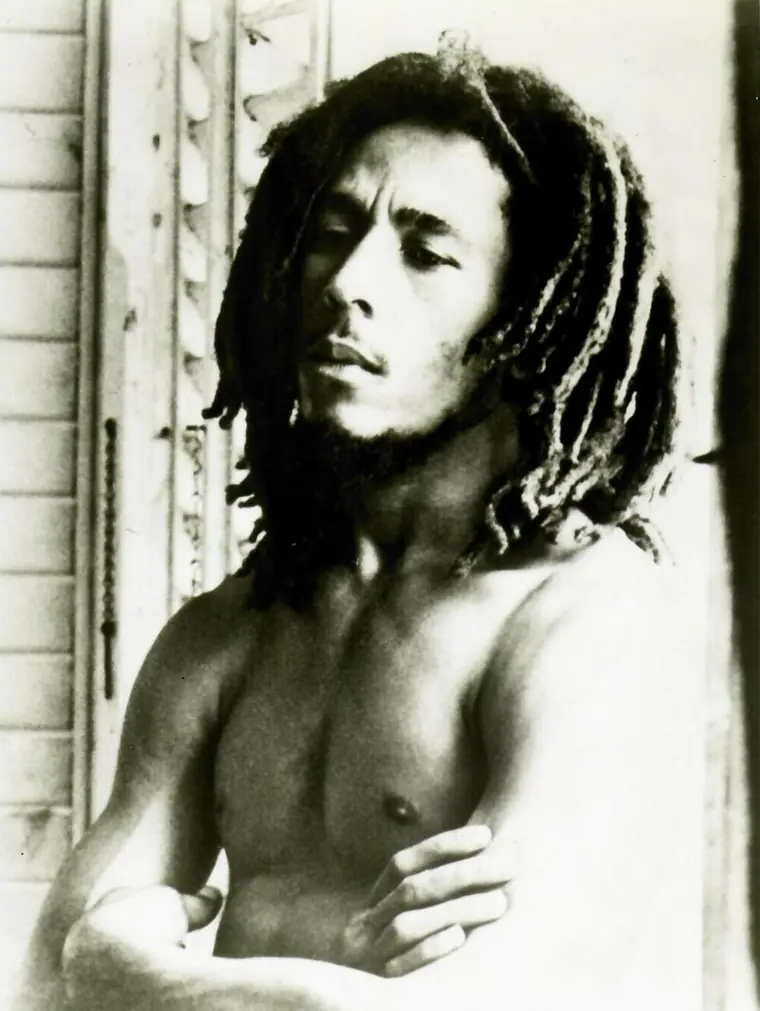
Bob Marley died on May 11, 1981, at Cedars of Lebanon Hospital in Miami, Florida. He was 36. The cancer that killed him had begun as a melanoma under a toenail four years earlier.
That is the Florida fact almost nobody knows about this case, and it is the reason it belongs in this archive rather than someone else's.
He left no will. This was not carelessness. Marley was a Rastafarian, and by consistent account he regarded the making of a will as an unbecoming preoccupation with death and with earthly property. It was a principled position, held by a man who at the time of his death owned one of the most valuable song catalogues on earth.
The result was ten years of administration across three legal systems, a federal RICO verdict in Manhattan, a decade-long fight in the Jamaican courts, and an estate that was reported to be worth roughly $30 million at the death and settled a decade later at $11.5 million.
Jamaica decides, not Florida
Marley was a Jamaican domiciliary. Under Jamaican intestacy law, the estate was reported to divide roughly as follows: 10% outright to the widow, Rita Marley; a life interest in a further 45%; and 45% divided among the surviving children. Accounts of the exact fractions differ, and some coverage described it simply as half to the widow and half to the children — one of several places where the public record on this estate is not clean.
Eleven children were ultimately recognized. They came from several relationships, and establishing who qualified was itself part of the work. So was fending off claims from bandmates, business partners, and a record label.
The Jamaican courts appointed an administrator. Mutual Security Merchant Bank and Trust Company took the role, and the estate's affairs were run by a court-supervised institution rather than by anyone Marley had chosen — because he had chosen no one.
That, in one sentence, is what intestacy costs a person with strong convictions. Marley's objection was to writing a document. The consequence was a bank, a court, and ten years of lawyers deciding what happened to his work.
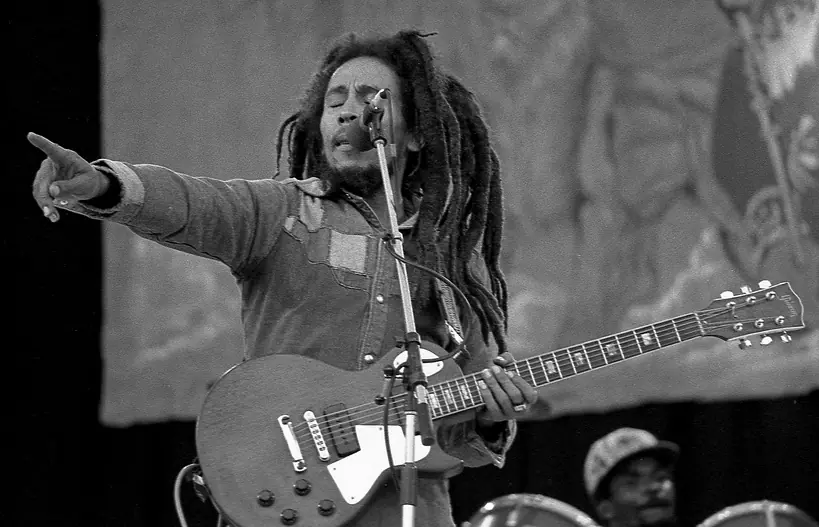
Bingham v. Zolt
Because Marley held assets in the United States, a US ancillary administrator was appointed — J. Reid Bingham — with authority over the American side of the estate. He sued.
The case was tried in the Southern District of New York and went up to the Second Circuit, which decided it on September 28, 1995. The defendants were Marley's accountant, Marvin Zolt, and his attorney, David J. Steinberg.
The allegation was that between 1981 and 1986 the two ran a series of schemes diverting foreign music assets and royalty income away from the estate — moving British Virgin Islands companies that held royalty rights through shell corporations, and concealing roughly $13.4 million. The pivotal documents were three transfers said to bear Bob Marley's signature and pre-dated to June 6, 1978, which if genuine would have moved the assets out of the estate during his lifetime.
The jury found Zolt and Steinberg liable for RICO violations, breach of fiduciary duty, and fraud. Compensatory damages came to $2,861,409.79, including trebled RICO damages, with $1 million in attorney's fees and $250,000 in punitive damages against Steinberg.
Rita Marley was not a defendant in that action. She was a third-party defendant, and separate proceedings concerning the transfers ran in Jamaica. Nothing here should be read as a finding against her; the verdict recorded above was entered against the accountant and the lawyer.
December 9, 1991
The Jamaican side ended on December 9, 1991. The estate's assets were settled at approximately $11.5 million and passed into the management of Island Logic Ltd., the company controlled by Chris Blackwell, the Island Records founder who had signed Marley in the first place.
Under the arrangement, Island Logic would manage the estate for a further ten years, after which it would pass to Marley's widow and his eleven legally recognized children.
Ten years of litigation, a second decade of outside management, and an estate that ended up back with the family in roughly 2001 — twenty years after the death.
The catalogue survived all of it. Legend, the compilation released in 1984, has sold in the tens of millions and is one of the best-selling albums in history. The estate his family eventually took control of was worth vastly more than the $11.5 million figure the court used in 1991. That is the ordinary arithmetic of a long administration: the beneficiaries get the asset back, and the decade goes to the professionals.
Timeline
- May 11, 1981Marley dies at Cedars of Lebanon Hospital in Miami, Florida, at 36. He leaves no will.
- May 21, 1981A state funeral in Jamaica. He is buried at Nine Mile, near his birthplace.
- 1981Jamaican courts open the intestate administration. Mutual Security Merchant Bank and Trust Company is appointed administrator.
- 1981–1986The period later alleged in US federal court to involve diversion of foreign royalty assets from the estate through shell companies.
- 1986–1987J. Reid Bingham, ancillary administrator of the estate in the United States, brings suit in the Southern District of New York.
- Dec 9, 1991The Jamaican settlement: the estate's assets are set at about $11.5 million and pass to Island Logic Ltd., Chris Blackwell's company, to manage for ten years.
- 1993A jury finds accountant Marvin Zolt and attorney David J. Steinberg liable for RICO violations, breach of fiduciary duty, and fraud.
- Sep 28, 1995The Second Circuit decides the appeal, upholding compensatory damages of $2,861,409.79 plus fees and punitive damages against Steinberg.
- c. 2001Management of the estate passes to Rita Marley and the eleven recognized children — twenty years after the death.
What actually went wrong
- No will, on principle. A conviction about death produced a court-appointed bank, a foreign administrator, and a decade of litigation. Beliefs about mortality and instructions about property are separable, and the second one is a form of care for the people left behind.
- No one identified in advance. With no executor named, the choice fell to a court. The people who ended up handling the assets were selected by process, not by trust.
- Eleven children and no acknowledgment on paper. Establishing who was legally a child of the decedent had to be litigated. A will naming each of them by name would have cost one afternoon.
- Assets in three legal systems. Jamaican domicile, US-situs royalty companies, British Virgin Islands entities. Cross-border estates need a plan written before death; afterward, each jurisdiction sends its own bill.
- Total reliance on professional advisers with no oversight. The accountant and the attorney were found liable for diverting assets. An intestate estate has no owner watching. That is exactly the vacuum an independent co-fiduciary is designed to fill.
Would it have gone that way in Florida?
This IS a Florida case — just not a Florida estate. He died here, so Florida had a role. Jamaica had the estate.
Start with the point people get wrong. Dying in Florida does not make you a Florida decedent. What governs the succession to your personal property is your domicile — the place you actually live and intend to remain — not the address of the hospital. Marley died in Miami and was domiciled in Jamaica, so Jamaican intestacy law decided who inherited his catalogue.
Florida's role in a case like this is defined by Fla. Stat. §734.102, the ancillary administration statute. When a nonresident dies leaving assets in Florida, credits due from Florida residents, or liens on Florida property, an ancillary administration is opened here. The statute sets an order of preference: a personal representative named in the will to handle Florida property, then the qualified foreign personal representative, then an alternate named in the will, then a representative selected by a majority in interest, and failing all that, the intestacy rules. A foreign will executed as the Florida code requires is admitted to probate rather than re-proved from scratch.
The ancillary representative then runs a real Florida administration: notice to creditors served and published under Chapter 733, claims barred if not timely filed, expenses and valid claims paid — and only then is the remaining property turned over to the domiciliary representative or directly to the beneficiaries. That is not a formality. It is a second probate, with its own clock and its own fees.
Fla. Stat. §731.106 fills in the rest. It fixes where a nonresident's intangible assets are located for these purposes — a debt is situated where the debtor resides or has its principal office — and it lets a Florida court, in the case of a decedent domiciled in a foreign country, direct the Florida personal representative to distribute directly to the persons entitled under the law of the decedent's own domicile. Florida applies Jamaican answers to Jamaican estates; it just insists on doing the Florida paperwork first.
Now the counterfactual. Had Marley been a Florida domiciliary dying intestate, the arithmetic would have looked nothing like Jamaica's. Under §732.102, a surviving spouse takes the entire intestate estate only if all descendants are descendants of both spouses and neither has other descendants; where the decedent has one or more descendants who are not descendants of the surviving spouse, the spouse takes one-half and the descendants take the other half under §732.103. With eleven children from several relationships, Rita Marley would have taken half outright and the eleven children would have shared the other half — no life estate, no 10% fraction, and no Jamaican formula.
§732.108 would also have mattered enormously. Florida treats a child born outside marriage as a descendant of the father where paternity is established by adjudication, by acknowledgment in writing, or by the parents' subsequent marriage. Eleven children, several relationships, no will — that statute would have carried the entire case.
The practical instruction has two parts, and the second is the one people skip. If you live in Florida, sign a Florida will and record a declaration of domicile under §222.17 so nobody argues later. And if you own property in more than one state or country, plan for each of them — a revocable trust holding out-of-state real property, or an entity that owns it, avoids the second and third probate entirely. Marley's estate needed a Jamaican court, a US federal court, and a Florida ancillary administration, and none of those three could give the others an order.
What people ask us about this.
Further reading
Third-party sites. Not ours, not endorsed, not kept current by us — just the places worth going next.
Sources
- Bob Marley — Wikipedia — death at Cedars of Lebanon Hospital, Miami, May 11 1981
- Bingham v. Rita Marley and Mutual Security Merchant Bank and Trust Company (2d Cir. 1995) — US Court of Appeals for the Second Circuit, via FindLaw
- Bingham v. Zolt, 683 F. Supp. 965 (S.D.N.Y. 1988) — US District Court, S.D.N.Y., via Justia
- This day in history: Bob Marley's estate is settled in court — Caribbean National Weekly
- Celebrity estate plans (part 5): Bob Marley — Archer Estate Law
- Fla. Stat. §734.102 — Ancillary administration — The Florida Senate
- Fla. Stat. §731.106 — Assets of nondomiciliaries — The Florida Senate
- Fla. Stat. §732.102 — Spouse's share of intestate estate — The Florida Senate
If this is your situation
Free 30-minute consult. Plain English. No pressure.
Nearly every case in this archive turned on something ordinary — an unwitnessed page, a stale beneficiary line, a document nobody could find. Those are cheap to fix while you're alive and expensive to fix afterward.