James “Whitey” Bulger
Agents found $822,000 and 30 guns inside the walls of a Santa Monica apartment. A federal court turned that, and everything else he owned, into money for the families of the people he was convicted of killing. Then his own estate became a plaintiff, and lost.
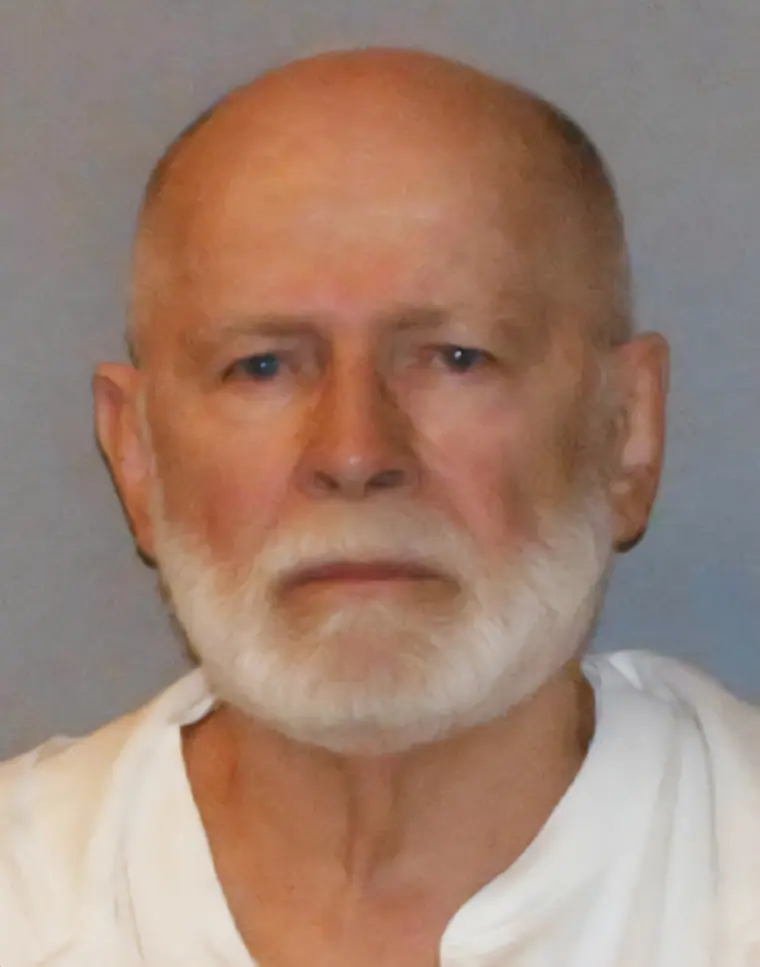
After sixteen years as a fugitive on the FBI's Ten Most Wanted list, James J. “Whitey” Bulger was arrested in Santa Monica, California, on June 22, 2011, in a rent-controlled apartment three blocks from the beach. Agents searching it found about $822,000 in cash and thirty firearms, hidden inside the walls.
On August 12, 2013, a federal jury in Boston convicted him on 31 of 32 counts, including racketeering, and found that he had participated in eleven murders. On November 14, 2013 he was sentenced to two life terms plus five years, ordered to pay $19.5 million in restitution and made subject to a $25.2 million forfeiture judgment.
He died on October 30, 2018, at the age of 89, at the United States Penitentiary at Hazelton in West Virginia, hours after being transferred there. He was killed by other inmates.
This page is about neither the crimes nor the death. It is about the money in the wall — how a court moved it from a criminal case to the families of victims, and what happened when the estate itself walked into a courtroom as the plaintiff.
From the wall to the families
The $25.2 million forfeiture judgment entered at sentencing let the government reach current and future assets, including the cash from Santa Monica — an amount recorded in the court papers to the cent, $821,799.49. The $19.5 million restitution order ran to the families of murder victims and to several extortion victims.
Those two obligations sit in a defined order: the forfeiture judgment is satisfied before restitution. In practice the government agreed to share what it collected with the victims' families, and the court directed the seized cash and Bulger's personal property to be liquidated for their benefit.
The liquidation was, by the standards of the case, small and undignified. In June 2016 his personal property was auctioned in Boston — furniture, a Stanley Cup ring, the contents of a hideout — and raised $109,295, distributed among the families. In February 2014 a judge had already denied a request by the widow of one victim for a larger share than the pro-rata division allowed.
Set the numbers next to each other, because the gap is the honest lesson of the case. Ordered: $44.7 million. Actually recovered from him: under a million. A restitution figure is a measure of harm, not a forecast of payment. Anyone administering an estate that owes restitution should assume the same arithmetic.
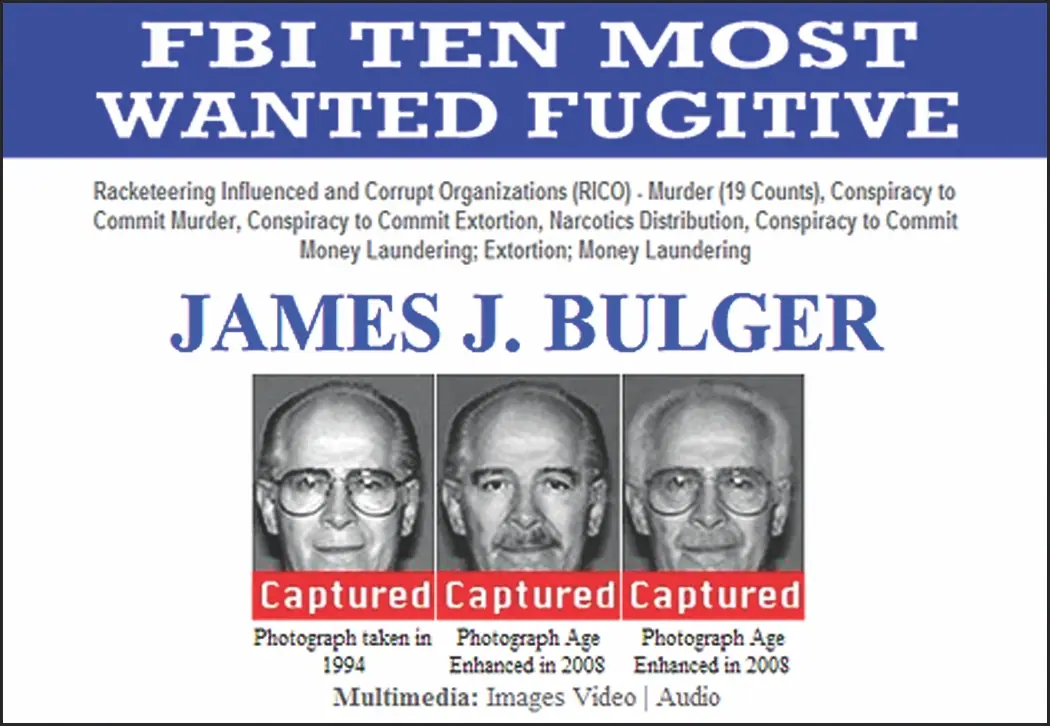
William Bulger Jr., as administrator, v. the United States
In September 2019 the family filed an administrative claim with the Department of Justice under the Federal Tort Claims Act, demanding $200 million. When it was not acted upon, a suit followed on October 30, 2020 — the second anniversary of the death — in federal court in West Virginia.
The plaintiff is the detail worth pausing on. It was William Bulger Jr., the decedent's nephew, as administrator of the estate. Not the family in their own names. The estate. Defendants included the former director of the Bureau of Prisons, the former warden at Hazelton, the former warden at USP Coleman II in Florida — the facility Bulger was transferred from — and roughly thirty unnamed employees. The complaint alleged that he was knowingly placed in danger.
On January 12, 2022, US District Judge John P. Bailey dismissed it. The reasoning had nothing to do with the merits and everything to do with jurisdiction: under the discretionary function exception to the Federal Tort Claims Act, the United States has not consented to be sued over decisions that involve judgment — and decisions about where to house a prisoner, and how to safeguard one, are discretionary.
The estate had the claim. The claim survived the death. And it still could not be heard, because the defendant was a sovereign that had not agreed to be sued about that decision. Survival gets you a plaintiff. It does not get you a cause of action, a defendant who can be sued, or a court with jurisdiction.
Charged in 2022, resolved in 2024
The killing itself went uncharged for nearly four years. In August 2022, three inmates were charged. Plea agreements were disclosed on May 13, 2024.
Fotios Geas pleaded guilty to voluntary manslaughter and assault resulting in serious bodily injury, and was sentenced in September 2024 to 25 years; he was already serving a life sentence. Paul DeCologero, whom both prosecutors and the defence described as having acted as a lookout without assaulting Bulger, was sentenced in August 2024 to just over four years on an assault charge. Sean McKinnon pleaded guilty in June 2024 to lying to FBI agents and received no additional prison time.
Convictions in that case did not revive the civil claim. A criminal conviction establishes what happened; it does not create a waiver of sovereign immunity, and the estate's suit had already been dismissed on jurisdictional grounds two years earlier.
Timeline
- Jun 22, 2011Arrested in Santa Monica after sixteen years as a fugitive. Agents recover about $822,000 in cash and thirty firearms from the apartment walls.
- Aug 12, 2013A federal jury in Boston convicts on 31 of 32 counts and finds participation in eleven murders.
- Nov 14, 2013Sentenced to two life terms plus five years, with $19.5 million in restitution and a $25.2 million forfeiture judgment.
- Feb 2014A judge denies a victim's widow's request for a larger share of the recovered assets than the pro-rata division allows.
- Jun 2016An auction of his personal property in Boston raises $109,295 for the families of victims.
- Oct 30, 2018He dies at USP Hazelton, West Virginia, aged 89, hours after transfer. He was killed by other inmates.
- Sep 2019The family files an administrative Federal Tort Claims Act claim with the Department of Justice for $200 million.
- Oct 30, 2020William Bulger Jr., as administrator of the estate, sues federal officials in West Virginia.
- Jan 12, 2022Judge John P. Bailey dismisses the suit: prisoner housing and safeguarding decisions fall within the discretionary function exception to the FTCA.
- 2024Three inmates resolve charges over the killing. Fotios Geas is sentenced to 25 years; Paul DeCologero to just over four years; Sean McKinnon to no additional time for lying to agents.
What actually went wrong
- A restitution number is not a recovery. $44.7 million was ordered between forfeiture and restitution. Under a million was actually realised from his assets. Families should be told the difference at the start, not at the end.
- Forfeiture is paid before restitution. The order of payment is set by law, not by sympathy, and it is why the practical route to the families ran through the government agreeing to share what it collected.
- Cash in a wall is still traceable and still forfeitable. Hiding assets from creditors and from the government does not defeat a judgment; it only guarantees that the accounting happens after you are no longer there to explain it.
- Survival of a claim is not the same as a viable claim. The estate had standing and a live cause of action, and lost on jurisdiction because the defendant was the United States and the decision complained of was discretionary.
- Somebody has to be appointed before anyone can sue. The wrongful-death claim could only be brought by an administrator of the estate. Opening the estate was a precondition, and in every state it takes time nobody has budgeted for.
Would it have gone that way in Florida?
In Florida the claim would survive the same way — and it would still need a personal representative appointed before anyone could file it.
Start where the Bulger case actually turned, which is standing. Fla. Stat. §46.021 provides that no cause of action dies with the person and that all causes of action survive, to be prosecuted “in the name of the person prescribed by law.” §733.612(20) gives the personal representative the express power to prosecute or defend claims or proceedings in any jurisdiction for the protection of the estate and of the decedent's property, and §733.612(19) lets the representative employ attorneys to do it.
For a death caused by another's wrong, §768.20 goes further and makes it exclusive: a wrongful death action must be brought by the decedent's personal representative, recovering for the benefit of the statutory survivors and the estate. There is no route around it. A grieving family cannot file a wrongful death claim in Florida until somebody has been appointed, which means the probate is not an afterthought to the lawsuit — it is a precondition of it. The wrongful-death limitation period under §95.11 is two years, and it does not pause while a family decides who is going to serve.
The other half of the Bulger story — the estate as defendant — runs on the Chapter 733 claims machine. §733.702 bars a claim not filed by the later of 3 months after the first publication of the notice to creditors or 30 days after service, and §733.710 imposes an absolute 2-year bar from the date of death with no extension. If the estate cannot pay everyone, §733.707 ranks the creditors and puts ordinary judgment creditors in Class 8, at the back.
And the federal obligations do not care about any of that. 18 U.S.C. §3613(b) provides that on the death of a person ordered to pay restitution, the estate is responsible for the unpaid balance and the federal lien continues until the estate receives a written release. 31 U.S.C. §3713(b) makes a personal representative personally liable for paying anyone else ahead of a claim of the United States out of an estate that cannot cover its debts. A representative who distributes to family while a restitution lien is outstanding has taken on the debt personally.
The honest caveat about suing the government. The Bulger claim failed on the discretionary function exception to the Federal Tort Claims Act, and no state statute changes that. Florida has its own version of the same principle: §768.28 waives sovereign immunity for the state and its subdivisions only in defined terms, with damages caps and a pre-suit notice requirement that must be satisfied before filing. A surviving claim against a government defendant is a claim that has to clear an immunity gate first, and missing the notice requirement ends it as thoroughly as any limitation period.
The uncomfortable Florida point, stated straight. Fla. Const. Art. X §4 exempts a Florida homestead from forced sale by creditors with no dollar cap — the limits are acreage only — and the exemption descends to heirs. A victim's family holding a restitution order or a judgment generally cannot force the sale of the family home of the person who harmed them, and that home passes to that person's children still exempt. Judgment debtors have relied on this deliberately for well over a century. It is a fair description of the law rather than an endorsement, and it has limits: it protects the homestead only, and it does not bind the federal government, whose liens attach notwithstanding a state exemption.
What to actually do. If your family may have a wrongful death claim, open the estate and get a personal representative appointed first — the claim cannot be filed without one, and the two-year clock is already running. If a government entity is a defendant, find out what notice is required and serve it before anything else. And if you are administering an estate that owes restitution, do not distribute a dollar until you have a written release or a court order telling you it is safe.
What people ask us about this.

Further reading
Third-party sites. Not ours, not endorsed, not kept current by us — just the places worth going next.
Sources
- Whitey Bulger's $822,000 to be given to victims' families — CBS Boston
- 'Whitey' Bulger auction: $109,295 raised for victims' families — WTKR, Jun 2016
- Judge denies request by widow of Bulger victim for bigger share of mobster's assets — The Boston Globe, Feb 2014
- James 'Whitey' Bulger's family sues US Bureau of Prisons for his brutal murder — The Boston Globe, Nov 2020
- Federal judge dismisses lawsuit filed by Whitey Bulger's relatives alleging prison transfer caused his death — The Boston Globe, Jan 2022
- An ex-Mafia hitman is sentenced to 25 years in the slaying of gangster James 'Whitey' Bulger — CNN, Sep 2024
- Inmate sentenced in prison killing of infamous Boston gangster James 'Whitey' Bulger — CBS News / AP, Aug 2024
- Whitey Bulger's Santa Monica hideout was full of money — GBH News, Feb 2016
If this is your situation
Free 30-minute consult. Plain English. No pressure.
Nearly every case in this archive turned on something ordinary — an unwitnessed page, a stale beneficiary line, a document nobody could find. Those are cheap to fix while you're alive and expensive to fix afterward.