Bruce Lee
He died in 1973 owning the most recognisable silhouette of the twentieth century. Half a century later a federal judge in Manhattan could not decide which country's law governed it, because nobody could establish where he had been living when he died.

Bruce Lee died in Hong Kong on July 20, 1973, at 32. A coroner's inquest returned a verdict of death by misadventure, attributing it to cerebral swelling following a reaction to a painkiller.
He left a widow, Linda, and two young children, Brandon and Shannon. He also left the single most valuable asset in this archive that nobody could hold: a face.
Fifty-three years later, that asset is still generating litigation on two continents. Not because anyone forged a document or hid a will — but because a right of publicity is created by state statute, statutes differ, most of the relevant ones were written after he died, and which one applies depends on a question his estate has never been able to answer cleanly: where did he live?
An asset created after he was already dead
In 1973, the postmortem right of publicity barely existed as a legal concept in the United States. The statutes that now govern it were enacted over the following decades, and each one made its own choices:
- California — Civil Code §3344.1 recognises a descendible postmortem right and runs it for 70 years after death. It was enacted long after 1973 and applied to people who had already died.
- Washington — RCW 63.60 gives an ordinary individual 10 years after death, and a “personality” whose identity has commercial value 75 years. Lee is buried in Seattle.
- Florida — Fla. Stat. §540.08 has protected name, portrait, photograph and likeness since 1967 and expressly extends the right 40 years after death, enforceable by a surviving spouse, surviving children, or a licensee or assignee.
- Hong Kong — no equivalent statutory postmortem publicity right at all; commercial control there runs through trade marks, copyright, and passing off.
American courts generally apply the law of the decedent's domicile at death to decide whether a postmortem publicity right exists and who owns it. So the whole question — is there an asset, is it descendible, how long does it last — collapses into a single factual issue about a man's residence in the summer of 1973.
That question has never been resolved.
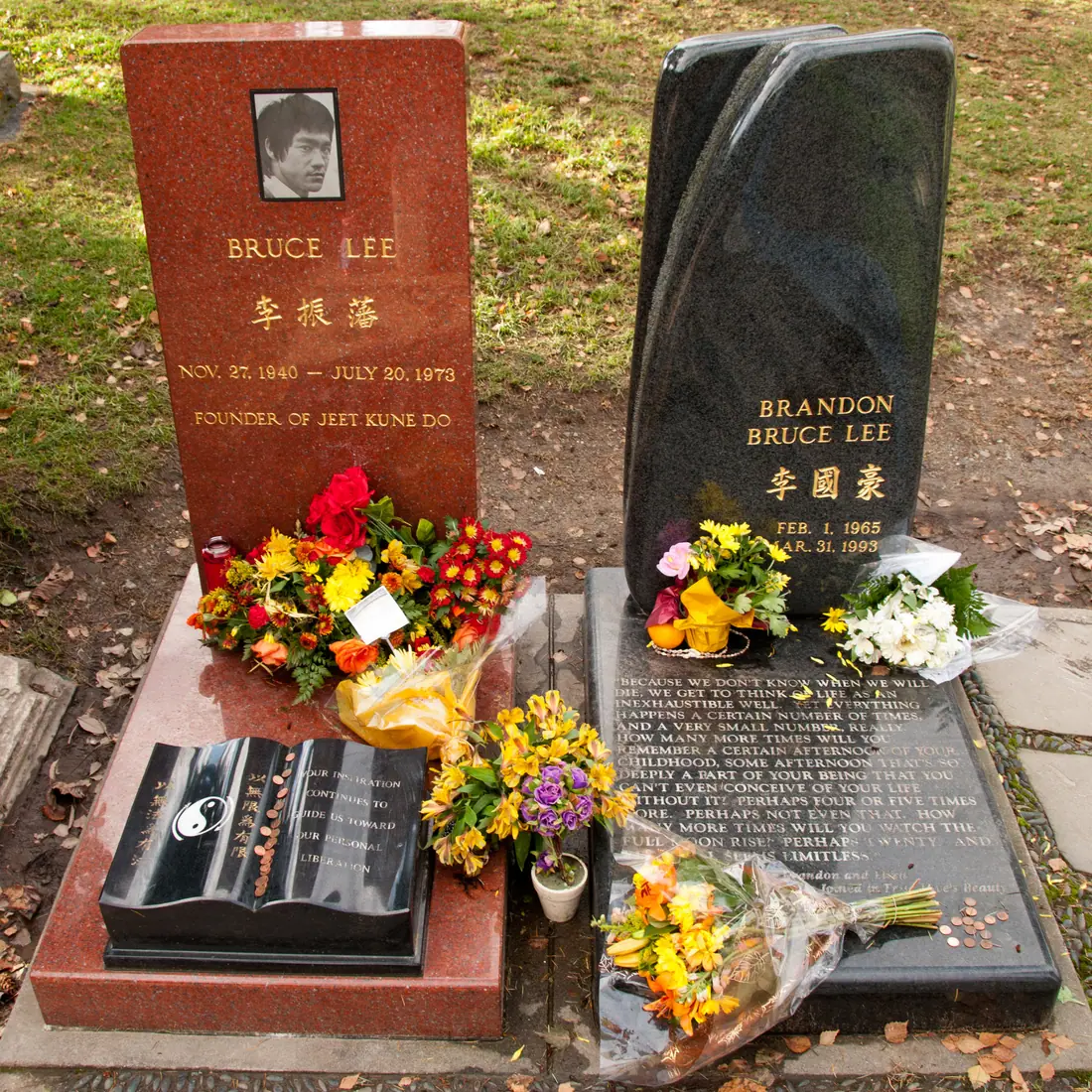
A federal judge who could not decide which country he lived in
Shannon Lee, his daughter, consolidated the family's rights into Bruce Lee Enterprises, LLC. In 2008 the interests of a predecessor entity, Concord Moon, were assigned to BLE, which she wholly owns.
BLE sued A.V.E.L.A., Inc., its principal Leo Valencia, and retailers including Urban Outfitters and Target, over t-shirts bearing Lee's image. The case was docketed in the Southern District of New York as No. 10-cv-2333, and the court ruled on summary judgment in March 2013.
The ruling is a museum piece of everything that can go wrong with an inherited intangible. As reported in contemporaneous legal commentary, the court found genuine issues of fact about whether Lee was domiciled in California or Hong Kong when he died — which determined which law governed the postmortem right — and held that BLE had not sufficiently established its chain of title to the publicity rights at that stage. Some claims survived and some did not. A preliminary injunction was denied for failure to show irreparable harm.
Read that again. Forty years after the death, in a dispute over one of the most commercially exploited images on earth, a federal court could not say who owned the right or which sovereign's law created it.
Neither of those failures is about fame. Both are about paperwork. Domicile is provable — with a tax filing, a voter registration, a driver's licence, a declaration. Chain of title is provable — with a written assignment, signed and dated, from each holder to the next. Nobody assembled either record while there was still someone alive who could have signed it.
A restaurant logo and 210 million yuan
In December 2019, Bruce Lee Enterprises filed suit in Shanghai against the Chinese fast-food chain Real Kungfu (Zhen Gongfu), whose logo depicts a figure in a fighting stance that BLE alleged appropriates Lee's likeness. The chain had used the mark for years.
The claim sought 210 million yuan — roughly $30 million at the time — calculated, according to reporting, at 14 million yuan a year over fifteen years, benchmarked against another performer's endorsement fees. BLE also asked the court to order the chain to stop using the image, to publish a clarifying statement for 90 consecutive days, and to pay 88,000 yuan in costs.
The company publicly disputed the claim. A hearing was reported in 2022. As of August 2026, no final judgment in that case has been publicly reported.
So: a man who died in 1973 has an active commercial dispute in 2026 over whether a restaurant sign looks like him. That is the closing argument for treating a likeness as an estate asset rather than as a memory.
Timeline
- Jul 20, 1973Bruce Lee dies in Hong Kong at 32. A coroner's inquest returns a verdict of death by misadventure.
- 1970sLinda Lee Cadwell administers the estate, litigating over film rights, insurance and Lee's stake in his production company.
- 1985California enacts a descendible postmortem right of publicity, later codified as Civil Code §3344.1 and extended to 70 years — applying to people already dead.
- 1998Washington enacts RCW 63.60, giving a “personality” a 75-year postmortem right.
- Jun 2008The interests of a predecessor entity are assigned to Bruce Lee Enterprises, LLC, wholly owned by Shannon Lee.
- 2010BLE sues A.V.E.L.A., Inc., Leo Valencia, Urban Outfitters and Target in the Southern District of New York over t-shirts bearing Lee's image.
- Mar 2013The court rules on summary judgment: material factual disputes remain over whether Lee was domiciled in California or Hong Kong, and BLE has not sufficiently established chain of title.
- Jul 2013Forty years after the death — the point at which a Florida-domiciled Lee's §540.08 right would have expired.
- Dec 2019BLE sues the Real Kungfu restaurant chain in Shanghai, seeking 210 million yuan over its logo.
- Aug 2026No final judgment in the Shanghai case has been publicly reported.
What actually went wrong
- Domicile never established. The one fact that decides whether a postmortem publicity right exists at all was left to be litigated forty years later by people who were not there.
- No written chain of title. Rights moved between individuals and entities over decades without a clean, signed assignment at each step — so the owner had to prove ownership in court instead of producing a document.
- An asset that did not legally exist yet. The publicity statutes were written after 1973. Nothing in the estate documents could name a right nobody had invented, which is precisely why estate plans need catch-all language for intellectual property and future rights.
- No entity created in his lifetime. An LLC or trust holding the name, likeness, marks and copyrights, formed and funded while the owner is alive, makes all of the above unnecessary.
Would it have gone that way in Florida?
Florida would have given him a clean statutory right — and then ended it in July 2013.
Florida's answer here is unusually crisp, and it cuts both ways.
Fla. Stat. §540.08 has been on the books since 1967 — six years before Lee's death, which already makes it better than California's or Washington's, both enacted long after. It prohibits the unauthorized publication or commercial use of any person's name, portrait, photograph or likeness without consent, and it expressly extends the right for 40 years after death, enforceable by a surviving spouse, surviving children, or a licensee or assignee. A Florida-domiciled Bruce Lee would have had a statutory right that existed on the day he died, with a named class of people entitled to enforce it. No retroactivity argument, no question whether the right was descendible.
And then it would have run out. Forty years from July 20, 1973 is July 20, 2013 — four months after the Southern District of New York issued its summary-judgment ruling. Every enforcement action after that date would have to rest on something other than §540.08. Florida is generous for four decades and then, deliberately, stops. Washington's 75-year term for a “personality,” or California's 70 years, would still be running today.
The domicile point is the transferable lesson. Courts apply the law of the decedent's domicile at death to decide whether a postmortem publicity right exists and who holds it. Florida gives residents a specific tool for nailing that down: Fla. Stat. §222.17 allows a person to file a sworn declaration of domicile with the clerk of the circuit court, stating that Florida is their predominant and principal home. It is one page. It costs almost nothing. It is signed, dated, sworn, and time-stamped by a court clerk — which is exactly the kind of evidence the Bruce Lee estate spent years not having. For snowbirds, dual-residence families, and anyone who moved late in life, it is among the highest-value documents in a Florida file.
What actually protects a likeness past year forty. Federal trade mark rights under the Lanham Act have no expiry date so long as the mark stays in use and the registrations are maintained — which is why serious estates convert a name, a signature, and a stylised image into registered marks and keep using them commercially. Copyright in photographs, films and writings runs on its own clock and is separately assignable. A well-built plan layers all three: statutory publicity for the finite term, trade marks for the indefinite one, and copyright for the works.
The honest caveat. §540.08 protects commercial use. It contains carve-outs for news, public affairs, and bona fide news reporting, and the First Amendment does substantial additional work. It does not let an estate control biography, criticism, documentary, or scholarship — nor should it.
The practical instruction: if your name or image has commercial value, put it in an entity now. Form an LLC or fund a trust, assign the rights to it by signed written assignment, register the marks, keep the assignment chain in one file, and — if you are a Floridian — record a §222.17 declaration of domicile. Every one of those steps is cheap while you are alive and close to impossible after you are not.
What people ask us about this.

Further reading
Third-party sites. Not ours, not endorsed, not kept current by us — just the places worth going next.
Sources
- Bruce Lee right of publicity claims survive summary judgment — Rebecca Tushnet's 43(B)log, Mar 2013
- Bruce Lee Enters., LLC v. A.V.E.L.A., Inc., No. 10-cv-2333 (S.D.N.Y.) — Leagle
- Bruce Lee's daughter sues Chinese fast-food chain for using late kung fu master's image — NBC News, Dec 2019
- Bruce Lee's daughter sues fast-food chain — Sixth Tone, Dec 2019
- Real Kungfu plans to take on Bruce Lee Enterprises in court — China Daily, Dec 2019
- Shanghai court conducts hearing on Bruce Lee's personality rights lawsuit — The Epoch Times, 2022
- Washington right of publicity law — Digital Media Law Project
- Fla. Stat. §540.08 — Unauthorized publication of name or likeness — The Florida Senate
If this is your situation
Free 30-minute consult. Plain English. No pressure.
Nearly every case in this archive turned on something ordinary — an unwitnessed page, a stale beneficiary line, a document nobody could find. Those are cheap to fix while you're alive and expensive to fix afterward.