Florida homestead
No dollar cap. No forced sale. The most generous homestead protection in the country — and a constitutional restriction that can quietly void the single most important gift in your will. Three Florida appellate decisions show exactly how the same clause does both jobs.
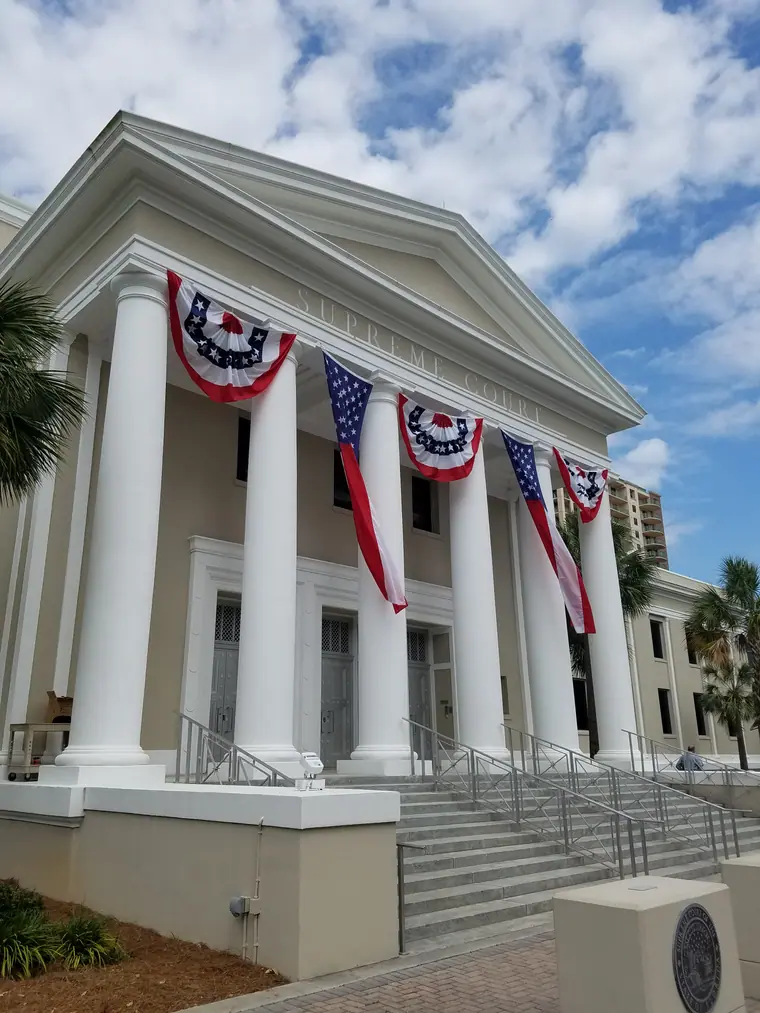
Homestead protection has been in the Florida Constitution since 1868, and the language has stayed remarkably stable through every revision since, including the 1968 rewrite that produced the current Article X, Section 4.
That one section does three separate jobs, and people who confuse them get hurt. It grants a property-tax exemption. It grants an exemption from forced sale by creditors, with no cap on value and only three exceptions — taxes and assessments, obligations for the purchase, improvement, or repair of the property, and obligations for house or field labor performed on it. And it imposes restrictions on alienation and devise.
The first two are the shield. Everybody in Florida has heard of them. The third is the trap, and almost nobody has, until a probate judge explains it.
The trap is a single sentence: the homestead shall not be subject to devise if the owner is survived by a spouse or a minor child, except that it may be devised to the spouse if there is no minor child. That is Art. X, §4(c), restated in Fla. Stat. §732.4015. It does not care what your will says. It does not care what your trust says. It is not a rule of construction that yields to intent. It is a limit on power.
How far the protection actually reaches
Two Florida Supreme Court decisions define the outer edge of the shield, and both went the homeowner's way.
In Snyder v. Davis, 699 So. 2d 999 (Fla. 1997), Betty Snyder devised her homestead to her granddaughter Kelli. Kelli's father — Betty's son Milo — was alive, which meant that under the intestacy statute Milo, not Kelli, would have been the heir. The personal representative argued that the exemption from forced sale therefore did not inure to Kelli, and moved to sell the house to pay creditors, administration costs, and cash bequests. The Fourth District agreed with him.
The Florida Supreme Court did not. It held that the exemption passes to a devisee who is within the class of persons who could take under the intestacy statute, whether or not that person would actually have been the heir on the date of death. A granddaughter is in the class. The house was protected.
In McKean v. Warburton, 919 So. 2d 341 (Fla. 2005), Henry Pratt McKean II died leaving no spouse and no minor children. His will made cash bequests — $20,000 to one person, $150,000 to his nephew Peter Warburton — and left the residue to his four half-brothers. He owned a condominium that was his homestead; it netted $141,000. Everything else he owned came to about $10,000, against roughly $14,000 in debts plus fees.
The certified question was whether unspecifically-devised homestead passes to general devisees before residuary devisees. The Supreme Court answered no. Protected homestead exists outside the probate estate; a residuary clause is a sufficiently precise expression of intent to carry it; and only an explicit direction to sell the homestead and pour the proceeds into the general estate strips the protection. The $141,000 went to the four half-brothers. The $150,000 bequest got nothing from it.
A trust cannot outrank a constitution
Now the other side, and the case that made it famous.
In Aronson v. Aronson, 81 So. 3d 515 (Fla. 3d DCA 2012), Hillard Aronson created a revocable trust in July 1996 and deeded a Key Biscayne condominium into it as trustee. In December of that year he deeded the same unit to his wife Doreen by quitclaim — a deed the Third District invalidated in an earlier appeal in 2006. He and Doreen later moved into the condominium, and it became his homestead. He died survived by Doreen and by two adult sons from a prior marriage.
The trust said Doreen would take a life interest and the sons would take the remainder. The sons, as successor trustees, moved to sell.
They could not. Because the unit was Hillard's homestead and he was survived by a spouse, it was not subject to disposition by the trust at all. Under §732.4015(2), a “devise” includes a disposition by trust of the portion of the trust estate that would have been the grantor's homestead if titled in his own name, and an “owner” includes the grantor of a revocable trust. Putting the house in a trust does not move it outside the constitutional restriction; it just changes whose signature is on the deed.
The Third District's phrase for what happened at the moment of death was “in a twinkle of an eye.” The homestead passed instantly, outside the trust and outside probate, to Doreen for life with a vested remainder in the two sons — and from that instant, the trustees had no power or authority over it whatsoever.
What actually happens when you devise it anyway
The devise does not fail into the residuary. It does not fail into intestacy generally. It is replaced by a specific statutory outcome under §732.401.
- Surviving spouse and descendants. The spouse takes a life estate, with a vested remainder to the decedent's descendants in being at the date of death, per stirpes. That is the default.
- Or the spouse elects out. Since 2010, under §732.401(2), the surviving spouse may instead elect an undivided one-half interest as tenant in common, with the other half vesting in the descendants per stirpes. The election must be filed for recording within 6 months after the decedent's death and during the spouse's lifetime, and it is irrevocable once made.
- Surviving spouse and no descendants. The homestead may be devised to the spouse. If it was not, it descends to the spouse.
- A minor child survives. The homestead may not be devised at all — not even to the spouse. This is the hardest version of the rule, and it catches young families constantly.
- Tenancy by the entireties and joint tenancy with survivorship are outside §732.401 entirely. The survivor takes by title, and the descent statute never engages.
The 2010 election exists because the life estate is frequently a bad deal for the person it was meant to protect. A life tenant carries the taxes, the insurance, the maintenance, and the association dues, cannot sell without the remaindermen's cooperation, and cannot easily borrow against the property. A surviving spouse can end up house-rich, cash-poor, and legally tied to their late spouse's adult children. Six months to decide, and then never again.
The two paths that actually work
There are exactly two clean ways to direct Florida homestead somewhere the restriction would otherwise block, and both have to happen while everyone is alive.
The waiver. Homestead devise rights can be waived by the spouse — in a prenuptial or postnuptial agreement under §732.702, or, more simply, in the deed itself under §732.7025, which supplies the operative sentence: By executing or joining this deed, I intend to waive homestead rights that would otherwise prevent my spouse from devising the homestead property described in this deed to someone other than me. Note the limits. That waiver does not surrender the creditor protection, and it does not let the owner mortgage, sell, or give the property away without the spouse's joinder. It waives one thing: the restriction on devise.
The lifetime transfer. Under §732.4017, an inter vivos transfer of homestead — including a transfer into a trust — is not a devise, provided the transferor retains no power, alone or with anyone else, to revoke or revest the interest. A revocable trust fails that test by definition, which is exactly why Aronson came out the way it did. An irrevocable transfer can succeed. So can an enhanced life estate deed, the Florida “lady bird” deed, which conveys the remainder now while leaving the owner full control for life.
If neither applies, and a spouse or minor child will survive, the honest planning move is to stop fighting the restriction and route the intended gift through a different asset — life insurance, a brokerage account with a beneficiary designation, or the residuary — while the homestead goes where the Constitution sends it.
Timeline
- 1868Homestead protection enters the Florida Constitution — protection from forced sale limited by area rather than by value, a choice that still distinguishes Florida from nearly every other state.
- 1968The constitutional revision produces the current Article X, Section 4: tax exemption, exemption from forced sale, and restrictions on alienation and devise, in one section.
- 1997Snyder v. Davis: the creditor exemption inures to a devisee within the class of intestate takers, even if that person would not have been the actual heir.
- 2005McKean v. Warburton: with no spouse and no minor children, unspecifically-devised homestead passes to the residuary devisees, not to general devisees. The $141,000 condominium never reaches the $150,000 bequest.
- 2010Chapter 2010-132 adds §732.401(2): the surviving spouse may elect an undivided one-half interest as tenant in common instead of the life estate, within 6 months of death.
- 2012Aronson v. Aronson: a revocable trust cannot dispose of homestead where a spouse survives. Title vests “in a twinkle of an eye,” and the successor trustees have no power to sell.
- Today
What actually went wrong
- Treating the trust as the answer. Funding a revocable trust with the homestead does nothing about the devise restriction. §732.4015(2) defines “owner” to include the grantor of a revocable trust and “devise” to include a disposition by that trust. Aronson is the case that says so out loud.
- Assuming the spouse's life estate is a gift. A life tenant pays the taxes, insurance, and upkeep on a house they cannot sell alone. For a surviving spouse with limited liquidity and adult stepchildren as remaindermen, it can be the worst available outcome — which is why the 2010 election exists, and why the six-month clock matters.
- Missing the six-month election window. §732.401(2)–(3) require the notice of election to be filed for recording within 6 months of death and during the spouse's lifetime, and the election is irrevocable. There is no late-filing provision.
- Forgetting minor children. With a minor child surviving, the homestead cannot be devised to anyone — including the surviving spouse. Young families routinely sign wills that purport to do exactly that.
- A waiver that was never signed, or signed too narrowly. §732.7025 supplies deed language that waives the devise restriction only. It does not waive the elective share, the creditor exemption, or the joinder requirement for a sale or mortgage. Each of those is a separate waiver in a separate document.
Would it have gone that way in Florida?
This IS the Florida rule — and the restriction on devise is the part nobody sees coming.
Fla. Const. Art. X, §4 protects up to 160 contiguous acres outside a municipality, or half an acre within one, with no cap on value, from forced sale by creditors — subject only to taxes and assessments, obligations for the purchase, improvement, or repair of the property, and obligations for house or field labor on it. That is the shield, and it is the most generous in the country.
The same section restricts devise. §732.4015(1) states it plainly: the homestead is not subject to devise if the owner is survived by a spouse or minor child, except that it may be devised to the spouse if there is no minor child. §732.4015(2) closes the trust workaround by defining “owner” to include the grantor of a revocable trust and “devise” to include a disposition by that trust of what would have been the grantor's homestead.
When a devise violates the restriction, §732.401 supplies the replacement. With a spouse and descendants, the spouse takes a life estate and the descendants take a vested remainder in being at the date of death, per stirpes — unless the spouse files a notice of election within 6 months taking an undivided one-half interest as tenant in common instead, which vests the other half in the descendants. The election is irrevocable. Property held as tenancy by the entireties or in joint tenancy with rights of survivorship is outside §732.401 entirely; the survivor takes by title.
Two escape routes, both requiring action during life. §732.7025 lets a spouse waive the devise restriction in the deed itself, using statutory language it supplies verbatim — but that waiver does not touch the creditor exemption and does not eliminate the requirement that the spouse join in any sale or mortgage. §732.4017 provides that an inter vivos transfer, including into a trust, is not a devise so long as the transferor keeps no power to revoke or revest the interest. A revocable trust cannot satisfy that condition. That is the whole holding of Aronson in one sentence.
The honest caveat, and it cuts against the trap: none of this applies unless the property actually was the decedent's homestead at death — actual residence with intent to make it a permanent home. A vacation house is not homestead. A rental is not homestead. And where there is no surviving spouse and no minor child, as in McKean, the restriction on devise disappears entirely and you may leave the house to anyone you like; the creditor exemption then depends on whether the devisee is within the class of intestate takers, which is what Snyder decided.
The practical instruction: open your will and find the paragraph that gives away the house. Then ask whether a spouse or a minor child will survive you. If the answer is yes and the beneficiary is anyone other than the spouse — a trust, a child from a first marriage, a charity, a sibling — that paragraph is currently void, and the Constitution has already decided what happens instead. Fix it with a §732.7025 deed waiver, a properly drafted enhanced life estate deed, or a different asset. Do not fix it by rewriting the will.
What people ask us about this.

Further reading
Third-party sites. Not ours, not endorsed, not kept current by us — just the places worth going next.
Sources
- Fla. Const. Art. X, §4 — Homestead; exemptions — The Florida Senate
- Fla. Stat. §732.4015 — Devise of homestead — The Florida Senate
- Fla. Stat. §732.401 — Descent of homestead — The Florida Senate
- Fla. Stat. §732.4017 — Inter vivos transfer of homestead property — The Florida Senate
- Fla. Stat. §732.7025 — Waiver of homestead rights through deed — The Florida Senate
- McKean v. Warburton, 919 So. 2d 341 (Fla. 2005) — FindLaw Caselaw
- Snyder v. Davis, 699 So. 2d 999 (Fla. 1997) — Justia
- Aronson v. Aronson, 81 So. 3d 515 (Fla. 3d DCA 2012) — Adrian Philip Thomas, P.A., Jul 2012
- A life estate the spouse can't afford: Florida homestead trap cured by new law — Florida Trust & Probate Attorneys Blog, Oct 2010
If this is your situation
Free 30-minute consult. Plain English. No pressure.
Nearly every case in this archive turned on something ordinary — an unwitnessed page, a stale beneficiary line, a document nobody could find. Those are cheap to fix while you're alive and expensive to fix afterward.