T.M. Zink
An Iowa lawyer left five dollars to his daughter and the rest of his estate to sit for 75 years, then build a library that no woman could enter and no woman's work could sit on the shelves. His daughter had the will set aside inside five months.
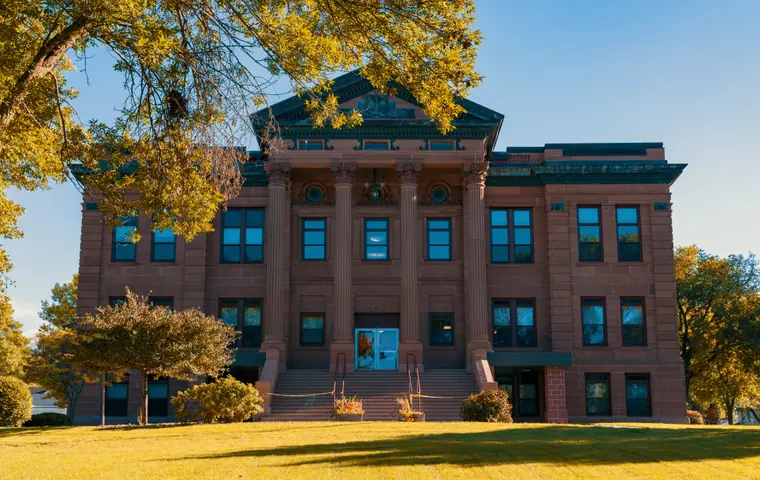
Townsend Murphy Zink was a lawyer in Le Mars, Iowa. He was born in 1858 and died on September 11, 1930, at 71. Eight weeks earlier, on July 18, 1930, he had executed a will.
It left five dollars to his daughter, Margretta. It left nothing to his wife, Ida, beyond an option to rent a house at $40 a month — he had a prenuptial agreement and relied on it. Everything else was to go into trust and accumulate for seventy-five years, at which point the fund would be used to build and stock a library.
The library had rules, and Zink wrote them out. No woman was to be admitted at any time, under any pretence or for any purpose. No book, chart, magazine, work of art, or picture was to be inside or outside the building unless it had been produced by a man. Signs reading NO WOMAN ADMITTED were to be carved in stone over every entrance.
The will also explained itself, which is rarely a good sign in a will. Zink wrote that his intense hatred of women was not of recent origin but the result of his experiences, his observations, and his study of all literature.
Five months from probate to nothing
Zink died on September 11. On October 14, 1930 — thirty-three days later — his daughter's lawyer filed an objection to the will in district court.
The petition raised nine separate grounds. They ranged from the technical to the frankly rhetorical, and included the claim that Zink had been of unsound mind and not capable of making such a will, and the claim that the document was an insult to American womanhood.
The medical evidence carried the case. Dr. George Donahoe testified for the contestant, describing Zink's condition in terms of a specific pathology rather than mere eccentricity. That is the crucial move in any capacity case: not this instruction is strange, but this instruction is a symptom.
On March 7, 1931, Judge C.W. Pitts held the will invalid. Zink was declared to have died intestate, and Margretta took the estate as sole heir. The whole matter took five months from the filing of the objection.

There was almost nothing to inherit
The library was never built, and the fortune the will was built around turned out to be substantially imaginary.
By the time the estate was actually administered, the Depression had reduced its value to roughly $10,000. Legal costs came out of that. A liability judgment of about $1,000 came out of what was left.
Then, in 1935, came the detail that retires the whole story: it emerged that Zink had transferred property to his daughter back in 1920. It had been hers the entire time. The estate she had fought five months to inherit was, in significant part, already her own property.
Zink spent the last weeks of his life drafting an instrument designed to project a grievance seventy-five years into the future. It survived him by 176 days.
Timeline
- Jul 18, 1930T.M. Zink executes a will leaving $5 to his daughter Margretta, nothing to his wife Ida beyond a rental option, and the residue to accumulate 75 years to build a library barring all women and all work by women.
- Sep 11, 1930Zink dies at Le Mars, Iowa, aged 71.
- Oct 14, 1930Margretta's attorney files an objection in district court on nine grounds, including that Zink was of unsound mind and not capable of making the will.
- Winter 1930–31Dr. George Donahoe testifies for the contestant as to Zink's mental condition.
- Mar 7, 1931Judge C.W. Pitts holds the will invalid. Zink is declared to have died intestate and Margretta takes as sole heir.
- 1931–1935The estate, reduced by the Depression to roughly $10,000, is further reduced by legal costs and a liability judgment of about $1,000.
- 1935It emerges that Zink had transferred property to his daughter in 1920. Much of what the fight was about had been hers all along.
What actually went wrong
- The will argued its own case for invalidity. Zink wrote his motive into the document in the language of a fixation. That paragraph was the contestant's best exhibit, and he drafted it himself.
- A five-dollar bequest is not a defence. Leaving a token sum to prove the child was not forgotten does nothing about capacity, and it guarantees the child has both standing and a reason to file.
- A charitable purpose no court would supervise. A trust that instructs a trustee to run an institution excluding half the population is not a charity a court can administer. The purpose was defective independent of the capacity problem.
- Seventy-five years of accumulation against an estate that could not survive one. The Depression cut the estate to about $10,000 within a year. The document was engineering a multi-million-dollar future on a fund that no longer existed.
- A will executed eight weeks before death. Late execution is not by itself suspicious, but it narrows the window in which a court has to assess the testator's mind, and it gives every witness's account of those weeks decisive weight.
Would it have gone that way in Florida?
Same result in Florida — and it would probably take less than five months.
Two independent grounds would sink this will in a Florida probate, and either one is sufficient.
First, capacity. §732.501 permits a will to be made by any person 18 or older who is of sound mind. Florida's standard is not high — a testator must generally understand the nature and extent of their property, the natural objects of their bounty, and the practical effect of the document. Eccentricity is not incapacity, and Florida courts enforce plenty of wills that other people find repellent.
But Florida, like Iowa, recognises that a will can be the product of a fixed false belief that no evidence would dislodge, and that a testamentary provision flowing from such a belief does not reflect a sound mind. A document reciting an intense hatred of an entire category of people as its stated reason for disposing of an estate is exactly the fact pattern that produces medical testimony and an adverse finding.
§733.107 sets out how that fight runs procedurally, and the sequencing matters. The proponent of the will establishes prima facie its formal execution and attestation — a self-proving affidavit under §732.503 does this on paper, without live witnesses. Then the burden shifts to the contestant to establish the grounds on which probate is opposed. So a contestant in Florida does not get a free swing; they have to prove incapacity. In Zink's case they would have, because the will proved most of it for them.
Second, the trust purpose. §736.0404 provides that a trust may be created only to the extent its purposes are lawful, not contrary to public policy, and possible to achieve. A trust directing that a facility exclude women, exclude works by women, and carve exclusion into the stonework is contrary to public policy on its face, and a facility open to the public would run into federal and Florida public-accommodation law besides. No Florida court would appoint a trustee to run it.
The honest caveat: striking the offensive condition does not automatically hand the money to the family. Where a charitable trust's particular purpose is unlawful or impracticable, §736.0413 permits a court to apply cy pres and redirect the fund to a charitable purpose consistent with the settlor's general charitable intention — here, plausibly, a library. The reason Zink's daughter took the whole estate is that the will was invalidated for incapacity, which killed the charitable gift along with everything else. Had the will been valid and only the condition offensive, the likelier Florida outcome is a library that admits everyone, not an inheritance.
The practical instruction runs both ways. If you are drafting: state what you want, not why you resent someone. A will is not a letter. Reasons in the document are evidence against it, and a separate, contemporaneous physician's assessment on the day of signing is worth more than any paragraph of justification. If you are contesting: Florida gives you a real burden to carry under §733.107, and strangeness alone will not carry it. You need evidence about the testator's mind, from people who saw it.
What people ask us about this.
Further reading
Third-party sites. Not ours, not endorsed, not kept current by us — just the places worth going next.
Sources
- Le Mars Trilogy: Part 1 — T.M. Zink's library — Useless Information Podcast
- The Zink Womanless Library — Futility Closet, July 2011
- Inside T.M. Zink's controversial will — Commonplace Fun Facts, September 2024
- Fla. Stat. §732.501 — Who may make a will — The Florida Senate
- Fla. Stat. §733.107 — Burden of proof in contests; presumption of undue influence — The Florida Senate
- Fla. Stat. §736.0404 — Trust purposes — The Florida Senate
- Fla. Stat. §736.0413 — Cy pres — The Florida Senate
If this is your situation
Free 30-minute consult. Plain English. No pressure.
Nearly every case in this archive turned on something ordinary — an unwitnessed page, a stale beneficiary line, a document nobody could find. Those are cheap to fix while you're alive and expensive to fix afterward.