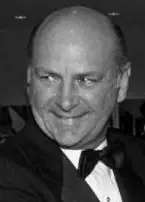
H. Wayne Huizenga
He built three Fortune 500 companies and owned three professional sports franchises. Forbes put him at $2.8 billion. When he died in Fort Lauderdale in 2018, the public record produced a probate file, a deed, and an auction result — and essentially nothing else. That is not an accident. It is Florida law working as designed.
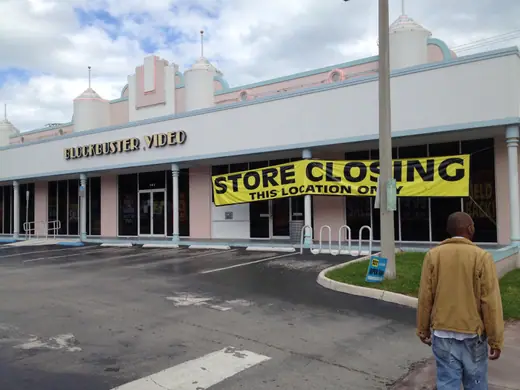
Harry Wayne Huizenga Sr. was born in Evergreen Park, Illinois, on December 29, 1937, and started with one garbage truck in 1968. He turned that into Waste Management, which went public in 1972. Beginning in 1987 he took a handful of video-rental stores and turned them into Blockbuster, which he sold in 1994. In 1995 he built AutoNation into the largest automotive retailer in the country. Three Fortune 500 companies, one founder — a distinction almost nobody else in American business holds.
He also collected teams. He bought into the Miami Dolphins in 1990 and took full control in 1994, having purchased the franchise from the children of its founder — a family whose own estate-tax problem is the reason it was for sale at all. He created the Florida Marlins in 1993 and sold them in November 1998, a year after they won the World Series. He created the Florida Panthers in 1993 and sold them in June 2001.
In February 2008 he sold half the Dolphins and the stadium to Stephen M. Ross for $550 million, and a further 45% the following January.
Forbes put his net worth at $2.8 billion in 2017. His wife of forty-five years, Marti, died of cancer on January 3, 2017. He died at his Fort Lauderdale home on March 22, 2018, at 80, and is buried at Evergreen Cemetery in Fort Lauderdale.
Four days, one file, and a silence
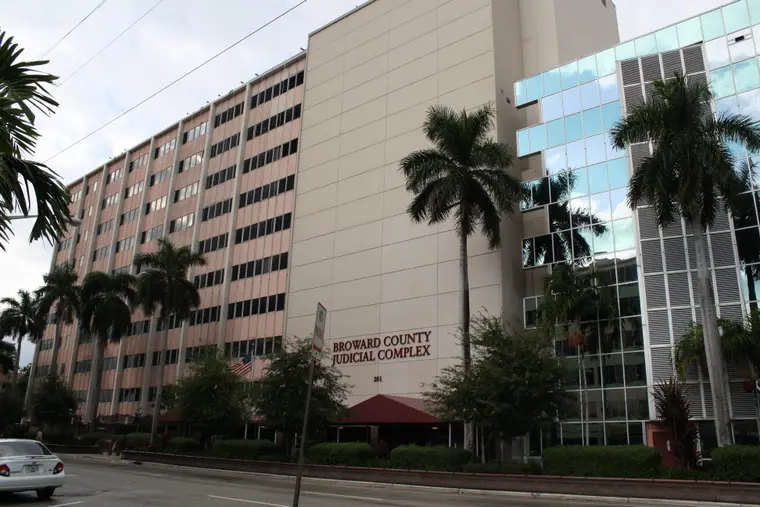
A probate matter styled In re: Estate of Huizenga, H. Wayne, Sr. was opened in the Seventeenth Judicial Circuit in Broward County on March 26, 2018 — four days after his death — before Judge Kenneth Gillespie. Its docket classification is the flattest in the system: Probate, Other.
That is a substantial share of what the public record says about a $2.8 billion fortune.
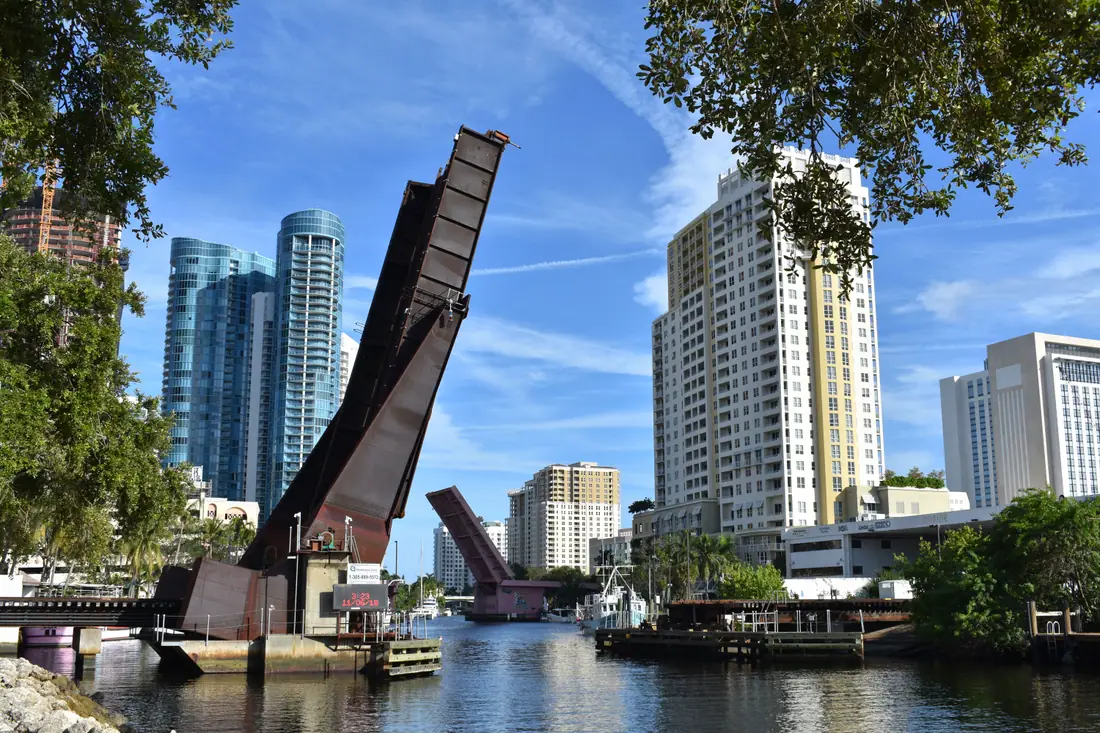
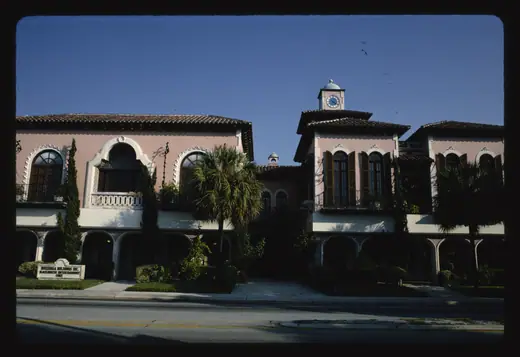
The rest of what became public was not filed by anyone. It was recorded. His riverfront Fort Lauderdale compound, Tarpon Pointe at 1575 Ponce de Leon Drive — 1.41 acres, a 20,653-square-foot main residence plus four more buildings, ten bedrooms, eighteen bathrooms, and 590 feet of frontage on the New River — was listed at roughly $27 million and then sold at auction without reserve. On June 5, 2019, it went for $16 million including the buyer's premium, a deed price reported at $14.3 million, to Charles West Jr., who founded the Pet Supermarket chain.
A house sale is public because deeds are public. Nothing else had to be.
What Florida makes public
Florida is not a secretive probate state. It is a state with a very specific list of what gets filed, and the list is shorter than most people assume.
- The will itself. Under §732.901, whoever has custody of the will must deposit it with the clerk of the circuit court within 10 days of learning of the death. Once deposited it is a court record. A will that pours everything into a trust is still a public document — it just does not say anything.
- The petition and the notice of administration. Who died, who is serving as personal representative, and who the interested persons are. §733.212 governs what the notice must say and who must be served.
- The notice of trust. Under §736.05055, when a settlor dies, the trustee must file a notice in the county of the settlor's domicile stating the settlor's name, the date of death, the title and date of the trust, and the trustee's name and address. Five facts. Not one of them is a term or a number.
- Deeds, mortgages, liens, and judgments. County official records. This is where Tarpon Pointe surfaced, and where every piece of titled real estate always will.
Now the other column.
What Florida keeps private
The trust instrument is never filed. A Florida revocable trust is a private contract. There is no recording requirement, no registry, no index. The notice of trust under §736.05055 announces that a trust exists; it does not attach it.
The inventory is confidential. This surprises people. Under §733.604(1), the personal representative must file a verified inventory listing estate property with reasonable detail and date-of-death values — and that inventory, along with amendments, supplements, and accountings, is confidential and exempt from Florida's public records law. It is available to the personal representative, the attorney, interested persons, and anyone a court permits for good cause. Not to the press, and not to you.
The trustee reports to beneficiaries, not to the county. Under §736.0813, a trustee's duty to inform and account runs to the qualified beneficiaries. That is an audience of a few people who already know.
Put those two columns side by side and the result is what you saw in 2018: a docket line, a five-fact notice, a recorded deed, and a wall.
What is public because he made it public
The visible half of the Huizenga fortune is the half he chose to make visible while he was alive, and philanthropy is public by its nature.
He gave $4 million to Nova Southeastern University in 1999; its business school carries his name. He gave $1 million to Pine Crest School in 1996, where a science building carries it too. Fort Lauderdale renamed Southeast 9th Street Wayne Huizenga Boulevard in 2012. The Panthers retired the number 37 in his honor in December 2017, three months before he died.
The Huizenga Family Foundation, EIN 65-0018158, has been tax-exempt since August 1988 and files a public Form 990-PF every year. In fiscal 2024 it reported $2.6 million in total assets, $1.6 million in revenue, and $1.36 million in charitable disbursements, with H. Wayne Huizenga Jr. as president. That is more financial detail than the entire probate file produced — because a private foundation trades disclosure for a deduction, and a trust does not.
Which is the point worth taking away. A Florida estate is as public as its owner decides to make it, plus a short mandatory minimum. Nothing in the public record discloses how the Huizenga estate was structured, and nothing here should be read as a claim about it. What the record does show is the shape of the silence — and the statutes that shape it are available to anyone.
Timeline
- Dec 29, 1937Harry Wayne Huizenga Sr. born in Evergreen Park, Illinois.
- 1968–1972One garbage truck becomes Waste Management, which goes public in 1972.
- 1987–1994A handful of video stores becomes Blockbuster. He sells in 1994.
- 1993–2001Creates the Florida Marlins and the Florida Panthers; takes full ownership of the Miami Dolphins in 1994. The Marlins win the World Series in 1997 and are sold in 1998; the Panthers are sold in 2001.
- Feb 2008Sells 50% of the Dolphins and the stadium to Stephen M. Ross for $550 million; a further 45% follows in January 2009.
- Jan 3, 2017His wife of forty-five years, Marti, dies of cancer.
- Mar 22, 2018Huizenga dies at his Fort Lauderdale home at 80. Forbes had put his net worth at $2.8 billion the previous year.
- Mar 26, 2018A probate matter is opened in Broward County — docket classification: Probate, Other.
- Jun 5, 2019Tarpon Pointe, his New River compound, sells at auction for $16 million including premium, against a $27 million ask.
What actually went wrong
- Real estate is the leak. Deeds, mortgages, and satisfactions are recorded in county official records and always will be. If a property is titled in a person's own name, its sale price becomes news the day it closes. Titling it in the trust during life changes who signs, not whether the deed is public.
- A pour-over will is a public document that says nothing — but it still names the trust. §732.901 puts it in the clerk's hands within 10 days. Anyone can read it. What they read is a document that gives everything to a trust identified by name and date, which is exactly as much as §736.05055 was going to tell them anyway.
- Probate you did not need is probate you cannot unfile. A single asset left outside the trust — one bank account, one car, one parcel — opens a public administration for the whole thing. The inventory stays confidential under §733.604(1), but the case, the parties, and every petition filed in it do not.
- Beneficiary designations run on a separate track. Retirement accounts, life insurance, and transfer-on-death registrations pass by contract and never appear in the probate file at all. That is privacy, and it is also the single most common way a plan quietly stops matching the will it was written alongside.
- Foundations trade privacy for the deduction. A private foundation's Form 990-PF is public — assets, grants, officers, compensation. That is a fair bargain, but it should be an informed one: charitable giving is the part of an estate plan that is designed to be read.
Would it have gone that way in Florida?
This IS the Florida answer. Privacy here is statutory, not clever — and it is narrower than people think.
Florida law does not hide estates. It publishes a specific, short list and keeps the rest closed. Understanding which is which is most of estate privacy planning in this state.
Public by statute: the will, once deposited with the clerk under §732.901 within 10 days of death; the petition for administration and the notice of administration under §733.212; the notice of trust under §736.05055, which discloses the settlor's name, date of death, the trust's title and date, and the trustee's name and address; and every deed, mortgage, and lien in the county's official records.
Confidential by statute: the inventory and every accounting. §733.604(1) makes them exempt from Florida's public-records law and limits inspection to the personal representative, the attorney, interested persons, and anyone the court permits for good cause. The trust instrument itself is not filed anywhere at any point. Under §736.0813, the trustee's duty to inform and account runs to the qualified beneficiaries, not to the public.
The honest caveat, and it is a big one: litigation destroys all of this. Petitions, motions, depositions filed as exhibits, and orders are public records. A trust that would have stayed private forever becomes an attachment to a complaint the first time someone sues over it. Privacy is not a property of the document; it is a property of a family that does not go to court. Which means the real privacy tools are a clear instrument, a competent trustee, a fee term that is actually written down, and a conversation held while the settlor is alive.
The second caveat: a funded trust is what does the work, not a signed one. A revocable trust that never received the house, the brokerage account, or the LLC interest does not avoid probate for those assets. The trust document stays private; the probate that had to be opened anyway does not.
The practical instruction: pull your own county's official records and search your name. Then list every account you own and write down, next to each, how it passes — trust, beneficiary designation, joint title, or will. Anything in the last column is going through a public probate. Move it or accept it, but do it on purpose.
What people ask us about this.
Further reading
Third-party sites. Not ours, not endorsed, not kept current by us — just the places worth going next.
Sources
- Wayne Huizenga — biography, companies, franchises, philanthropy — Wikipedia
- South Florida business tycoon H. Wayne Huizenga dies at 80 — CBS Miami, Mar 2018
- Original Marlins owner H. Wayne Huizenga dies — MLB.com, Mar 2018
- In re: Estate of Huizenga, H. Wayne, Sr. — Broward County, filed Mar 26, 2018 — UniCourt court records
- Estate of billionaire Wayne Huizenga comes to auction — Forbes, Feb 2019
- Pet Supermarket founder buys Huizenga estate — The Real Deal, Jun 2019
- Huizenga Family Foundation Inc — Form 990-PF, EIN 65-0018158 — ProPublica Nonprofit Explorer
- Fla. Stat. §733.604 — Inventories and accountings; public records exemption — The Florida Senate
- Fla. Stat. §736.05055 — Notice of trust — The Florida Senate
If this is your situation
Free 30-minute consult. Plain English. No pressure.
Nearly every case in this archive turned on something ordinary — an unwitnessed page, a stale beneficiary line, a document nobody could find. Those are cheap to fix while you're alive and expensive to fix afterward.