Tony Hsieh
The Zappos founder died at 46 with no will and a fortune reported at roughly $840 million. Creditors came forward with about $130 million in claims — one of them written on a sticky note. Five years later a document nobody had seen arrived at the courthouse in the mail.
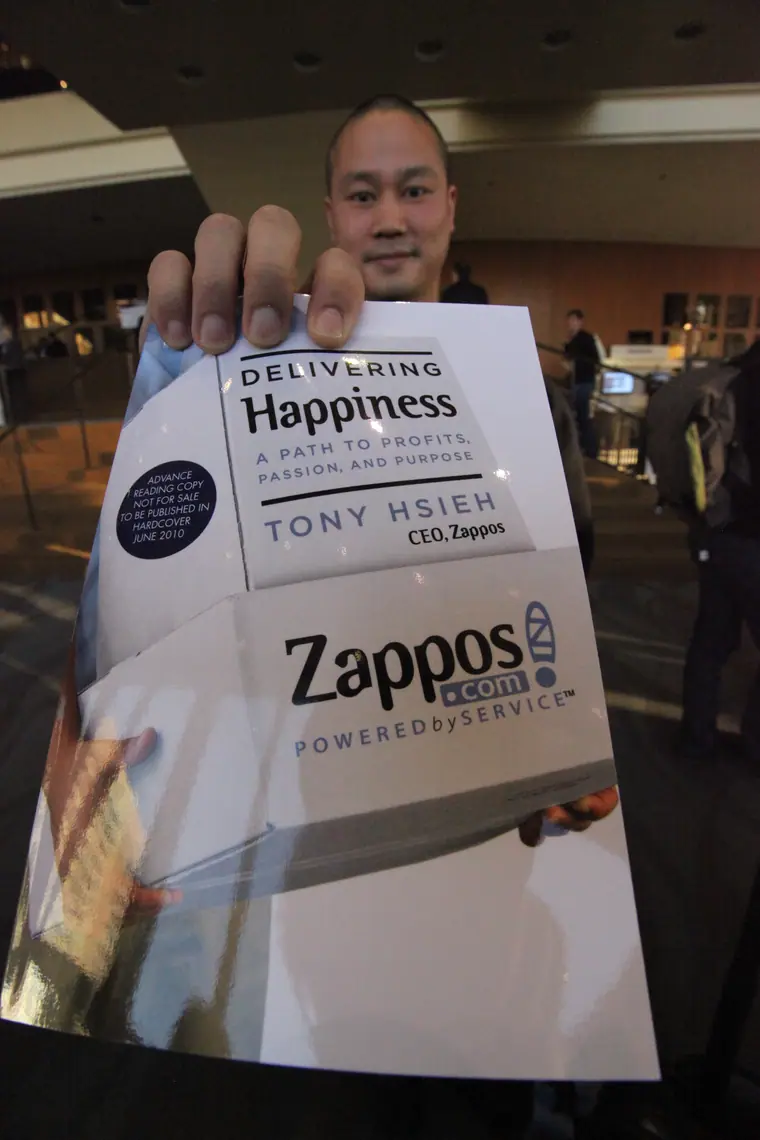
Tony Hsieh sold Zappos to Amazon for $1.2 billion in 2009 and spent the decade after it giving money away at speed — to downtown Las Vegas, to festivals, to restaurants, to people he liked. He resigned as chief executive in August 2020. He died on November 27, 2020, at 46, of complications from a house fire in New London, Connecticut.
Forbes had put his net worth at roughly $840 million. The estate his family later inventoried in Clark County came in above $520 million.
He left no will, no trust, and no estate plan of any kind.
What followed is the most instructive intestacy of the last decade, because it demonstrates a cost that the Prince estate mostly did not have to pay: when a man makes hundreds of informal deals and then dies without documents, every single one of those deals becomes a claim against a probate estate, and a judge has to decide which ones are real.
A father and a brother, appointed in a week
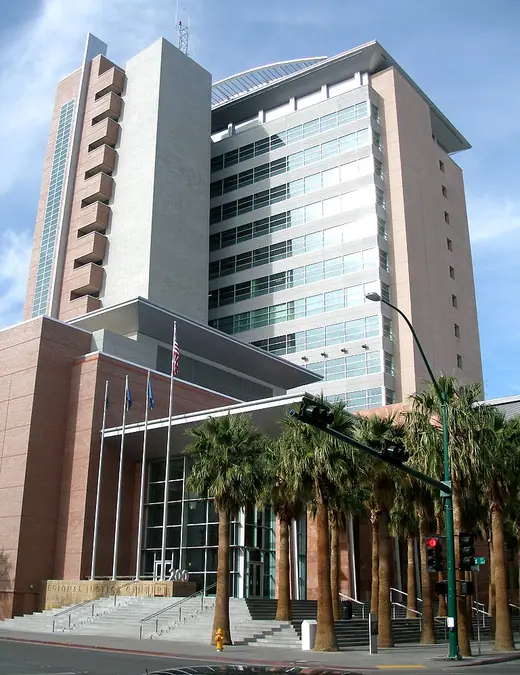
Within days, Judge Gloria Sturman of the Eighth Judicial District Court in Clark County granted an ex parte motion appointing Hsieh's father Richard Hsieh and his brother Andrew Hsieh as co-special administrators. Hsieh had no spouse and no children, so under Nevada intestacy his parents stood to inherit.
That is the ordinary, sensible outcome of an intestate estate — and it is also a decision the decedent had no part in. The court chose. It chose reasonably. It chose from a statutory list rather than from anything Hsieh had ever written down.
Andrew Hsieh resigned the role in the summer of 2022. Richard Hsieh has continued as administrator.
The administration has not been cheap. By the Las Vegas Review-Journal's tally, the family and its legal team had billed more than $18 million combined through spring 2025 — including roughly $8 million in administrator fees to Hsieh's father and brother, almost $8.4 million in fees to Holland & Knight, and over $1.3 million to Goldsmith & Guymon. Judge Sturman pushed back on the rates at one hearing, saying of a $1,250 hourly figure: “I have a problem with $1,250. I'm not approving that rate.” She approved fees on a blended-rate analysis instead.
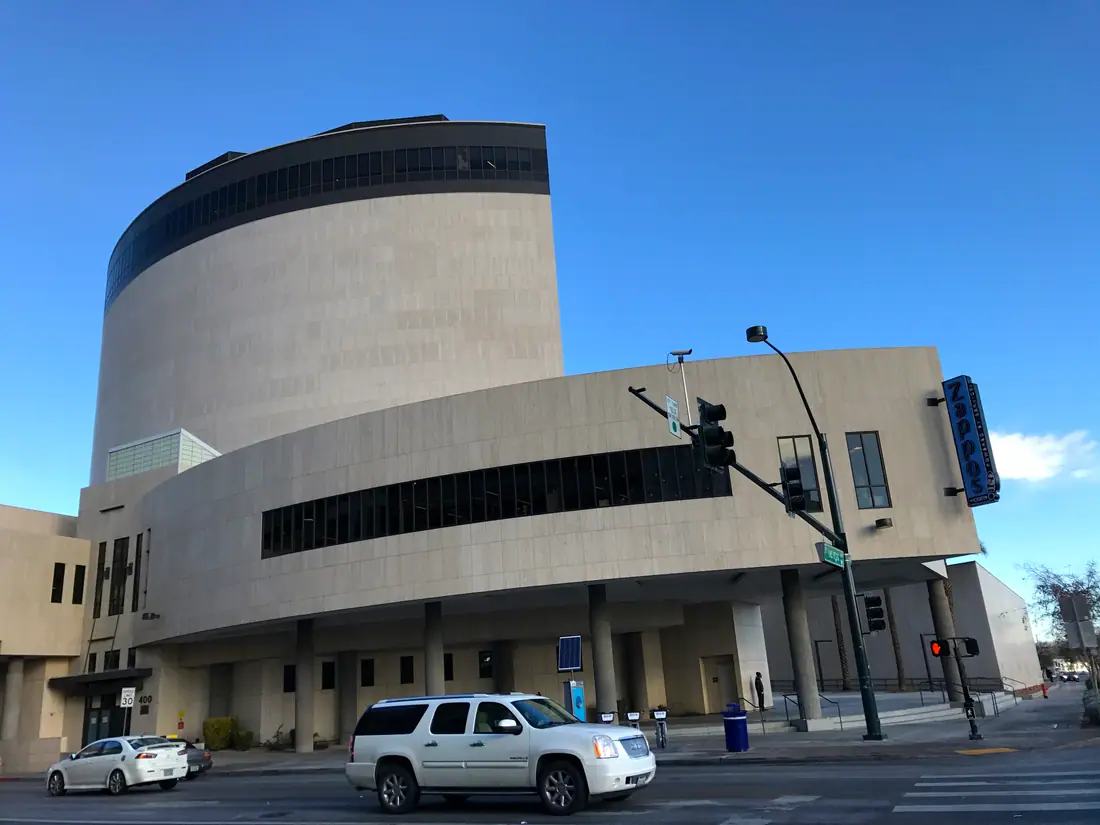
$130 million, and one Post-it note
The creditor window produced roughly $130 million in claims from about ten people and companies. A sample of what an undocumented life looks like when it reaches a courtroom:
- Jennifer “Mimi” Pham — over $90 million. Including roughly $75 million tied to expected earnings of a film production company and a documentary streaming venture, about $3,500 in personal bills paid on Hsieh's behalf, and claims to personal property from golf carts and electric bikes to artwork and Burning Man supplies.
- Suzie Baleson, of Wellth Collective — $8,765,981.60. To the cent.
- Justin Weniger, through 1122 Holdings — a claimed 27.7% equity interest in the Life is Beautiful music festival.
- Mark Evensvold — $30 million, on a sticky note. Evensvold, who had worked in operations and business development at the Nacho Daddy restaurant chain Hsieh invested in, produced a handwritten and nearly illegible Post-it note he characterised as a contract: a move to Park City, Utah, a $450,000 annual salary, a signing bonus of 20% of Hsieh's interest in Nacho Daddy, and duties that included working on “random projects like koi fish or tree houses.”
Evensvold sued the estate for part ownership of Nacho Daddy, seeking more than $12 million. The estate settled with him; terms were not disclosed. A settlement is not an admission that the note was enforceable — it is a calculation that litigating it would cost more than resolving it. That calculation is exactly what a claimant with a sticky note is counting on.
None of this is evidence that Hsieh's friends behaved badly. It is evidence of something duller and more dangerous: an estate with no records of its own has no way to say no.
A will arrives in the mail, five years late
In April 2025, lawyers from McDonald Carano and Greenberg Traurig filed a seven-page document with the Clark County court and asked that it be admitted as Tony Hsieh's will. It is dated March 13, 2015. It reportedly directs more than $50 million and Las Vegas real estate into trusts for beneficiaries the family says it does not recognise, includes a no-contest clause, and names as co-executor a man called Pir Muhammad.
The accompanying letter said the document had been found in February 2025 among Muhammad's belongings, that Muhammad had suffered from Alzheimer's disease, and that he had not known Hsieh had died. Muhammad himself is reported to have died in 2022.
Richard Hsieh objected, and the objection is unusually specific. Filings on his behalf assert that a document-forensics examiner found it “virtually certain” that Hsieh's signature was forged; that a linguistic analysis found the drafting inconsistent with professional legal work; that his legal middle name is misspelled; that the document refers to a trust that does not exist; and that the four listed witnesses cannot be tied to the addresses given, with at least one name absent from US records altogether. The two attorneys who filed the will have said they never met Hsieh. They maintain the document is genuine and should be tested in court.
Nothing here has been decided. A forgery allegation is an allegation. Judge Sturman has ordered the matter proceed as a formal will contest, with notice published.
On January 9, 2026, she appointed the two attorneys — Robert Armstrong of McDonald Carano and Mark Ferrario of Greenberg Traurig — as co-special administrators for the limited purpose of arguing the will into probate and defending it. On January 23, 2026, Richard Hsieh petitioned the Nevada Supreme Court, calling that appointment “manifestly wrong” and arguing it leaves three overlapping personal representatives in one estate. As of August 2026 the contest remains unresolved.
Timeline
- 2009Amazon acquires Zappos for a reported $1.2 billion.
- Aug 2020Hsieh resigns as chief executive of Zappos after 21 years.
- Nov 27, 2020Hsieh dies at 46 of complications from a house fire in New London, Connecticut. No will, trust, or estate plan is found.
- Dec 2020Judge Gloria Sturman appoints Richard Hsieh and Andrew Hsieh co-special administrators in Clark County, Nevada.
- 2021Roughly $130 million in claims is filed by about ten claimants, including a $30 million claim built on a handwritten Post-it note.
- Summer 2022Andrew Hsieh resigns as co-administrator. Richard Hsieh continues alone.
- Apr 17, 2025Attorneys file a seven-page document dated March 13, 2015 and petition to admit it as Hsieh's will, with a letter saying it was found in a deceased man's belongings.
- Spring 2025Family and legal fees billed to the estate pass $18 million combined.
- Jan 9, 2026Judge Sturman appoints the two attorneys who filed the will as co-special administrators for the limited purpose of defending it.
- Jan 23, 2026Richard Hsieh petitions the Nevada Supreme Court to overturn that appointment. The will contest remains pending as of August 2026.
What actually went wrong
- No will and no trust, at 46, with nine figures on the table. Everything below follows from this. Youth is the single most common reason an estate plan does not exist, and the least defensible.
- Hundreds of informal deals and no written record of any of them. A handshake is a contract right up until one party dies. Then it is a claim, and the only surviving witness is the claimant.
- No liquidity plan and no business succession. Interests in restaurants, festivals, and real-estate ventures do not administer themselves. Someone has to value them, defend them, and decide whether to sell — and with no trustee named, that someone is a court-supervised administrator paid by the hour.
- A public docket. Intestacy put the inventory, the claims, the fee applications, and the family's objections into a file any person on earth can read — and mail into.
- Family members as fiduciaries with no fee agreement. Administrator compensation is a statutory entitlement, not a courtesy. Eight million dollars of it was lawful and still became a headline.
Would it have gone that way in Florida?
Same result on who inherits — his parents — and the same wide-open door for claimants. Florida shortens the door, it does not close it.
Hsieh had no spouse and no children. Under Fla. Stat. §732.103, an intestate estate with no surviving descendants passes to the decedent's father and mother equally, or to the survivor of them. Florida reaches the same place Nevada did: the parents take. Then, and only then, does the statute move to siblings and their descendants, and grandparents and theirs — and there it stops.
Who runs it is the part people never anticipate. Fla. Stat. §733.301 sets the order of preference for appointment when there is no will: the surviving spouse first, then the person selected by a majority in interest of the heirs, then the heir nearest in degree. A parent qualifies. So does a sibling. If they disagree, the judge picks. The decedent, having named nobody, has no vote — and the person appointed is entitled to compensation under §733.617, presumptively 3% of the first million and sliding from there, plus extraordinary services. That is not a loophole. That is the fee schedule, and it applies whether the personal representative is a bank or your brother.
On the sticky note, Florida is genuinely tougher than most states, and the reason is timing. §733.702 requires a creditor to file a claim within the later of three months after the first publication of the notice to creditors or thirty days after being served with it. §733.710 then imposes a hard outer limit: two years after the date of death, and that one is a statute of repose the court cannot extend. A claimant who surfaces in year three with a handwritten note is not fighting about whether the note is enforceable. He is out.
The claim window would not have made Hsieh's estate simple. It would have compressed it. Ten claimants asserting $130 million would still have had to be evaluated — but on a clock, and with a personal representative empowered to file objections that force each claimant into an independent action within thirty days.
On the contested document, Florida's rules are strict in the way that matters here. §732.502 requires a will to be signed at the end by the testator and by two attesting witnesses, each signing in the presence of the testator and of each other. §733.107 puts the burden on the proponent to establish prima facie formal execution and attestation, after which the burden shifts to the contestant. And §732.901 obliges anyone holding an original will to deposit it with the clerk within ten days of learning of the death — a duty that makes a five-year silence a fact the court gets to weigh. Florida's §732.517 would also have neutralised the no-contest clause: in this state, such clauses are unenforceable, so contesting a suspicious document costs a beneficiary nothing but fees.
The practical instruction has two halves and neither is optional. Sign a will and fund a revocable trust, so that a private trustee administers your affairs instead of a public docket. And write your deals down — an operating agreement, a promissory note, a term sheet, an email confirming what was agreed. Your estate will not be able to remember what you meant. It can only read what you kept.
What people ask us about this.
Further reading
Third-party sites. Not ours, not endorsed, not kept current by us — just the places worth going next.
Sources
- Tony Hsieh's family and its legal team make millions overseeing his probate case — Las Vegas Review-Journal, 2025
- The state of Tony's estate: one year after the tech mogul's unexpected death — KTNV 13 Investigates, Nov 2021
- Judge awards Tony Hsieh's father, brother administrative duties over massive wealth, estate — KTNV, Dec 2020
- Man who entered a Post-it note contract with Tony Hsieh sues estate for ownership in Nacho Daddy — KLAS 8 News Now
- Tony Hsieh's estate settles lawsuit involving Post-it note contract — Las Vegas Review-Journal
- Mysterious will for late Zappos CEO Tony Hsieh's $500 million estate is fake, attorneys claim — CBS News, 2025
- Family of late Zappos CEO calls ‘surprise' will a scam as forgery signs mount — InvestmentNews, 2025
- Tony Hsieh's father asks Nevada court to step into son's probate case — Las Vegas Review-Journal, Jan 2026
- Fla. Stat. §733.710 — Limitations on claims against estates — The Florida Senate
If this is your situation
Free 30-minute consult. Plain English. No pressure.
Nearly every case in this archive turned on something ordinary — an unwitnessed page, a stale beneficiary line, a document nobody could find. Those are cheap to fix while you're alive and expensive to fix afterward.