Tina Turner
She left Tennessee for Switzerland in 1995, took Swiss citizenship in 2013, and signed away her American citizenship at the embassy in Bern that October. When she died in 2023, one question decided everything about her estate — and it was not what her will said. It was where she lived.
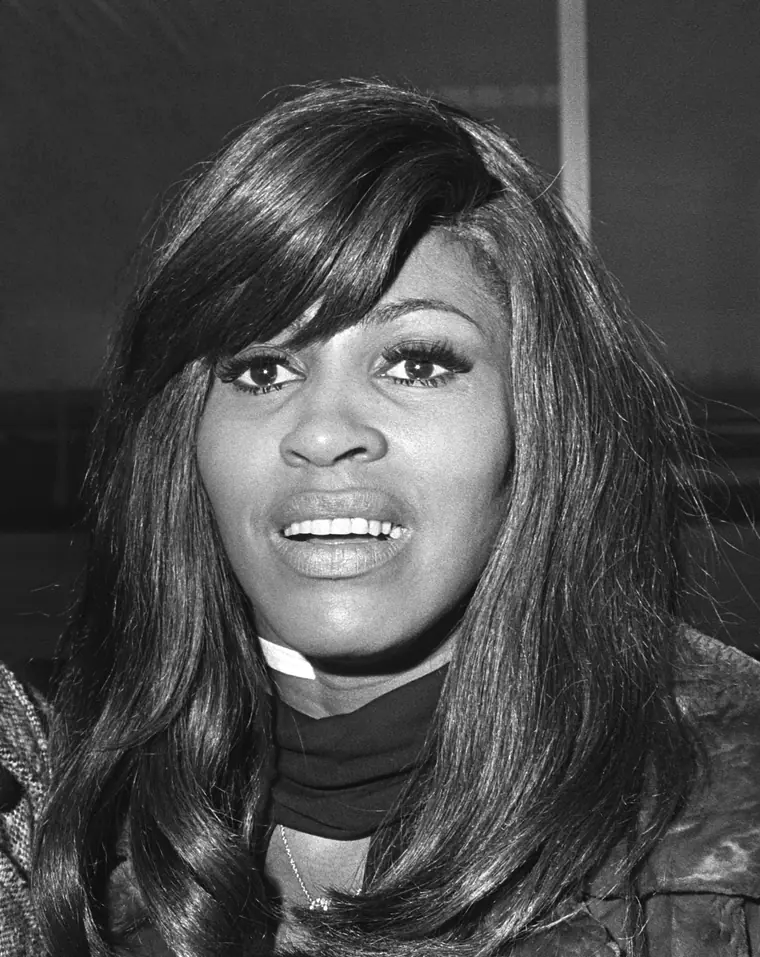
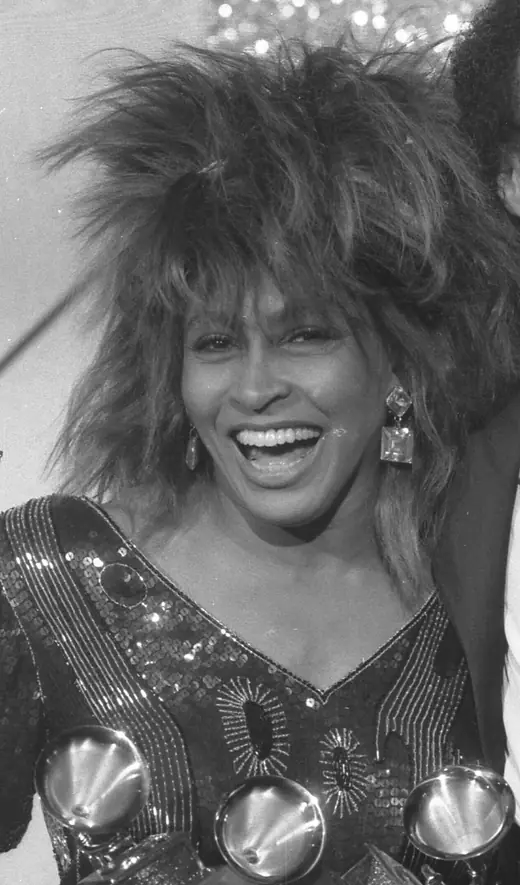
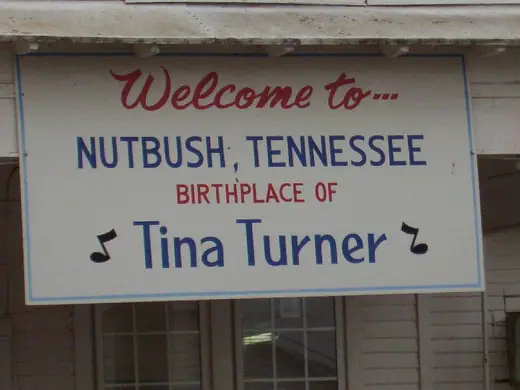
Anna Mae Bullock was born in Brownsville, Tennessee, on November 26, 1939, and raised in Nutbush, a place small enough that its name became a song. She died on May 24, 2023, at 83, at her home in Küsnacht, a lakeside village on the Zürichsee.
In between she made one decision that governs almost everything about her estate, and it was not a decision about her will. She moved.
She followed Erwin Bach to Switzerland in 1995. She married him there in 2013. She took Swiss citizenship the same year, and on October 24, 2013, at the American embassy in Bern, she signed the paperwork giving up her United States citizenship. The State Department's own category for what she did is relinquishment rather than renunciation, a distinction that matters to the department and, as it turns out, very little to the Internal Revenue Service.
The terms of her estate have never been made public, and that is the point. Switzerland does not publish them. What is public is the legal architecture she moved into — and it is the cleanest available demonstration that in cross-border estates, domicile is not a detail of the plan. Domicile is the plan.
Giving up a passport does not give up the IRS
The popular version of expatriation is that you hand back the passport and the tax problem goes away. The statutory version is considerably less romantic.
For anyone expatriating on or after June 17, 2008, the governing provision is IRC §877A, and it treats leaving as a sale. A covered expatriate — someone who meets a net-worth test of $2 million or more, or an average-income test, or who cannot certify five years of federal tax compliance on Form 8854 — is deemed to have sold every asset she owns at fair market value on the day before the expatriation date. The gain is taxed then and there, reduced by an inflation-adjusted exclusion amount, and the bill does not wait for anyone to actually sell anything.
That is the exit toll. There is also a permanent tail, and it is aimed at the people left behind rather than the person leaving.
- IRC §2801 — the succession tax on the recipient. A US citizen or resident who receives a gift or bequest from a covered expatriate pays 40 percent of its value. Not the estate. Not the donor. The American on the receiving end.
- It took seventeen years to get a form. §2801 was enacted in 2008. Final regulations were published on January 14, 2025, and the IRS released Form 708 in January 2026, applying to transfers received on or after January 1, 2025. The first returns are due in 2027.
- US-situs assets never leave. Non-citizens who are not US residents still face US estate tax on US-situated property, with a unified credit sheltering only about $60,000 — filed on Form 706-NA — subject to whatever an estate tax treaty adjusts. The US–Switzerland estate and gift tax treaty of 1951 is one of roughly fifteen such treaties in force.
Turner had told 60 Minutes in 1996 that she still paid American taxes, still owned property in America, and still ran her businesses from there. By 2021 the American businesses were being converted into something a Swiss resident could hold cleanly: in October 2021 she sold her music rights to BMG, reported at an estimated $50 million, with Warner continuing to distribute the recordings.
None of the specific numbers in her own filings are public, and nothing here asserts what she paid or owed. What is public is the framework, and the framework says the same thing to everyone: expatriation is a transaction with a price, and the price is calculated on the way out.
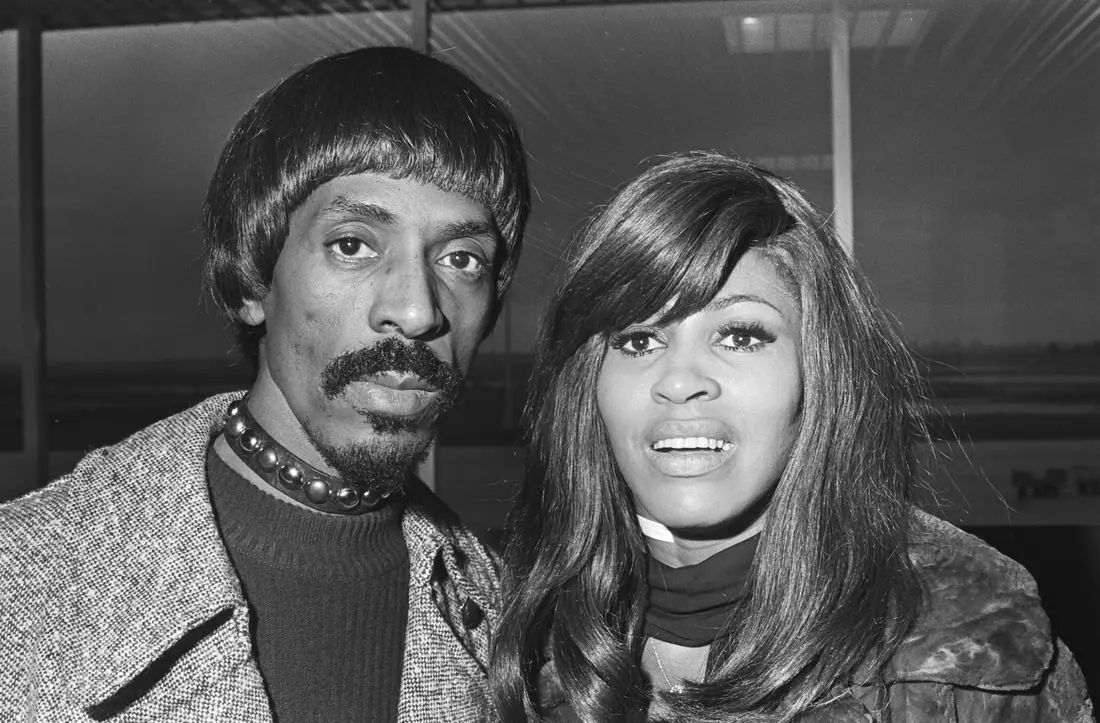
A country that tells you who inherits
American estate planning starts from testamentary freedom. Leave it to anyone. Leave it to a dog. The only real constraint is a spouse's elective share.
Swiss law starts somewhere else. Switzerland has forced heirship — Pflichtteil — reserved portions that named relatives cannot be written out of. A Swiss will operates inside those reserves, not over them.
And Switzerland changed the arithmetic five months before she died. The revised law of succession took effect on January 1, 2023:
- Descendants' compulsory portion cut from three-quarters of their statutory entitlement to one-half.
- Parents' compulsory portion abolished entirely.
- The spouse's compulsory portion unchanged at one-half of the statutory entitlement.
- The freely disposable quota grew. In the standard case of a surviving spouse and descendants, the portion the testator may direct as she likes rose from 37.5 percent of the estate to 50 percent.
So a Swiss testator who died in December 2022 and one who died in June 2023 had materially different amounts of freedom over the same estate. Turner died in the second group.
There is a second Swiss feature worth knowing, because it is the mirror image of the American assumption. Switzerland has no federal inheritance tax; the tax is cantonal, and the cantons — Zurich among them — generally exempt a surviving spouse and direct descendants. A country with forced heirship and almost no death tax is the exact inverse of the American arrangement, which is total freedom and a federal estate tax at 40 percent.
Her family had already been reduced by loss twice in the years before her death. Her eldest son, Craig, died by suicide in July 2018. Her son Ronnie died of cancer in December 2022. She was survived by her husband, Erwin Bach, and by Ike Turner's two sons, whom she adopted during that marriage.
Twenty-eight years of proof
What makes this case useful is not the fame. It is that she did the hard version properly.
She did not spend part of the year in Switzerland and call it home. She lived there for 28 years, married there, naturalised there, formally exited the other citizenship in front of a consular officer, and died there. Nobody was ever going to argue about which country's law applied, because there was no factual space left for the argument.
That is the whole discipline, and it is the part people skip. Changing where you live is a matter of proof, not intention. Tax authorities on both sides of a move look at the same evidence: where the home is, where the family is, where the doctor and the bank and the car are, where you vote, where you spend the nights.
Anyone who has moved for tax reasons and kept the old house, the old driver's licence, the old voter registration and the old accountant has not moved. They have acquired a second address and a future audit.
Timeline
- Nov 26, 1939Born Anna Mae Bullock in Brownsville, Tennessee; raised in Nutbush.
- 1995Moves to Switzerland with Erwin Bach.
- 1996Tells 60 Minutes she still pays American taxes, still owns US property, and still runs her businesses from the United States.
- 2013Takes Swiss citizenship and marries Erwin Bach.
- Oct 24, 2013Signs the relinquishment of her US citizenship at the American embassy in Bern.
- Oct 2021Sells her music rights to BMG, reported at an estimated $50 million; Warner continues to distribute.
- Jan 1, 2023Switzerland's revised succession law takes effect — descendants' compulsory portion cut to one-half, parents' abolished, freely disposable quota raised to 50 percent in the standard case.
- May 24, 2023Dies at home in Küsnacht, Canton of Zurich, at 83. The estate is administered under Swiss law, privately.
- Jan 14, 2025Final US regulations under IRC §2801 published — the 40 percent tax on US recipients of gifts and bequests from covered expatriates. Form 708 follows in January 2026.
What actually went wrong
- Nothing obvious — which is the point. This is the rare estate in the archive where the planning appears to have matched the life. It is here as the control group.
- The trap she avoided: the half-move. Domicile is proved by conduct over years. Keeping the old house, the old licence, the old voter registration and the old advisers while claiming a new home is the single most common failure in cross-border and cross-state planning.
- The trap most people do not know exists: §877A. Expatriation triggers a deemed sale of everything the day before you go, for anyone over the $2 million net-worth line or the income or certification tests. It is priced on the way out, not on the way in.
- The trap that lands on the family: §2801. A US recipient of a bequest from a covered expatriate owes 40 percent — a tax paid by the person inheriting, in a country the decedent had already left.
- Forced heirship is not optional. Move to a civil-law country and its reserved shares govern, whatever the will says. Two people with identical wills who died five months apart in Switzerland had different amounts of freedom, because the reserves changed on January 1, 2023.
Would it have gone that way in Florida?
Florida asks the identical question — and asks it of tens of thousands of people every year who think they have already answered it.
Substitute Sarasota for Küsnacht and the legal machinery is the same shape. Turner moved to a place with no death tax and a rule about who has to inherit. Florida is a place with no state estate tax at all — Fla. Const. Art. VII, §5 forbids one — and its own rules about who cannot be cut out. The reason people move here and the reason they get it wrong are the same reasons.
Start with domicile, because everything downstream depends on it. Florida gives you a specific instrument for the purpose: Fla. Stat. §222.17, the sworn declaration of domicile, filed with the clerk of the circuit court. It is one page. It is not conclusive on its own — a northern state's revenue department will still count your nights and read your utility bills — but it is the cheapest piece of evidence available, and the number of new Floridians who never file it is remarkable.
Then the spouse. Florida's answer to forced heirship is the elective share: under §732.201 and §732.2035, a surviving spouse may elect 30 percent of the elective estate, and that estate is defined broadly enough to reach revocable trusts, payable-on-death accounts, and joint property. Read §732.201 closely, because it contains the domicile hook — the elective share belongs to the spouse of a person who dies domiciled in Florida. Die domiciled elsewhere and Florida's 30 percent is not on the table; some other jurisdiction's rule is. Under §732.2135 the election must be made within six months after notice of administration or two years after death, whichever is earlier, and under §732.702 a valid prenuptial or postnuptial waiver defeats it entirely.
Then the house. Florida homestead is the closest thing in American law to forced heirship. Under Fla. Const. Art. X, §4 and Fla. Stat. §732.4015, a homestead cannot be freely devised if the owner is survived by a spouse or a minor child — and §732.401 supplies what happens instead, including the surviving spouse's option to take a one-half tenancy in common rather than a life estate. You do not get to leave the Florida house to whoever you like. Switzerland tells you that about the whole estate; Florida tells you about the roof.
Then the property you left behind. This is the part that surprises the outbound movers. If someone dies domiciled anywhere else — Switzerland, Ohio, Ontario — but still owns Florida real property in their own name, Florida opens an ancillary administration under §734.102. A Florida personal representative is appointed, Florida creditor notice under Chapter 733 runs, and only then does what is left go to the foreign representative. Moving away does not close Florida; the deed does. Titling that condo into a revocable trust, or an LLC, generally does.
The honest caveat: no filing wins a domicile argument by itself. Domicile is decided on the whole picture, and the declaration under §222.17 is one exhibit in it.
So the practical instruction is a list, and it is short. File the declaration of domicile. Move the driver's licence, the voter registration, the vehicle registrations, the primary bank, the doctors and the mail. Claim the homestead exemption on the Florida house and drop the residency-based exemption in the old state. If you keep real property in another state or country, put it in a trust or an entity so nobody has to open a second probate to transfer it. And if the move is international rather than interstate, price the exit — §877A and §2801 — before you sign anything, not after.
What people ask us about this.


Further reading
Third-party sites. Not ours, not endorsed, not kept current by us — just the places worth going next.
Sources
- Tina Turner — biography, Swiss citizenship, death, and the 2021 BMG sale — Wikipedia
- Switzerland was Tina Turner's longtime home. Why did the star leave the U.S.? — CBS News, May 2023
- Tina Turner formally 'relinquishes' U.S. citizenship — Washington Post, Nov 12 2013
- Expatriation tax — Internal Revenue Service
- Guidance under section 2801 regarding the imposition of tax on certain gifts and bequests from covered expatriates — Federal Register, Jan 14 2025
- Some nonresidents with U.S. assets must file estate tax returns — Internal Revenue Service
- New inheritance law in 2023 — what's changing? — Swiss Life
- Tina Turner's kids: all about her four children, including two late sons — TODAY, May 2023
- Fla. Stat. §734.102 — Ancillary administration — The Florida Senate
If this is your situation
Free 30-minute consult. Plain English. No pressure.
Nearly every case in this archive turned on something ordinary — an unwitnessed page, a stale beneficiary line, a document nobody could find. Those are cheap to fix while you're alive and expensive to fix afterward.