Roald Dahl
Dahl died in 1990 and left a body of work that behaves like a corporation. His family put the rights into a company, apologised in 2020 for things he had said, sold the company to Netflix in 2021, and in 2023 the publisher changed hundreds of words in the books. Every step of that was legal. None of it was his decision.
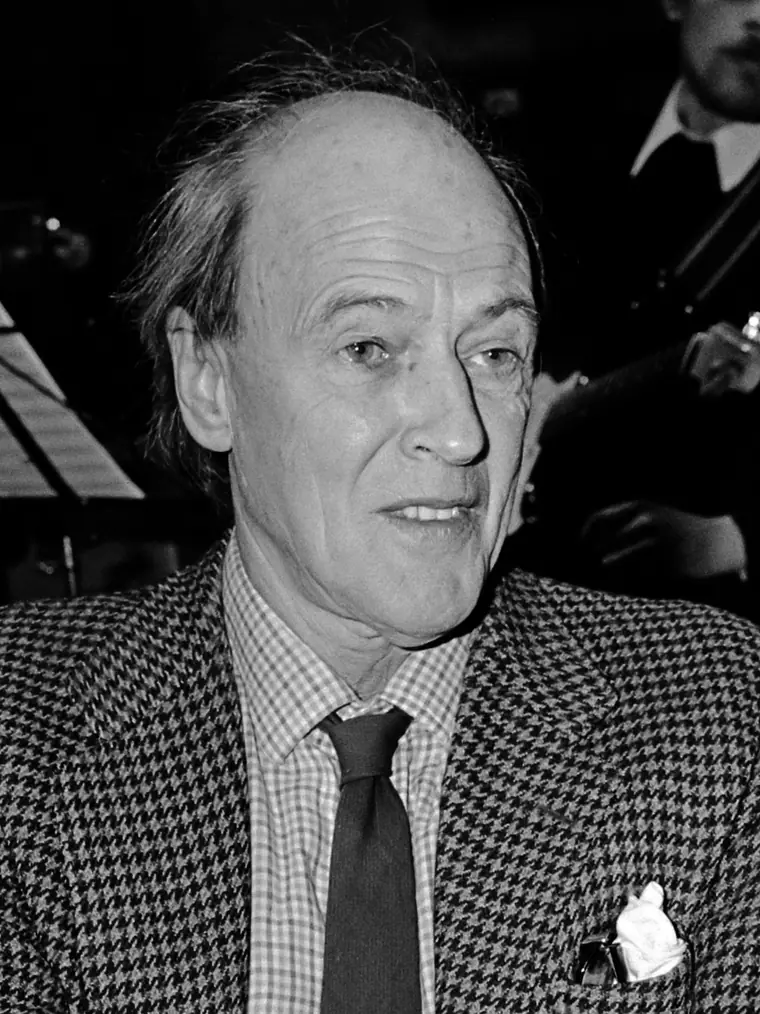
Roald Dahl died on November 23, 1990, in Oxford, at 74. He is buried at Great Missenden, in the Buckinghamshire village where he wrote in a hut in the garden.
What he left behind was not a manuscript collection. It was an operating business: characters, film rights, merchandising, stage adaptations, and a back catalogue that sells relentlessly in dozens of languages. His family placed the whole thing inside a company — the Roald Dahl Story Company — and ran it.
Three things then happened that no will could have anticipated, and that together make this the clearest available case study in who controls a dead author's words.
The apology
Dahl made antisemitic statements during his life, in print and in interviews, and never retracted them.
In 2020 — thirty years after his death — his family posted an apology on the official Roald Dahl website, acknowledging his antisemitism and the lasting hurt it caused. It appeared quietly and was picked up by the press in December that year.
There is no legal mechanism that required it and none that prevented it. The people who owned the estate and the website decided to say something, and said it. Reputation is not an asset the deceased can control, and it is one of the few things an estate plan cannot allocate.
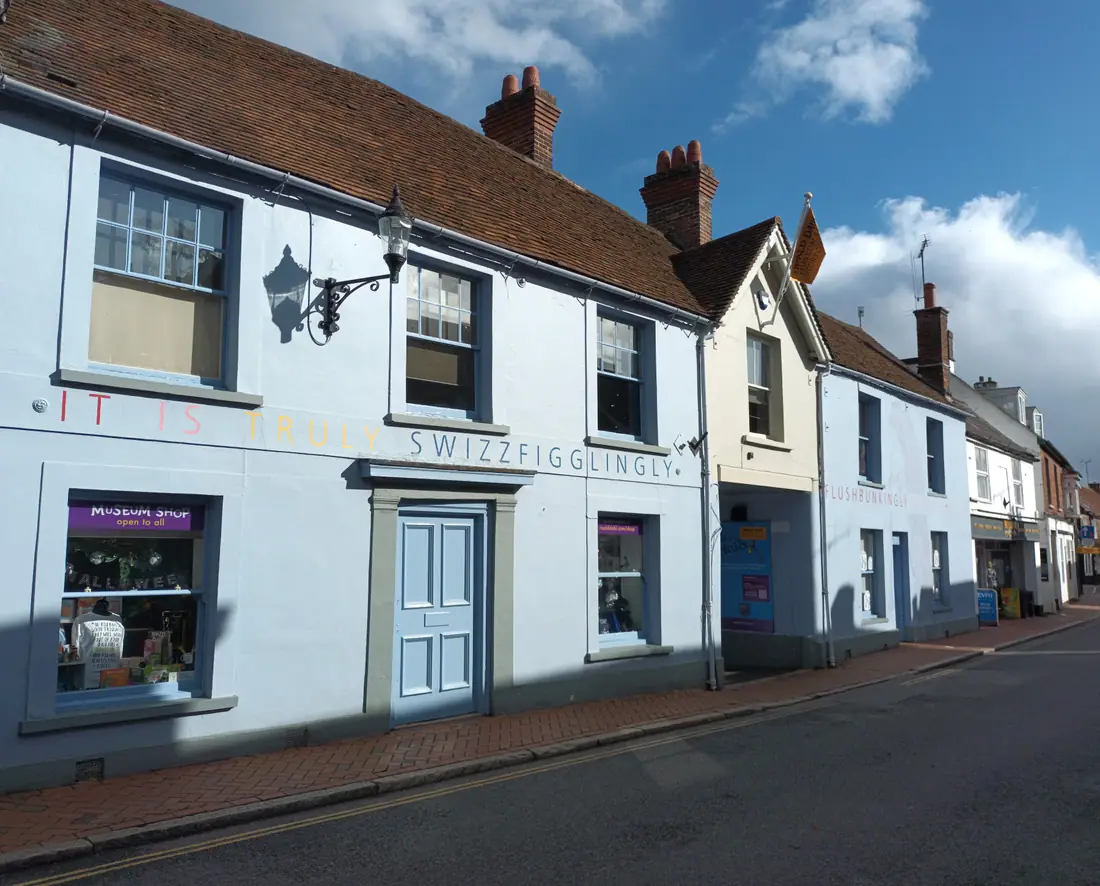
The sale
On September 21, 2021, Netflix announced that it was acquiring the Roald Dahl Story Company, which manages the rights to Dahl's stories and characters. The price was not disclosed. Netflix said it would operate the company as an independent business.
That transaction is the ordinary end point of a well-run literary estate. The heirs converted a bundle of copyrights into a company, the company into a going concern, and the going concern into cash and a corporate owner.
It also relocated every future decision about Dahl's work — what gets adapted, what gets licensed, what gets published, in what form — from a family to a buyer. Which is the entire point of selling something.
The revisions
In February 2023, Puffin Books — which holds the publishing rights to Dahl's children's books — released editions containing hundreds of changes to the text, made on the advice of sensitivity readers. Reported examples included replacing “fat” with “enormous” and removing words such as “crazy” and “mad,” along with gender-neutral rewording.
The reaction was immediate and came from every direction at once, including from Prime Minister Rishi Sunak and from Salman Rushdie. On February 23, 2023, Puffin announced it would also publish the original, unedited texts as The Roald Dahl Classic Collection, so both versions would remain available.
Here is the legal position, stripped of the argument. In the United States, an author of literary work has no general moral right of integrity. The Visual Artists Rights Act gives certain visual artists a limited right to prevent distortion of their work; nothing equivalent covers novels. Once the copyright is owned by someone else, that owner can authorise changes to the text and publish the result under the author's name.
So: no lawsuit, because there was nothing to sue about. The only thing that ever governs this is the contract — and a contract has to be written by someone who is still alive.
Three levers, and the order to pull them
An author who wants a say after death has exactly three tools, and they work in this sequence.
- Own it through a structure you designed. A trust or company you set up, with a decision-maker you chose and a written standard they must apply. This is the only lever with real reach.
- Write the licence terms. Publishing and adaptation agreements can restrict alteration, require approval of edits, and limit sublicensing. Contract rights survive you; moral rights, in the US, mostly do not.
- Decide, in advance, whether it can be sold. If your heirs can transfer the whole rights package, every restriction you drafted lasts exactly as long as the buyer's appetite for it. A no-sale provision, or a right of first refusal held by a foundation, is the difference.
Dahl's estate used the first two well enough to build something worth acquiring. The third is where control ended.
Timeline
- Nov 23, 1990Dahl dies in Oxford at 74. He is buried at Great Missenden.
- 1990s–2010sThe family consolidates the copyrights, characters, and adaptation rights into what becomes the Roald Dahl Story Company.
- 2020Dahl's family posts an apology for his antisemitism on his official website. It is reported in the press in December.
- Sep 21, 2021Netflix announces the acquisition of the Roald Dahl Story Company for an undisclosed price, to be run as an independent company.
- Feb 2023Puffin Books publishes editions of the children's books with hundreds of text changes made on the advice of sensitivity readers.
- Feb 23, 2023After sustained public criticism, Puffin announces it will also publish the original texts as The Roald Dahl Classic Collection.
What actually went wrong
- Nothing failed — and the case is still a warning. Every step here was lawful and competently executed. The point is how far a dead author's work travelled from him, entirely within the rules.
- Copyright is transferable, and transfers are forever. Once the rights package could be sold, the identity of the decision-maker became a commercial question rather than a testamentary one.
- US law gives literary authors no right of integrity. If you want your text protected from alteration, that protection has to come from a contract or a trust term you wrote, not from copyright law.
- Reputation cannot be devised. An estate plan can direct money, property, and control. It cannot direct what your family says about you thirty years later, and it should not try.
Would it have gone that way in Florida?
Same outcome here. Florida protects a dead person's name and likeness for 40 years — but nothing in Florida law protects their sentences.
Florida cannot change the copyright answer, because copyright is federal. What Florida adds is a separate right that most people confuse with it, and the distinction is worth getting exactly right.
Fla. Stat. §540.08 is Florida's right of publicity. It prohibits the use of a natural person's name, portrait, photograph, or other likeness for trade, commercial, or advertising purposes without express written or oral consent — and after death, that consent comes from the surviving spouse or children, or from a person or corporation to whom the right has been licensed. The right runs for 40 years after death. The statute allows injunctive relief, actual damages including a reasonable royalty, and punitive damages. It carves out bona fide news reporting and matters of legitimate public interest.
So in Florida, an estate can stop somebody putting a dead author's face on a cereal box for four decades. It cannot stop the copyright owner rewording the author's book, because the words are copyright and the face is publicity, and those are different rights with different owners and different rules.
That means everything protective has to be built by hand, and Florida gives good tools for it. §736.0402 and §736.0404 confirm that a trust may be created for any lawful purpose — including holding intellectual property and directing how it is exploited. §736.1406 authorises powers to direct, the statutory basis for a trust protector or an editorial adviser who must approve any alteration, adaptation, or sale. §689.225 lets a Florida trust created on or after July 1, 2022 run for up to 1,000 years, so the structure does not expire before the copyrights do. And §736.0813 keeps the trustee accountable to the qualified beneficiaries while it all runs.
The honest caveats are three. First, §736.0412 permits nonjudicial modification of an irrevocable trust after the settlor's death on unanimous agreement of the trustee and all qualified beneficiaries — so restrictions survive in proportion to how hard unanimity is to assemble, and a charitable interest is the usual answer. Second, federal copyright termination rights held by a surviving spouse and children operate notwithstanding any agreement to the contrary; they cannot be drafted away. Third, a court can modify a trust under §736.04113 where circumstances the settlor did not anticipate defeat its purposes — which is a feature, not a bug, but it is a limit.
The practical instruction, and it applies to anyone who owns creative work rather than just to famous novelists: put the copyrights in a trust while you are alive, name a protector with a written standard for approving edits and adaptations, and say in the instrument whether the rights may ever be sold outright. Those three provisions are the whole of the control you can actually keep.
What people ask us about this.
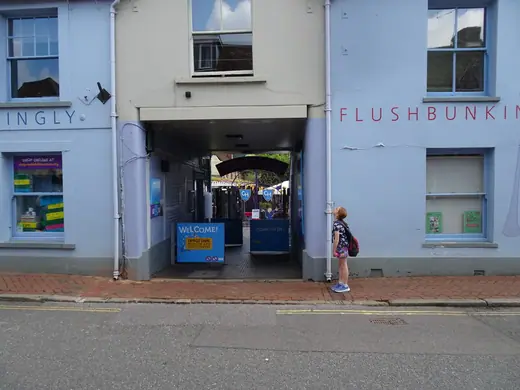

Further reading
Third-party sites. Not ours, not endorsed, not kept current by us — just the places worth going next.
Sources
- Roald Dahl — Wikipedia
- Roald Dahl family apologizes for children's author's anti-Semitism — NPR, Dec 6, 2020
- Netflix — acquisitions, including the Roald Dahl Story Company (Sept 21, 2021) — Wikipedia
- Roald Dahl Museum and Story Centre — The Roald Dahl Museum
- Fla. Stat. §540.08 — Unauthorized publication of name or likeness — The Florida Senate
- Fla. Stat. §736.1408 — Duty and liability of directed trustee — The Florida Senate
- Fla. Stat. §689.225 — Statutory rule against perpetuities — The Florida Senate
If this is your situation
Free 30-minute consult. Plain English. No pressure.
Nearly every case in this archive turned on something ordinary — an unwitnessed page, a stale beneficiary line, a document nobody could find. Those are cheap to fix while you're alive and expensive to fix afterward.