Redd Foxx
The IRS took his Las Vegas house and seven cars while he was still alive. Two years later he collapsed on a soundstage and died with a reported $3.6 million in tax debt and no will. A friend paid for the funeral, and the estate stayed open for another fifteen years.
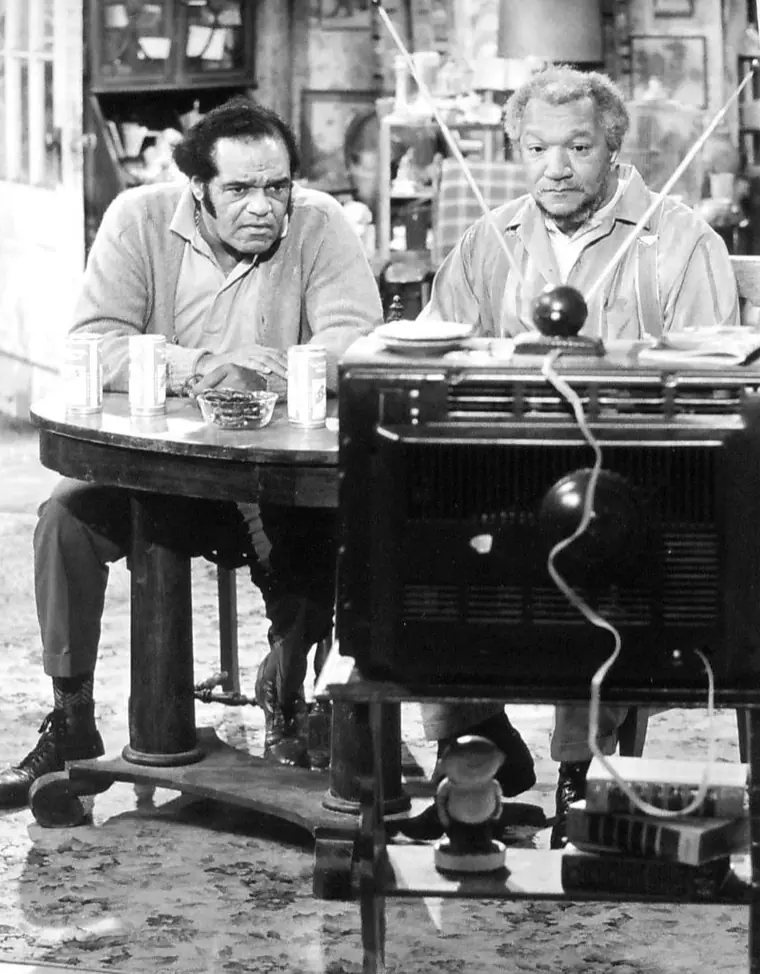
John Elroy Sanford earned a reported four million dollars in a single year. He spent it on a life that looked exactly like four million dollars, and on what he later described as very bad management.
By 1983 he was in bankruptcy, with proceedings running for years. The IRS was assessing him for the tax years 1983 through 1986. On November 28, 1989, the collection arrived in person: agents seized his home in Las Vegas and seven vehicles. The liability, with penalties and interest, had reached $996,630.
He described the seizure afterward in terms that are still difficult to read. They took the necklace off his neck and the identification bracelet off his wrist and the money out of his pocket. He said he was treated as though he were not human.
This is the part of the case that matters and that people skip past: all of that happened while he was alive. The estate did not create the problem. The estate inherited it.
He died at work, and he died broke
In 1991 he was starring in The Royal Family, a CBS sitcom created with Eddie Murphy's involvement — a comeback, and a paycheque against a debt that had grown well past what any paycheque was going to cover.
On October 11, 1991, during a break from rehearsal, he suffered a heart attack on the set. He was resuscitated and taken to hospital, and was pronounced dead four and a half hours after admission. He was 68.
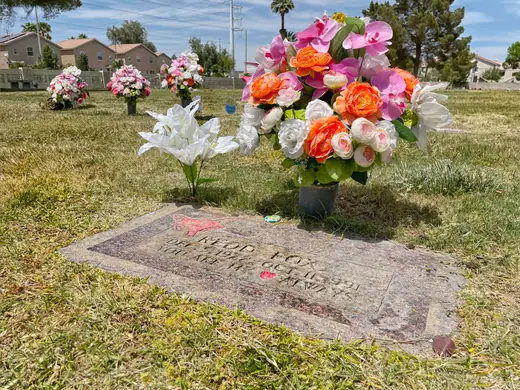
It has been reported that at his death he owed more than $3.6 million in taxes. His funeral and his headstone were paid for entirely by Eddie Murphy.
That fact tends to get told as a story about friendship, and it is one. It is also a precise, technical description of what an insolvent estate is: an estate with no money to bury the person whose estate it is.

No will, two heirs, and a probate that would not close
He died intestate. The heirs were his daughter, Debraca Denise, and his fourth wife, Ka Ho Cho, whom he had married about two months before he died.
Debraca was appointed administrator of the Nevada estate. Ka Ho Cho later objected to the administration, alleging that revenue the estate was collecting — residuals, licensing, royalties — was not being reported and was not going toward the IRS debt. Those were allegations; the probate court never tried them.
What the court did do, in 2006, was remove the administrator for failing to comply with an order to account, and appoint the Clark County public administrator, John J. Cahill, in her place. A public administrator is the official a court appoints when there is nobody suitable, willing, or trusted left. Cahill pursued the estate's income streams, and from 2007 reported bringing in more than $100,000 — including royalty payments from Hallmark and CBS Studios for the use of Foxx's image.
So the estate that could not pay for a funeral in 1991 was still generating money, and still being administered by a county official, deep into the 2000s. Nothing about a debt-heavy estate resolves itself. It just keeps costing.
Why an insolvent estate is a different job
When an estate has more claims than assets, the personal representative stops being a distributor and becomes something closer to a referee. Nobody gets what the will says. Everybody gets what the statute says, in the order the statute says it, until the money runs out.
Three things about that job are counterintuitive, and all three show up in this file:
- The order is fixed, and it is not negotiable. A personal representative who pays a sympathetic creditor ahead of a statutory class can be held personally liable for the shortfall. Kindness is not a defence.
- Some claims outrank the tax collector, and funeral expenses are one of them — up to a statutory cap. The person who buried the decedent is not last in line.
- Deadlines that kill ordinary creditors do not run against the United States. State non-claim statutes bar the local hospital and the credit card company. They do not bar the IRS.
That last point is not a technicality — it is the difference between an estate that closes in a year and an estate like this one.
Timeline
- 1983Foxx files for bankruptcy. Proceedings continue for years; the IRS is assessing tax for 1983 through 1986.
- Nov 28, 1989The IRS seizes his Las Vegas home and seven vehicles. The liability, with penalties and interest, stands at $996,630.
- 1991He begins work on The Royal Family for CBS.
- Oct 11, 1991He suffers a heart attack on the set during a rehearsal break and is pronounced dead four and a half hours after hospital admission, at 68. He leaves no will.
- Oct 1991Eddie Murphy pays for the funeral and the headstone in full.
- 1990s–2000sThe Nevada probate remains open. His daughter Debraca Denise serves as administrator; his widow Ka Ho Cho objects to the accounting of estate revenue.
- 2006The probate court removes the administrator for failing to comply with an order to account and appoints public administrator John J. Cahill.
- 2007 onwardThe public administrator reports collecting more than $100,000 for the estate, including royalties from Hallmark and CBS Studios for use of Foxx's image.
What actually went wrong
- Tax problems left to compound. Penalties and interest are not a side effect; they are the main event. A liability that was manageable in 1984 was six figures by 1989 and reportedly seven figures by 1991, and every dollar of the growth was avoidable with an instalment agreement or an offer in compromise.
- No will, and a marriage two months old. Dying intestate handed the distribution rules to a statute and handed the administration to whoever asked first. A will naming a neutral personal representative would have cost a few hundred dollars.
- No liquidity for the one bill that always comes due. Funeral costs arrive within days, before any court appoints anybody. A small life insurance policy — or a payable-on-death account with a few thousand dollars in it — is available immediately and is not tied up in probate.
- Income-producing assets with no plan. Residuals, royalties and image licensing kept paying for decades. Nobody had structured who would collect them, how they would be accounted for, or what they were worth. That vacuum produced fifteen years of disputes.
- An administrator with an interest in the outcome. Naming an heir as personal representative of an insolvent estate puts one beneficiary in charge of paying creditors ahead of the other beneficiary. It is a structural conflict, and it ended here with a court removing her and appointing a county official.
Would it have gone that way in Florida?
Same result, and Florida can be blunter about why: homestead would not have saved the house, and the two-year claim bar does not run against the IRS.
Florida is famous for protecting debtors, so start by removing the illusion. Fla. Const. Art. X, §4 gives Florida the strongest homestead protection in the country — no forced sale by creditors, no dollar cap, up to half an acre inside a municipality. It stops the credit card company, the judgment creditor, the hospital. It does not stop a federal tax lien. Under 26 U.S.C. §6321 the lien attaches to all property and rights to property, and the Supremacy Clause makes state exemptions ineffective against it — the Supreme Court settled that in United States v. Rodgers, 461 U.S. 677 (1983). A Redd Foxx living in Sarasota loses the house on the same day he lost it in Las Vegas.
Next, the claim deadlines, which are the part Florida lawyers rely on most and which fail here for the same reason. §733.702 requires most creditors to file within 3 months of the first publication of the notice to creditors, or within 30 days of being served if they are a known or reasonably ascertainable creditor. §733.710 is harder still: an absolute 2-year bar from the date of death, regardless of notice, regardless of whether anyone opened a probate at all.
Those statutes are extremely effective against ordinary creditors and useless against the federal government. The controlling case, as it happens, is a Florida case that went to Washington. In United States v. Summerlin, 310 U.S. 414 (1940), a Florida court held a federal claim void because it was filed after the state's non-claim period. The Supreme Court reversed: the United States is not bound by state statutes of limitation, and a state non-claim statute cannot extinguish a federal claim. The IRS is not a creditor you can outwait.
So the fight in a Florida version of this estate is about priority, and priority is set by §733.707. The order is: (1) costs and expenses of administration, including the personal representative's and attorney's fees; (2) reasonable funeral, interment and grave-marker expenses, capped at $6,000; (3) debts and taxes with preference under federal law — this is where the IRS sits; (4) reasonable and necessary medical and hospital expenses of the last 60 days of the last illness; (5) family allowance; (6) child-support arrearages; (7) debts from continuing the decedent's business; (8) everything else. A personal representative who pays out of order is personally answerable for it.
Two consequences worth naming. First, Eddie Murphy's cheque would have been reimbursable ahead of the IRS in Florida — up to $6,000. Class 2 outranks Class 3. Second, a surviving spouse in Florida is not left with nothing even in an insolvent estate: §732.402 exempt property (household furnishings up to $20,000, two vehicles, and certain education savings) and §732.403 family allowance (up to $18,000) come off the top and are not reachable by ordinary creditors — though, again, a federal tax lien that attached during life is a different animal.
The instruction: if you owe the IRS, deal with it while you are alive, when instalment agreements, penalty abatement and offers in compromise exist. None of those tools are available to your personal representative. And whatever else you leave, leave a few thousand dollars in a payable-on-death account for the funeral — it transfers in days, it never enters probate, and it means nobody has to make a phone call about it.
What people ask us about this.


Further reading
Third-party sites. Not ours, not endorsed, not kept current by us — just the places worth going next.
Sources
- Redd Foxx — finances, the 1989 IRS seizure, death and funeral — Wikipedia
- Hollywood mourns death of comedian Redd Foxx — UPI Archives, Oct 12, 1991
- The Redd Foxx estate mess — The Probate Lawyer Blog, Mar 2010
- Why Eddie Murphy paid for Redd Foxx's funeral — Finurah, Jun 2024
- The day the IRS caught up with Redd Foxx — Travis W. Watkins Tax Resolution, Nov 2017
- United States v. Summerlin, 310 U.S. 414 (1940) — Justia — U.S. Supreme Court
- United States v. Rodgers, 461 U.S. 677 (1983) — Justia — U.S. Supreme Court
- Fla. Stat. §733.707 — Order of payment of expenses and obligations — The Florida Senate
If this is your situation
Free 30-minute consult. Plain English. No pressure.
Nearly every case in this archive turned on something ordinary — an unwitnessed page, a stale beneficiary line, a document nobody could find. Those are cheap to fix while you're alive and expensive to fix afterward.