Nelson Mandela
Two months after he died, three judges sat in a room in Johannesburg and read his will aloud to the family. It was careful, specific, and provided for staff, schools, and the party. Twelve years later the courts are still working through what he left behind.
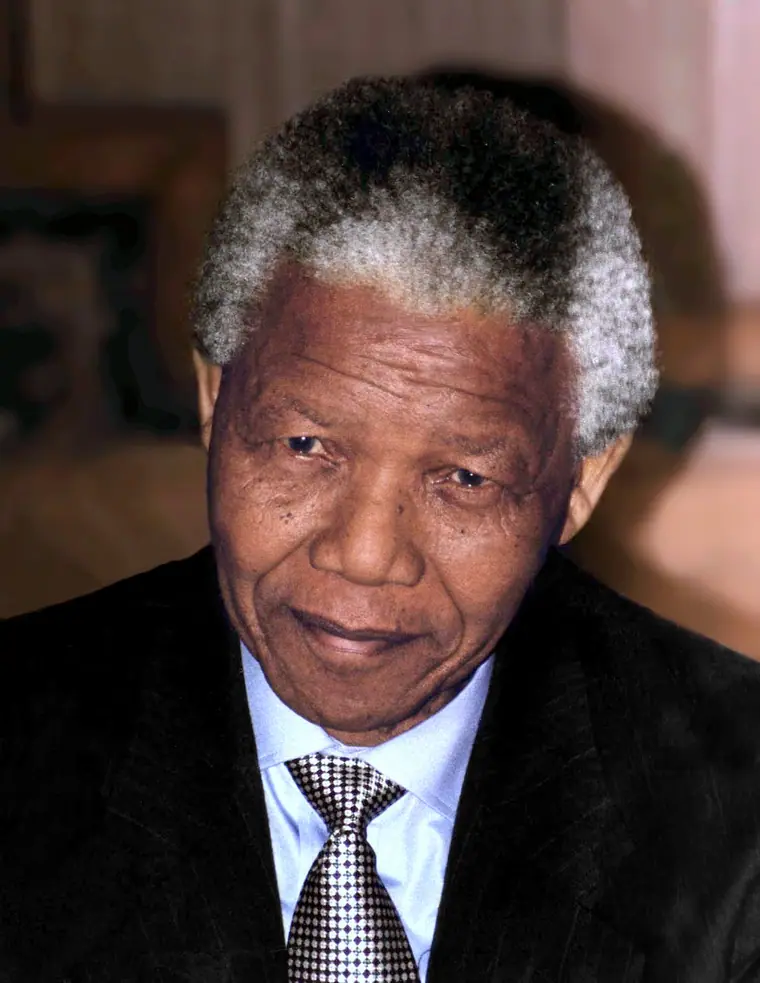
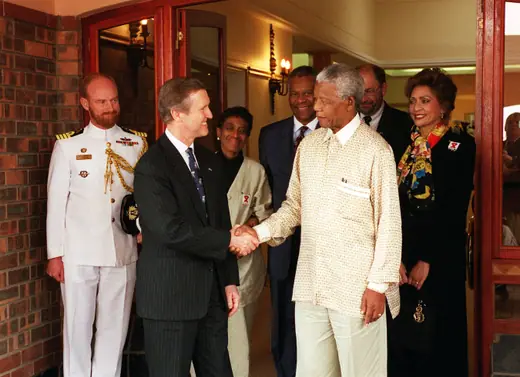
Nelson Mandela died on December 5, 2013, at 95. On February 3, 2014, at the Nelson Mandela Centre of Memory in Johannesburg, Deputy Chief Justice Dikgang Moseneke read the will aloud to the family and beneficiaries, and then summarised it for the press.
That is not how it works in most places, and it is not how it works in Florida. But it produced an unusually clear public record of a document that would otherwise have been guessed at for a decade.
The will was dated October 12, 2004, with final amendments in 2008. The executors were Moseneke, Judge President Themba Sangoni of the Eastern Cape, and the advocate George Bizos SC, who had defended Mandela at the Rivonia Trial fifty years earlier. The provisional estate was put at about R46 million — roughly $4.1 million — subject to verification, and expressly excluding royalties and assets already held in trust.
Trusts, schools, staff, and a slice of the royalties
It was a carefully built document, and the striking thing about it is how small and specific many of the gifts were.
R100,000 to each of the schools and universities he had attended — among them the University of Fort Hare and the University of the Witwatersrand — and the same to Qunu Secondary School and Orlando West High School. R50,000 to each of several members of his personal staff, including his long-serving private secretary. R1.5 million to the Nelson Rolihlahla Mandela Family Trust. A share of future royalties, reported at between 10 and 30 percent, to the African National Congress.
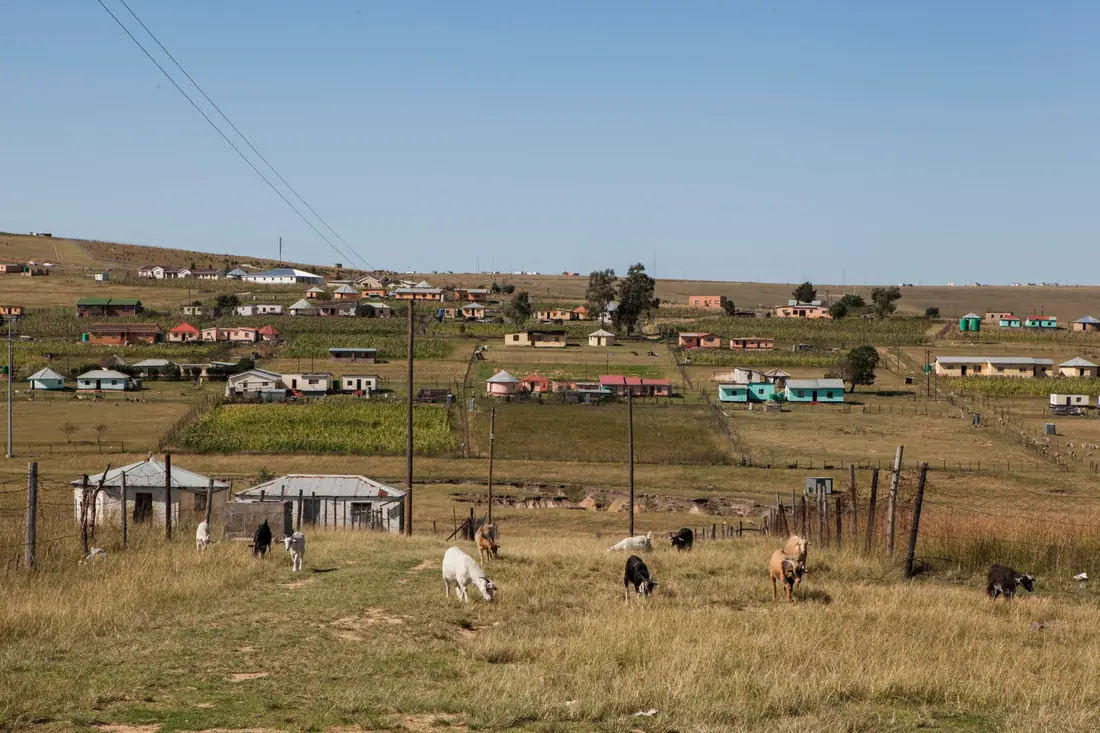
His home at Qunu, in the Eastern Cape, went to the Nelson Mandela Family Trust, for the benefit of the family and of his widow Graça Machel and hers.
Machel's own position was the one that mattered most numerically. The marriage was in community of property under South African law, which as a starting point entitles a surviving spouse to half the joint estate. Reporting at the reading indicated she had been given the choice of whether to pursue that entitlement; accounts differ on what she elected. Either way, the will did not attempt to strip it.
Two companies, one homestead, and a delay of nineteen years
The companies. In 2013, while Mandela was still alive, his daughters Makaziwe Mandela and Zenani Mandela-Dlamini applied to court to remove Bizos, Tokyo Sexwale, and the attorney Bally Chuene as directors of Harmonieux Investment Holdings and Magnifique Investment Holdings, two entities set up to hold proceeds connected to Mandela's artwork and handprint editions. The directors' position, publicly stated, was that Mandela had asked them to serve. The dispute ran alongside a family that was in several places at once about it.
The homestead. Winnie Madikizela-Mandela brought proceedings claiming ownership of the Qunu property, on the basis of a 1997 administrative decision. In April 2016 the Mthatha High Court dismissed the claim. In January 2018 the Supreme Court of Appeal dismissed her appeal, holding that the delay in seeking review had been unreasonable and prejudicial: a reasonable person in her position would have asserted the right while Mandela was alive to give his own account of events. She died three months later.
That ruling is the one worth pausing on. The court did not decide who was right about 1997. It decided that nineteen years was too long to wait to ask, because the person who could have answered was gone.
The asset that was never really in the estate
The longest-running fight is not about the R46 million at all. It is about objects and what they mean.
Makaziwe Mandela, with the former Robben Island warder Christo Brand, arranged to sell more than seventy items associated with Mandela through the New York auction house Guernsey's — sunglasses, walking sticks, shirts, identification documents, a signed copy of the post-apartheid constitution, gifts from three American presidents, and a Robben Island cell key. The stated purpose was to fund a memorial garden at the grave at Qunu. Estimates reported for the collection ran to $2–3 million.
The South African Heritage Resources Agency objected, arguing that a number of the items were heritage resources of national significance under the National Heritage Resources Act and could not simply leave the country. The sale, originally scheduled for January 2022, was suspended. In December 2023 the North Gauteng High Court declined to grant SAHRA an interdict. SAHRA, with the Department of Sport, Arts and Culture and the Robben Island Museum, appealed.
On January 23, 2026, the Supreme Court of Appeal dismissed that appeal, four judges to one, clearing the way for the auction and for the items to be exported. As of August 2026 no sale date has been publicly reported.
The pattern here is the one that turns up in every legacy estate in this archive. The money was distributed within a couple of years. The meaning — the name, the objects, the right to say what they are for — has taken thirteen years and is not finished.
Timeline
- Oct 12, 2004Mandela signs the will that governs, with final amendments made in 2008.
- Apr 2013Makaziwe Mandela and Zenani Mandela-Dlamini apply to remove George Bizos, Tokyo Sexwale and Bally Chuene as directors of two holding companies connected to Mandela's artwork proceeds.
- Dec 5, 2013Mandela dies in Johannesburg at 95.
- Feb 3, 2014Deputy Chief Justice Dikgang Moseneke reads the will aloud at the Nelson Mandela Centre of Memory. Provisional estate: about R46 million, excluding royalties.
- Apr 7, 2016The Mthatha High Court dismisses Winnie Madikizela-Mandela's claim to the Qunu property.
- Jan 19, 2018The Supreme Court of Appeal dismisses her appeal, holding that the nineteen-year delay in seeking review was unreasonable and prejudicial to the estate.
- Jan 2022A planned Guernsey's auction of Mandela items is suspended after SAHRA raises heritage objections.
- Dec 2023The North Gauteng High Court declines to interdict the sale of 29 items identified as heritage resources.
- Jan 23, 2026The Supreme Court of Appeal dismisses SAHRA's appeal four to one, clearing the auction to proceed and the items to be exported. As of August 2026 no sale date has been publicly reported.
What actually went wrong
- The valuable part was outside the will. R46 million passed under a document everyone could read. The royalties, the artwork proceeds, and the name were held in trusts and companies governed by other documents, and that is where every fight happened.
- Fiduciaries who were also friends. Appointing the people who had stood beside you for fifty years is humane and it is normal. It also means that any beneficiary who disagrees with a decision is disagreeing with a person, not an institution.
- A house promised, occupied, and claimed. The Qunu property carried a nineteen-year-old administrative history that nobody resolved while the one witness who mattered was still alive to describe it.
- Objects with two owners at once. A shirt can be personal property and national heritage simultaneously. Nothing in the will addressed that, and the resulting question took four years and two courts.
- No plan for the meaning. The will disposed of money precisely. It did not say who decides what the name is for — which is the only question anyone has actually litigated since.
Would it have gone that way in Florida?
Florida would have ended two of these fights on the calendar alone — and would have struck down the gift of the family home.
Four Florida answers, and they run in different directions.
First, and most surprisingly: the house. Mandela left the Qunu homestead to a family trust for the benefit of the family and his surviving spouse. In Florida that devise would be void. Fla. Const. Art. X, §4(c) and Fla. Stat. §732.4015 prohibit devising homestead property at all if the owner is survived by a spouse or a minor child, except to the spouse outright when there is no minor child. A devise of homestead to a trust while a spouse survives fails. Under §732.401, the property then passes as a life estate to the surviving spouse with a vested remainder to the descendants — or the spouse may elect, within six months, to take an undivided one-half interest as tenant in common instead. This is the single most common expensive surprise in Florida estate planning, and it catches sophisticated people constantly.
Second, the spouse's share. South African community of property gave Machel a claim to half the joint estate. Florida's analogue is the elective share — §732.2035 gives a surviving spouse 30% of the elective estate, and the elective estate deliberately reaches past the probate file into revocable trusts, pay-on-death accounts, and joint property. That is a smaller percentage than community of property but a much wider net. The election has a hard deadline under §732.2135: six months after service of the notice of administration, or two years after death, whichever comes first. It can be waived in advance under §732.702, and a prenuptial waiver signed before marriage does not even require financial disclosure.
Third, the Qunu delay — and this is where Florida is brutally efficient. The Supreme Court of Appeal needed a doctrine of unreasonable delay because there was no statutory clock. Florida supplies clocks and does not require anyone to argue about fairness. An interested person served with notice of administration has three months under §733.212(3) to object to the validity of the will, the venue, or the jurisdiction of the court, and objections not timely filed are barred. Creditor claims die under §733.702, and §733.710 imposes an absolute two-year bar after death regardless of notice. A claim first raised nineteen years later does not reach the merits in Florida; it does not reach the courthouse steps.
Fourth, removing the fiduciaries. An application to remove trustees or directors would run in Florida under §736.0706, which allows removal for serious breach, for lack of cooperation among co-trustees that substantially impairs administration, for unfitness or persistent failure to administer effectively, or where removal serves the beneficiaries' interests and a suitable successor is available. Note what is not on that list: disagreement. Florida courts do not remove a trustee because beneficiaries would prefer someone else.
The instruction, and it is two sentences. If you own a Florida home and you have a spouse or a minor child, do not put the homestead into your trust without advice — the devise restriction will override your document, and the fix is usually an enhanced life estate deed or a properly drafted spousal waiver, not a clause. And if any part of your legacy is a name rather than a number, say in writing who decides what it is used for, because that is the question your family will actually fight about.
What people ask us about this.
Further reading
Third-party sites. Not ours, not endorsed, not kept current by us — just the places worth going next.
Sources
- Nelson Mandela's last will and testament made public — Forbes, Feb 2014
- Nelson Mandela leaves $4.1 million estate to family members, others — NBC News / AP, Feb 2014
- Mandela's estate worth R46m — Eyewitness News, Feb 2014
- Mandela v Executors, Estate Late Nelson Rolihlahla Mandela and Others (2938/2014) [2016] ZAECMHC 13 — Eastern Cape High Court, Mthatha, Apr 2016 (SAFLII)
- Winnie has no claim to Madiba's Qunu home, SCA rules — TimesLIVE, Jan 2018
- Mandela's will — who gets what — Mail & Guardian, May 2016
- South Africa seeks to halt auction of Mandela's personal items — ABC News / AP
- Dozens of items that once belonged to Nelson Mandela can head to auction, South African court rules — Smithsonian Magazine, Jan 2026
- Supreme Court of Appeal dismisses SAHRA's bid to prevent auction of Mandela memorabilia — Weekend Argus / DFA, Jan 2026
If this is your situation
Free 30-minute consult. Plain English. No pressure.
Nearly every case in this archive turned on something ordinary — an unwitnessed page, a stale beneficiary line, a document nobody could find. Those are cheap to fix while you're alive and expensive to fix afterward.