Mickey Rooney
In March 2011 a 90-year-old man who had been making films since the Coolidge administration sat down in front of a United States Senate committee and described being unable to get information about his own money. Three years later he died. The estate came to eighteen thousand dollars.

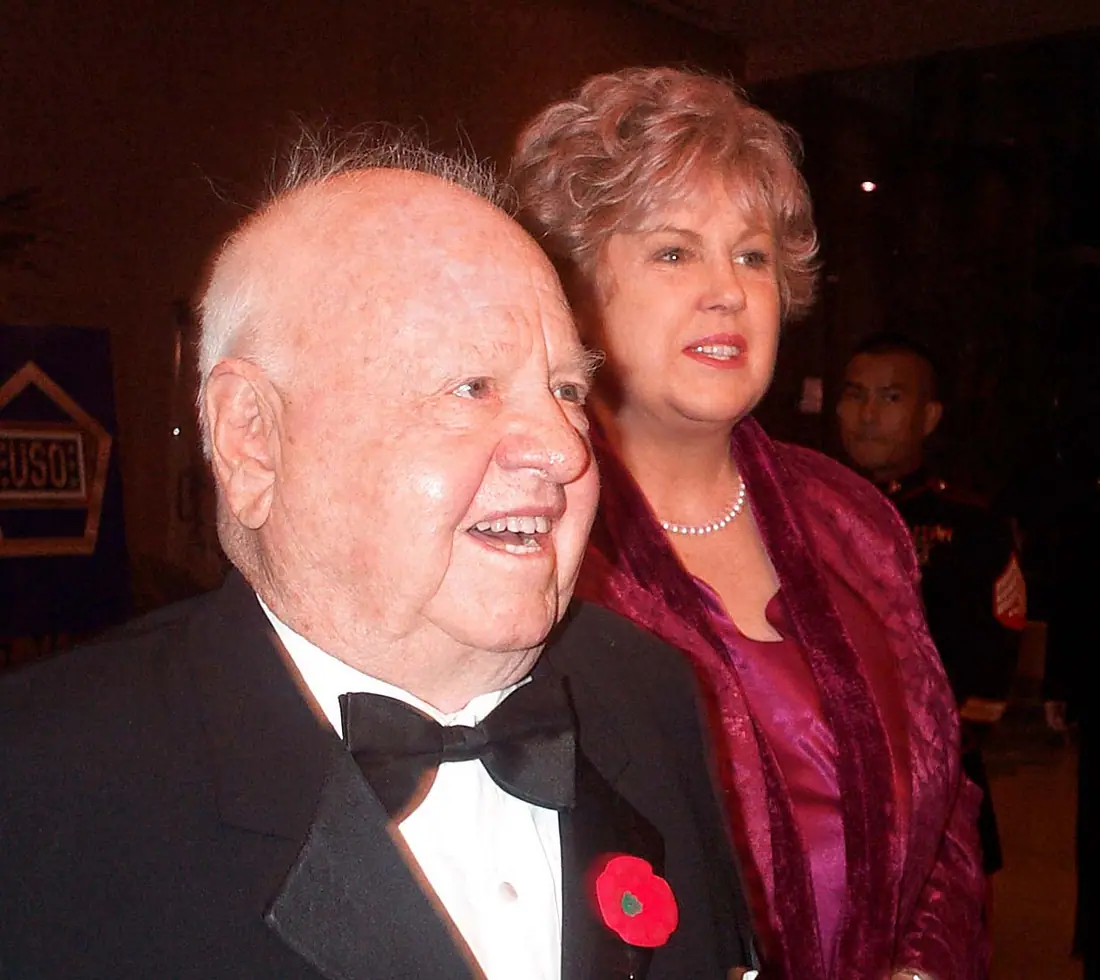
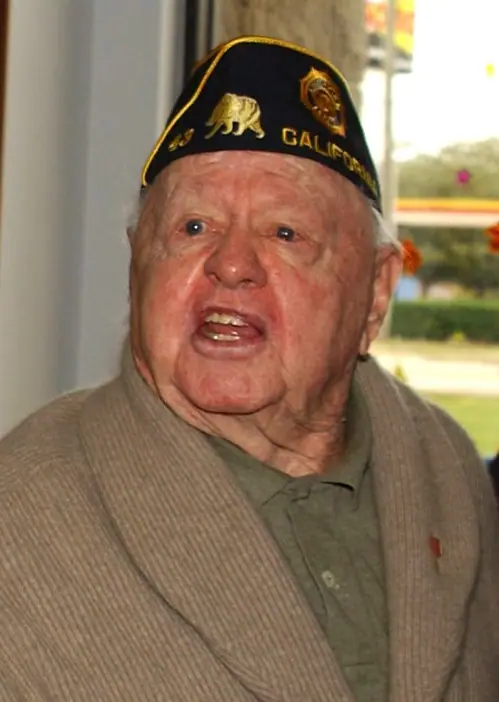
Ninnian Joseph Yule Jr. was born in Brooklyn on September 23, 1920, and was working on a stage before he was two. As Mickey Rooney he was, for a stretch of the late 1930s, the biggest box-office draw in the United States. He won a Bronze Star in the Second World War entertaining troops near the front. He worked, more or less continuously, for about ninety years.
He died on April 6, 2014, at 93, at his home in Studio City. His personal property was valued at $18,000. He owed medical bills and back taxes, and money was raised publicly to bury him.
The gap between those two paragraphs is what this case is about, and the man himself insisted on describing it in public while he was still alive to do it.
A restraining order, then a Senate hearing
On February 16, 2011, Rooney obtained a temporary restraining order against his stepson Christopher Aber and Aber's wife Christina, alleging elder abuse. In April 2011 the temporary order was replaced by a confidential settlement.
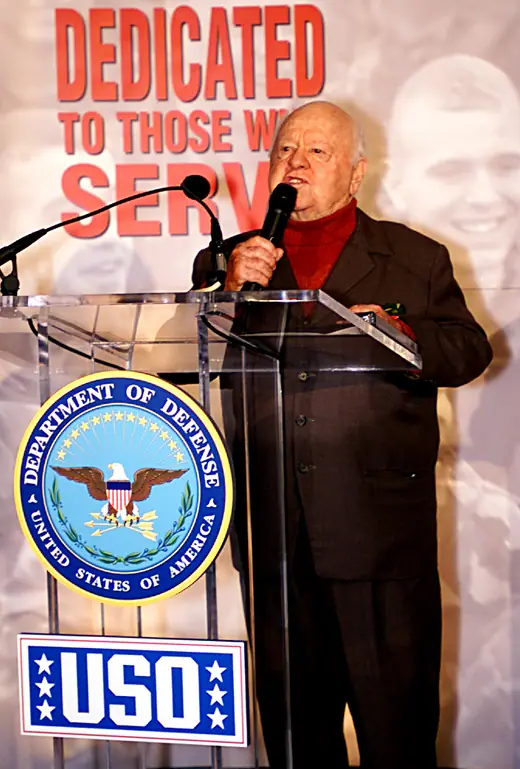
Two weeks after the order, on March 2, 2011, he testified before the United States Senate Special Committee on Aging. He was 90. His prepared testimony is a public document on the committee's own website.
He told the committee his money had been taken and misused, and that when he asked for information he was told he could not have his own information. He described being unable to act in his own house.
It is worth pausing on what that testimony is, procedurally. It is not evidence in any case. It is not a finding. It is a very old and very famous man deciding that the most useful thing he could do with what remained of his public standing was to sit in a hearing room and say out loud that this happens — because the ordinary version of it happens to people whose names nobody knows, and who therefore never get a hearing at all.
Later in 2011 a Los Angeles court placed his finances under a conservatorship. The conservator was Michael Augustine.
A judgment nobody could collect
The conservatorship then did what a conservatorship is for: it hired lawyers and went after the money.
The conservator's action alleged that Rooney's stepson and his wife had converted millions of dollars in assets over roughly a decade. Reporting has put the amount claimed at around $8.5 million.
In 2013 the matter produced a $2.8 million stipulated judgment against the stepson in Los Angeles County Superior Court, together with the recovery of memorabilia and personal property. A stipulated judgment is a judgment the parties agree to have entered. It resolves the claim; it does not adjudicate guilt.
It was also, in practical terms, a piece of paper. Rooney's attorney said publicly that it was unlikely the estate would ever collect on it. Reporting has described the judgment as unenforceable in substance.
That is the part of elder financial exploitation nobody puts in the brochure. By the time anyone notices, the money has usually been spent. Recovery actions are slow, expensive, and are frequently litigated against people who have nothing left to take. The judgment is real. The dollars are gone.
The will, the children, and the burial
On March 11, 2014, less than a month before he died, Rooney signed a will. It left the entire estate to a different stepson, Mark Rooney, and Mark's wife Charlene, who had cared for him during the last two years of his life. It named the conservator, Michael Augustine, as executor.
It disinherited his eight surviving children and his estranged wife, Jan Rooney, whom he had married in 1978 and separated from in 2012 but never divorced. His attorney said he regarded his children as being in better financial positions than he was. Jan Rooney retained rights to Social Security and a portion of pension income under an earlier agreement.
A will signed three weeks before death, by a man who had been under a conservatorship, disinheriting eight children in favour of a caretaker, is the textbook fact pattern for a contest. And a contest came. The will was challenged; the lawyers who had obtained the conservatorship defended it, and the will stood.
Then came the fight nobody expected, over the least valuable thing in the estate.
The executor said Rooney had wanted to be buried at Hollywood Forever Cemetery. Jan Rooney sought to inter him in a pre-arranged family plot. A Los Angeles judge ordered the remains left undisturbed while it was resolved. The parties settled, a judge approved the agreement, and Rooney was buried at Hollywood Forever.
So the estate was $18,000, and the family still went to court over where to put him. The most bitter probate fights are very often about the asset with no dollar value at all.
Timeline
- Feb 16, 2011Rooney obtains a temporary restraining order against his stepson Christopher Aber and Aber's wife Christina, alleging elder abuse.
- Mar 2, 2011Rooney, aged 90, testifies before the US Senate Special Committee on Aging, describing being unable to obtain information about his own finances.
- Apr 2011The temporary restraining order is replaced by a confidential settlement.
- 2011A Los Angeles court places Rooney's finances under a conservatorship; Michael Augustine is appointed conservator.
- 2013A $2.8 million stipulated judgment is entered against the stepson in Los Angeles County Superior Court, plus recovery of memorabilia and personal property. Reporting puts the amount originally claimed at roughly $8.5 million.
- Mar 11, 2014Rooney signs a will leaving his estate to a different stepson, Mark Rooney, and Mark's wife Charlene, and naming the conservator as executor. Eight surviving children and his estranged wife take nothing under it.
- Apr 6, 2014Rooney dies at 93 in Studio City. His personal property is valued at $18,000, against unpaid medical bills and taxes.
- Apr 2014A dispute over his remains delays burial. A judge orders the remains left undisturbed; the parties settle and he is buried at Hollywood Forever Cemetery.
- 2015The will is admitted to probate and successfully defended against challenges. The 2013 judgment is never meaningfully collected.
What actually went wrong
- Authority was handed over without oversight. The recurring feature of financial exploitation cases is a person of trust holding access to accounts and documents with nobody independent looking at the statements. The remedy is structural: a second set of eyes, and a duty to report to someone.
- Detection took years. Reporting describes conduct across roughly a decade before anything formal happened. By the time a court was involved, the recoverable money was largely gone.
- The conservatorship arrived late. It worked — it produced a judgment, recovered property, and gave him a professional in charge. It could not restore a decade of drained accounts.
- A judgment is not money. A $2.8 million stipulated judgment that cannot be collected changes the ledger and not the bank balance. Prevention is the entire game in this area of law.
- A deathbed will in a contested family invites a contest. Signing a will three weeks before death, under a conservatorship, disinheriting eight children in favour of a caretaker, is defensible and was defended — and it still cost the estate a fight it could not afford.
Would it have gone that way in Florida?
Florida has more machinery for this than almost any state — a criminal statute, a civil statute with fee-shifting, and a burden of proof that flips. Every one of them still works better before the money moves.
Start with the vocabulary, because Florida's differs. California appoints a conservator; Florida appoints a guardian, under Chapter 744. Same idea, different word. Florida's process runs through an examining committee, and the court must impose the least restrictive alternative — which is why a well-drafted durable power of attorney and health care surrogate, signed while you still can, is the thing that keeps a guardianship from being necessary at all.
Florida criminalises this specifically. Under Fla. Stat. §825.103, exploitation of an elderly person or disabled adult is its own felony. It reaches taking or misusing the funds or property of a person 65 or older, using a position of trust or a business relationship to do it, breaching a fiduciary duty as a guardian, trustee or agent under a power of attorney, and fraudulently altering a will or trust. The degree tracks the amount: third-degree felony under $10,000, second-degree from $10,000 to $49,999, first-degree at $50,000 or more. The statute also creates a rebuttable presumption of exploitation where more than $10,000 is transferred to a non-relative the person has known for under two years without receiving equivalent value.
Florida also gives the victim a civil action with fee-shifting, which matters more than it sounds. Under §415.1111, a vulnerable adult who has been abused, neglected or exploited — or the adult's guardian, or the personal representative of a deceased victim's estate — may sue for actual damages, punitive damages, attorney's fees and costs. Fees are what makes an exploitation case economically possible for a family that has just discovered the accounts are empty.
Then the will. Florida takes undue influence seriously and, unusually, moves the burden. Under Fla. Stat. §732.5165, a will procured by fraud, duress, mistake or undue influence is void. Under §733.107(2), once the presumption of undue influence arises, it shifts the burden of proof to the person who benefited — not merely a burden to come forward with evidence, but the burden of persuasion. The presumption itself comes from In re Estate of Carpenter, 253 So. 2d 697 (Fla. 1971), which asks whether a substantial beneficiary occupied a confidential relationship with the testator and actively procured the will, and lists the factors courts weigh — presence at the execution, knowing of the contents beforehand, recommending the attorney, safekeeping the will, and so on.
Apply that to a will signed three weeks before death, by a person under court supervision, leaving everything to a live-in caretaker: in Florida, that combination will very often be enough to shift the burden onto the caretaker. Which cuts both ways. If you genuinely want to leave your estate to the person who actually cared for you — and many people rightly do — the defensive drafting matters enormously: independent counsel with no connection to the beneficiary, a contemporaneous capacity assessment, the beneficiary out of the room, a written statement of reasons, and, if it can be managed, doing it years earlier rather than weeks.
And a no-contest clause will not save it. Fla. Stat. §732.517 makes in terrorem clauses in wills unenforceable in Florida, and §736.1108 does the same for trusts. A disinherited Florida child can challenge the will without risking anything they were given, because they were given nothing.
Finally, the burial. Florida is one of the states with a clear statutory answer. Fla. Stat. §497.005 defines the legally authorized person for the disposition of remains, and the decedent's own written direction ranks first — ahead of the spouse, ahead of the children, ahead of everyone. A signed page saying where you want to be buried, kept somewhere findable, would have ended the Rooney burial dispute before it started, and it is the single cheapest document in estate planning.
The honest caveat: none of these tools is fast. A guardianship petition, a §415.1111 action and a will contest all take months to years, and a judgment against someone who has spent the money is worth what Rooney's was worth.
So the practical instruction is preventive, and it is four lines. Sign a durable power of attorney and a health care surrogate now, and name two people, not one. Give a second, uninvolved person standing access to the statements — a child, an accountant, a professional fiduciary — so that somebody who is not the caregiver is looking at the numbers every month. Write down where you want to be buried and give a copy to the person who will be asked. And if you intend to leave your estate to the person caring for you, do it early, through your own lawyer, and write down why.
What people ask us about this.
Further reading
Third-party sites. Not ours, not endorsed, not kept current by us — just the places worth going next.
Sources
- Mickey Rooney tells Senate panel he was a victim of elder abuse — CNN, Mar 2 2011
- Testimony of Mickey Rooney to the Senate Special Committee on Aging — US Senate Special Committee on Aging, Mar 2 2011
- Mickey Rooney — biography, the 2011 restraining order, conservatorship and estate — Wikipedia
- Protecting a Hollywood legend — Holland & Knight case study
- Mickey Rooney's will leaves estate to stepson, cuts out family — CBS News, Apr 2014
- Mickey Rooney's widow contests late actor's will — CNN, May 8 2014
- Mickey Rooney family resolves tussle over remains — NBC News, Apr 2014
- Mickey Rooney buried at Hollywood Forever Cemetery — ABC7 Los Angeles, Apr 2014
- Fla. Stat. §825.103 — Exploitation of an elderly person or disabled adult — The Florida Senate
If this is your situation
Free 30-minute consult. Plain English. No pressure.
Nearly every case in this archive turned on something ordinary — an unwitnessed page, a stale beneficiary line, a document nobody could find. Those are cheap to fix while you're alive and expensive to fix afterward.