Marlon Brando
He bought the house in 2002 and kept it in his own name. The woman who ran his household said he had promised to sign the deed over before he died. He never did — and an unwritten promise about real estate is, in almost every American state, a story rather than a contract.
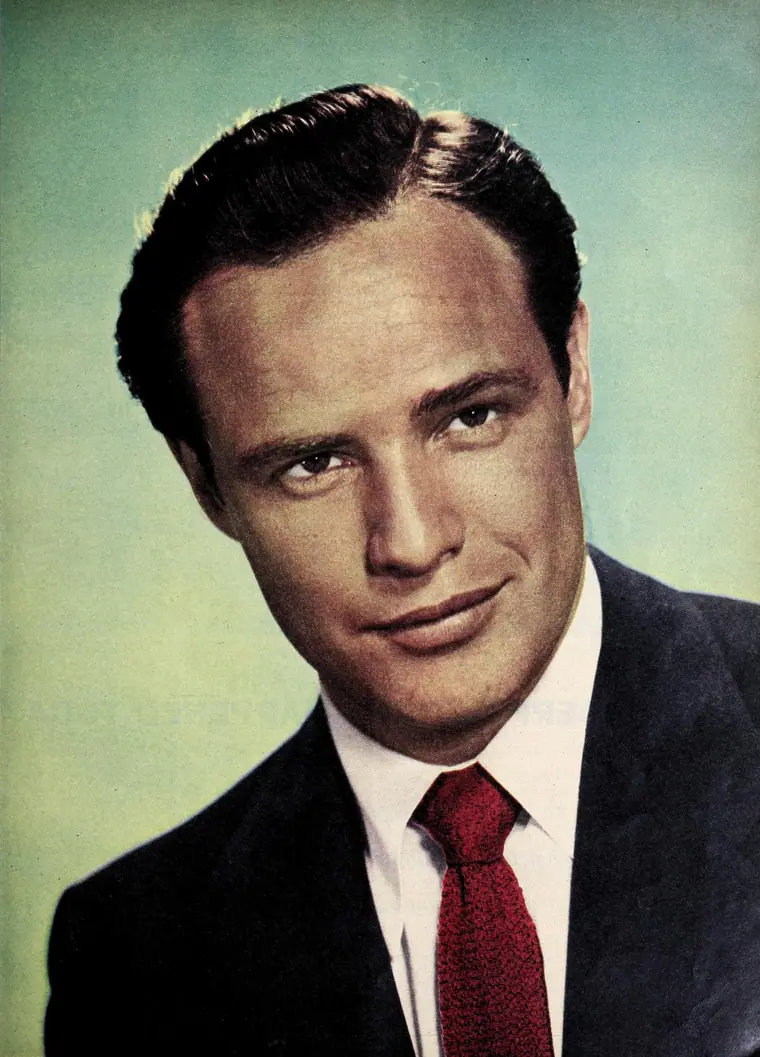
Marlon Brando died at a Los Angeles hospital on July 1, 2004. He was 80. He left a will, executors, a living trust, and a household of people who had worked for him for decades and had been told, in conversation, what he intended for them.
That last category is the one that generated the litigation. Reporting after his death put the number of lawsuits touching the estate at more than two dozen.
The clearest of them concerned a house in the San Fernando Valley. Angela Borlaza had worked for Brando since 1995 — first as his cook, later as his personal assistant and, in her own description, the major domo of his household. In her 2006 lawsuit she alleged that Brando bought the house for her in 2002, kept the title in his own name for tax reasons, and told her the deed would be transferred to her before he died.
He did not transfer it. She alleged he became too ill to do so. After his death the house was sold, and in March 2005 she was evicted from it.
Fraud, deceit, and a broken oral contract
Borlaza filed suit in Los Angeles Superior Court in July 2006, two years after Brando's death. She named the estate's co-executors — the producer Mike Medavoy, Larry J. Dressler, and Avra Douglas — and pleaded fraud, deceit, and breach of an oral contract to give her the house. She sought the proceeds of the sale and $2 million in punitive damages.
The petition went further. Borlaza alleged that a codicil to Brando's will had been executed on June 18, 2004 — thirteen days before his death — shifting authority to the co-executors from his longtime advisers, and that at the time he was, in the petition's words, incapacitated, confused, medicated and non-communicative. She questioned whether he had signed it at all, telling the court that Brando had shared with her a private feature of his signature by which she could recognise a genuine one.
None of that was ever decided. No court found that Brando lacked capacity, that any signature was not his, or that any promise had been made. The claims were allegations, contested by the executors, and the file closed without a ruling on any of them.
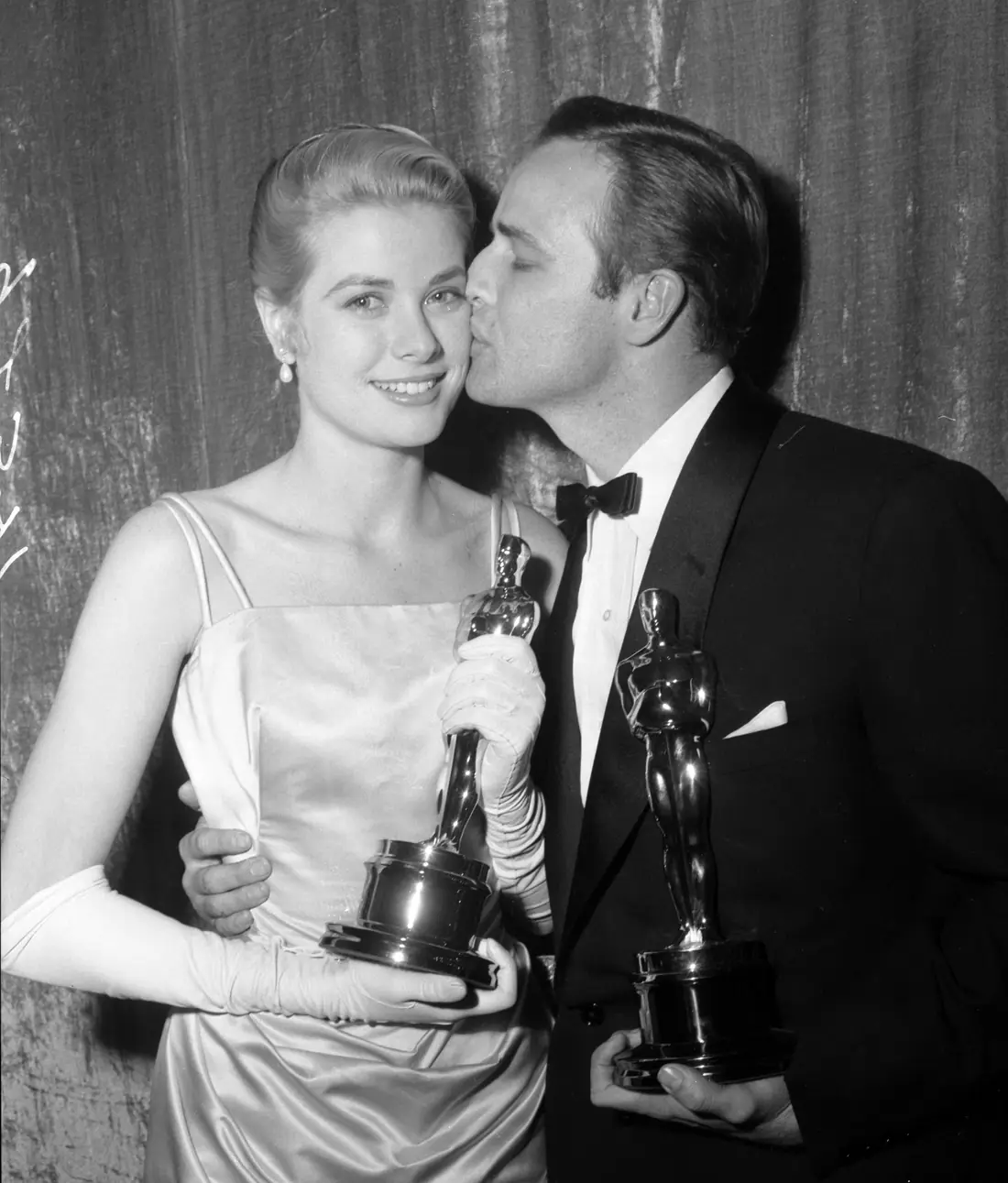
On December 22, 2006, a settlement was filed. Borlaza received $125,000 — a figure to be read against a claim for the sale proceeds plus $2 million, and against an estate reported at roughly $26 million. Settlement is not an admission by anyone. It is what a disputed oral promise is generally worth once lawyers have costed out the proof problem on both sides.
Why an unwritten promise about a house is almost never enforceable
Three separate legal walls stand between a claimant and an oral promise of real estate, and a claim has to get past all of them.
The statute of frauds. Since 1677 the common-law world has required contracts for the sale of land to be in writing and signed. The rule exists precisely because the person best placed to contradict the claim is dead. Every American state has a version.
The dead man's problem. The only two people in the conversation were Brando and Borlaza. One of them cannot testify. Courts are structurally suspicious of a contract whose only surviving witness is the person who benefits from it.
The title record. Brando held the deed. Land ownership in the United States is a public register, and the register said his name. A stated reason for the arrangement — that it was held in his name for tax purposes — is an explanation for why the record looks the way it does. It is not a transfer.
There are exceptions in some states — part performance, promissory estoppel, constructive trust — but they demand hard corroboration: payments made, improvements built, a written memorandum, contemporaneous evidence that the arrangement existed. They are narrow doors, they are expensive to walk through, and they very often close on the last remaining witness.
The estate as an employer
The Brando case is remembered as a story about one housekeeper. It is better read as a story about what happens when a long-serving household staff is provided for by relationship rather than by document.
People who work in a home for a decade or more occupy a genuinely awkward legal position. They are employees, so they have wage claims. They are often also intended beneficiaries, which is not a legal status at all until it is written down. And they are, frequently, the people closest to the decedent in the final months — which places them at exactly the intersection where a probate court is trained to be careful, because that proximity is also the fact pattern of undue influence.
The result is that the very people an owner most wants to look after are the ones whose claims are hardest to prove and most likely to be resisted. Brando appears to have wanted Angela Borlaza to have that house. The absence of a piece of paper turned that intention into a two-year lawsuit and a settlement worth a fraction of the asset.
Twenty-plus other suits followed the same estate for years afterward. Sorting out an estate of roughly $26 million took far longer, and cost far more, than the documents required to avoid it.
Timeline
- 1995Angela Borlaza begins working for Brando as a cook, later becoming his personal assistant and household manager.
- 2002Brando purchases a house in the San Fernando Valley. Title is held in his name. Borlaza later alleges it was bought for her, with a promised transfer of the deed.
- Jun 18, 2004A codicil to Brando's will is executed, thirteen days before his death, shifting authority to co-executors Mike Medavoy, Larry J. Dressler and Avra Douglas.
- Jul 1, 2004Brando dies in Los Angeles at 80. The estate is reported at roughly $26 million.
- Mar 2005The house is sold and Borlaza is evicted from it.
- Jul 2006Borlaza sues the co-executors in Los Angeles Superior Court alleging fraud, deceit and breach of an oral contract, seeking the sale proceeds and $2 million in punitive damages, and challenging the June 2004 codicil.
- Dec 22, 2006A settlement is filed. Borlaza receives $125,000. No allegation is adjudicated.
- 2004–2010sReporting counts more than two dozen lawsuits touching the estate, delaying distribution for years.
What actually went wrong
- A promise about land, made out loud. The one category of promise that the law has required in writing for three and a half centuries, for exactly this reason.
- Title never moved. Holding a house in your own name for tax reasons means you own the house. The register does not record intentions.
- Nothing in the will or the trust. A specific devise naming the property and the person would have made the claim unnecessary. Its absence made the claim unprovable.
- A codicil thirteen days before death. Whatever its merits — and none of the allegations against it were ever adjudicated — a last-minute change signed by a dying man is the single most contestable document in probate practice.
- Household staff provided for by relationship. Long-serving employees are the people most likely to have been promised something and least able to prove it. They need naming in the instrument, in writing, or they need nothing at all.
Would it have gone that way in Florida?
Same result, three times over. Florida has a statute written specifically to kill this claim — and two more that would have killed it independently.
Florida does not merely apply the ordinary statute of frauds to promises like this. It has a dedicated provision, and it is unusually strict.
Fla. Stat. §732.701 provides that no agreement to make a will, to give a devise, not to revoke a will, not to revoke a devise, not to make a will, or not to make a devise is binding or enforceable unless the agreement is in writing and signed by the agreeing party in the presence of two attesting witnesses. Read the requirement carefully: not just a writing — a writing executed with the same formality as a will. A signed note is not enough. An email is not enough. A promise repeated to five people over ten years is not enough. Subsection (2) adds that even a joint or mutual will creates no presumption of a contract. Florida closed this door and then bolted it.
Then the statute of frauds, separately. §725.01 makes unenforceable any action on a contract for the sale of lands, tenements or hereditaments, or on any agreement not to be performed within one year, unless the agreement or a memorandum of it is in writing and signed by the party to be charged. A promise to convey a house at some future point fails this on both limbs at once.
Then the clock. This is the one that surprises out-of-state lawyers. Fla. Stat. §733.710 bars all claims against a Florida decedent's estate — including claims not yet due, contingent, or unliquidated — two years after the date of death, regardless of whether anyone published notice and regardless of whether the claimant knew. It is not a claims-procedure rule that can be excused for good cause; it operates as a statute of repose. §733.702 shortens it further for known claimants: 3 months from first publication of the notice to creditors, or 30 days from service. Borlaza filed in July 2006, roughly two years and a fortnight after Brando's death. In Florida that filing is late on its face.
The honest caveat. Florida courts do recognise narrow equitable routes where the statutes would otherwise work a fraud — constructive trust, resulting trust, unjust enrichment, and in the right facts a claim for tortious interference with an expectancy under Schilling v. Herrera, 952 So. 2d 1231 (Fla. 3d DCA 2007), where probate remedies are inadequate. Every one of them requires corroboration outside the claimant's own account: money the claimant paid, improvements the claimant made, a contemporaneous writing, an admission by the decedent to a disinterested witness. They are real, and they are hard, and the two-year bar in §733.710 sits over all of them.
The practical instruction, in both directions. If you intend to give someone your house, move the title or name the property and the person in the document — a recorded deed, a life estate with a remainder, a Florida enhanced life estate (lady bird) deed that keeps full control during your lifetime, or a specific devise. If you have been told you will inherit something, understand that you own nothing until it is written and executed properly, and that in Florida your outside limit for doing anything about it is two years from the date of death.
What people ask us about this.
Further reading
Third-party sites. Not ours, not endorsed, not kept current by us — just the places worth going next.
Sources
- Lawsuit filed over Brando estate — CBS News / AP, Jul 2006
- Executors of estate of Marlon Brando agree to settle lawsuit with former aide for $125,000 — Fox News / AP, Jan 4 2007
- Marlon Brando estate sues over sale of chair — NBC News / AP, 2007
- Celebrity legacies: Marlon Brando's estate marred by dozens of lawsuits — Danielle Mayoras
- The Marlon Brando will: a lesson in estate planning — Haimo Law
- Marlon Brando's housekeeper claimed he promised she would inherit his home — Katzner Law Group
- Fla. Stat. §732.701 — Agreements concerning succession — The Florida Senate
- Fla. Stat. §725.01 — Statute of frauds — The Florida Senate
If this is your situation
Free 30-minute consult. Plain English. No pressure.
Nearly every case in this archive turned on something ordinary — an unwitnessed page, a stale beneficiary line, a document nobody could find. Those are cheap to fix while you're alive and expensive to fix afterward.