Marjory Stoneman Douglas
She died in Coconut Grove at 108 with no spouse and no children — the profile that usually produces a mess. It did not, because she had already handed over her papers in 1987 and her cottage in 1991, and left written instructions for her ashes. Almost nothing was left to fight about.
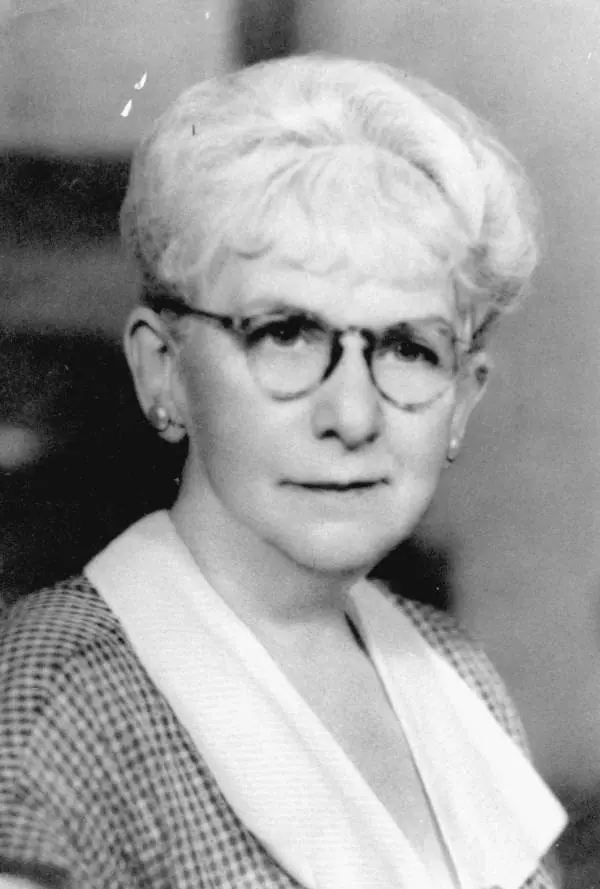
Marjory Stoneman Douglas was born in Minneapolis on April 7, 1890. She married Kenneth Douglas in 1914 and was divorced by 1915. That autumn she came to Miami to rejoin her father, Frank Bryant Stoneman, the first publisher of the paper that became the Miami Herald, and went to work on its staff. She never remarried and had no children.
In 1947 she published The Everglades: River of Grass. The first printing sold out in a month. It has sold roughly half a million copies since, and it supplied the phrase that changed how a swamp was described in American English — and therefore how it was treated.
In 1969, at 79, she founded Friends of the Everglades, which had 3,000 members within three years. President Clinton gave her the Presidential Medal of Freedom in 1993, at 103. She died at her Coconut Grove cottage on May 14, 1998, at 108.
By every actuarial and legal measure, this should have been a difficult estate. A woman of enormous public significance, no spouse, no descendants, a nationally important archive, a landmark house, and a hundred and eight years of accumulated everything. Instead, the two assets that mattered had already left her hands eleven and seven years before she died.
1987: the archive leaves in a truck
In 1987, Douglas gave her papers to the University of Miami Libraries Special Collections. The collection — catalogued as ASM0060 — runs to 39 linear feet: book manuscripts, correspondence, photographs, diaries, newspaper clippings, video, and awards. Among it are hundreds of letters she wrote to politicians, including Representative Dante Fascell and Governor Bob Graham.
That is a completed lifetime gift of tangible personal property. Delivered, accepted, done. It is not a bequest, it is not conditional, and it is not subject to anything a probate court has to say about it.
The distinction is not academic. An archive of that scale left by will is an appraisal problem, a storage problem, a creditor problem, and frequently a family problem. Left by delivery during life, it is a receipt. The University has since digitized portions of it and built a public exhibit around the collection.
1991: the house is sold, and she stays in it
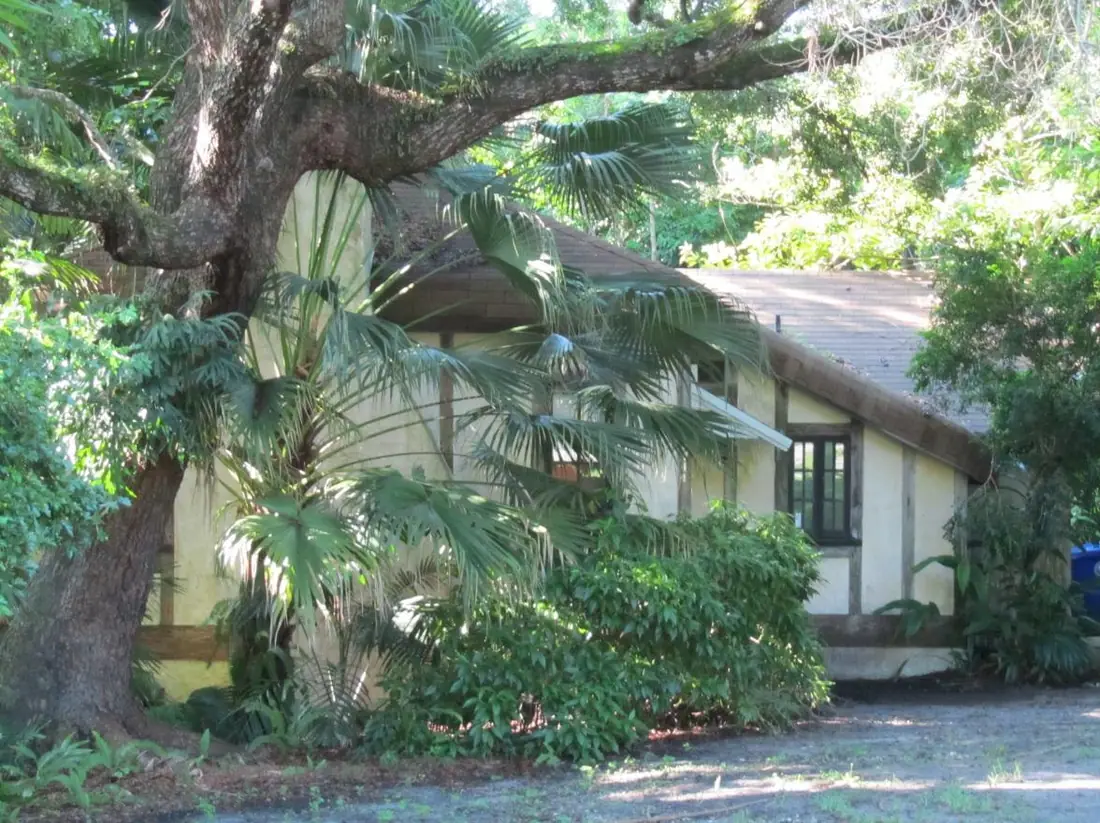
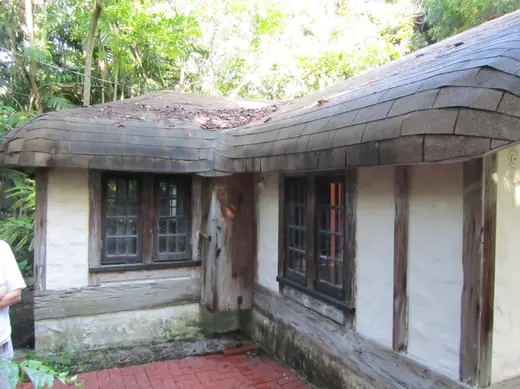
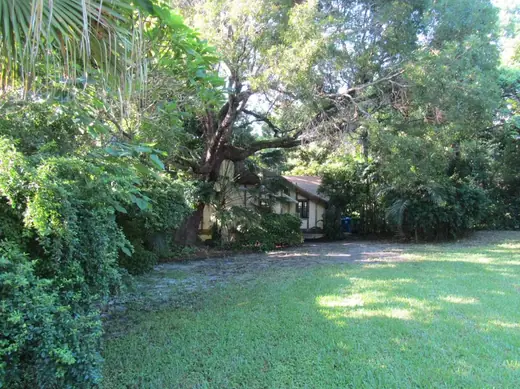
The cottage at 3744 Stewart Avenue, in the south end of Coconut Grove, is 916 square feet — a single-story wood-frame house resembling an English country cottage, with half-timbered stucco, brick, cypress detailing, and a curving shingled roof. She moved in in 1926 and called it a workshop more than a house. She wrote River of Grass there.
In 1991 the State of Florida purchased it — one account puts the transaction in 1992 — as the home of one of Florida's most distinguished citizens. Under the arrangement, Douglas lived out her remaining years there, with the intent that after her death it would become a place honoring her work.
So the house was not devised. It was conveyed during her life, with her occupancy preserved, to an institution that would still exist when she did not. That is a structure Florida estate lawyers recognize immediately, and it is the reason the property never entered a probate inventory or a dispute among remote heirs.
The house has been closed to the public since her death. It was designated a National Historic Landmark on February 27, 2015, and listed on the National Register the same day (reference 15000312). The Florida Department of Environmental Protection manages it within the state park system. In 2024 the state bought the adjoining vacant lot — once the home of a college roommate of hers — for $1.78 million. Foundation and roof repairs are complete, and on April 3, 2025 Miami's Historic and Environmental Protection Board voted 7-0 to approve drainage and landscaping work, while declining a proposed driveway, parking area, and brick pathway. The plan discussed publicly contemplates visits by appointment in small groups.
1998: the third instruction
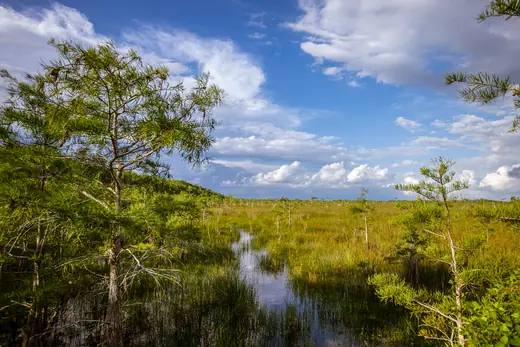
The Marjory Stoneman Douglas Wilderness — roughly 1.3 million acres inside Everglades National Park — was named for her in 1997, the year before she died.
Her ashes were scattered there in a public ceremony on May 23, 1998, as she had asked.
This is the third of the three things she handled in advance, and it is the one most likely to go wrong for everyone else. Disputes over remains are the bitterest category of probate litigation precisely because there is nothing to divide and no way to compromise. Florida has an answer for it, and the answer is a piece of paper written before death.
Timeline
- Apr 7, 1890Born in Minneapolis. She comes to Miami in the fall of 1915 and joins her father's newspaper staff.
- 1926Moves into the Stewart Avenue cottage in Coconut Grove, where she will live for the rest of her life.
- 1947The Everglades: River of Grass is published. The first printing sells out in a month.
- 1969Founds Friends of the Everglades at 79. Membership reaches 3,000 within three years.
- 1987Donates her papers — 39 linear feet — to the University of Miami Libraries Special Collections.
- 1991The State of Florida purchases the cottage; she continues to live there. One account dates the transaction to 1992.
- 1993Receives the Presidential Medal of Freedom at 103.
- May 14, 1998Dies at the cottage at 108. Her ashes are scattered on May 23 in the Marjory Stoneman Douglas Wilderness, named for her the year before.
- Feb 27, 2015 – Apr 2025The house becomes a National Historic Landmark and NRHP listing 15000312. The state buys the adjoining lot for $1.78M in 2024; Miami's preservation board approves drainage and landscaping work on April 3, 2025.
What actually went wrong
- Almost nothing — which is the point. With no spouse and no descendants, §732.103 would have sent her estate to parents, then siblings and their descendants, then grandparents and theirs. She removed the two assets anyone would have fought over before the statute could reach them.
- A lifetime gift beats a bequest for anything hard to value. An archive, a collection, a house with historic significance: appraisal fights, storage costs, and creditor exposure all attach to property that is still yours at death. Delivered during life, none of it applies.
- Institutions outlive people. She gave the papers to a university and the house to a state. Both were still there in 1998 and both are still there now. A gift to an individual is a gift that has to survive that individual's own estate.
- Written instructions for remains are the cheapest document in estate planning. Florida ranks the decedent's own written directions first. Douglas left them, and there was no dispute — which is not the usual outcome for a public figure with a wilderness area named after her.
- The public record is thin, and that is normal. Beyond the property and the archive, little about her estate administration is publicly reported. Florida inventories are confidential by statute, and an estate that was largely emptied during life produces very little to report.
Would it have gone that way in Florida?
Same result, and Florida makes this route easier than most states. The best estate plan is often the one that finishes before probate starts.
Douglas died a Florida resident with no surviving spouse and no descendants. Under §732.103, an intestate estate in that posture passes to the decedent's parents, then to brothers and sisters and the descendants of deceased brothers and sisters, then to grandparents and their descendants — and it stops there, escheating to the State School Fund under §732.107 if no qualifying heir is found. That is a genealogical search, conducted by a personal representative, at the estate's expense. She avoided it by owning less at death.
The house is the instructive piece. Because she had no spouse and no minor child, the constitutional restriction on devising Florida homestead in §732.4015 did not apply to her at all — she could have left the cottage to anyone. She still transferred it during life. §732.4017 confirms why that works: an inter vivos transfer of homestead, including into a trust, is not a devise, provided the transferor retains no power to revoke or revest the interest. A completed sale to the State of Florida with continued occupancy is exactly that transaction. The asset was gone from the estate the day the deed was recorded.
Florida offers a homegrown version of the same idea for families who cannot simply sell the house: the enhanced life estate deed, universally called the lady bird deed. The owner keeps full use, full control, and the right to sell or mortgage without anyone's consent, and the remainder passes automatically at death without probate. It is the retained-possession structure with the control problem removed.
On remains, §497.005 defines who is the legally authorized person to direct the disposition of a body — and the decedent's own written directions rank first, ahead of a spouse, ahead of children, ahead of everyone. That single ranking is why Douglas's ashes went where she said and why so many other families end up in front of a judge instead.
The honest caveat: lifetime gifts are irreversible, and they can go badly. Give away the house and you are a guest in it unless the deed says otherwise in writing. Give away the collection and you cannot get it back if the institution changes direction. Large gifts have federal gift-tax reporting consequences, and transfers of a home can affect Medicaid eligibility within the five-year look-back. None of that argues against the strategy; all of it argues for documenting the terms.
The practical instruction: make a list of the three things in your estate that are hardest to value and most likely to be argued about — and decide now whether each one should leave during your life or at your death. Then write down what you want done with your body, sign it, and tell the person who will be asked. Those two exercises cost nothing and remove the majority of what probate courts actually fight about.
What people ask us about this.
Further reading
Third-party sites. Not ours, not endorsed, not kept current by us — just the places worth going next.
Sources
- Marjory Stoneman Douglas — biography, publications, death, ashes — Wikipedia
- Marjory Stoneman Douglas House — construction, address, state purchase, NHL designation — Wikipedia
- Grande dame of the Everglades — Tampa Bay Times, May 15 1998
- Honoring the legacy of Marjory Stoneman Douglas — Coconut Grove Spotlight, May 2024
- Restoration of historic cottage moves ahead — Coconut Grove Spotlight, Apr 2025
- Marjory Stoneman Douglas Papers, Special Collections — University of Miami Libraries
- University Libraries to showcase papers of Marjory Stoneman Douglas — University of Miami News, Nov 2023
- Marjory Stoneman Douglas — Florida Department of State, Division of Arts and Culture
- Fla. Stat. §732.103 — Share of other heirs — The Florida Senate
If this is your situation
Free 30-minute consult. Plain English. No pressure.
Nearly every case in this archive turned on something ordinary — an unwitnessed page, a stale beneficiary line, a document nobody could find. Those are cheap to fix while you're alive and expensive to fix afterward.