Burt Reynolds
The will filed after his death in Jupiter, Florida said in plain words that his only son was left out of it. Every headline ran with that. The next clause of the same sentence explained why, and it was the opposite of what the headlines said.
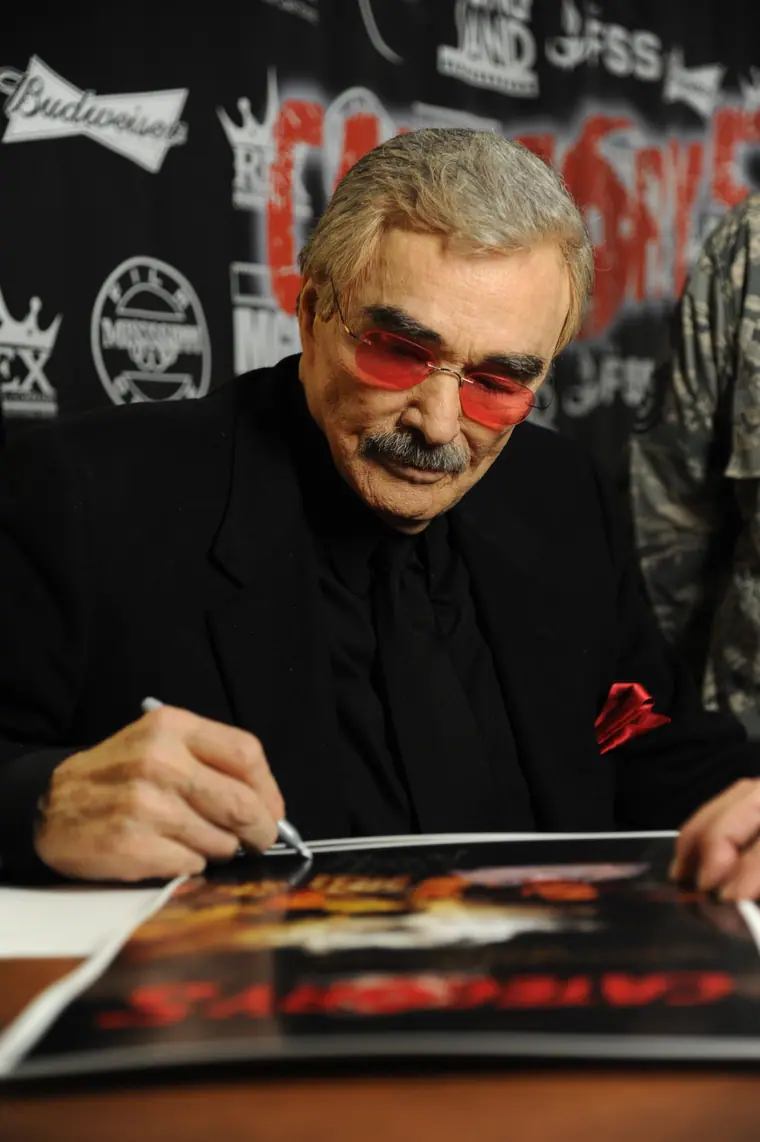
Burt Reynolds died on September 6, 2018, in Jupiter, Florida, at 82, after cardiac arrest. He had been the number-one box-office star in America for five straight years, and he had lived in Florida for most of his adult life.
Eleven days later, the will he had signed in 2011 was filed with a Florida probate court, and the reporting wrote itself. The document named his only child, Quinton, and then said this:
“I intentionally omit him from this, my Last Will and Testament, as I have provided for him during my lifetime in my Declaration of Trust.”
Roughly half the coverage stopped at the comma.
A pour-over will over a private trust
What Reynolds had was a pour-over will paired with a revocable living trust — the standard architecture for anyone who wants their affairs handled without a public court file.
The trust holds the assets during life and distributes them after death, under terms nobody outside the family ever reads. The will exists as a backstop. Its entire job is to catch anything that was never retitled into the trust and pour it into the trust, so that even the strays end up governed by the private document.
That is why a properly executed plan produces a will that looks almost empty. There is nothing in it, because there is nothing left for it to do. Reporting at the time described the will as effectively hollow, with the assets in the trust. That is not a criticism. That is the design working.
His niece, Nancy Lee Brown Hess, was named to serve. Contemporary reporting listed Brian Ritchey Brown and Tracy Erin Rogers as alternates. Accounts differed on whether she was named as personal representative of the estate, trustee of the trust, or both — which is itself a symptom of the point: the will was public and the trust was not, so the press could see half the plan.
- The will is filed. Anyone may read it at the courthouse. It says almost nothing.
- The trust is not filed. It says everything, and no one outside the family and its beneficiaries has a right to see it.
- The pour-over clause sends any stray asset into the trust rather than distributing it under the will.
- The named son appears in the will — which, as it happens, is the clause that forecloses a pretermitted-child claim.
Reported estimates of the estate ranged from $3 million to $5 million — modest for a career of more than a hundred films, and the number reflects a different chapter.
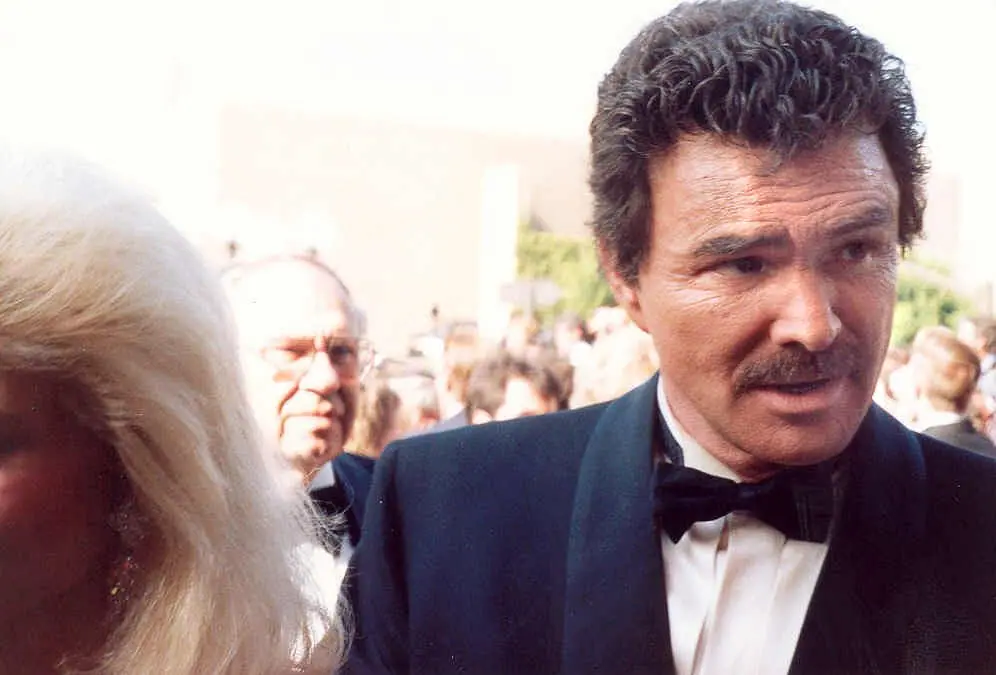
1996: Chapter 11, and the house that survived it
In 1996 Reynolds filed for Chapter 11 bankruptcy. Reported figures put his assets at roughly $6.65 million against liabilities above $11 million. The causes were the ordinary ones, in extraordinary amounts: an expensive divorce, restaurant ventures he had personally guaranteed rather than holding through an entity, and a $3.7 million loan tied to a television series that fell short of the episode count needed for syndication.
He kept his Florida home. He kept it because of Article X, Section 4 of the Florida Constitution, which exempts a homestead from forced sale by creditors with no cap on value — up to half an acre inside a municipality, up to 160 acres outside one. It is the most powerful debtor protection of its kind in the United States, and Reynolds's case was cited by name in Washington when Congress debated tightening it.
Two things follow from that, and both matter to this archive. First, a man who had been through an insolvency knew exactly what it feels like to have his finances read in public, which is a plausible reason to build the rest of his life around a document nobody could read. Second, the homestead protection that shielded him from creditors during life is a different rule from the homestead descent restrictions that govern where a house can go at death.
Two and a half years to a grave
Reynolds was cremated. His remains stayed in Florida.
On February 11, 2021 — nearly two and a half years after his death — his ashes were interred at Hollywood Forever Cemetery in Los Angeles, in a small private ceremony with relatives attending by video. The cemetery's president, Tyler Cassity, arranged it. Afterward a single fan came by and left a miniature Trans Am on the grave.
No public explanation was given for the delay, and the family, which had asked for privacy after his death, did not offer one. It is worth saying plainly that a two-year gap between a cremation and an interment is not unusual and is not evidence of a dispute. Families take time. Cemeteries have waiting lists. The relevant legal point is simply that someone has to be authorized to decide, and in Florida that authority follows a statutory ranking unless the decedent wrote his wishes down.
The estate itself produced no publicly reported litigation. The will said what it said, the trust did what it was built to do, and the person who might have had standing to complain was the beneficiary of the trust. That is the whole trick, and it is not a trick.
Timeline
- 1988Reynolds and Loni Anderson adopt a son, Quinton.
- Dec 1996Reynolds files Chapter 11 bankruptcy, reporting roughly $6.65 million in assets against liabilities above $11 million. Florida's homestead exemption protects his Florida home.
- 2011Reynolds signs the will that will later be filed — a pour-over will naming Quinton and expressly omitting him in favor of a Declaration of Trust.
- Sep 6, 2018Burt Reynolds dies in Jupiter, Florida, at 82, after cardiac arrest.
- Sep 17, 2018The will becomes public. Coverage reports that Reynolds “cut out” his son. The same sentence explains that a trust already provides for him.
- 2018–2020The trust administers privately. No public estate litigation is reported.
- Feb 11, 2021His ashes are interred at Hollywood Forever Cemetery in Los Angeles in a small private ceremony, relatives attending by video.
What actually went wrong
- Nothing, legally. This is one of the few cases in the archive where the plan did its job. It is here because of what the coverage did to it.
- The optics of a public will. A pour-over will is filed; a trust is not. So the only document the world reads is the one that says a child gets nothing — and it says so in the coldest available language.
- Language that invites a headline. “I intentionally omit him” is legally necessary and rhetorically brutal. A drafter can add a neutral recital — because he is provided for under my trust — in the same clause, and many now do, precisely because of cases like this one.
- Guaranteeing business debt personally. The 1996 bankruptcy traced substantially to restaurant ventures funded personally rather than through an entity. That is an asset-protection failure, and it happened decades before the estate plan had to work.
Would it have gone that way in Florida?
This IS Florida — and Florida law is the reason the plan held.
Start with the sentence everyone misread, because Florida has a statute that makes it necessary. Fla. Stat. §732.302 provides that a child born or adopted after a will is executed, and not provided for in it, takes an intestate share as a pretermitted child — unless it appears from the will that the omission was intentional.
The honest caveat, which almost no commentary on this estate got right: §732.302 protects only children who arrive after the will. Quinton was adopted in 1988; the will was signed in 2011. He was not a pretermitted child, and the statute would not have applied to him regardless. But a careful drafter writes the exclusionary language anyway, because a will is often the last one signed after decades of family change, and because ambiguity about a named child is the cheapest litigation to prevent and the most expensive to lose.
Now the structure. §732.513 expressly authorizes a devise to the trustee of a trust — including a trust that is amendable, revocable, later amended, or funded only with expected death benefits — so long as the trust is in writing when the will is signed and is identified in the will. The devised property becomes trust principal and is governed by the trust's terms. That statute is what makes a Florida pour-over will work, and it is why the public document can be nearly empty.
Privacy has a limit worth knowing. A revocable trust is not filed with the court, but it is not a black box either. Under §736.0813, the trustee owes qualified beneficiaries a duty to keep them reasonably informed and to account. A beneficiary who is shut out has a remedy; a stranger reading the newspaper does not.
Two more Florida rules that shaped this estate. Art. X, §4 of the Florida Constitution protects homestead from forced sale by creditors with no dollar cap — that is the rule that let Reynolds keep his Florida house through a Chapter 11 in 1996. Separately, §732.4015 restricts the devise of homestead only where there is a surviving spouse or a minor child. Reynolds had neither at death, so the house could pass under the trust like any other asset. People conflate these two homestead rules constantly. They do different jobs.
Finally, remains. Under §497.005, Florida ranks who may direct the disposition of a body — and the decedent's own written directions rank first, ahead of a spouse, a child, or anyone else. If where you end up matters to you, the way to control it is a signed written direction, not a hope that your family will agree.
The practical instruction: if you use a trust to keep your affairs private, make sure the will that goes with it is written knowing it will be read by strangers. Name every child, say plainly that they are provided for elsewhere, and put your disposition-of-remains wishes in a signed document that lives with the trust rather than inside a will nobody will open until after the funeral.
What people ask us about this.
Further reading
Third-party sites. Not ours, not endorsed, not kept current by us — just the places worth going next.
Sources
- When disinheritance is not what it seems: the last will and testament of Burt Reynolds — Above the Law, Sep 2018
- Burt Reynolds kept his estate planning private with a trust — Karp Law Firm, Sep 2018
- Burt Reynolds' will says his niece, not his son, will manage estate — TMZ, Sep 17 2018
- Burt Reynolds' remains find home at Hollywood cemetery more than two years after death — Gulf News / AP, Feb 2021
- The light in Burt Reynolds' financial woes — TrustCounsel, Sep 2018
- Bankruptcy red carpet: Burt Reynolds — American Bankruptcy Institute
- Burt Reynolds — Wikipedia
- Fla. Stat. §732.513 — Devises to trustee — The Florida Senate
- Fla. Stat. §732.302 — Pretermitted children — The Florida Senate
If this is your situation
Free 30-minute consult. Plain English. No pressure.
Nearly every case in this archive turned on something ordinary — an unwitnessed page, a stale beneficiary line, a document nobody could find. Those are cheap to fix while you're alive and expensive to fix afterward.