Kobe Bryant
He signed the last amendment to his family trust in 2017. His fourth daughter was born in 2019. When he died in January 2020, the document that held the family's money named three children — and the trustees had to go to court to add the fourth.
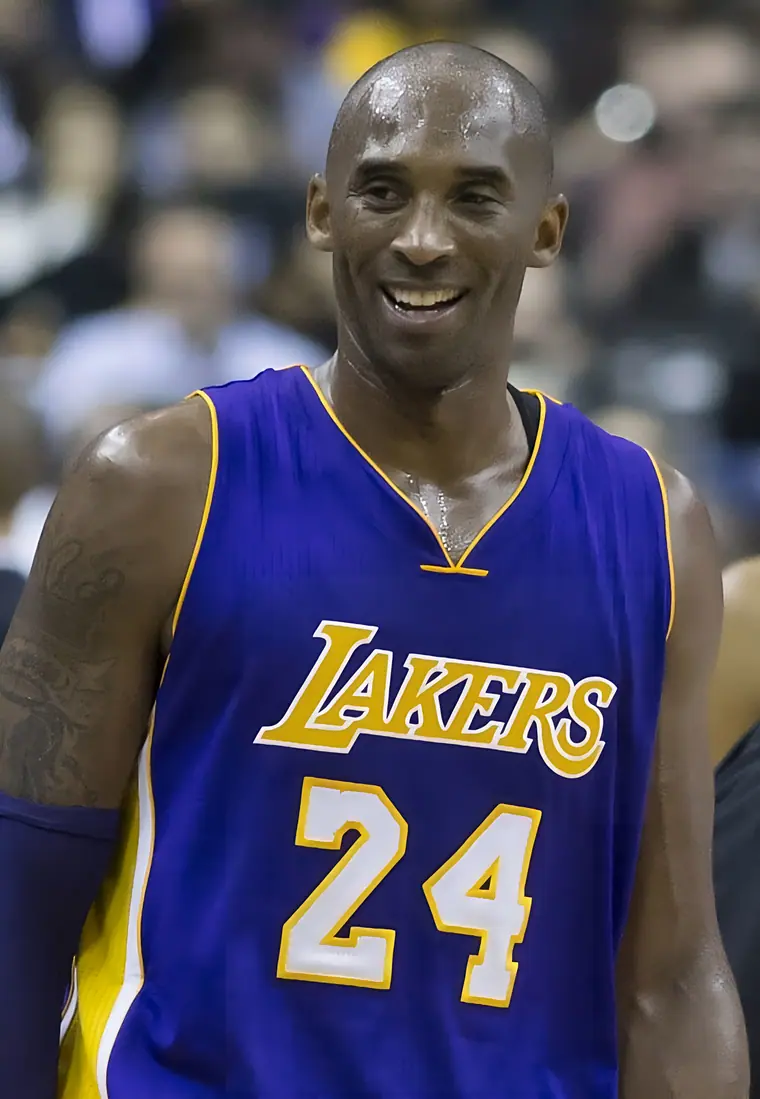
Kobe Bryant died on January 26, 2020, in a helicopter crash in Calabasas, California, along with his 13-year-old daughter Gianna and seven other people.
He had done the thing everyone is told to do. He had a revocable living trust, created in 2003, the year his first daughter was born. He had kept it under review: it was amended in 2011, and amended again in 2017, after the birth of his third daughter, Bianka.
His fourth daughter, Capri, was born in 2019. The trust was never amended again.
Naming children instead of describing them
On Bryant's death the trust was reported to have divided into two subtrusts, for the benefit of his wife Vanessa Bryant and the three daughters the document named. Capri, born after the last amendment, was not among them.
The reason is a drafting choice that sounds trivial and is not. The trust identified the beneficiaries by name. It did not contain an after-born children clause — the boilerplate sentence that says any child hereafter born to or adopted by me is included automatically. A document that describes a class picks up everyone who later joins that class. A document that lists names does not.
In March 2020, the co-trustees — Vanessa Bryant and the Lakers executive Robert Pelinka, Jr. — petitioned the Los Angeles County Superior Court to modify the trust to add Capri as a beneficiary. Their argument was not that the document said something it did not say. It was that the material purpose of the trust was to provide for Bryant's wife and their daughters, and that the 2017 amendment adding Bianka was itself evidence of what he intended to do for each child as she arrived.
No one opposed it. The court granted the petition; approval was reported in October 2020.
It worked. It also took seven months, a lawyer, and a judge — to accomplish something a single sentence in the original document would have done for free.
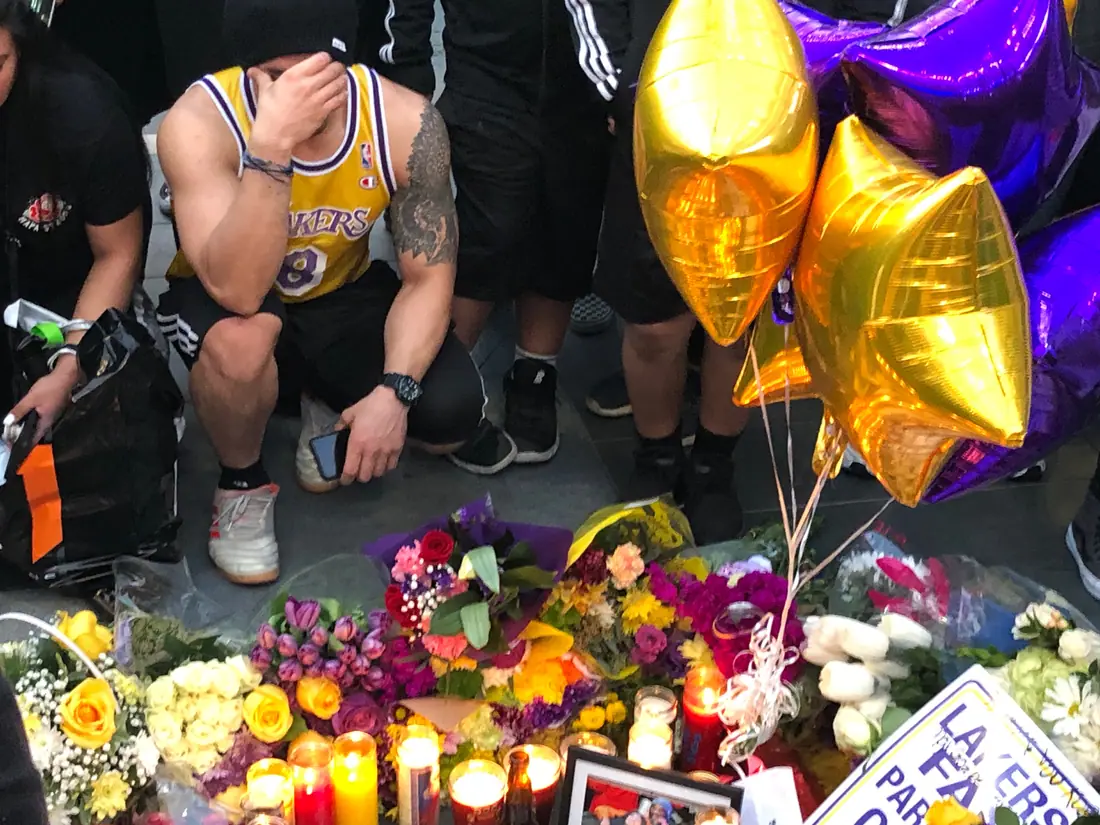
The claim that belonged to the widow, not the estate
The other litigation out of this case is legally unrelated and worth understanding on its own, because it turns on a distinction that surprises a lot of families.
In the weeks after the crash, personnel from the Los Angeles County Sheriff's Department and Fire Department took and circulated photographs of the crash scene. Trial testimony described the images being shown at an awards banquet and passed around at a bar. Vanessa Bryant sued the County in federal court — Bryant v. County of Los Angeles, No. 2:20-cv-09582 (C.D. Cal.) — alleging violation of her constitutional privacy rights under 42 U.S.C. §1983, along with negligence and infliction of emotional distress.
On August 24, 2022, after an 11-day trial, a jury found for her and for co-plaintiff Christopher Chester, whose wife and daughter also died in the crash. The jury awarded $16 million to Bryant and $15 million to Chester. In February 2023 the County settled the remaining claims; Bryant's total was reported at $28.85 million, Chester's at $19.95 million.
Here is the point that matters for probate. That money was not an estate asset. The injury was not to Kobe Bryant; it was to the people who had to live knowing the photographs existed. The claim was personal to Vanessa Bryant and to Chris Chester, and it went to them directly.
Families routinely get this backwards in both directions — assuming a wrongful-death recovery belongs to the estate when it does not, or assuming a claim the decedent owned before death disappears when he dies. Both assumptions cost money.
The estate plan that was current the day it was signed
Strip out the helicopter and the nine figures, and the Bryant trust problem is the single most common defect in American estate planning: a good document, correctly executed, describing a family that no longer exists.
The events that break a plan are the events people are too busy to file paperwork about. A birth. An adoption. A marriage. A divorce. A grandchild. A house bought in another state. Each one takes ten minutes to reflect in a document, and each one takes years off the useful life of a plan that does not get it.
Two habits fix almost all of it. Draft in classes, not lists — my descendants, my children then living, any child hereafter born to me — so the document keeps working while your life changes. And calendar a review against the events that actually matter rather than against the calendar year.
Bryant's family got the outcome they wanted. They got it because there was no dispute, the trustees moved quickly, and California law had a mechanism available. Change any one of those and the answer changes.
Timeline
- 2003Bryant creates the family revocable trust, the year his first daughter is born.
- 2011The trust is amended.
- 2017The trust is amended again, after the birth of his third daughter, Bianka. This is the last amendment.
- 2019His fourth daughter, Capri, is born. The trust is not amended again.
- Jan 26, 2020Bryant dies in a helicopter crash in Calabasas, California, with his daughter Gianna and seven others.
- Mar 2020Co-trustees Vanessa Bryant and Robert Pelinka, Jr. petition the Los Angeles County Superior Court to modify the trust to add Capri as a beneficiary.
- Oct 2020Court approval of the modification is reported. Capri becomes a beneficiary.
- Aug 24, 2022A federal jury awards Vanessa Bryant $16 million and Christopher Chester $15 million over the circulation of crash-scene photographs by county personnel.
- Feb 2023Los Angeles County settles the remaining claims. Bryant's total is reported at $28.85 million; Chester's at $19.95 million.
What actually went wrong
- Beneficiaries named, not described. The trust listed children by name instead of using an after-born clause covering any child later born or adopted. One sentence would have made the 2020 petition unnecessary.
- A review cycle tied to nothing. The document was amended after one birth and not after the next. Updates that depend on remembering are updates that eventually do not happen.
- A fix that required a judge. Judicial modification is a real remedy and it worked here. It is also slow, public, and only available on terms a court accepts — a worse position than never needing it.
- Confusion about which claims are estate assets. The photograph litigation belonged to the surviving family personally, not to the estate. Families lose real money by assuming the opposite, and by assuming claims die with the person.
Would it have gone that way in Florida?
Partly — and the part that would not help is the part people expect to. Florida's pretermitted child statute protects children left out of a will. It does not fix a trust.
Florida has a statute written for exactly this situation. Fla. Stat. §732.302 — the pretermitted child provision — says that when a testator fails to provide by will for a child born or adopted after the will was made, that child takes the share he or she would have received had the testator died intestate. There are two exceptions: where the will shows the omission was intentional, and where the testator already had children when the will was signed and left substantially all of the estate to the other parent of the omitted child, who survives and takes under the will.
Read that carefully, because the operative word is will. Section 732.302 sits in Chapter 732, which governs wills and intestate succession. It does not rewrite a revocable trust. In a plan like Bryant's — where nearly everything sits in the trust and the will is a short pour-over document with almost no property passing under it — the pretermitted child statute has very little to work on. The intestate share of a nearly empty probate estate is a nearly empty share.
So the Florida fix is the same one the Bryant trustees used, under a different statute. Fla. Stat. §736.04113 permits a court to modify the terms of an irrevocable trust — and a revocable trust becomes irrevocable at the settlor's death — where, because of circumstances not anticipated by the settlor, compliance with its terms would defeat or substantially impair a material purpose. A trust whose stated purpose is to provide for the settlor's children, drafted before the last child existed, is the textbook application.
Two alternatives are worth naming, because they may be faster than a contested petition. Fla. Stat. §736.0412 allows nonjudicial modification after the settlor's death by unanimous agreement of the trustee and all qualified beneficiaries, provided the modification is not inconsistent with a material purpose — no judge required, if everyone genuinely agrees. And Fla. Stat. §736.04117, Florida's decanting statute, lets an authorized trustee with power to invade principal pour the assets into a new trust with corrected terms, on 60 days' written notice to the qualified beneficiaries. Decanting has real limits — it cannot enlarge the trustee's own compensation, cannot eliminate liability for breach, and cannot add a beneficiary who was never a beneficiary of the original trust — so it is a repair tool, not a rewrite tool.
The honest caveat: every one of these depends on cooperation. Bryant's modification was unopposed. Add one adult beneficiary whose share shrinks when a new child is added, and §736.04113 becomes contested litigation with a real chance of a different result. The remedy is worth having and is not worth relying on.
The practical instruction: open your trust and read the beneficiary paragraph out loud. If it contains first names and no phrase like any child hereafter born to or adopted by me, it is a snapshot, not a plan. Fixing that is a one-page amendment, and it costs a fraction of the petition it prevents.
What people ask us about this.

Further reading
Third-party sites. Not ours, not endorsed, not kept current by us — just the places worth going next.
Sources
- Kobe Bryant trustees seek modification of trust in court — Nelson Mullins, 2020
- Vanessa Bryant receives court approval to add youngest daughter Capri to Kobe's trust — Entertainment Tonight, Oct 2020
- Jury awards Vanessa Bryant $16 million in crash photos case — ESPN, Aug 2022
- Vanessa Bryant settles crash photos suit for $28.85 million — ESPN, Feb 2023
- Vanessa Bryant reaches $28.85M settlement over helicopter crash photos — NBC News, Feb 2023
- Vanessa Bryant v. County of Los Angeles, No. 2:20-cv-09582 (C.D. Cal.) — CourtListener docket
- Fla. Stat. §732.302 — Pretermitted children — The Florida Senate
- Fla. Stat. §736.04113 — Judicial modification of irrevocable trust — The Florida Senate
If this is your situation
Free 30-minute consult. Plain English. No pressure.
Nearly every case in this archive turned on something ordinary — an unwitnessed page, a stale beneficiary line, a document nobody could find. Those are cheap to fix while you're alive and expensive to fix afterward.