John F. Kennedy
The most examined presidency in American history left an estate almost nobody has seen. Kennedy used a revocable living trust with a pour-over will, so the inventory never had to be filed. The money underneath it sat in trusts his father built decades before Congress wrote a rule for them.
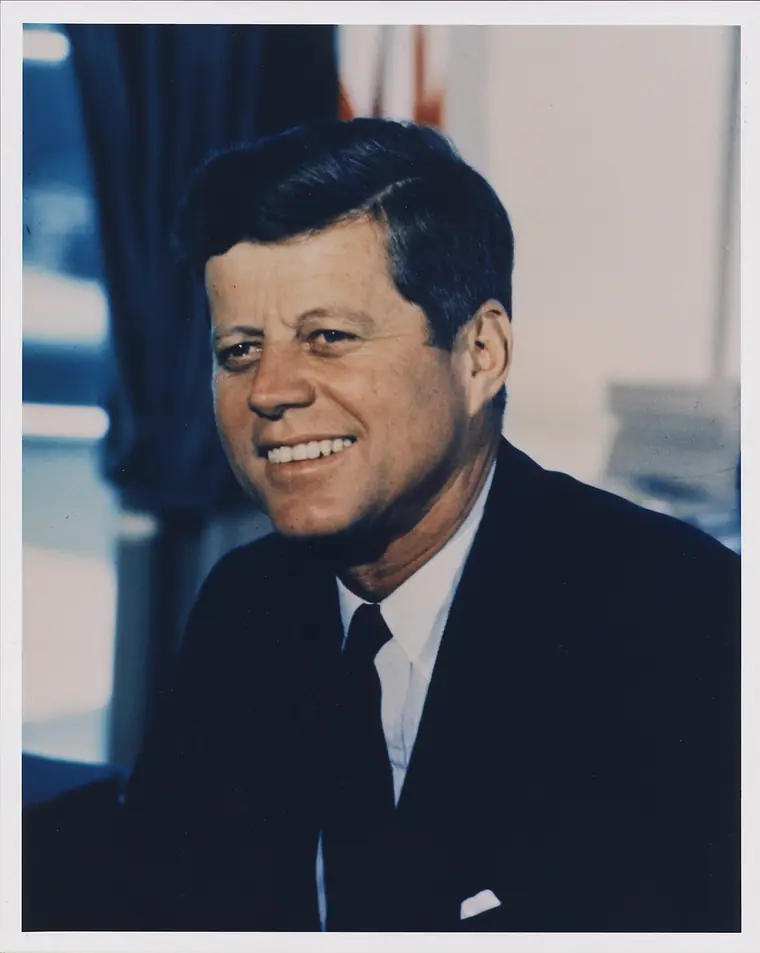
There is a curious gap in the historical record. The Kennedy presidency has been examined document by document for sixty years — the tapes, the memoranda, the medical files, the Warren Commission's twenty-six volumes.
His estate is close to a blank page.
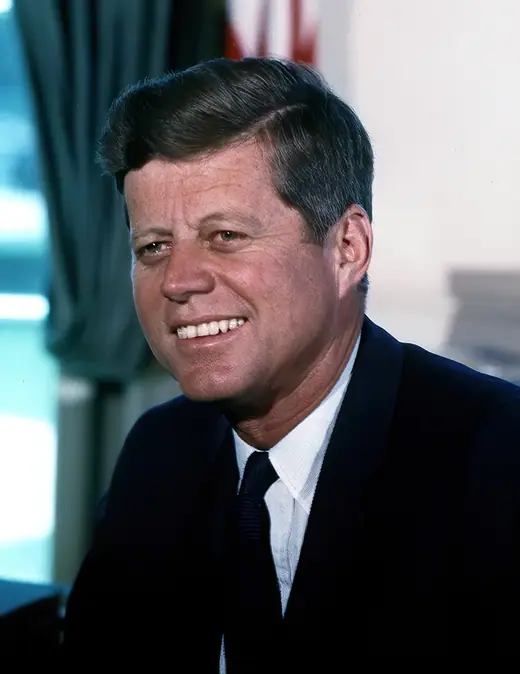
That is not an accident and it is not a cover-up. It is the designed output of the structure he used. Kennedy held his assets in a revocable living trust, with a pour-over will to catch anything left outside it. A trust is a private instrument. It is not filed with a court, and neither is a schedule of what it holds. There was, in consequence, no public inventory of the president's property for anyone to read.
This is worth sitting with, because most people encounter the privacy argument for trusts as a mild selling point — avoids probate, keeps things quiet. Here is the demonstration at maximum scale: the most investigated man of the twentieth century, and his balance sheet stayed private.
He did not build it, and that is the point
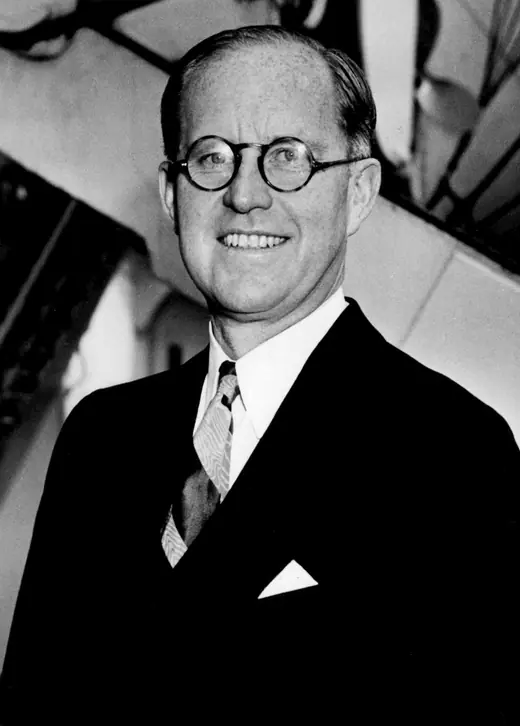
The wealth Kennedy lived on was not his own. It came from Joseph P. Kennedy Sr., who made a fortune in banking, securities, and film, and who set about moving it out of his own hands as fast as he made it.
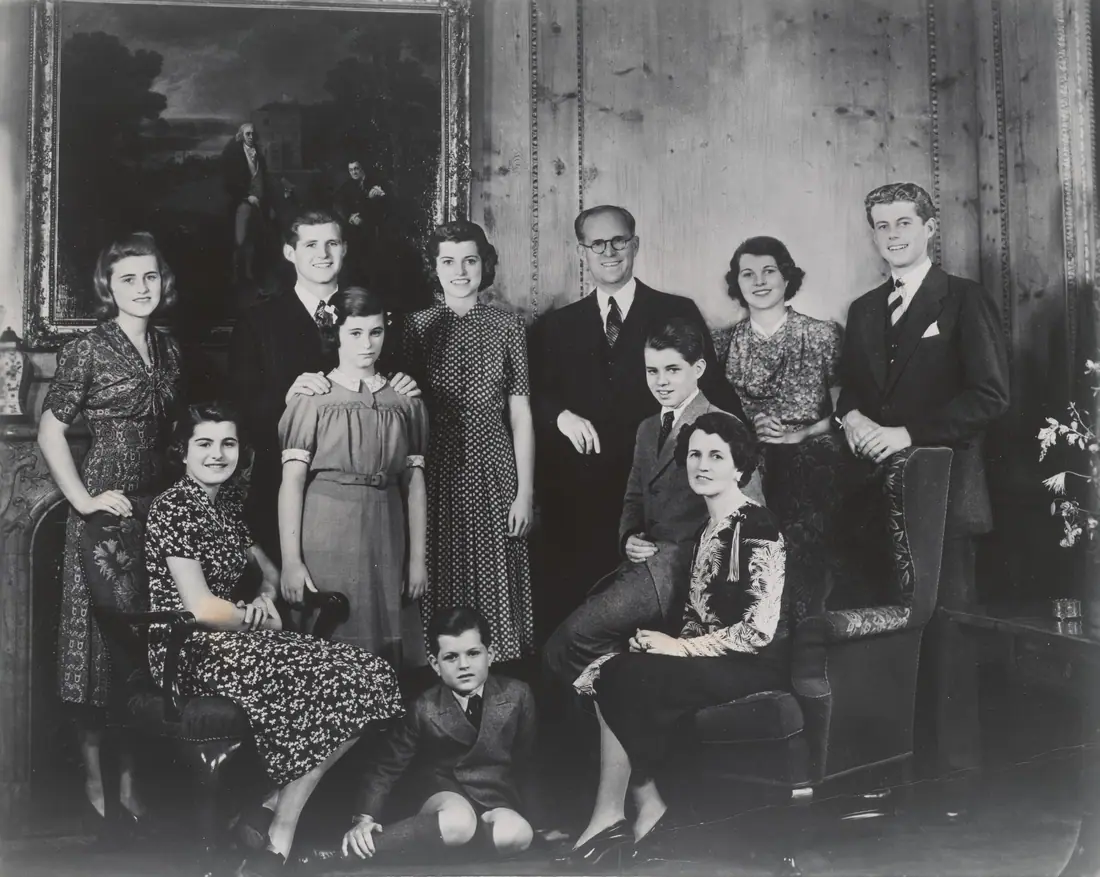
Kennedy Sr. established million-dollar trust funds for each of his nine children, structured to guarantee lifelong financial independence. His personal fortune was estimated at $4 million in 1929 and $180 million by 1935; when Fortune published its first ranking of American wealth in 1957, it placed him in the $200–400 million band. He died on November 18, 1969, at 81.
So the political dynasty rested on a legal one. Nine children who never had to earn a living, funded by an instrument each of them received rather than made. And when John Kennedy died in Dallas at 46, in 1963, the trusts holding the family money were entirely unaffected. They were not his to lose. A trust created by someone else, for your benefit, does not pass through your estate. It carries on under its own terms.
Decades before the tax code caught up
The manoeuvre at the heart of the Kennedy structure is the generation-skipping trust: money placed in trust for a child, with the remainder running to grandchildren, so that the fund is taxed once on the way in and not again as it passes down each generation. Done well, one estate tax buys three generations of transfer.
For most of the twentieth century this was simply available. There was no generation-skipping transfer tax until 1976. Congress enacted a version that year, found it administratively unworkable, repealed it, and replaced it with the modern regime effective October 23, 1986.
And it did not reach backwards. Irrevocable trusts created before September 25, 1985 are grandfathered and remain exempt from the GST tax. Money placed in trust before that date can continue skipping generations under rules Congress has abolished for everyone else — permanently, for as long as the trust itself lasts.
That is the whole quiet story of a great deal of American old money. Not aggression, not evasion. Being early. The families who put assets into long-term trusts before the mid-1980s are still operating inside a tax regime that no longer exists.
- Before 1976: no federal generation-skipping transfer tax at all.
- 1976: a first GST tax, so unworkable it was later repealed retroactively.
- Sept 25, 1985: the grandfathering line. Irrevocable trusts already in existence stay outside the GST tax.
- Oct 23, 1986: the modern GST tax takes effect — now a flat 40% on top of the estate tax, with an exemption tracking the estate-tax exemption.
In 2026 that exemption is $15 million per person, $30 million for a married couple. Below the line, none of this costs anything. Above it, the difference between a trust that skips a generation and one that does not is 40 percent of everything it holds, every generation.
What a revocable trust does not do
Because Kennedy's structure is now the default recommendation for millions of people, it is worth being blunt about what it does not deliver.
It is not asset protection. A revocable trust is revocable. You can undo it, so your creditors can reach it. That is true in Florida by statute and true nearly everywhere.
It is not tax planning. A revocable trust is ignored for income and estate tax purposes during your life. The Kennedy tax result came from the irrevocable trusts his father funded, not from JFK's own revocable one.
It is not privacy from your own beneficiaries. A trust is private as to the public. It is emphatically not private as to the people it benefits, who have statutory rights to be told the trust exists and to receive accountings.
And it does nothing at all unless it is funded. A trust that has not been retitled into is an empty box, and the pour-over will is the emergency backup — which means probate, which is the thing the structure was supposed to avoid.
Timeline
- 1920s–30sJoseph P. Kennedy Sr. establishes million-dollar trust funds for each of his nine children, designed to provide lifelong financial independence. His fortune is estimated at $4 million in 1929 and $180 million by 1935.
- 1957Fortune's first ranking of American wealth places Kennedy Sr. in the $200–400 million band.
- Nov 22, 1963John F. Kennedy is assassinated in Dallas at 46. His estate is governed by a revocable living trust with a pour-over will; no public inventory of assets is required.
- Nov 18, 1969Joseph P. Kennedy Sr. dies at Hyannis Port at 81.
- 1976Congress enacts the first federal generation-skipping transfer tax. It proves administratively unworkable.
- Sept 25, 1985The grandfathering date. Irrevocable trusts in existence before this day remain exempt from the GST tax that follows.
- Oct 23, 1986The modern generation-skipping transfer tax takes effect, replacing the repealed 1976 version.
- 2026The federal estate and GST exemption stands at $15 million per person; the GST rate is a flat 40 percent above it.
What actually went wrong
- Nothing, and that is unusual for this archive. Kennedy used the structure most estate lawyers would still recommend, and it did exactly what it was built to do.
- The real lesson is the calendar. The tax advantage the family enjoyed came from acting decades before the rule existed. Every generation-skipping structure available today has the same property: it works because it is done early, and it stops working the moment the assets are already in an estate.
- Inherited trusts are a planning problem too. Nine children with lifetime income from an instrument none of them wrote is a structure that has to be read, understood, and coordinated with each beneficiary's own plan. Most people who benefit from a trust have never seen it.
- Privacy is not protection. A revocable trust hides the numbers from the public. It does not hide them from creditors, from the IRS, or from beneficiaries entitled to an accounting.
Would it have gone that way in Florida?
This is the standard Florida structure — and Florida law is unusually explicit about both what it delivers and what it does not.
The revocable-trust-plus-pour-over-will package Kennedy used is what a Florida estate planner draws up on an ordinary Tuesday. Florida has statutes for every moving part of it.
The pour-over itself is expressly authorized. Under §732.513 a valid devise may be made to the trustee of a trust evidenced by a written instrument in existence when the will is made, or subscribed concurrently with it, provided the instrument is identified in the will. Subsection (2)(a) makes clear the devise is not invalidated because the trust is amendable or revocable, or both, by any person — so you may keep rewriting the trust for the rest of your life without re-executing the will. The one hard limit is in subsection (4): a complete written revocation of the trust before death invalidates the devise. Revoke the trust and forget the will, and you have created an intestacy.
The privacy is real. A Florida personal representative must file an inventory of estate assets under §733.604, and it goes in the court file. Assets held in a funded revocable trust are not part of that estate and do not appear. This is the single most common practical reason Florida families use trusts, and it is not a small thing in a state where property records and probate files are searchable from a phone.
But it is privacy from the public, not from the beneficiaries. §736.0813 imposes a duty on a Florida trustee to keep the qualified beneficiaries reasonably informed of the trust and its administration, to notify them of the trust's existence and their right to request a copy, and to provide annual accountings. A beneficiary who wants to see the numbers is entitled to see the numbers.
And it is not asset protection. §736.0505 provides that the property of a revocable trust is subject to the claims of the settlor's creditors during the settlor's lifetime, to the extent it would not have been exempt if owned outright. A spendthrift clause does not change that for the person who created the trust. After death, §733.707(3) makes the revocable trust liable for the expenses of administration and enforceable claims where the probate estate is insufficient. The trust is a container, not a wall.
Two Florida advantages worth naming. First, an old trust is not stuck being old: §736.04117 permits decanting — a trustee with absolute power to invade principal may distribute it to a new trust with better terms — and §736.0412 allows nonjudicial modification after the settlor's death by unanimous agreement of the trustee and all qualified beneficiaries. A grandfathered generation-skipping trust drafted in 1962 can often be modernized without losing its status, though that requires tax advice before anyone touches it. Second, Florida has no state estate tax at all under Fla. Const. Art. VII, §5, so the only transfer tax in play is the federal one.
The instruction: if you have a revocable trust, the question that matters is not whether it is well drafted. It is whether the deed to your house, the title to your accounts, and your beneficiary designations actually name it. An unfunded trust routes everything through the pour-over will and into the probate court you paid to avoid. And if you are a beneficiary of a trust someone else created — a parent's, a grandparent's — ask for a copy. Under §736.0813 you are entitled to one, and it may be the single largest financial fact of your life.
What people ask us about this.
Further reading
Third-party sites. Not ours, not endorsed, not kept current by us — just the places worth going next.
Sources
- Trusts and Estates, Presidents' Day Edition — Kennedy's revocable trust and pour-over will — Above the Law
- Joseph P. Kennedy Sr. — the trust funds for his nine children and the scale of the fortune — Wikipedia
- Generation-skipping transfer tax — enactment, repeal, and the 1985 grandfathering date — Wikipedia
- Fla. Stat. §732.513 — Devises to trustees — The Florida Senate
- Fla. Stat. §736.0505 — Creditors' claims against settlor — The Florida Senate
- Fla. Stat. §736.0813 — Duty to inform and account — The Florida Senate
- Fla. Stat. §733.707 — Order of payment; revocable trust liability — The Florida Senate
If this is your situation
Free 30-minute consult. Plain English. No pressure.
Nearly every case in this archive turned on something ordinary — an unwitnessed page, a stale beneficiary line, a document nobody could find. Those are cheap to fix while you're alive and expensive to fix afterward.