John Jacob Astor IV
The richest man on the Titanic left a pregnant teenage widow the income from a five-million-dollar trust and the use of two great houses — on one condition. She remarried four years later and gave all of it up. The terms are constantly misreported, and the law behind them surprises people.
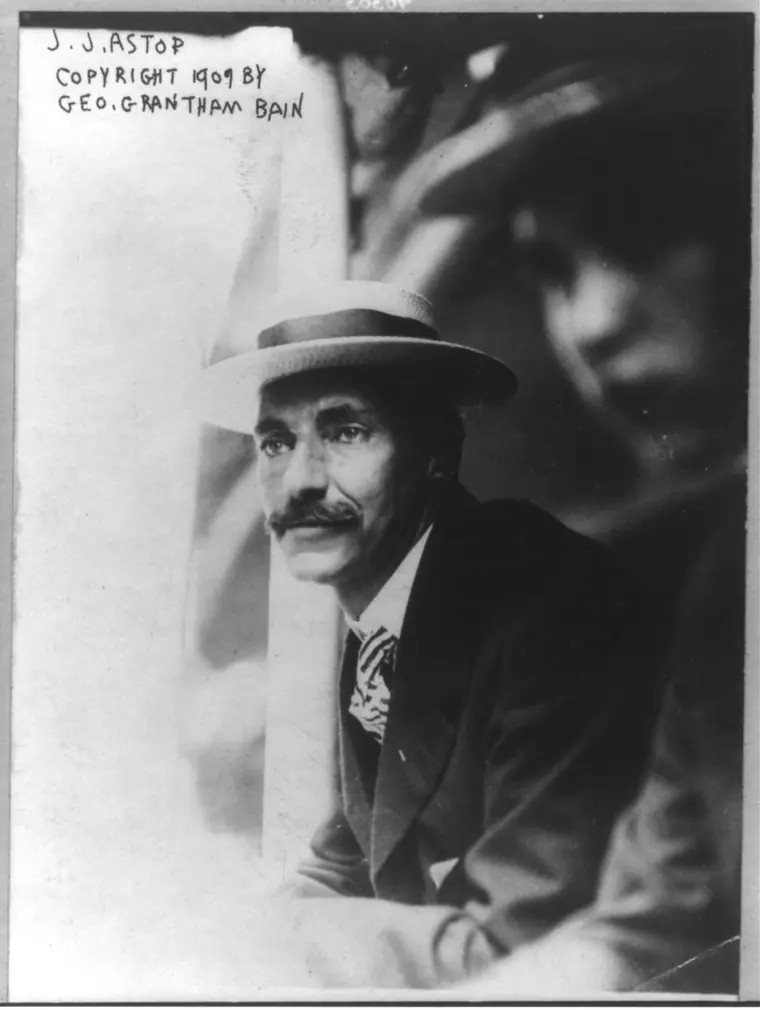
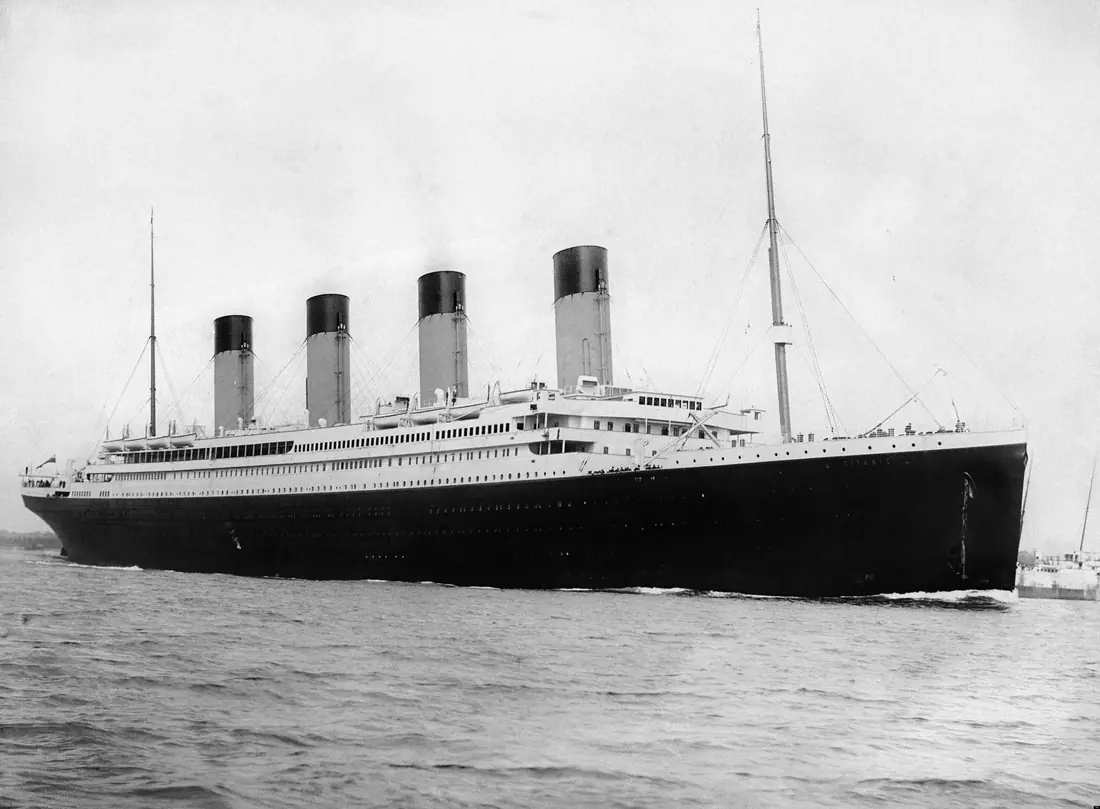
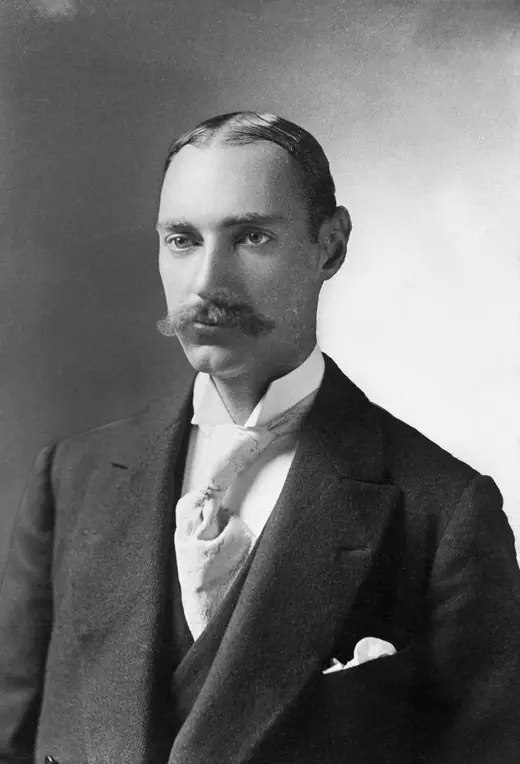
Colonel John Jacob Astor IV — property heir, inventor, Spanish-American War veteran, author of a science-fiction novel — was the wealthiest passenger aboard the Titanic. He died in the sinking on April 15, 1912, at 47. His body was recovered a week later.
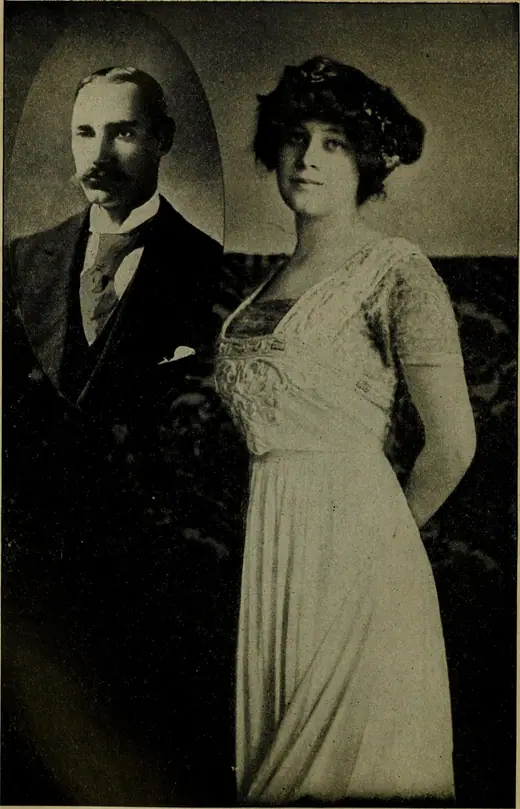
He had divorced his first wife, Ava Willing, in 1909, and on September 9, 1911 married Madeleine Talmage Force, who was 18. The marriage was a New York scandal for the usual reasons and one additional one: he was nearly thirty years older, and society had opinions about it. The couple went abroad for an extended honeymoon partly to let the noise die down, and were returning home when the ship went down. Madeleine survived. She was pregnant. Their son, John Jacob Astor VI, was born on August 14, 1912, four months after his father drowned.
The estate was reported at roughly $85 million — a genuinely enormous sum in 1912. And the will contained a clause that has been retold, garbled, moralised over and misquoted for more than a century.
What the will actually provided
The bulk went where a nineteenth-century property fortune was always going to go: to the eldest son. William Vincent Astor, then 20 and the child of the first marriage, took the great majority of the estate — reported at about $69 million, together with the Ferncliff estate at Rhinebeck and the yacht.
Ava Alice Muriel Astor, the daughter of the first marriage, received a trust reported at $10 million.
Madeleine received an outright bequest of $100,000; the income from a $5 million trust; the use of the Fifth Avenue house and its contents; and the use of Beechwood, the Newport house, and its contents. The income and the houses were hers so long as she did not remarry.
The unborn child — nobody knew yet whether there was one, or who it would be — was provided for with a trust reported at $3 million, to come to him at 21. Set against his half-brother's $69 million, that is the number that shaped the rest of the family's history.
Contemporary reporting noted the widow's provision as the clause most likely to invite a challenge, and speculated about a contest. No successful contest followed. Vincent Astor was among the executors.
Is a condition against remarriage even enforceable?
This is the part people get backwards, and it is worth stating carefully.
American law is genuinely hostile to conditions in general restraint of marriage. A gift conditioned on never marrying at all is normally struck down as contrary to public policy. Partial restraints — marry within a faith, marry after a certain age, marry with a trustee's consent — are tested for reasonableness, and courts uphold them more often than the folklore suggests. The best-known American example is Shapira v. Union National Bank, 315 N.E.2d 825 (Ohio C.P. 1974), where a condition that a son marry a Jewish woman within seven years was enforced as a reasonable partial restraint.
But a widow's remarriage clause is the classic exception, and it is generally valid. The reasoning is not about restraining marriage at all. It is about the duration of a gift. A testator is understood to be providing support for a spouse while she needs it from him, and to be entitled to say that the support ends when someone else assumes it. Courts therefore treat the clause as defining how long the interest lasts, rather than as a penalty on marrying — and provisions of exactly this shape have been enforced in American and English courts for centuries.
So Astor's clause was not aggressive drafting. In 1912 it was conventional, appearing in a very large share of wills leaving life provision to a widow, and it would not have raised an eyebrow in a surrogate's court.
She remarried at 23
On June 22, 1916, at Bar Harbor, Maine, Madeleine Astor married William Karl Dick, a banker and a friend from before her first marriage. She was 23. By doing it she gave up the trust income and the right to live in the Astor houses, exactly as the will provided. (Some retellings put the remarriage in 1919; the well-documented date is 1916.)
That marriage produced two sons and ended in divorce in 1933. She married again in November 1933, to the Italian boxer and actor Enzo Fiermonte, and that marriage also ended. She died in Palm Beach, Florida, on March 27, 1940, of a heart ailment. She was 46 — one year younger than her first husband had been on the Titanic.
Her son by Astor came into his father's trust at 21, by which time it was reported to have grown to about $5 million. It was still a fraction of what his half-brother had. When Vincent Astor died in February 1959 without children, John Jacob Astor VI filed suit contesting Vincent's 1958 will, alleging that Vincent had lacked mental capacity when he signed it. The matter was settled for a reported $250,000, with the bulk of Vincent's estate remaining with his widow and the Vincent Astor Foundation. An allegation in a pleading is not a finding, and there was none.
Two generations, two estate disputes, and one common cause: a will that divided a family's money in proportions the family could not later live with.
Timeline
- Sep 9, 1911John Jacob Astor IV, 47, marries Madeleine Talmage Force, 18.
- Apr 10, 1912The Astors board the Titanic at Cherbourg, returning from an extended honeymoon abroad.
- Apr 15, 1912Astor dies in the sinking. Madeleine survives and is pregnant. His body is recovered on April 22.
- Apr–May 1912The will is filed in New York. Vincent Astor takes the great majority of a roughly $85M estate; press reports flag the widow's clause as the provision most likely to be contested. No successful contest follows.
- Aug 14, 1912John Jacob Astor VI is born at the Fifth Avenue house, four months after his father's death, with a reported $3M trust waiting for him at 21.
- Jun 22, 1916Madeleine Astor, 23, marries William Karl Dick at Bar Harbor, Maine — and by doing so forfeits the trust income and the use of both Astor houses.
- 1933That marriage ends in divorce. In November she marries Enzo Fiermonte.
- Mar 27, 1940Madeleine dies in Palm Beach, Florida, at 46.
- Feb 1959Vincent Astor dies childless. John Jacob Astor VI sues, contesting Vincent's 1958 will on capacity grounds.
- 1960sThat claim is settled for a reported $250,000. The bulk of Vincent's estate stays with his widow and the Vincent Astor Foundation.
What actually went wrong
- A provision that was normal in 1912 and reads as cruel now. Nothing about the clause was unusual for its time. It is a reminder that a will is a document written inside a set of assumptions that will not survive as long as the trust does.
- A vast difference between the children. $69 million to one son and $3 million to another is a decision a testator is entitled to make and a family will argue about for fifty years. Unequal is fine. Unequal and unexplained is what produces litigation.
- A young widow's provision built entirely as income. Madeleine received almost nothing she could own outright. Her security was a stream that someone else's decisions could switch off, and a house she occupied but did not hold.
- A posthumous child provided for by guesswork. The will had to anticipate a person who did not yet exist. It managed that far better than most documents do — and still fixed his share decades before anyone knew who he would be.
- Retold wrong ever since. She did not forfeit $5 million. She forfeited the income from a $5 million trust and the use of two houses, and kept the $100,000 she had been given outright. The details matter, and they are the first casualty of a good story.
Would it have gone that way in Florida?
The clause would probably be valid in Florida too. It would also be beside the point — a Florida widow can ignore the will and elect 30% of the elective estate, with no strings on it at all.
Two separate questions, and Florida answers them differently.
Would the condition be enforceable? Most likely yes. Florida, like the rest of the country, treats a general restraint on marriage as contrary to public policy and a reasonable partial restraint as enforceable — the Shapira line. And a widow's remarriage clause sits in the most protected category of all, because courts characterise it as a limitation on the duration of a gift rather than a penalty for marrying. If you put it in a trust, the governing provision is Fla. Stat. §736.0404: a trust may be created only to the extent its purposes are lawful, not contrary to public policy, and possible to achieve. A support interest that ends on remarriage clears that bar comfortably. A provision that stripped a beneficiary of everything if she ever married anyone, with no support rationale, would be a much harder sell.
But would it matter? In Florida, largely not — because a surviving spouse is not confined to what the will offers. Under §732.201 a surviving spouse of a person who dies domiciled in Florida may elect an elective share of 30% of the elective estate, and §732.2035 defines that estate broadly: probate assets, revocable trust property, pay-on-death accounts, joint property, and certain transfers made within a year of death. A widow handed a conditional income stream can decline it and take a statutory share instead. The election must be made within the deadline in §732.2135 — six months after service of the notice of administration, or two years after death, whichever comes first.
And there is a second floor under her. §732.4015 and Fla. Const. Art. X, §4 restrict the devise of homestead where the owner is survived by a spouse or a minor child. Where a homestead is devised in a way the constitution does not permit, §732.401 substitutes a life estate in the surviving spouse with a vested remainder in the descendants, or the spouse's election to take an undivided half-interest as a tenant in common. That life estate is a creature of statute. It does not end on remarriage, and a will cannot make it end on remarriage, because the will is not what created it.
The honest caveat. All of this can be given away in advance. §732.702 permits a spouse to waive the elective share, homestead rights, family allowance and more by written contract signed by that spouse — a prenuptial or postnuptial agreement. A waiver signed before marriage requires no financial disclosure; one signed after marriage does. Astor married in 1911, when no such instrument was in common use and no such statute existed. A 2026 version of this marriage would almost certainly have a prenup, and the prenup, not the will, would decide the question.
The practical instruction. If you want to provide for a second spouse while preserving capital for children of a first marriage, do it with a QTIP-style marital trust: income for life to the spouse, remainder to the children, with a named trustee and clear standards. Say in writing why you structured it that way. And address the elective share head-on — either with a valid waiver, or by making the marital provision generous enough that electing against it would leave the spouse worse off. A conditional gift the spouse can simply refuse is not a plan; it is an invitation to litigate the whole estate.
What people ask us about this.
Further reading
Third-party sites. Not ours, not endorsed, not kept current by us — just the places worth going next.
Sources
- John Jacob Astor IV — Wikipedia
- Madeleine Astor — Wikipedia
- John Jacob Astor VI — Wikipedia
- Colonel Astor's will — Encyclopedia Titanica (contemporary press transcription)
- Astor will contest not contemplated — Encyclopedia Titanica (contemporary press transcription)
- Shapira v. Union National Bank, 315 N.E.2d 825 (Ohio C.P. 1974) — Wikipedia
- Fla. Stat. §732.201 — Right to elective share — The Florida Senate
- Fla. Stat. §732.401 — Descent of homestead — The Florida Senate
- Fla. Stat. §736.0404 — Trust purposes — The Florida Senate
If this is your situation
Free 30-minute consult. Plain English. No pressure.
Nearly every case in this archive turned on something ordinary — an unwitnessed page, a stale beneficiary line, a document nobody could find. Those are cheap to fix while you're alive and expensive to fix afterward.