The Gucci family
Guccio Gucci left his company to his sons in 1953. By 1993 not one share was owned by anybody named Gucci. Nothing exotic caused it — no forged will, no missing heir. Just an ownership structure that split every time somebody died and a family that never wrote down how to disagree.
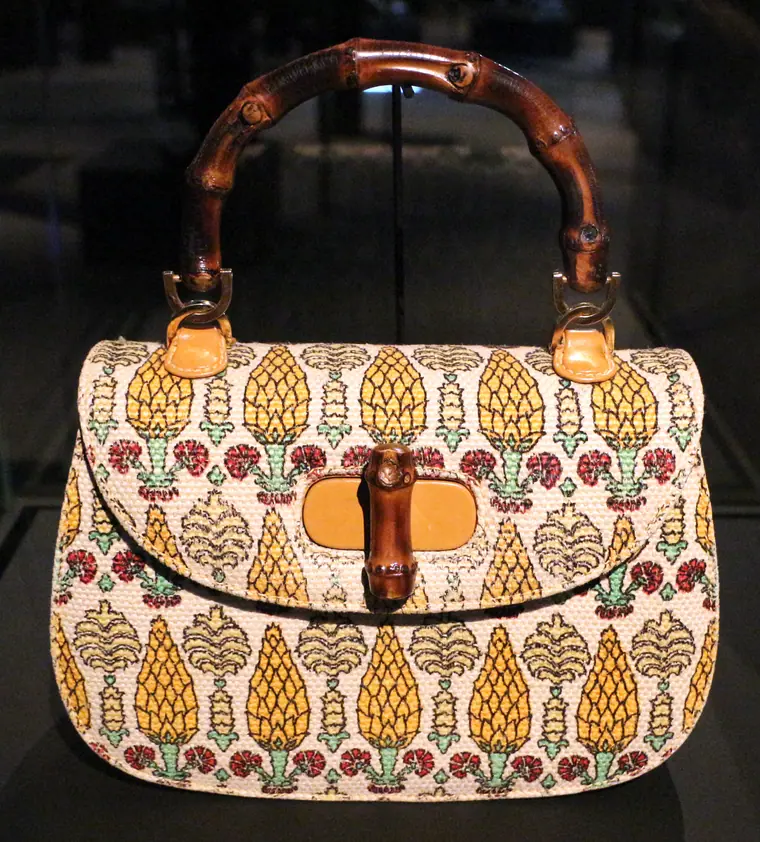
Guccio Gucci opened a leather-goods shop in Florence in 1921. He died in 1953, weeks after the firm opened its first New York store, and left the company to his sons.
Forty years later, in 1993, Maurizio Gucci sold the last family-held stake to the Bahrain-based investment house Investcorp for a reported $170 million. Nobody named Gucci owned any of it.
That is the whole arc, and the interesting part is how ordinary the mechanism was. There was no stolen inheritance and no lost document. What there was, at every generational handover, was an equal division among children with no agreement about what the co-owners would do when they disagreed — and a company whose value made disagreement inevitable.
Thirds, then halves, then a courtroom
Guccio's shares went to his sons Aldo, Vasco, and Rodolfo. Aldo built the American business and ran the company as chairman from 1953. When Vasco died in 1974 without children, his stake was bought out and the company became a 50/50 split between Aldo and Rodolfo — which is to say, between two branches of a family with different numbers of children and entirely different plans.
The third generation multiplied the problem. Aldo's sons Giorgio, Paolo, and Roberto shared his half. Rodolfo had one son: Maurizio. When Rodolfo died in 1983, Maurizio inherited his father's 50% intact — a single grandchild holding as much as three cousins combined.
Paolo Gucci was the one who took it outside the family. After a series of disputes over his role and his own branded ventures, he reported his father's US tax arrangements to the Internal Revenue Service.
On January 17, 1986, Aldo Gucci pleaded guilty to using foreign entities to evade more than $7 million in US income taxes. He was sentenced to a year and a day. He was 81.
In 1986 Maurizio himself left Italy for Switzerland after being accused of forging his father's signature on share transfers to reduce inheritance tax. He was convicted and subsequently acquitted.
Stand back from the personalities for a moment and the pattern is entirely structural. In three generations the number of owners went from one, to three, to five, and the concentration of holdings went from total, to equal thirds, to a lopsided arrangement in which one grandson held as much as three others combined. At no point did anybody sign a document saying what would happen if those owners wanted different things.
Inheritance tax made it worse, and predictably so. A family business that passes at death in a jurisdiction with meaningful death duties creates, at every handover, an heir who owes money and owns something they cannot sell in pieces. That heir has three options: find cash, sell to a sibling, or sell to a stranger. If no agreement obliges the siblings to buy, and no insurance or reserve supplies the cash, the third option is the only one that actually works.
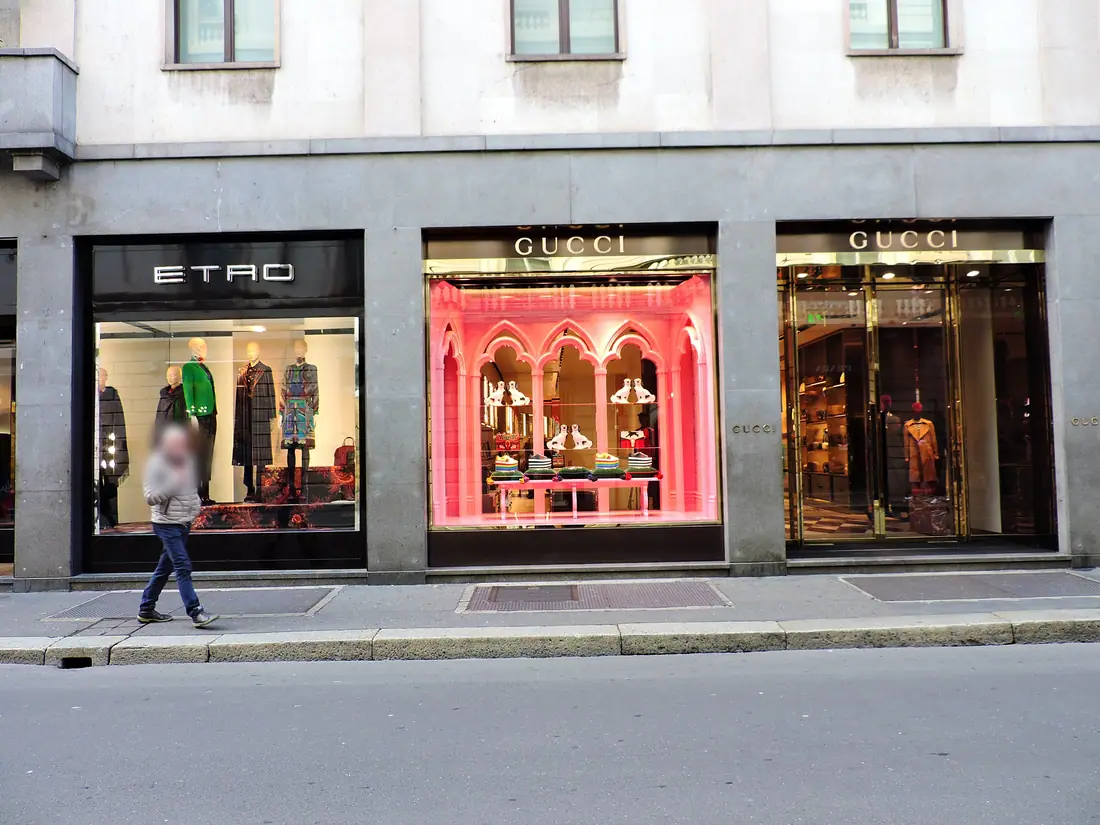
Investcorp bought the arguments
Outside capital does not need to win a family fight. It only needs to be the buyer when a family member decides to stop having one.
Investcorp acquired the Gucci stakes in stages, taking roughly 50% by the end of the 1980s as members of Aldo's branch sold, and then buying Maurizio's remaining holding in 1993 for a reported $170 million. Total reported investment across the acquisition ran to roughly $295.8 million, including recapitalisation funding.
The company was subsequently listed, restructured, and eventually bought by the French group that is now Kering. It survived. The family's ownership did not.
Maurizio Gucci was shot dead outside his Milan office on March 27, 1995, at 46. In 1998 his former wife Patrizia Reggiani was convicted of arranging the killing and sentenced to 29 years, reduced on appeal to 26; four others were also convicted. She was released in October 2016.
A maintenance award that outlived the marriage and the man
There is a postscript that belongs in an estate archive rather than a crime one. Maurizio and Patrizia Reggiani divorced in 1994, a year before his death, under an agreement providing for maintenance. Payments were suspended while she was in prison.
In 2017 the Italian courts held that she remained entitled to the maintenance under that agreement, and to arrears accrued during her imprisonment — reported at over $1 million a year, with back payments taking the total past $20 million. Their daughters Alessandra and Allegra Gucci have challenged the rulings repeatedly, including before the European Court of Human Rights, and the courts have upheld the award.
The distinction the Italian courts drew is a real one and worth stating precisely: that money was contractual maintenance owed under a divorce settlement, not an inheritance. She did not inherit from the man she was convicted of having killed. She enforced a contract against his estate.
Florida draws the same line — and draws it in a place that would surprise most readers. The result below is not the one people expect.
The company was never the problem
It is worth being clear about what did and did not fail here, because the two are routinely confused.
The business was fine. Under Investcorp's ownership, with Domenico De Sole running it and Tom Ford designing, Gucci went from near-collapse in the early 1990s to one of the most valuable luxury houses in the world within a few years, listed publicly, and was eventually absorbed into the French group now called Kering. The brand outlived the family's ownership by more than three decades and is worth many multiples of the $170 million the last family stake fetched in 1993.
What failed was the ownership structure. A company that four related shareholders cannot agree to run is not a bad company; it is an ungoverned one. The market solved the governance problem by removing the shareholders, which is the solution available to every family that does not solve it first.
That is the uncomfortable symmetry in this file. Every sale in the sequence was voluntary. Every seller received a price that a willing buyer paid. Nobody was defrauded out of the company. They simply had no agreed way to keep it, so one by one they took the money instead — and the person offering the money was the only party to the whole affair with a written plan.
Timeline
- 1921Guccio Gucci opens a leather-goods shop in Florence.
- 1953Guccio Gucci dies weeks after the first New York store opens. His shares pass to his sons Aldo, Vasco and Rodolfo. Aldo becomes chairman.
- 1974Vasco Gucci dies without children. His stake is bought out, leaving Aldo and Rodolfo with 50% each.
- 1983Rodolfo Gucci dies. His son Maurizio inherits the whole 50% — against three cousins sharing the other half.
- Jan 17, 1986Aldo Gucci pleads guilty to evading more than $7 million in US income taxes, after his son Paolo alerted the IRS. He is sentenced to a year and a day, at 81.
- 1986Maurizio Gucci leaves Italy for Switzerland amid an accusation of forging his father's signature on share transfers to reduce inheritance tax. He is convicted and later acquitted.
- Late 1980sInvestcorp acquires roughly 50% of the company as members of Aldo's branch sell out.
- 1993Maurizio Gucci sells his remaining stake to Investcorp for a reported $170 million. No shares remain in family hands.
- Mar 27, 1995Maurizio Gucci is shot dead outside his Milan office at 46. His former wife Patrizia Reggiani is convicted in 1998 of arranging the killing and released in October 2016.
- 2017Italian courts confirm Reggiani's entitlement to maintenance under the 1994 divorce agreement, with arrears reported to exceed $20 million. Her daughters' challenges are unsuccessful.
What actually went wrong
- Equal division with no tiebreaker, three times running. Thirds, then halves, then a half against three sixths. Every handover created a new deadlock and none of them created a mechanism for resolving one.
- No shareholders' agreement and no buy-sell. With no agreed price, no agreed process, and no restriction on selling to outsiders, any owner who wanted liquidity could only get it from a stranger — which is precisely what happened.
- Nothing stopped shares leaving the family. A right of first refusal in favour of the other shareholders is one paragraph. Its absence is why an investment house owned half the company before anybody could react.
- Roles were never separated from ownership. Who is a shareholder, who is a director, who is an employee, and who is a designer are four different questions. Treating them as one meant every commercial disagreement became an ownership fight.
- Tax planning done unilaterally and late. An inheritance-tax problem addressed by a disputed signature after a death is not planning. It is a legal risk taken on behalf of everybody who owns the company.
Would it have gone that way in Florida?
Florida law would have supplied every missing piece of the governance — and on the coda, Florida bars a killer from inheriting but would not automatically wipe out a contractual maintenance claim.
Take the succession first, because that is what the case is actually about. Florida gives a family company three specific tools, and Gucci used none of their equivalents.
Fla. Stat. §605.0502 provides that a transferee of an LLC membership interest gets the right to distributions and nothing else — no participation in management, no access to company records — unless the operating agreement says otherwise, and that transfer restrictions in the operating agreement are enforceable against a transferee with knowledge of them. §605.0105 then confirms how much an operating agreement may govern: relations among members, the duties of managers, and the conduct of the company's affairs, subject to a list of protections it may not eliminate, including the duties of loyalty and care and reasonable access to information. A Florida family that writes a real operating agreement decides in advance who may buy, who may sell, and to whom. That is the paragraph Gucci never had. It is also the mechanism at the centre of Blechman v. Estate of Blechman, 160 So. 3d 152 (Fla. 4th DCA 2015), where an operating agreement's own terms controlled the disposition of a member's interest at death and a later trust amendment did not.
For a corporation rather than an LLC, §607.0730 authorises a voting trust: shareholders transfer their shares to a trustee who votes them as a block, with the agreement and beneficial-owner list filed with the company. §607.0731 goes further and provides that a shareholders' voting agreement is specifically enforceable — a court will compel performance rather than award damages — and binds a transferee who has notice of it, with notice given by a legend on the certificate. Two branches of a family holding 50% each can, in Florida, contract their way out of a deadlock before the deadlock arrives.
Add the fourth piece, which is money. A buy-sell agreement funded with life insurance owned outside the estate means the surviving owners can actually pay for the departing owner's shares without selling the business or borrowing against it. An unfunded buy-sell is a promise; a funded one is a transaction. Aldo's branch sold to Investcorp because Investcorp was the party with the cheque.
Now the coda, and here Florida's answer has two halves. Fla. Stat. §732.802 — the slayer statute — provides that a person who unlawfully and intentionally kills the decedent is not entitled to any benefits under the will or under the Probate Code, and the estate passes as though the killer had predeceased. It reaches the intestate share, the elective share, homestead, exempt property, family allowance, joint property, and life insurance proceeds. A final judgment of conviction of murder in any degree is conclusive for that purpose; absent a conviction, the probate court may decide by the greater weight of the evidence whether the killing was unlawful and intentional. That is a civil standard, so an acquittal does not settle the probate question.
The honest caveat is the one the Italian courts identified. §732.802 removes benefits — the things a person receives because the decedent died. A pre-existing contractual obligation, such as maintenance owed under a marital settlement agreement, is not a benefit under the Probate Code; it is a claim against the estate, filed and paid in the ordinary way under §733.702 and ranked under §733.707. Florida courts would still have obvious equitable and public-policy arguments to consider, and no Florida decision on this exact combination of facts is cited here. But the general principle holds: the slayer statute governs inheritance, not every debt.
The practical instruction. If your family owns a business, the governing document is the operating agreement or the shareholders' agreement — not the will. Put in a right of first refusal, a valuation method, a funding source, a tiebreaker or an odd number of decision-makers, and a rule about what happens on death, divorce, disability, or a member simply wanting out. Then check that your will and trust do not contradict it, because when they conflict, the entity's own agreement usually wins.
What people ask us about this.

Further reading
Third-party sites. Not ours, not endorsed, not kept current by us — just the places worth going next.
Sources
- Gucci Group N.V. — company history — Company-Histories.com
- Gucci pleads guilty in tax case — The Washington Post, Jan 18 1986
- Gucci pays IRS in tax case — UPI Archives, Jan 21 1988
- Aldo Gucci — Wikipedia — chairmanship 1953–1986, the plea and sentence
- Maurizio Gucci — Wikipedia — the 1983 inheritance, the 1993 sale, the murder and convictions
- “Lady Gucci” Patrizia Reggiani could inherit a $23 million fortune — CBS News
- Patrizia Reggiani — Wikipedia — conviction, sentence, release, and the maintenance rulings
- Fla. Stat. §732.802 — Killer not entitled to receive property or other benefits — The Florida Senate
If this is your situation
Free 30-minute consult. Plain English. No pressure.
Nearly every case in this archive turned on something ordinary — an unwitnessed page, a stale beneficiary line, a document nobody could find. Those are cheap to fix while you're alive and expensive to fix afterward.