George Washington
He wrote it himself over the summer of 1799 — twenty-nine pages in his own hand, on paper bearing his own watermark, and he said so in the document: no professional character had been consulted. It is one of the most studied wills in American history. Florida would not admit a page of it.
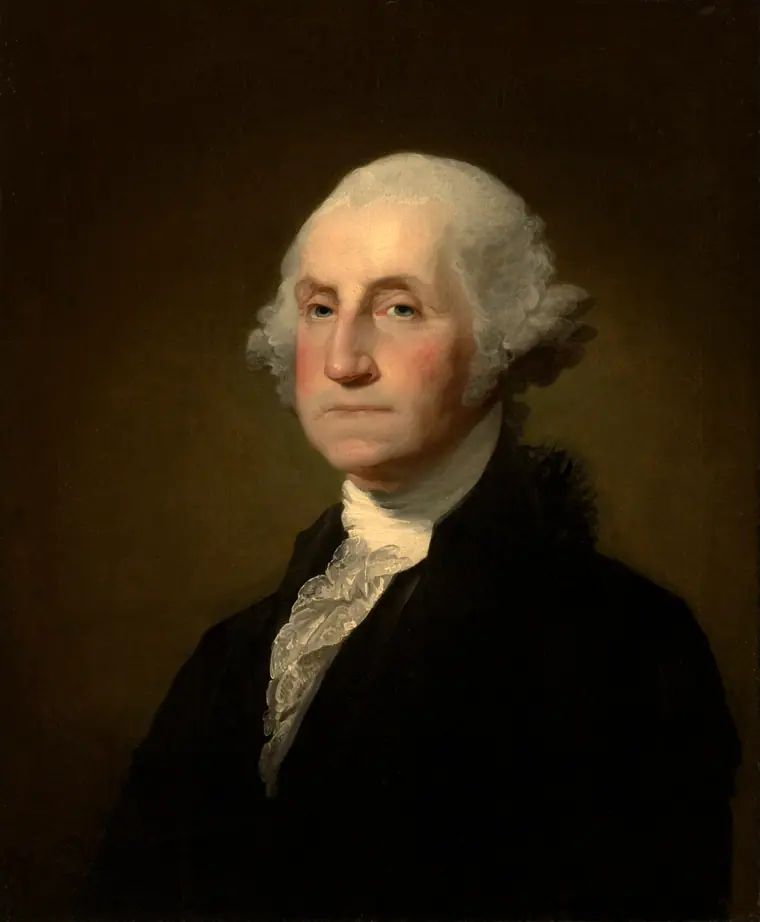
George Washington signed his will on July 9, 1799, five months before he died. He wrote it himself, over the course of that summer, on fifteen sheets of specially prepared paper carrying his own watermark — twenty-nine written pages, front and back. He signed at the foot of every page except one, where he appears to have believed his signature was already there.
He also wrote, inside the document, a sentence that estate lawyers have been quoting at each other for two centuries: that in its construction it would readily be perceived that no professional character had been consulted, or had any agency in the draught.
That was true, and it shows — in both directions. The will is meticulous where a lawyer would have been meticulous: debts to be paid punctually and speedily, a life estate to Martha in the whole of the property, a residue carved into twenty-three shares for named relations, seven executors, and an attached Schedule of Property listing more than fifty thousand acres across New York, Pennsylvania, Maryland, Virginia, and the Ohio, Kanawha, and Little Miami rivers, with an aggregate estimate of roughly $530,000.
It is also, formally, a document that no modern American state outside a minority would accept as written. Washington executed it as a holograph: entirely in his hand, signed, and unattested. There are no witnesses named at the end of it. Virginia in 1799 did not require any.
What the will did, and what it could not do
The provision the will is remembered for concerns the people Washington enslaved, and it has to be stated exactly, because it is routinely stated wrong in both directions.
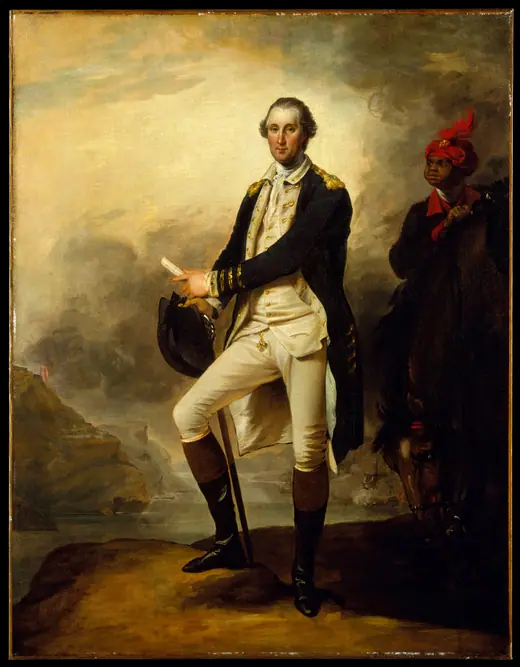
What the will did. Upon the death of Martha Washington, the enslaved people held in his own right were to receive their freedom. He directed that the aged and infirm among them be clothed and fed by his estate for the rest of their lives. He directed that children without parents able to provide for them be bound out by the court, taught to read and write, and brought up to a useful occupation. He expressly forbade the sale or transportation out of the Commonwealth of any of them, under any pretence whatsoever. And he instructed his executors to see the clause fulfilled religiously, without evasion, neglect, or delay.
His valet, William Lee, was treated separately and immediately: freedom at once if he chose it, or the option to remain, and an annuity of $30 a year for life.
What the will could not do. In 1799 there were 317 enslaved people at Mount Vernon. Washington owned 123 of them — some counts say 124. Another 153 were dower slaves: property of the estate of Martha's first husband, Daniel Parke Custis, in which she held only a life interest. Neither George nor Martha Washington had the legal power to free those 153. They belonged, in law, to the Custis heirs. A further forty were rented from a neighbour, Penelope French, and were never his to free at all.
Over decades the two groups had married each other and raised children together. Freeing one group and not the other did not liberate a community. It cut through the middle of families, and it did so along a line drawn by a property interest created before Washington ever married into it.
This is not a technicality that can be waved past. It is the central legal fact of the clause. A will can only give away what the testator owns. Washington owned 123 people and freed 123 people. The other 194 stayed enslaved, and the law that kept them there was ordinary property law, working exactly as designed.
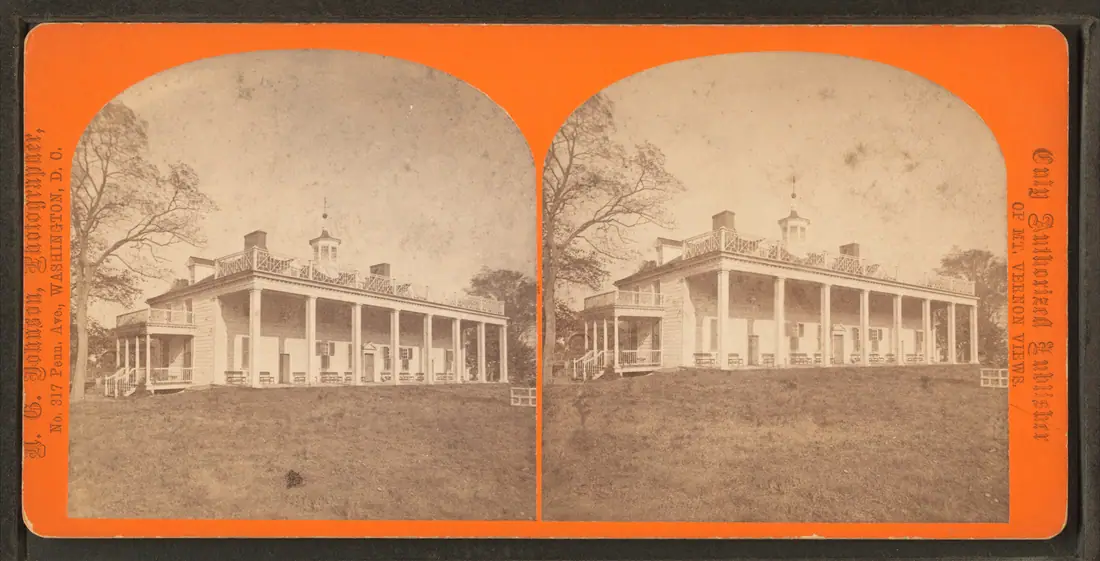
Martha did not wait
The will made the manumission take effect on Martha Washington's death. She did not wait for it.
In December 1800, roughly a year after her husband died, she executed a deed of manumission, recorded in the Fairfax County court records, and Washington's 123 became free on January 1, 1801 — more than eighteen months before Martha's own death in May 1802. Contemporary accounts differ on her reasons and this page will not guess at them.
The dower slaves were not freed. On Martha's death in 1802 they passed, as dower property does, to the Custis heirs and were distributed among her grandchildren. Some of the families divided in 1801 were divided again.
Washington also used the will to fund institutions rather than only people: fifty shares in the Potomac Company toward a national university in the District of Columbia, and one hundred shares in the James River Company to Liberty Hall Academy in Rockbridge County — an institution that is now Washington and Lee University. The Potomac Company gift produced nothing; the company failed, and the national university was never built.
The document is better than its reputation and worse than its legend
Read as a piece of drafting rather than as scripture, the will is a very good amateur job with the exact defects you would predict from an amateur job.
It is unusually clear about intent — Washington keeps explaining why he is doing things, which is why historians can still read his reasoning two centuries later. It is unusually thorough about contingencies among his relatives, running the residue through twenty-three named shares.
It is weakest on formality and administration: no attestation, seven executors with overlapping authority, a schedule of speculative western land that took the estate years to convert into money, and a charitable gift tied to the shares of a single company that later collapsed. His nephew Bushrod Washington and the other executors spent years selling land to satisfy a document that assumed the land could be sold.
- Intent, stated. He explains his reasoning inside the instrument. Modern drafting mostly does not, and modern litigation mostly wishes it had.
- Formality, skipped. No witnesses, because Virginia did not require them. That single choice is what makes the will unenforceable in most of the country today.
- Charity tied to one asset. Fifty shares in one company, and when the company failed the gift failed with it.
- Illiquid schedule. Fifty thousand acres of frontier land is a valuation, not a fund. Executors pay bills in cash.
Timeline
- July 9, 1799Washington signs a 29-page will written entirely in his own hand, with an attached Schedule of Property estimating more than 50,000 acres at roughly $530,000. No attesting witnesses.
- July 1799He compiles a census of the enslaved population at Mount Vernon: 317 people — 123 owned by him, 153 dower property of the Custis estate, 40 rented from Penelope French.
- Dec 14, 1799Washington dies at Mount Vernon.
- Jan 20, 1800The will is proved at the Fairfax County Courthouse. It is admitted as a holograph, valid under Virginia law without witnesses.
- Dec 1800Martha Washington executes a deed of manumission rather than waiting for her own death, as the will provided.
- Jan 1, 1801The 123 people Washington owned become free. The 153 dower slaves do not.
- May 1802Martha Washington dies. The dower slaves pass to the Custis heirs and are divided among her grandchildren.
- 19th centuryThe Potomac Company fails; the national university bequest produces nothing. The James River shares endow what becomes Washington and Lee University.
What actually went wrong
- No witnesses. Legal in 1799 Virginia, fatal today in Florida and most other states. A will that depends on a jurisdiction's tolerance for holographs is a will that stops working the moment you move.
- A gift of property he did not have the power to give. The manumission clause reached 123 people because that is all the law let it reach. Nothing in a will can dispose of an asset the testator does not own — which is why beneficiary designations, jointly held property, and life-estate interests defeat so many otherwise careful documents.
- Seven executors. Overlapping authority in a large estate is not redundancy, it is a coordination problem. Modern practice names one, with named successors.
- A charitable gift tied to a single company's stock. When the Potomac Company collapsed the national university bequest collapsed with it. Fund a charitable gift with a sum or a percentage, not with one certificate.
- A schedule of illiquid land. Fifty thousand frontier acres is a number on paper. The executors had to find buyers before they could pay anyone.
Would it have gone that way in Florida?
Invalid. Florida would refuse the entire document, and Washington would have died intestate.
This is one of the rare cases where the answer is not a nuance. Florida would not admit George Washington's will to probate. Not part of it. None of it.
Fla. Stat. §732.502 sets out the only way to make a will in Florida. It must be signed by the testator at the end. It must be signed in the presence of two attesting witnesses. Those witnesses must sign in the presence of the testator and in the presence of each other. Washington's will satisfies the first requirement and neither of the others. There are no witnesses on it, because Virginia in 1799 did not ask for any.
The obvious escape hatch does not open either. §732.502(2) is Florida's courtesy to out-of-state documents: a will executed by a nonresident is valid here if it was validly executed under the law of the place where it was signed — except a holographic or nuncupative will. A holographic will is exactly what Washington wrote. The one statute that exists to rescue foreign wills carves out his by name. Florida is one of the strictest states in the country on this point and has been for a long time.
The distinction worth keeping straight is that Florida's objection is not to handwriting. You may write your will out longhand on a legal pad if you like. If two witnesses watch you sign it and then sign it themselves in front of you and each other, it is a valid Florida will. What Florida will never accept is a will with no attesting witnesses, however careful, however clearly intended, however obviously in the decedent's hand. There is no substantial-compliance doctrine and no harmless-error rule to fall back on.
So the counterfactual runs like this. A Florida court finds no valid will. The estate passes by intestacy under §§732.102 and 732.103: the surviving spouse's share first, then descendants, then parents, then siblings. The twenty-three residuary shares Washington drafted for his nieces and nephews vanish. The university bequests vanish. And the manumission clause — the provision he cared most about and drafted most emphatically — has no legal existence at all, because the instrument containing it was never a will.
It is worth saying plainly what that means. The most consequential paragraph Washington ever wrote as a private citizen would have failed for want of two signatures. Formality is not the opposite of intent. Formality is the only thing that lets intent survive the person who had it.
The instruction: if you have a handwritten will, a will signed alone, a will signed in another country, or a will you are not certain was witnessed, have it reviewed before it matters. Under §732.901 whoever holds the original must deposit it with the clerk within ten days of learning of the death — and the clerk's counter is a bad place to discover that a document was never executable. Re-signing a will correctly takes twenty minutes.
What people ask us about this.
Further reading
Third-party sites. Not ours, not endorsed, not kept current by us — just the places worth going next.
Sources
- Last Will and Testament of George Washington (full text) — Wikisource
- Washington Wills — description of the original 29-page will and its probate — Fairfax County Circuit Court
- A Decision to Free His Slaves — George Washington's Mount Vernon
- Ten Facts About Washington & Slavery — George Washington's Mount Vernon
- Census of the Enslaved Population at Mount Vernon, 1786 and 1799 — George Washington's Mount Vernon
- George Washington's Will — the Schedule of Property and its $530,000 estimate — George Washington's Mount Vernon
- Enclosure: Schedule of Property, 9 July 1799 — Founders Online, National Archives
- Fla. Stat. §732.502 — Execution of wills — The Florida Senate
If this is your situation
Free 30-minute consult. Plain English. No pressure.
Nearly every case in this archive turned on something ordinary — an unwitnessed page, a stale beneficiary line, a document nobody could find. Those are cheap to fix while you're alive and expensive to fix afterward.