Lucille Ball & Desi Arnaz
They built a studio together, divorced, and then did the one thing most co-founders never manage: one bought the other out, cleanly, at a price. By the time either of them died there was no company left to argue about. The argument that did happen was over love letters and a Rolls-Royce.

Desilu Productions was founded in 1950 by a married couple with a vaudeville act they wanted to put on television. Within seven years it had bought the RKO Pictures production facilities for $6 million — the Gower Street lot in Hollywood and the RKO-Pathé lot in Culver City — and was one of the largest television producers in America.
Then, in 1960, Lucille Ball and Desi Arnaz divorced.
This is the moment where most jointly built businesses begin their slow death: two former spouses, equal owners, no mechanism for either to leave, and every operating decision now routed through the worst possible relationship. Desilu did not do that.
In November 1962, Arnaz resigned as president and Ball bought out his holdings — a reported $2.5 million — and succeeded him. She became the first woman to run a major Hollywood studio, and she ran it for five years, greenlighting Star Trek and Mission: Impossible along the way. In 1967 she sold Desilu to Gulf+Western for $17 million, and it became the television arm of Paramount.
A buy-sell is the only exit that works
A closely held company has no market. Nobody wants 50% of a business run by somebody else's ex-spouse, or by somebody else's children. So when a co-owner leaves — by divorce, by disagreement, or by dying — there are exactly three outcomes.
- The remaining owner buys the departing owner's stake at a price set in advance. This is a buy-sell agreement. It works, it is boring, and almost nobody has one.
- The company is sold whole. Also fine, and much more likely to happen at a decent price when it is a choice rather than a forced liquidation.
- Nobody does anything, and the interest passes to heirs. Now a founder's children own half a company they cannot run, cannot sell, and cannot force anyone to buy. This is the outcome that produces the litigation.
Ball and Arnaz got the first outcome in 1962 and the second in 1967. That is not luck; that is two people with lawyers doing the transaction while both of them could still sign.
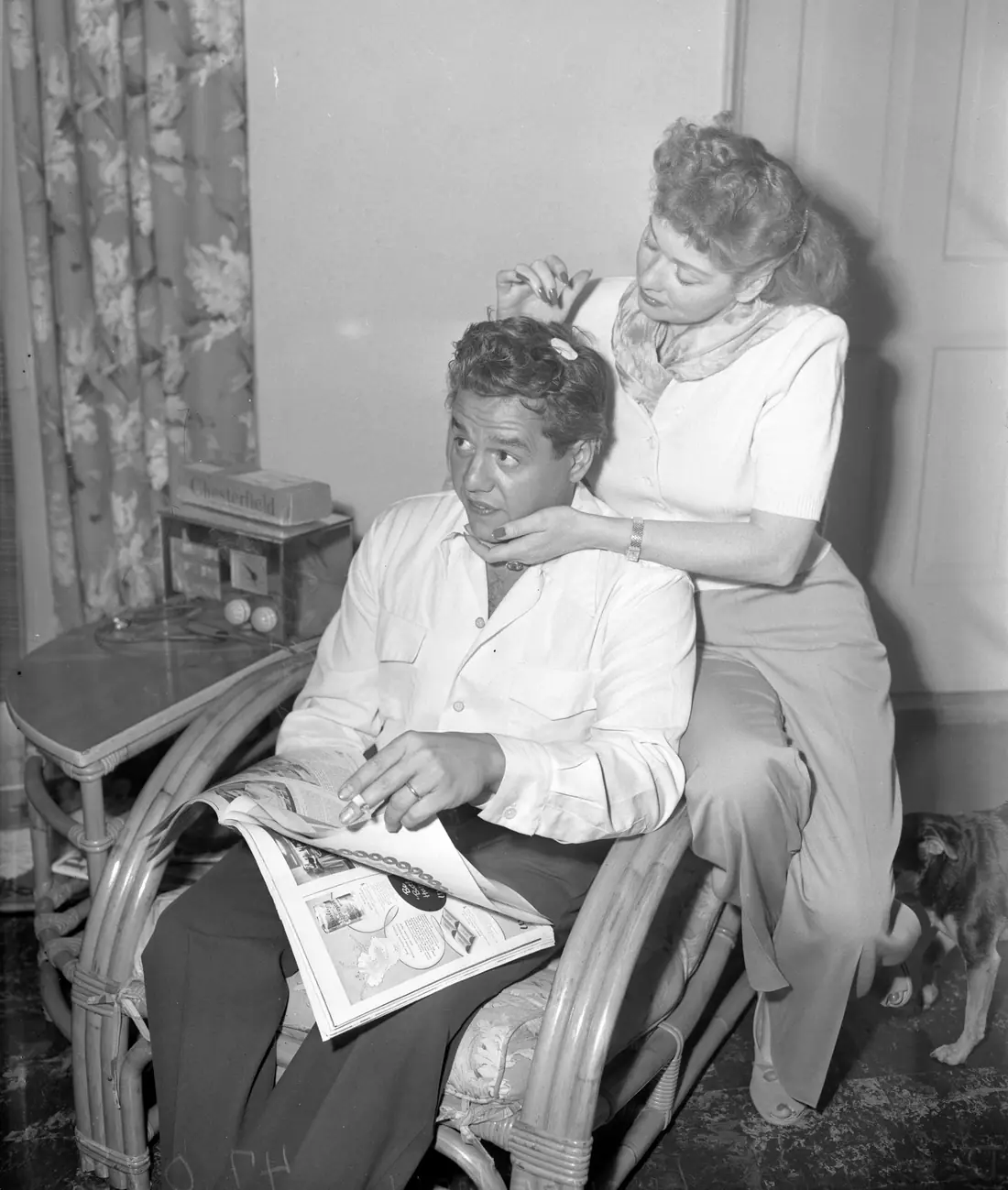
What Lucille Ball's estate actually did
Lucille Ball died on April 26, 1989. Her estate was reported at roughly $40 million, and the trust assets were divided three ways: her second husband Gary Morton, whom she married in 1961, and her two children with Arnaz, Lucie Arnaz and Desi Arnaz Jr.
The will also made specific provision for personal effects. Certain items — love letters, photographs, address books, backgammon boards, her lifetime achievement awards — were left to her daughter Lucie.
Lucie did not claim them from the estate. Under the terms of the document, unclaimed personal effects fell into Gary Morton's share.
Gary Morton remarried. He died in 1999, and the items passed to his widow, Susie McAllister Morton — a woman who had never met Lucille Ball.
The auction, and a $250,000 bond
In 2010, Susie Morton consigned roughly a dozen items to Heritage Auction Galleries — letters between Ball and Morton, photographs, a Rolls-Royce, and personal belongings.
Lucie Arnaz Luckinbill went to court to stop the sale. The judge's ruling was conditional in a way that is very familiar to litigators and very unwelcome to families: she could halt the auction if she posted a $250,000 bond to protect the seller against loss if the injunction turned out to be wrong.
She could not post it. Her lawyers negotiated instead, and the lifetime achievement awards were returned. The rest was sold.
Set the two halves of this file side by side. The $17 million company was handled perfectly — cleanly transferred while everyone was alive, converted to cash, and never litigated. The box of letters was handled by a clause nobody followed up on, and produced a lawsuit twenty-one years after the death, in which the daughter's remedy depended on whether she could find a quarter of a million dollars in cash.
Estates are almost never destroyed by the big asset. They are destroyed by the small one.
Timeline
- 1950Ball and Arnaz found Desilu Productions to bring their act to television.
- Late 1957Desilu buys the RKO Pictures production facilities — the Gower Street and Culver City lots — for $6 million.
- 1960Ball and Arnaz divorce. The company continues under joint ownership.
- Nov 1962Arnaz resigns as president; Ball buys out his holdings, reported at $2.5 million, and succeeds him — the first woman to head a major studio.
- 1967Ball sells Desilu to Gulf+Western for $17 million. It becomes the television arm of Paramount.
- Dec 2, 1986Desi Arnaz dies at 69. His estate contains no interest in Desilu; it was bought out twenty-four years earlier.
- Apr 26, 1989Lucille Ball dies at 77. Her estate, reported at roughly $40 million, is divided in trust among Gary Morton, Lucie Arnaz and Desi Arnaz Jr.
- 1999Gary Morton dies. Personal effects left to Lucie Arnaz but never claimed from the estate had fallen into his share, and pass to his widow, Susie McAllister Morton.
- 2010Susie Morton consigns roughly a dozen Ball items to Heritage Auction Galleries. Lucie Arnaz Luckinbill sues; the court conditions an injunction on a $250,000 bond. The lifetime achievement awards are returned; the rest is sold.
What actually went wrong
- Nothing, on the company — and that is the headline. A buyout in 1962 and a sale in 1967 meant neither estate ever held an illiquid stake in a business somebody's heirs would have to run or unwind.
- A specific bequest with no deadline and no fallback. Personal effects were left to a named daughter. Nobody set a period for claiming them and nobody said where they went if she did not. They went to the residuary beneficiary by default.
- Nobody followed up. The failure here was administrative, not legal. A personal representative or a family adviser who confirmed in writing that each specific bequest had actually been delivered would have closed the whole file.
- An outright share to a spouse who could remarry. Gary Morton took his share outright. When he remarried and died, everything he still held passed under his plan. A trust for his lifetime with the remainder back to Ball's children would have kept the memorabilia in the family.
- Memorabilia treated as furniture. Letters, awards and photographs are the assets families actually fight about, and they are the ones most estate plans handle in a single throwaway sentence about tangible personal property.
Would it have gone that way in Florida?
Florida would have reached the same good outcome on the company — and it gives you three specific tools that would have saved the box.
Two very different questions here, so take them separately.
The business. In Florida the governing document is not the will. For an LLC, §605.0105 makes the operating agreement the controlling instrument for the members' rights and duties, with Chapter 605 filling gaps only where the agreement is silent — and controlling what happens to a member's interest at death is squarely something an operating agreement may address. For a corporation, §607.0731 makes shareholder voting agreements specifically enforceable and binds transferees who take with notice. A buy-sell clause inside either document does what Ball and Arnaz did by negotiation in 1962: it fixes, in advance, who buys, on what trigger, and at what price.
Without one, Florida's default is unforgiving to heirs. §605.0502 separates the transferable interest — the right to receive distributions — from membership itself. Your children inherit the economics and not the management rights, not a vote, and not access to company records unless the agreement or the remaining members grant them. They own a share of a company they cannot direct and cannot make anyone buy.
Meanwhile the estate has to keep the lights on. §733.612 authorises a personal representative to continue an unincorporated business the decedent was operating, and §733.707(1)(g) makes debts incurred by continuing that business a Class 7 claim. A personal representative running someone else's company under court supervision, at 3% compensation under §733.617, is a bad substitute for an owner. Fund the buy-sell with life insurance and the cash to complete the purchase arrives on the day it is needed.
One Florida trap worth naming: §732.2035, the elective share. It is 30% of an elective estate that reaches revocable trusts, joint accounts and beneficiary designations — which means a surviving spouse's claim can land squarely on a business interest that has no cash in it. A §732.702 waiver signed before marriage, or a plan that funds the elective share from insurance rather than equity, prevents a company being sold to pay a spousal claim.
And the box. Florida gives three cheap fixes for exactly what happened in 1989. First, §732.515 lets you dispose of tangible personal property by a separate written list, signed and referred to in the will — you can update it any time without re-signing the will, and it is legally effective. Second, put a deadline and a taker of last resort in the clause: if a beneficiary does not claim an item within, say, six months of notice, it passes to a named alternate rather than falling into the residue. Third, give the surviving spouse's share in trust for life with the remainder to your children, rather than outright. Under §732.514 a devise vests at death — once it is outright and vested, it is theirs, and it will travel under their will to their family.
The instruction: if you own part of a business, the single most valuable document you will ever sign is a funded buy-sell agreement — it does more for your family than your will does. And when someone leaves you a specific object, go and collect it, in writing, and get a receipt. A signed personal-effects list under §732.515, an alternate taker, and a six-month deadline would have kept a box of letters out of an auction house twenty-one years later.
What people ask us about this.


Further reading
Third-party sites. Not ours, not endorsed, not kept current by us — just the places worth going next.
Sources
- Desilu — Wikipedia
- Lucille Ball — Wikipedia
- Lucille Ball: dangers of being the first to die — MRC Law Corp
- Celebrity estate lessons: Lucille Ball — Harrison Estate Law
- Here's who inherited Lucille Ball's money after she died — Grunge
- How Lucille Ball and Desi Arnaz changed TV with Desilu Productions — Biography.com
- Fla. Stat. §732.515 — Separate writing identifying devises of tangible property — The Florida Senate
- Fla. Stat. §605.0502 — Transfer of transferable interest — The Florida Senate
If this is your situation
Free 30-minute consult. Plain English. No pressure.
Nearly every case in this archive turned on something ordinary — an unwitnessed page, a stale beneficiary line, a document nobody could find. Those are cheap to fix while you're alive and expensive to fix afterward.