The Bruce Willis iTunes story
In September 2012 the UK press reported that Bruce Willis was considering suing Apple for the right to leave his iTunes library to his daughters. His wife denied it the same day. The story was false — and it taught more people about digital inheritance than any statute has.

On September 3, 2012, the British press reported that Bruce Willis was considering legal action against Apple over his wish to leave his digital music collection to his daughters. The reports described a large library and floated a workaround — that his lawyers were looking at family trusts as the “holders” of downloaded music.
It was picked up everywhere within hours. Technology outlets, wire services, financial press. It is, by a wide margin, the most-repeated fact about digital inheritance in the English language.
It was not true. His wife, Emma Heming Willis, said so on Twitter the same day: “it's not a true story.” Outlets that had run it, including TechCrunch, published corrections. Rolling Stone's headline was the plainest: Bruce Willis Did Not Sue Apple Over His iTunes Library.
This entry exists because of what happened next. The correction travelled a tenth as far as the story, and the story was, on the law, essentially correct. A false report about a real problem is a strange thing to have to write about — so let us do the useful half properly.
You did not buy it. You licensed it.
The button says Buy. The contract does not.
Digital media sold through the major platforms — Apple, Amazon, Google, Steam, the streaming services — is delivered under a licence, and the licence is personal, non-exclusive, and non-transferable. You have paid for permission to play something, on your account, on a limited number of devices, for as long as the licence lasts. You have not acquired a thing that can be handed to somebody else.
That distinction is not a technicality invented by lawyers to be annoying. It is the difference between two categories of property, and it decides everything downstream:
- A physical copy is owned. The CD, the vinyl, the hardback, the DVD on the shelf. You own that particular copy, and under the first sale doctrine, 17 U.S.C. §109, you may sell it, lend it, give it away, or leave it in your will. Copyright law is finished with that copy the moment it is sold.
- A digital file is licensed. The first sale doctrine attaches to a lawfully made physical copy — the phonorecord — not to the file. The courts have said so explicitly.
- Which is why resale markets do not exist. In Capitol Records, LLC v. ReDigi Inc., the Southern District of New York held in 2013 that a platform for reselling “used” digital music files infringed, because transferring a file necessarily makes a new copy, and first sale protects distribution rather than reproduction. The Second Circuit affirmed in December 2018, 910 F.3d 649. There is no lawful second-hand market in digital downloads, and the reason is structural, not commercial.
So the reported Willis position was legally sound even though the report was false. The licence does not survive you — or more precisely, it terminates on the terms the platform wrote, and no probate court can order otherwise, because a licence is not the platform's property to transfer any more than it is yours.
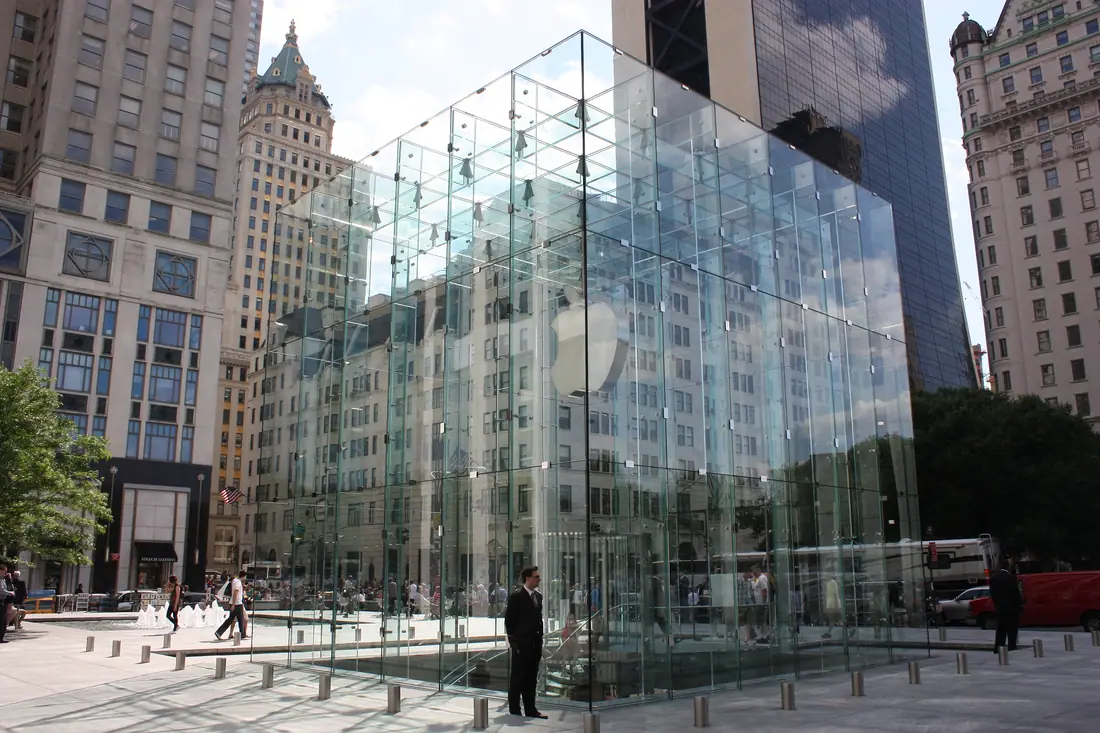
Apple's own inheritance tool says the same thing
The most persuasive evidence that the underlying point is real does not come from a court. It comes from Apple's own documentation.
In 2021 Apple introduced Legacy Contact — a genuinely good feature that lets you name people who can request access to your account data after your death, using an access key plus a death certificate. It is exactly the “online tool” that Florida's digital-assets statute puts at the top of its priority ladder.
Apple's support page describes what a Legacy Contact may reach: photos, messages, notes, files, device backups, and more. And then it lists, in terms, what is not included: “movies, music, books, or subscriptions you purchased with your Apple Account, and data stored in your iCloud Keychain (payment information, passwords, and passkeys).”
Read that list twice, because it is the whole case. The purpose-built inheritance mechanism, offered by the company that sold you the media, expressly excludes the media. It hands over the photographs your family actually wants and withholds the film library you paid for. Both of those decisions follow from the same distinction: your photographs are yours; the movie is licensed.
The Keychain exclusion is the second half of the lesson and gets almost no attention. The passwords do not pass either. Naming a legacy contact does not hand anyone your credentials, which is why the password problem is a separate problem with a separate solution.
The inventory nobody makes
Strip out the myth and a workable checklist remains. Some digital things are property and pass; some are licences and do not; a few are ambiguous enough to be worth a clause.
- Passes: files you created and hold. Photographs, video, documents, manuscripts, code, recordings. You own the copyright in your own work, and copyright is property that passes under a will or by intestacy.
- Passes: physical media. Discs, books, records. Owned outright, first sale applies, leave them to whoever you like.
- Passes: accounts with a cash balance or a transferable asset behind them. Exchange-held cryptocurrency, brokerage accounts, PayPal balances, domain name registrations in most registrars' terms.
- Does not pass: licensed media. Purchased films, television, music, and ebooks on the major platforms. Streaming subscriptions, obviously.
- Does not pass, usually: game accounts, loyalty points, and airline miles. Governed by terms of service that generally prohibit transfer, though some programmes make discretionary exceptions on presentation of a death certificate.
One practical consequence that surprises people: the files you ripped from your own CDs in 2004 are in a different legal position from the files you bought on iTunes in 2012. Neither is a great asset, but only one of them came with a contract saying it dies with you.
And the honest bottom line for most families. The media library is not the loss. Nobody grieves a film collection. What families actually want back is the photographs, the messages, and the documents — and those are the things the statutes and the online tools do reach, if somebody set them up.
Timeline
- 2003The iTunes Music Store opens. The button says “Buy.” The terms say “licence.”
- Sep 3, 2012UK press report that Bruce Willis is considering legal action against Apple over leaving his music library to his daughters. Outlets worldwide pick it up.
- Sep 3, 2012Emma Heming Willis denies it on Twitter: “it's not a true story.” TechCrunch and others publish corrections the same day.
- Mar 30, 2013Capitol Records, LLC v. ReDigi Inc., 934 F. Supp. 2d 640 (S.D.N.Y.): the first sale doctrine does not permit resale of a digital music file, because the transfer makes a new copy.
- Jul 1, 2016Florida's Fiduciary Access to Digital Assets Act, Fla. Stat. Ch. 740, takes effect — a procedure for access, not a transfer of ownership.
- Dec 12, 2018The Second Circuit affirms ReDigi, 910 F.3d 649. There is no lawful second-hand market in digital downloads.
- Dec 2021Apple introduces Legacy Contact — and documents that purchased movies, music, books and subscriptions are not included in what a legacy contact may access.
- 2026The story is still circulating. So is the rule it accidentally publicised.
What actually went wrong
- The correction did not travel. A denial issued within hours of publication has spent fourteen years losing to the original headline. If you have heard this story, you probably have not heard the ending.
- A false report became the public's only exposure to a real rule. Digital media is licensed, not owned, and most people learned that from a story that did not happen.
- People plan for the wrong asset. Clients ask about the music library and not about the twelve years of family photographs in the same account, which is the thing that actually cannot be replaced.
- The trust workaround reported in 2012 does not work as described. Holding a licence in a trust does not make the licence transferable; it only changes who the account holder is, and platform terms generally require a natural person.
- The password problem gets bundled in and lost. Apple's own tool excludes the Keychain. Access to media and access to credentials are two different problems, and only one of them has a settings-page answer.
Would it have gone that way in Florida?
Same answer, and Florida says so in one sentence: a fiduciary gets no greater right than the user had.
Florida has one of the clearer digital-asset statutes in the country, and it disposes of this question directly rather than by implication.
Fla. Stat. §740.004(2) provides that Chapter 740 does not give a fiduciary or designated recipient any new or expanded rights other than those held by the user. That is the whole answer. If the decedent held a personal, non-transferable licence to watch a film, the personal representative inherits a personal, non-transferable licence to watch a film — held by a person who is not the licensee, which is to say, nothing at all.
§740.05(2) puts the same limit from the other direction. A fiduciary's authority over a digital asset is subject to the applicable terms-of-service agreement except as §740.003 provides, is subject to other applicable law, including copyright law, is limited by the scope of the fiduciary's duties, and may not be used to impersonate the user. Copyright law is named in the statute. Florida is not going to hand your executor a licence that federal law does not recognise as transferable, and it is not going to bless logging in as you.
What Chapter 740 does do is get the data out — and that is worth far more than the media. §740.003(1) puts an online tool at the top of the priority ladder: a direction given through Apple's Legacy Contact, Google's Inactive Account Manager, or Facebook's legacy contact overrides a contrary instruction in a will, trust, or power of attorney. §740.007 entitles a personal representative to the catalogue of a deceased user's communications and other non-content digital assets on production of a death certificate and certified letters, without any consent record. §740.006 reaches the content of communications, but only with the user's recorded consent or a court order.
And there is a Florida drafting trap specific to media. §732.515 allows a will to incorporate a separate written list disposing of items of tangible personal property. People love this section — it is where the jewellery, the guns, and the paintings go, and it can be updated without re-executing the will. It does not reach digital files. A downloaded album is not tangible personal property. Putting “my music collection” on the §732.515 list accomplishes nothing; the physical records on the shelf, on the other hand, belong there.
The instruction is short and it is the same one this archive gives every time. Set the online tools this week — Apple Legacy Contact, Google Inactive Account Manager, Facebook legacy contact — because under §740.003(1) they outrank your will and take ten minutes. Put express consent language in the will, the trust, and the durable power of attorney, including the §740.008 grant of authority over the content of electronic communications. Then keep the things you actually own where they can be reached: photographs and documents backed up somewhere your family can get to without a court order, and physical copies of anything you would be upset to lose.
As for the film library: it was never yours. Nobody hid that. It was in paragraph 11.
What people ask us about this.
Further reading
Third-party sites. Not ours, not endorsed, not kept current by us — just the places worth going next.
Sources
- Bruce Willis isn't suing Apple over iTunes music ownership rights — TechCrunch, Sep 2012
- Bruce Willis did not sue Apple over his iTunes library — Rolling Stone, Sep 2012
- Actor Bruce Willis won't sue Apple over iTunes music ownership — AppleInsider, Sep 2012
- Can Bruce Willis leave his iTunes music to his kids? — CNN Business, Sep 2012
- Can Bruce Willis leave his iTunes collection to his children? Inheritability of digital media in the face of EULAs — Santa Clara Computer & High Tech. L.J., vol. 29
- Capitol Records, LLC v. ReDigi Inc., 910 F.3d 649 (2d Cir. 2018) — U.S. Court of Appeals for the Second Circuit, Dec 2018
- How to add a Legacy Contact for your Apple Account — Apple Support
- Fla. Stat. §740.004 — Terms-of-service agreement — The Florida Senate
- Fla. Stat. §740.05 — Fiduciary duty and authority — The Florida Senate
If this is your situation
Free 30-minute consult. Plain English. No pressure.
Nearly every case in this archive turned on something ordinary — an unwitnessed page, a stale beneficiary line, a document nobody could find. Those are cheap to fix while you're alive and expensive to fix afterward.