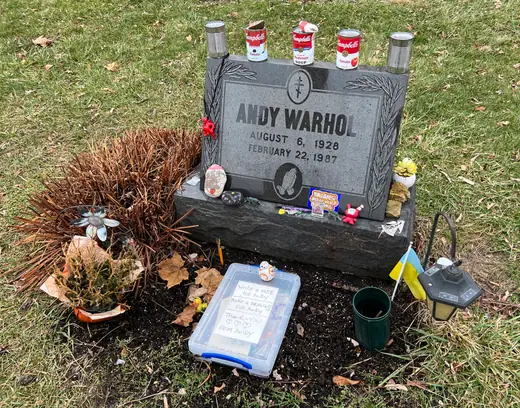
Andy Warhol
Warhol left almost everything to a foundation. The executor hired a lawyer on a percentage of the estate — then the two sides came to court with valuations hundreds of millions apart, because the fee depended on the answer. Nine years, two appeals, and one bankruptcy later, the lawyer owed the estate money.
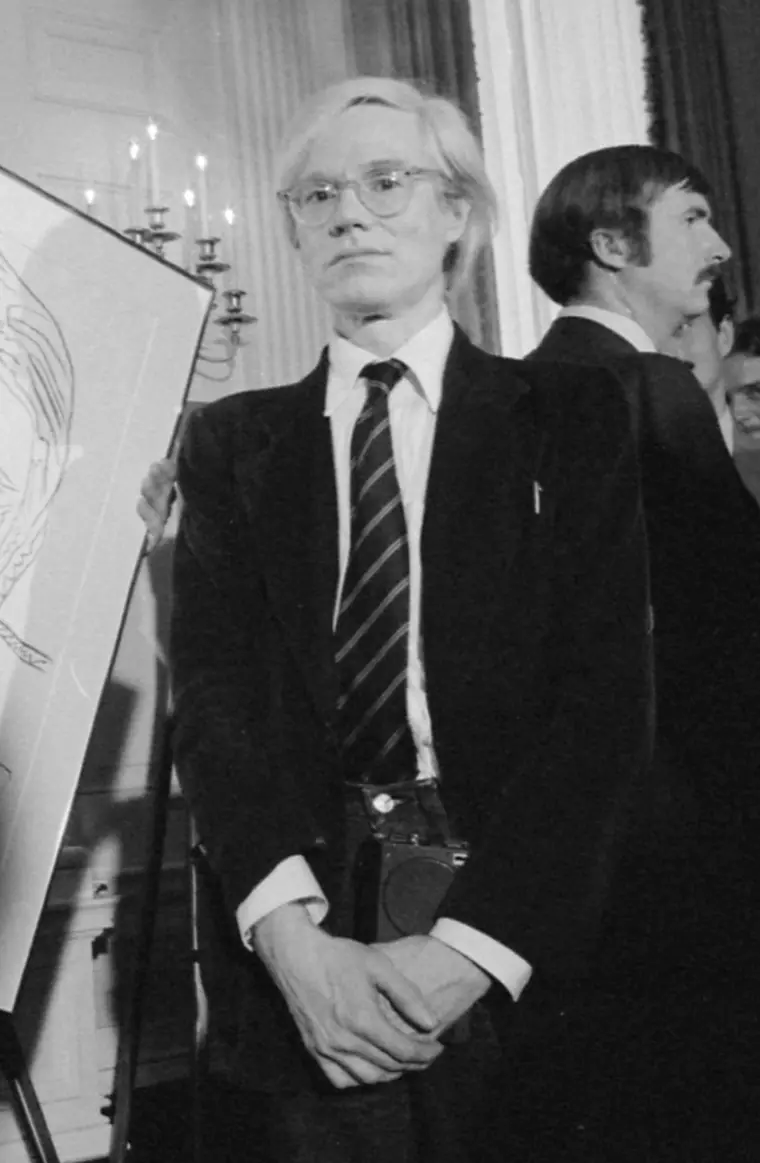
Andy Warhol died in New York on February 22, 1987, at 58, after gallbladder surgery. He left a will that did one large thing and two small ones: modest bequests to his business manager and his two brothers, and everything else to a foundation to be created for “the advancement of the visual arts.”
That phrase is the entire charitable instruction. Six words. The Andy Warhol Foundation for the Visual Arts has been interpreting them ever since.
The residue those six words captured was not a bank balance. Reporting on the estate inventory describes roughly 700 paintings, 9,000 drawings, 19,000 prints, and 66,000 photographs by Warhol himself, plus works by other artists, real estate, and securities. A Sotheby's auction of his personal collection ran ten days in April 1988 and brought about $25.3 million — and that was the part of the estate he had bought rather than made.
Frederick W. Hughes — Warhol's business manager since the 1960s — was named sole executor. He took a $250,000 bequest under the will, organised the foundation, and hired a lawyer.
2.5%, then 2%, then nine years
Hughes retained Edward W. Hayes as counsel to the estate. The initial agreement, per the Second Circuit's later account, set Hayes's fee at 2.5% of the gross estate, then thought to be around $100 million. Within about five weeks it was amended down to 2%, because the estate was turning out to be much larger than that.
Two percent of something enormous is a good deal. Two percent of something unmeasured is a lawsuit. On June 25, 1987, Hayes also became general counsel to the Foundation — the sole beneficiary of the estate whose value would set his fee.
Between 1987 and 1990 Hayes was paid $4.85 million. In April 1992 he petitioned the New York Surrogate's Court for roughly $12 million more, on the theory that the estate was worth $600 million and change.
The Foundation said no. And then it said something more interesting: it said the estate was worth $220 million, based on a 1991 Christie's appraisal that put the art at $95 million.
Blockage, and why $95 million met $390 million
The gap was not fraud on anybody's part. It was a real and old argument about how you value thousands of works by one dead artist at the same moment.
Sell 700 Warhol paintings on Tuesday and you will not get 700 times the price of one Warhol painting. You will flood your own market. Appraisers answer this with a blockage discount — a reduction applied to a large single-artist holding to reflect what an orderly disposition would actually realise. In the Warhol appraisal the discount produced figures reported at 30% to 90% below item-by-item values.
Hayes argued the discount had been applied too aggressively, pointing to line items such as the black-and-white photographs, appraised at $107,000 on one method and $11.6 million on his.
The Foundation had its own reason to prefer a smaller number that had nothing to do with Hayes: a private foundation must distribute about 5% of its assets in grants every year. A $500 million valuation is a permanently larger annual obligation than a $220 million one.
In 1994, Surrogate Eve Preminger set the art at $390.9 million and the fair market value of the estate at $509.9 million — roughly two and a half times the Foundation's figure.
The executor changed sides
While the fee case was pending, Hughes's position collapsed on two fronts. He had been forced out as chairman of the Foundation in 1992, and he was living with multiple sclerosis.
In the litigation, Hughes then settled with the Foundation and switched sides. Per contemporaneous reporting in The Art Newspaper, he agreed to accept the Foundation's valuation of the estate, to terminate Hayes as estate counsel, and to support the Foundation against Hayes — in exchange for $5 million in cash and title to certain Warhol paintings the Foundation had claimed.
That is a sentence worth reading twice. The executor — the person who signed the fee agreement, whose commissions ran on the same numbers — resolved his own exposure and left the estate's lawyer alone on the other side of the table.
In 1995, Surrogate Preminger valued Hayes's services at $7.2 million (shared with co-counsel Francis Harvey, who took 25%), plus $250,000 in fees. Reporting at the time noted Hayes had paid more than $5.2 million to the thirty-odd lawyers he had brought in, and that the Foundation's own litigation costs ran to about $4 million.
Reversed, then bankrupt
The Foundation appealed. In 1996 the Appellate Division cut the value of Hayes's services from $7.2 million to $3.5 million. Its reasoning, as recounted by the Second Circuit, was that the Surrogate had improperly measured the legal fee partly by reference to executorial functions — work an executor is paid commissions for, not work a lawyer bills for — and that the award would have compensated Hayes at an extraordinary effective hourly rate.
Because Hayes had already received $4.85 million, the effect of the reduction was that he owed the estate $1.35 million. The estate assigned that judgment to the Foundation on August 2, 1996. Hayes filed for bankruptcy on August 23, 1996. The dischargeability fight reached the Second Circuit in 1999, reported as In re Hayes, 183 F.3d 162.
Twelve years after Warhol died, the estate was still generating federal appellate opinions about who should have been paid what.
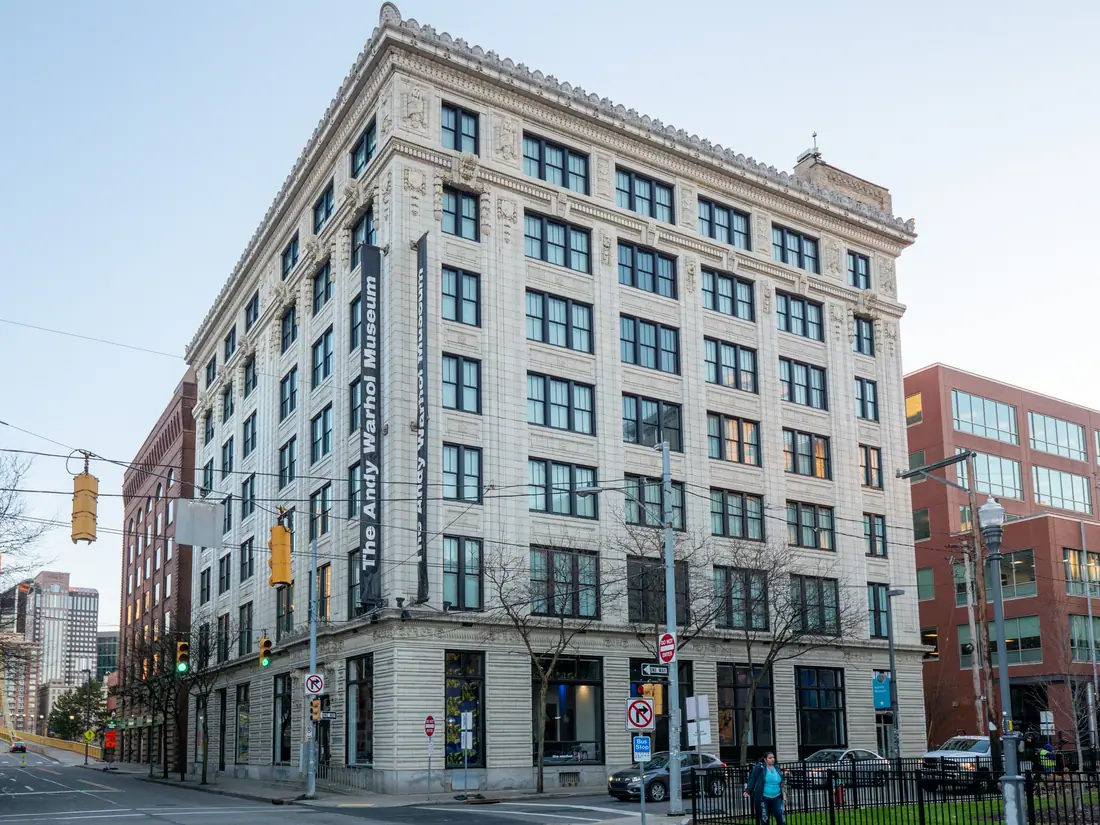
The Foundation survived it, funded the Andy Warhol Museum in Pittsburgh — opened 1994 — and has since given away hundreds of millions of dollars to artists and arts institutions. The six words worked. The fee clause did not.
Timeline
- Feb 22, 1987Warhol dies in New York at 58. His will leaves modest bequests to his business manager and brothers, and the residue to a foundation for the advancement of the visual arts.
- 1987Fred Hughes qualifies as sole executor and retains Edward W. Hayes at 2.5% of the gross estate; within about five weeks the rate is amended to 2%. On June 25 Hayes also becomes general counsel to the Foundation.
- Apr 1988A ten-day Sotheby's sale of Warhol's personal collection brings roughly $25.3 million.
- 1987–1990Hayes is paid $4.85 million by the estate.
- Apr 1992Hayes petitions the New York Surrogate's Court for roughly $12 million more. The Foundation values the estate at $220 million, on a Christie's appraisal of $95 million for the art.
- 1994Surrogate Eve Preminger values the art at $390.9 million and the estate at $509.9 million. Hughes settles with the Foundation, accepts its valuation, terminates Hayes, and takes $5 million plus certain paintings.
- 1995Preminger finds the fee agreement unenforceable and independently values Hayes's services at $7.2 million, shared with co-counsel, plus $250,000 in fees.
- 1996The Appellate Division reduces the value of Hayes's services to $3.5 million, leaving him owing the estate $1.35 million. The judgment is assigned to the Foundation on August 2; Hayes files for bankruptcy on August 23.
- 1999The Second Circuit decides the resulting bankruptcy appeal, In re Hayes, 183 F.3d 162.
What actually went wrong
- A percentage fee on an estate nobody had valued. Two percent of $100 million is $2 million. Two percent of $509.9 million is $10.2 million. Signing the rate before anyone counts the assets guarantees the count becomes contested.
- No cap, no fee schedule, no periodic approval. The Surrogate ultimately held the agreement unenforceable for lack of limiting provisions. A ceiling, a tiered rate, or court approval every year would have kept the number out of court.
- Counsel to the estate who was also counsel to the beneficiary. Serving both the fiduciary and the sole residuary beneficiary places one lawyer on both sides of the fee question.
- An asset class with no market price. Seventy thousand works by one artist have no clean valuation and never will. An estate like that needs a valuation protocol written in advance — appraiser selection, method, and a tiebreak — not litigation afterwards.
- Six words of charitable instruction. “The advancement of the visual arts” gave the Foundation enormous latitude, which worked out. It also gave everyone else enormous latitude to argue about what the estate was for.
Would it have gone that way in Florida?
Mostly computed, not litigated. Florida supplies a presumptive percentage for both the personal representative and the estate's attorney — nobody has to invent a retainer.
The Warhol fee war ran for nine years because New York asked what the lawyer's services were worth, from a standing start, against a moving valuation. Florida starts somewhere much less interesting, and that is the point.
Fla. Stat. §733.617 gives the personal representative a presumptively reasonable commission for ordinary services: 3% of the first $1 million of the compensable estate value, 2.5% above $1M to $5M, 2% above $5M to $10M, and 1.5% above $10M. Extraordinary services — selling real property, running the decedent's business, conducting litigation, handling tax proceedings, dealing with protected homestead — earn further reasonable compensation on top. The court may increase or decrease the figure, but it starts from a number rather than an argument.
Fla. Stat. §733.6171 does the same for the attorney for the personal representative, on a similar sliding scale, and adds something New York did not have in 1987: subsection (2) requires a written disclosure to the personal representative before the fee arrangement is set, and requires that the arrangement be reported to interested persons. Florida law also expects the fee to be for legal services. The Appellate Division's criticism of the Warhol award — that it had been measured partly by executorial work — is built into the Florida structure, because executorial work is already paid under §733.617.
Two further Florida levers. §733.106(4) lets the court direct from what part of the estate fees and costs are paid, including charging them against a specific beneficiary's share when one party's conduct generated the expense. And any interested person can petition to have compensation determined, which turns a fee dispute into a hearing rather than a decade.
Now the honest caveat. Florida's schedules are presumptive, not mandatory. A large art or business estate will still produce a genuine valuation fight — Florida trustees get no percentage default at all, only §736.0708's “reasonable under the circumstances,” measured by the West Coast Hospital factors and, after Robert Rauschenberg Foundation v. Grutman, expressly not by hours worked. Warhol's assets, in a Florida trust rather than a Florida probate, would have looked a great deal more like Rauschenberg's.
The practical instruction is short. Fix the fee terms in writing before anyone appraises anything, and require an independent valuation protocol for any concentrated holding — art, closely held stock, land — naming who appraises, on what method, and what happens if the parties disagree. Then get compensation approved periodically rather than at the end. A fee argued once a year is a conversation. A fee argued at the close is a lawsuit.
What people ask us about this.
Further reading
Third-party sites. Not ours, not endorsed, not kept current by us — just the places worth going next.
Sources
- In re Hayes; Andy Warhol Foundation for Visual Arts v. Hayes, 183 F.3d 162 (2d Cir. 1999) — FindLaw
- In re Edward W. Hayes, Debtor; Andy Warhol Foundation v. Hayes, 183 F.3d 162 — Justia
- Court makes decision in battle over Warhol estate — The Art Newspaper, June 1995
- Embattled Warhol estate fights legal fees — The Art Newspaper, Jan 1994
- Warhol lawyer loses $1.35 million in court ruling — The Art Newspaper, Mar 1996
- Frederick W. Hughes — Wikipedia
- Andy Warhol Foundation for the Visual Arts — Wikipedia
- Fla. Stat. §733.6171 — Compensation of attorney for the personal representative — The Florida Senate
- Fla. Stat. §733.617 — Compensation of personal representative — The Florida Senate
If this is your situation
Free 30-minute consult. Plain English. No pressure.
Nearly every case in this archive turned on something ordinary — an unwitnessed page, a stale beneficiary line, a document nobody could find. Those are cheap to fix while you're alive and expensive to fix afterward.