Maria Assunta & Tommaso
A 94-year-old Roman widow handwrote a will leaving roughly €10 million — apartments in Rome and Milan, land in Calabria — to a black stray cat she had picked up four years earlier. Italian law does not let a cat take anything. What she actually created was a search, and a promise.
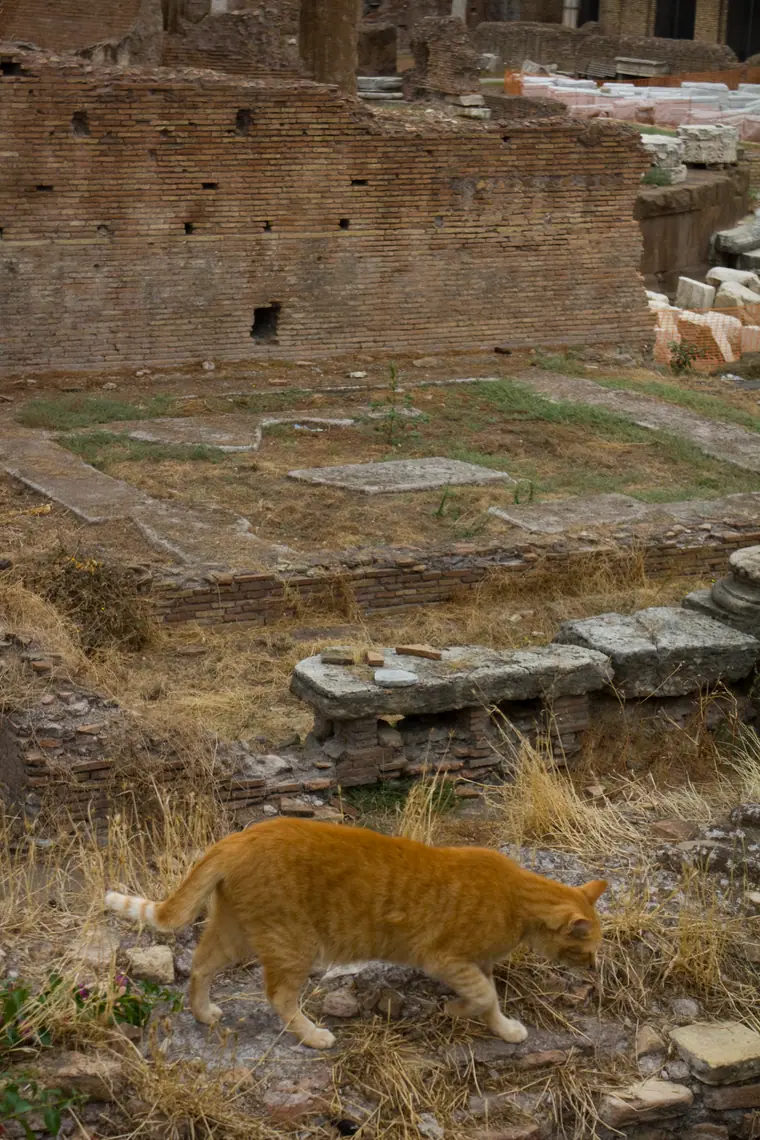
Rome has, by the usual estimate, something on the order of 180,000 stray cats. In about 2007 one of them — black, ordinary, unremarkable in every way that a cat can be unremarkable — was taken in by a woman named Maria Assunta. She was in her nineties. She was the widow of a builder who had done well. She had no children.
In October 2009, in the Rome office of her lawyers Anna Orecchioni and Giacinto Canzona, Assunta wrote out a new will in her own hand. It left everything to Tommaso: cash, apartments in Rome and Milan, and land in Calabria. Press accounts put the total at roughly €10 million, about $13 million at the time.
She died in November 2011 at 94. The story went around the world in a day, in the form it always takes — stray cat inherits fortune — and in that form it is not true, in Italy or anywhere else.
“We didn't find any that we thought suitable”
The lawyers did the work. Orecchioni later told reporters that several organizations came forward, and that none of them was one they considered suitable for the role. Her phrasing, widely quoted: they had requests from several organizations, but did not find any they thought suitable.
So the primary gift did not land. Under Italian law an animal cannot inherit — it is property, the same as in France, England, and every American state — and the intended human-institutional recipient did not materialize. That is a live failure inside a will, of the kind that ordinarily sends assets somewhere the testator never contemplated.
What resolved it was a person nobody had planned around. Stefania — reported only by her first name — had met Assunta in a park and become her nurse as she grew frail. She was named to take the cat and the fortune. Her account of why is one sentence long: she had promised Assunta she would look after the cat when she was gone.
Tommaso and Stefania moved out of Rome to somewhere quieter, and, at the family's request, the press was not told exactly where. Given what happened to Leona Helmsley's dog once its address became public, that was a sound decision.
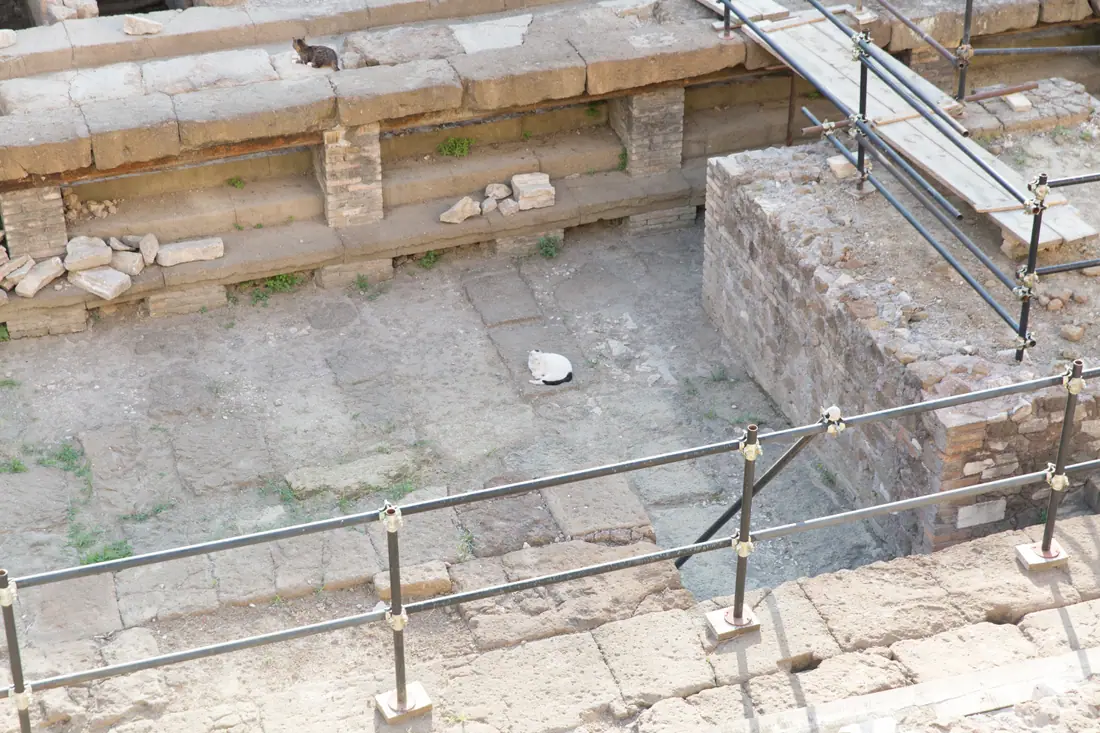
A cat named as heir is a set of instructions to a human being
Strip out the geography and the case is the same machine as every other pet-inheritance story: an animal cannot take, so the estate must land on a person or an institution, and everything then depends on what obliges that recipient to spend the money the way the testator wanted.
Italy has no equivalent of the American pet trust — no statute that creates an enforceable trust with a non-human subject and a named enforcer. What Italian practice offers instead is closer to a gift with a burden: property passes to a person or a body, subject to a charge to care for the animal. The obligation is real. The enforcement is thinner, because it depends on somebody with standing being willing to bring it.
Assunta had one structural advantage that made her plan possible at all. Italy has forced heirship — a reserved share for a spouse, children, and in some circumstances ascendants, that a will cannot cut out. She had no spouse, no children, and no surviving qualifying relatives. Nobody had a claim to reduce. That is not luck so much as the reason the will was never contested.
- The animal is the subject, not the party. It is what the money is spent on, never who owns it.
- The recipient's duty is only as strong as the document makes it. A wish creates none. A charge creates one somebody must enforce.
- A named institution that declines, dissolves, or is rejected leaves a hole — and where the estate falls into that hole is decided by statute, not by sentiment.
- Publicity is a risk to the animal. The cat's location was deliberately withheld.
Even the reporting on this case repeated a hoax
One detail is worth flagging, because it shows how completely this genre runs on repetition. Several outlets covering Tommaso in 2011 noted that he was only the second- or third-richest animal in the world, behind a German Shepherd named Gunther who had been left a fortune by a German countess.
There is no countess. There never was one. That story has been checked and found empty for thirty years, and Netflix built a series on the checking. But it was in the clip files, so it went into the Tommaso coverage, so it stayed in the clip files.
Tommaso is the opposite case: a real widow, a real will, real deeds in three Italian regions, real lawyers who went on the record with their names. It got a fraction of the attention, because the true version has fewer villas in it.
Timeline
- c. 2007Maria Assunta, a childless widow in her nineties, takes in a black stray cat in Rome and names him Tommaso.
- Oct 2009Assunta handwrites a new will in her lawyers' Rome office, leaving her estate to a worthy animal-welfare association — if one can be found — charged with caring for Tommaso.
- Nov 2011Assunta dies at 94. Her estate is reported at roughly €10 million: cash, apartments in Rome and Milan, land in Calabria.
- Dec 2011The lawyers report that several animal organizations came forward and none was found suitable for the role.
- Dec 2011Stefania, Assunta's nurse — whom she met in a park — is named to hold the estate and care for the cat. She says she promised Assunta she would.
- Dec 2011The story runs worldwide as “stray cat inherits $13 million.” Under Italian law the cat inherits nothing; a person does, subject to caring for him.
- After 2011Tommaso and Stefania leave Rome. Their location is deliberately not published.
What actually went wrong
- A gift conditioned on a search nobody could complete. “A worthy association, if one can be found” hands a discretionary judgment to whoever is holding the file. Reasonable people rejected every candidate, and the primary gift simply did not land.
- No named institution, and no named backup. One organization identified by its exact legal name, with a second and third in reserve, would have made the whole exercise a five-minute administrative step.
- No enforcement mechanism for the animal's care. The promise that has actually protected Tommaso was made in a park, not in the will.
- A handwritten will. It worked in Italy, where a fully holographic will is valid. In much of the United States — Florida included — the identical document is void, and the estate passes as if it never existed.
Would it have gone that way in Florida?
No. In Florida the will itself would have failed before anyone reached the question of the cat.
Start with the document, because in Florida the document is where this ends. Fla. Stat. §732.502 requires a will to be signed at the end by the testator and by two attesting witnesses, each signing in the presence of the testator and of each other. There is no exception for a will written entirely in the testator's own hand. §732.502(2) honors wills validly executed in another state or country — but expressly excludes holographic and nuncupative wills.
That exclusion is unusual in its bluntness and it catches people constantly. A handwritten, unwitnessed will is perfectly valid in Italy, France, and about half the American states. Bring it to Florida and it is not a will at all. Maria Assunta's estate, on Florida facts, would have passed by intestacy under §732.103 — descendants, then parents, then siblings and their descendants, then grandparents and their descendants — and if that list ran out, to the State School Fund under §732.107. Not to a charity. Not to the cat's caretaker. To relatives she may never have met, or to the State of Florida.
Now assume she had signed a properly witnessed Florida will containing the same words. The gift is to “a worthy animal-welfare association, if one can be found.” Two Florida provisions govern what happens when that condition is not satisfied.
§732.604 says a devise that fails for any reason falls into the residue, and a failed residuary share passes to the remaining residuary beneficiaries. So the practical answer is: whoever is named to take the residue gets everything, and if the residuary clause is the failed clause, you are back to intestacy. Nothing about the outcome would honor the intent — which is why §732.6005, the rule that the testator's intent controls construction, does its best work when the drafting gives a court something to construe.
If instead the gift had been framed as a charitable trust, Florida has a repair mechanism. §736.0413 codifies cy pres: where a particular charitable purpose becomes unlawful, impracticable, impossible, or wasteful, a court may direct the property to be applied in a manner consistent with the settlor's charitable purposes. A trust saying “to an animal-welfare organization selected by my trustee, and if none is suitable, to another organization consistent with my purpose of caring for stray animals” gets fixed by a judge in one hearing. A bare devise in a will does not.
And the cat has a Florida answer of its own. §736.0408 would let Assunta create an enforceable pet trust for Tommaso — a trustee holding a funded amount, a named caretaker, a named enforcer, and a remainder over to the animal charity when he dies. That single structure does everything she wanted, in the right order: the cat is provided for and supervised first, and the charity takes what is left rather than taking custody of a cat and a fortune at once.
The practical instruction: name your charity by its exact legal name and its EIN, name a second and third choice, and add a line letting your trustee substitute a similar organization if none of them exists when the time comes. If you have written a will out by hand and it has no witnesses, it is not a Florida will — get it executed properly, this month.
What people ask us about this.
Further reading
Third-party sites. Not ours, not endorsed, not kept current by us — just the places worth going next.
Sources
- Tommaso, the Italian cat, inherits $13 million from owner Maria Assunta — The World / PRX
- Italian cat inherits $13M — CBC News, Dec 2011
- Woman leaves $13M fortune to pet cat — ABC News, Dec 2011
- Italian cat inherits 10 million euro — ITALY Magazine, Dec 2011
- World's richest cat? Italian feline Tommaso inherits fortune — HuffPost, Dec 2011
- Fla. Stat. §732.502 — Execution of wills — The Florida Senate
- Fla. Stat. §736.0413 — Cy pres — The Florida Senate
- Fla. Stat. §732.604 — Failure of testamentary provision — The Florida Senate
If this is your situation
Free 30-minute consult. Plain English. No pressure.
Nearly every case in this archive turned on something ordinary — an unwitnessed page, a stale beneficiary line, a document nobody could find. Those are cheap to fix while you're alive and expensive to fix afterward.