Gunther the German Shepherd
For thirty years a line of German Shepherds has been reported as the richest dog on earth, heir to a German countess. Reporters checked. There is no countess. There never was. The dog does, however, own a mansion on Brickell Avenue — which is a different and more interesting fact.
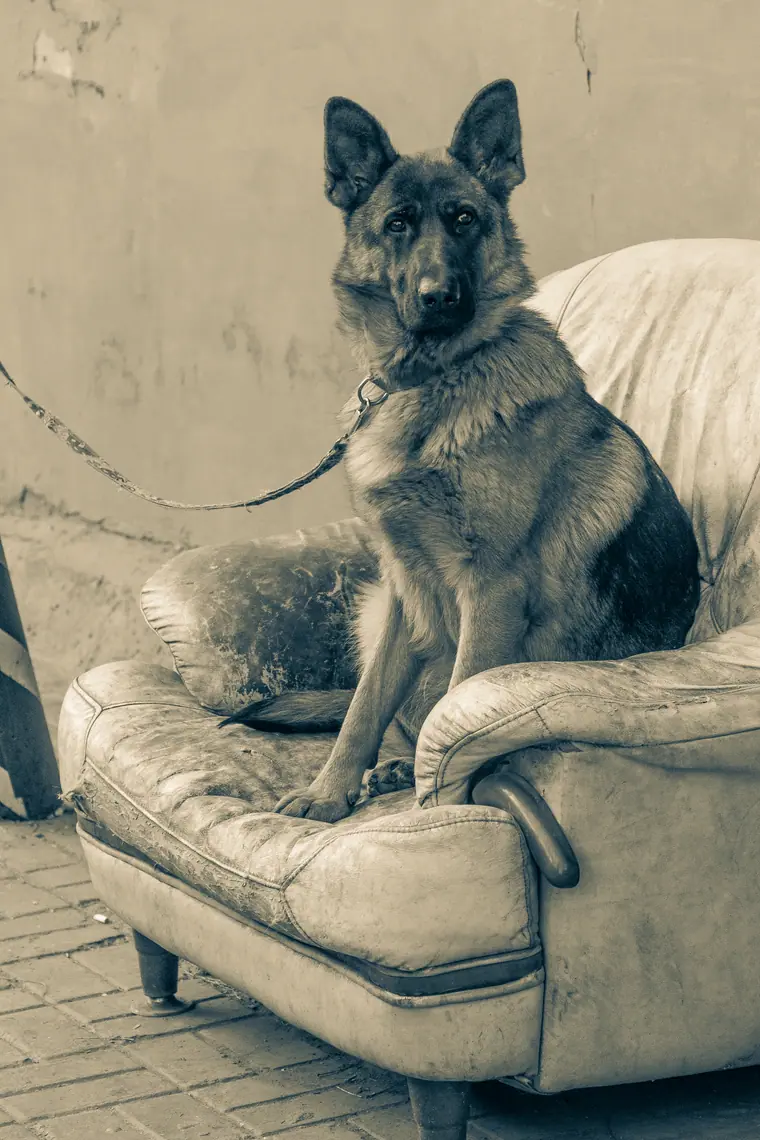
The story is very good, which is why it has run in newspapers on four continents for three decades.
Countess Karlotta Liebenstein, a German aristocrat with a pharmaceutical fortune and no close family, lost her son. His name was Gunther. Grieving, she left her entire estate in trust to his German Shepherd, also named Gunther, and died in 1992. The trust was reported at $65 million, then $80 million, then $150 million, depending on the year and the outlet. Managed carefully, the money grew. The dog acquired staff, a private chef, a swimming pool, and eventually a waterfront mansion in Miami previously owned by Madonna.
By the late 1990s Gunther was in the Guinness Book of Records as the world's wealthiest dog. The Associated Press ran the story. The Miami Herald ran it. It went around again in 2021 when the mansion was listed for $31.75 million and everyone reported that a dog was selling it.
There is no evidence that Countess Karlotta Liebenstein ever existed. No birth record, no death record, no estate, no German title. Reporters have looked, repeatedly, for thirty years, and found nothing.
1995, 1999, 2021, 2023 — it got debunked four separate times
The man behind the Gunther enterprise is Maurizio Mian, an Italian businessman whose family sold a pharmaceutical business — the Gentili institute, developer of the osteoporosis drug alendronate — to Merck. Mian has been the public face of the Gunther Group, the Gunther Foundation, and the Gunther Corporation for the whole of the dog's reported career.
The first crack came early. In a 1995 interview, later cited by the Miami New Times, Mian said the inheritance story was “just an invention to publicize the philosophy of the Gunther Group.” He subsequently retracted that, saying he had been trying to mislead the Italian press.
In 1999, Guinness World Records told reporters there was not enough evidence to support the claims about Gunther's wealth. Guinness stopped recognising a “richest dog” category altogether. The Washington Post wrote it up; a Miami Herald editor described the affair as one of the city's worst publicity stunts.
In 2021, when the Brickell Avenue house was listed, the Miami New Times went through the records again and found no countess. The Associated Press, which had carried elements of the story, removed its erroneous version.
In February 2023, Netflix released “Gunther's Millions,” a four-part series in which the countess is presented as a fabrication, along with her son. The series reports that the underlying money was the Mian family's own, and that the trust was constructed around it. We note what the series reports and stop there: nothing has been established against anyone in a court, and we are not asserting otherwise.

The house on Brickell Avenue is real
This is where the story stops being folklore and starts being a title search.
Madonna bought the Tuscan-style villa at 3029 Brickell Avenue in Miami for $4.9 million in 1992. In 2000 she sold it for $7.5 million in cash to Gunther Corp. In 2021 the property was listed at $31.75 million, and Miami-Dade County property records showed the owner as Gunther Corp. — not a dog.
That distinction is the entire legal content of the case. An animal cannot hold title to Florida real estate. It cannot sign a deed, be served with process, pay ad valorem taxes, or appear as a grantee. What can do all of those things is a Florida corporation, and behind every Florida corporation is a human being holding shares.
So the headline “dog sells Madonna's mansion” is doing something specific: it is describing a corporate real-estate transaction as if the mascot on the letterhead were the seller. It is a good line. It is not a conveyance.
- A dog cannot own a house. Property cannot own property — the same rule that stops a cat inheriting in Paris stops a shepherd holding a deed in Miami.
- A corporation can. And a corporation is owned by people, governed by directors, and taxed accordingly.
- A pet trust is neither. It is a trust: a human trustee, a human caretaker, a human enforcer, and an animal that is the subject of the spending rather than a party to anything.
Gunther III, IV, and VI — and why that could not work
The reported Gunther is not one dog. He is a line of them, numbered like a monarchy, each said to succeed to the fortune. That detail is the tell, and it is worth pulling apart, because it is the single most common misunderstanding people bring to a real pet-trust meeting.
A pet trust does not roll over to the next animal. Every American pet-trust statute, Florida's included, ties the trust to animals alive during the settlor's lifetime and terminates it when the last of those animals dies. You cannot fund a perpetual canine dynasty. You can provide, generously and enforceably, for the specific animals you actually had.
That limit exists for a reason older than pet trusts: a trust with no human beneficiary and no end date is a fund that never has to answer to anybody. The law's answer is to make the trust end when the animal does, and to send the remainder to a person or a charity who has been waiting, watching, and entitled to ask questions.
The unglamorous version of this story is that a properly drafted pet trust for an ordinary dog costs a few hundred dollars, holds a five-figure sum, and never appears in a newspaper. That is what success looks like.
Timeline
- 1992Countess Karlotta Liebenstein reportedly dies and leaves her fortune in trust for a German Shepherd. No record of the countess has ever been found.
- 1994–1995The story spreads internationally. In a 1995 interview Maurizio Mian describes the inheritance as an invention to publicize the Gunther Group; he later retracts the remark.
- 1998Gunther appears in the Guinness Book of Records as the world's wealthiest dog.
- 1999Guinness tells the press there is insufficient evidence for the claim and discontinues the category.
- 2000Gunther Corp. buys Madonna's villa at 3029 Brickell Avenue, Miami, for $7.5 million in cash.
- Nov 2021The property is listed at $31.75 million. Miami New Times finds no countess; the Associated Press removes its erroneous account.
- Feb 2023Netflix releases “Gunther's Millions,” presenting the countess and her son as fabrications.
What actually went wrong
- Nothing went wrong legally — that is the point. There was no estate, no probate, and no fight. What there was, for thirty years, was a story that shaped what millions of people believe about leaving money to animals.
- A number with no instrument. Every figure attached to Gunther — $65M, $80M, $150M — was reported without anyone producing a will, a trust deed, or a probate file. That should always be the first question.
- Outlets repeated each other. Guinness listed it because the press reported it; the press reported it because Guinness listed it. Two large institutions each treated the other as the source.
- Folklore crowds out the real document. People who believe pet inheritance means a dog with a chef and a mansion do not go and ask for the $400 statutory trust that would actually protect their animal.
Would it have gone that way in Florida?
This IS partly a Florida story — and Florida law explains exactly why the dog-dynasty version could never be real.
The Brickell Avenue house is Florida property, held by a Florida corporation, recorded in Miami-Dade. So the first Florida answer is a flat one: no animal appears anywhere in that chain of title, because it legally cannot. A grantee must be a person or a legal entity. A German Shepherd is neither.
The second answer concerns the trust that was supposedly behind it. Florida's pet-trust statute, Fla. Stat. §736.0408, is deliberately narrow in one respect that kills the Gunther premise: the trust may be created for the care of an animal alive during the settlor's lifetime, and it terminates on the death of the last surviving animal covered by the trust. There is no mechanism to pass it to the next dog, or the dog after that. Gunther III cannot leave it to Gunther IV, because Gunther III never had it.
Why is the statute drawn that way? Because of §736.0402, which requires a trust to have a definite beneficiary — someone ascertainable who can hold the trustee to account. A pet trust is one of the narrow statutory exceptions to that rule, and the price of the exception is a hard stop. Without it you would have a fund with no human beneficiary running forever, which is the classic definition of money nobody can supervise. §689.225, Florida's rule against perpetuities, backs that up from the other direction.
There is a homestead footnote worth knowing if you own a house here. Fla. Const. Art. X, §4 protects a Florida homestead from forced sale and restricts how it may be devised — but the protection belongs to a natural person who resides there. Title a Florida home in a corporation, an LLC, or an irrevocable trust for the benefit of an animal, and you have given up homestead protection and the accompanying property-tax cap. That trade is made accidentally more often than it is made on purpose.
The honest caveat: none of this stops you from being generous. §736.0408 has no dollar ceiling. You may fund a pet trust with far more than a dog will ever cost, and a Florida court only intervenes if the amount substantially exceeds the intended use, in which case the excess goes to your remainder beneficiaries rather than being lost. Generosity is fine. Perpetuity is not.
The practical instruction: if you want your animals cared for after you die, ask for a pet trust naming the animals you own now, a caretaker, a successor caretaker, an enforcer, a budget, and a remainder beneficiary — and add a line covering after-acquired pets so a dog you adopt next year is included. It is a two-page rider on a normal estate plan. It has never made a headline, and it works.
What people ask us about this.


Further reading
Third-party sites. Not ours, not endorsed, not kept current by us — just the places worth going next.
Sources
- Is a millionaire German Shepherd named Gunther really selling Madonna's former Miami mansion? — Miami New Times, 2021
- Truth behind the world's richest dog and star of Gunther's Millions — Guinness World Records, Feb 2023
- Story about dog “selling” mansion part of long-running tale — NBC News / AP, Nov 2021
- Gunther's Millions: the biggest lie in Netflix's new docuseries — Slate, Feb 2023
- Gunther's Millions: the true story behind Netflix's rich dog docuseries — Den of Geek, Feb 2023
- Millionaire pooch selling Miami villa once owned by Madonna — NBC 6 South Florida, Nov 2021
- Fla. Stat. §736.0408 — Trust for care of an animal — The Florida Senate
If this is your situation
Free 30-minute consult. Plain English. No pressure.
Nearly every case in this archive turned on something ordinary — an unwitnessed page, a stale beneficiary line, a document nobody could find. Those are cheap to fix while you're alive and expensive to fix afterward.