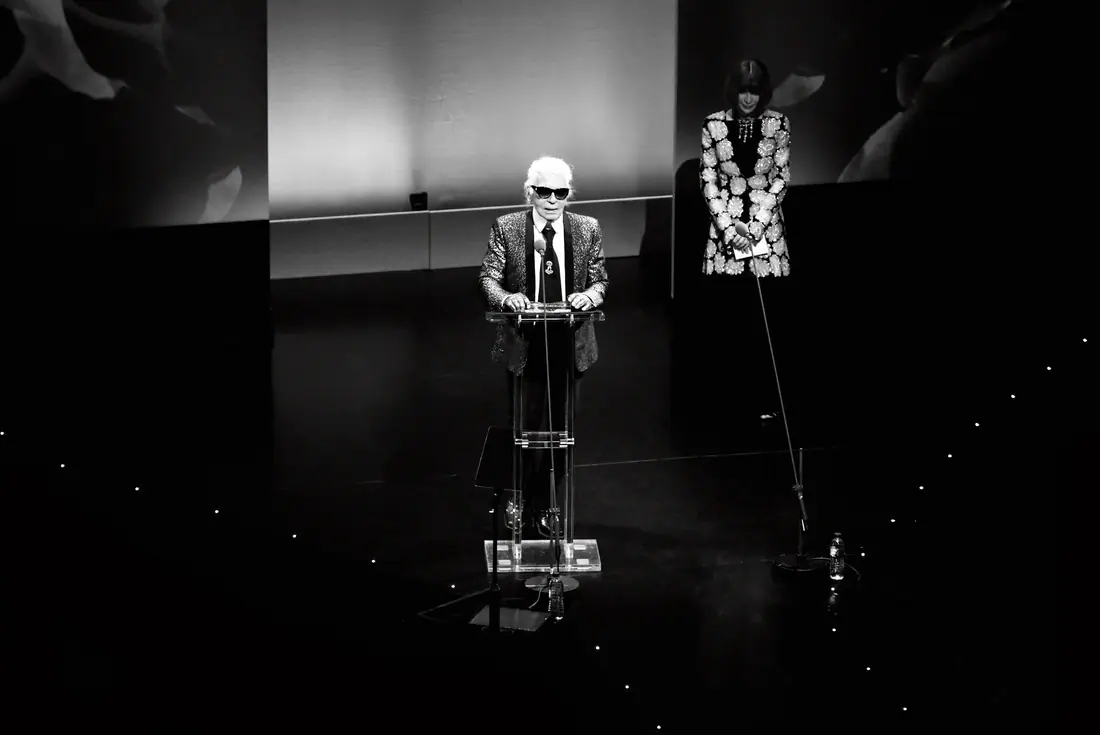
Karl Lagerfeld
He told interviewers his Birman cat was an heiress. French law says an animal is property, and property cannot inherit. Seven years after his death the estate is still tangled with the French tax authorities, and the woman caring for Choupette says nobody has been paid anything.

Karl Lagerfeld ran Chanel for 36 years, Fendi for 54, and a house under his own name alongside both. He died on February 19, 2019, at 85. The fortune has been reported at figures from roughly $195 million to $300 million, and no published account agrees with another, which is the first clue about how this one has gone.
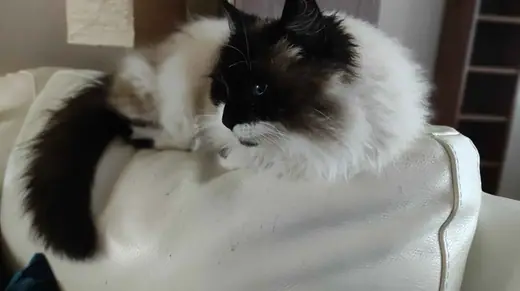
The famous part is the cat. Choupette is a blue-cream Birman, born August 15, 2011, given to Lagerfeld that Christmas by the model Baptiste Giabiconi, who had asked him to look after her while he traveled. Lagerfeld kept her. He then spent seven years telling interviewers, with visible enjoyment, that she was an heiress.
He was describing an intention, not a legal fact. Under Article 515-14 of the French Civil Code — added in 2015 — animals are living beings endowed with sensitivity who remain, in the same sentence, subject to the regime of property. France softened the label and kept the rule. A thing does not inherit things.
Asked about that, Lagerfeld reportedly answered that it was lucky he was not French. It is a good line. It does not fix the problem, because the problem is not nationality.
A Monaco will, a French tax file, and seven beneficiaries
Lagerfeld's will was reported to have been finalized in April 2016 and filed in Monaco, where he kept a residence. It has never been made public. Reporting consistently describes seven beneficiaries, among them his longtime assistant and bodyguard Sébastien Jondeau, the models Baptiste Giabiconi and Brad Kroenig, his godson Hudson Kroenig, and his former housekeeper Françoise Caçote, who took Choupette and has cared for her since.
The amount attached to the cat has been reported at roughly €1.2 million, sometimes rendered as $1.5 million. Accounts differ, and since nobody outside the estate has seen the document, every figure in circulation is secondhand.
What is not in dispute is the shape of the arrangement. The money for Choupette was always going to be given to a human being. That is the only lawful way to do it in France, and it was the right instinct.
It is also where the exposure sits. A gift to a caretaker with a wish attached is a gift to the caretaker. If it is instead structured as a burden the caretaker is legally obliged to perform, someone has to be entitled to enforce it — and someone has to be alive, willing, and funded enough to go do that.
“We have received absolutely nothing”
As of August 2026 the estate remains unresolved. Reporting describes a protracted dispute with the French tax authorities over the valuation and administration of assets spread across several countries — properties, art, antiques, and business interests — with distributions to the named beneficiaries stalled behind it.
In June 2026, Caçote told The Atlantic, in remarks picked up widely: “I want to be completely transparent: today, we have received absolutely nothing.” She has said she retained lawyers at her own expense to pursue the bequest and works part-time while doing it. Choupette's agent, Lucas Bérullier, put the underlying obstacle in one sentence to the same reporting: the law is the law, and a cat cannot own a bank account.
Choupette is fifteen. She still models. Caçote's stated priority, in her own words, is that the cat is happy and protected as Lagerfeld would have wanted.
France taxes inheritances by the recipient's relationship to the deceased, and a beneficiary who is not a relative can be taxed at rates reaching 60%. Lagerfeld had no children and no surviving family. Every person he named was, for tax purposes, a stranger. That is a structural fact about the estate, not a criticism of anyone in it.
The cat was already rich, and that is the actual lesson
Here is the detail that reframes the whole story. Choupette did not need the will.
In a 2015 interview Lagerfeld said she had earned about €3 million during 2014 from two campaigns alone — a car advertisement in Germany and the Shu Uemura “Shupette” cosmetics line in Japan. Those were commercial contracts, negotiated during his lifetime, paid in real money to accounts controlled by people who were actually alive.
So the most reliable provision Lagerfeld ever made for his cat was not a testamentary one. It was an income stream set up while he could still supervise it. Everything he arranged to happen after his death is, seven years later, still sitting in a file.
That is the sentence worth taking away from a fashion story: the parts of a plan that operate during your lifetime work; the parts that depend on a probate court and a tax authority operate on their schedule, not yours. Funding a caretaker before you die, in a vehicle nobody has to litigate, is not a lesser plan. It is frequently the better one.
Timeline
- Aug 15, 2011Choupette is born — a blue-cream Birman.
- Dec 2011Baptiste Giabiconi leaves the cat with Lagerfeld while traveling. Lagerfeld keeps her.
- 2014Choupette earns a reported €3 million from two campaigns: a German car advertisement and Shu Uemura's “Shupette” line in Japan.
- Feb 18, 2015Article 515-14 enters the French Civil Code: animals are sentient beings, and remain subject to the regime of property.
- Apr 2016Lagerfeld's will is reported to have been finalized. It is filed in Monaco and never made public.
- Feb 19, 2019Lagerfeld dies at 85. Seven beneficiaries are reported, including his former housekeeper Françoise Caçote, who takes Choupette.
- 2019–2026The estate remains entangled with the French tax authorities over cross-border assets. No distributions are reported.
- Jun 2026Caçote tells The Atlantic that the beneficiaries have received absolutely nothing. Choupette, at 15, continues to model.
What actually went wrong
- A promise made in interviews, not in a document anyone can enforce. Saying the cat is an heiress is publicity. It creates no duty, no trustee, and no remedy.
- Assets in several countries and a will filed in a third. A Monaco will over French, German, and other holdings guarantees that the first fight is about which authority values what — years before anyone reaches the merits.
- No liquidity for the caretaker. The person actually feeding the animal is funding lawyers out of pocket while the estate is frozen. A small amount payable immediately, outside the contested estate, would have removed that entirely.
- A tax profile nobody planned around. With no relatives, every beneficiary sat in France's highest bracket. That was knowable in 2016 and is not fixable in 2026.
Would it have gone that way in Florida?
Florida gives you the tool France does not — but only if you build a trust, not a bequest with a wish attached.
Start with what is identical. A Florida animal is property too. Naming a cat as a beneficiary of your will does nothing here for exactly the reason it does nothing in Paris. The gift has to run through a human being either way.
What Florida adds is Fla. Stat. §736.0408, which authorizes a trust for the care of an animal alive during the settlor's lifetime and — this is the part that matters — makes it enforceable. That single word is the difference between the two documents people confuse:
A bare bequest to a caretaker says: I leave $50,000 to Françoise, who I hope will look after the cat. Legally, that is $50,000 to Françoise. If she rehomes the animal the next week, nobody has standing to complain, because the money is hers and the cat is a chattel. It is a gift with a sentence of etiquette attached.
A pet trust under §736.0408 says: a trustee holds the money; a named caretaker has custody of the animal; a named enforcer may petition a Florida court to compel the trustee to spend on the animal; and when the last covered animal dies, whatever is left goes to a named remainder beneficiary. Nobody has to be trusted, because someone can be sued.
Three drafting points that fail far more often than the big number does. Name a successor caretaker, and a second one. Caretakers move, get sick, and predecease people — Choupette has outlived her owner by seven years and counting, and a parrot or a horse can outlive you by forty. Name an enforcer who is not the caretaker and not the trustee, so the person checking the spending has no stake in it; §736.0408 contemplates exactly that, and a court may appoint one if you do not. And use §736.0813, the trustee's duty to inform and account, deliberately: require a short annual accounting to the enforcer, so a problem surfaces in year one rather than year seven.
Two Florida advantages worth naming for anyone reading this from a house they bought after selling one somewhere else. Florida has no state estate or inheritance tax — Fla. Const. Art. VII, §5 forbids one — so the 60% stranger rate that shapes the Lagerfeld file has no Florida equivalent. And if you have moved here, file a declaration of domicile under §222.17 and behave consistently with it, because the single most expensive thing in this case is not the cat: it is two tax authorities disagreeing about where a man lived.
The practical instruction: a Florida pet trust with a named caretaker, a named successor, a separate enforcer, a real budget, and a remainder beneficiary is a routine document that fits inside a normal estate plan. Fund it, tell the caretaker it exists, and give them enough cash reaching them in the first month that they never have to hire a lawyer to feed your animal.
What people ask us about this.


Further reading
Third-party sites. Not ours, not endorsed, not kept current by us — just the places worth going next.
Sources
- Karl Lagerfeld's cat still waiting for her inheritance — Yahoo / The Independent, Jun 2026
- Karl Lagerfeld's cat Choupette still waiting for her inheritance — HOLA!, Jun 2026
- Lagerfeld's cat won't get her paws on his fortune. France will. — Bloomberg Tax, 2019
- Chanel No. 5… or 7? Beneficiaries fight over Lagerfeld's estate — Irwin Mitchell LLP
- Karl Lagerfeld's cat could inherit part of his fortune — Fortune, Feb 2019
- Choupette — breed, origin, and reported earnings — Wikipedia
- Article 515-14 — Code civil — Légifrance
- Fla. Stat. §736.0408 — Trust for care of an animal — The Florida Senate
If this is your situation
Free 30-minute consult. Plain English. No pressure.
Nearly every case in this archive turned on something ordinary — an unwitnessed page, a stale beneficiary line, a document nobody could find. Those are cheap to fix while you're alive and expensive to fix afterward.