Sumner Redstone
Most probate litigation starts with a funeral. Redstone's started in 2015, while he was 92 and very much alive, when a former companion asked a Los Angeles court to declare him incapable of having removed her. Four years of litigation followed, in three states, over a trust that had not yet begun.
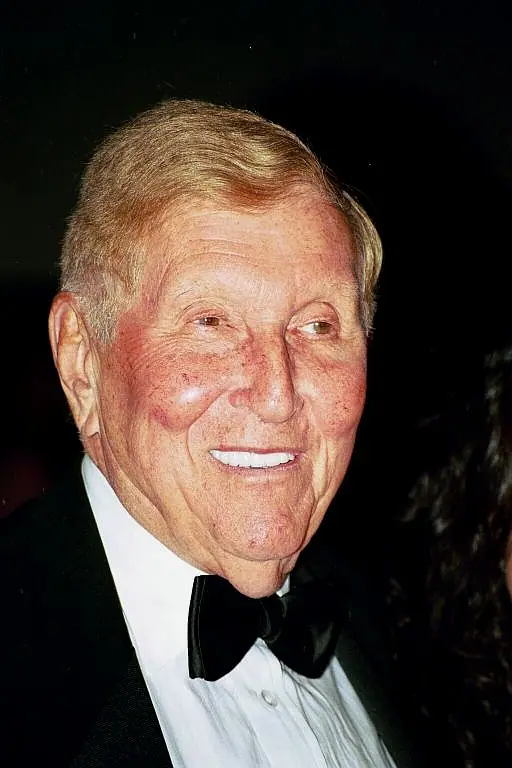
Sumner Redstone controlled roughly 80% of the voting stock of National Amusements, the private company that in turn controlled Viacom and CBS. He had built it from a chain of drive-in theatres his father started, and he was famous for a single sentence about succession, which was that he did not intend to die.
His estate plan was, on paper, competent and conventional for a fortune of that shape. The NAI shares sat in an irrevocable trust for the benefit of his five grandchildren, administered by seven trustees acting by majority. No single trustee controlled it. His daughter Shari Redstone was one of the seven; so was her son Tyler Korff.
And the trust was written to become operative on his death or his incapacity.
That second word is the whole case. A trust that activates on incapacity converts a medical question into a corporate one, and gives every person affected by the answer a reason to litigate the diagnosis of a living man.
November 2015: a health care directive, litigated
In October 2015, Redstone, then 92, removed Manuela Herzer — a former companion who had lived at his Beverly Hills house — as his designated health care agent, and replaced her with Shari Redstone. Reporting at the time indicated Herzer's expected inheritance under his prior plan was in the region of $70 million.
Herzer filed in Los Angeles Superior Court seeking to void that removal, alleging he had lacked the capacity to make it. The petition was not about money on its face. It was about a health care directive — the cheapest document in any estate plan, and the one that decides who stands next to the bed.
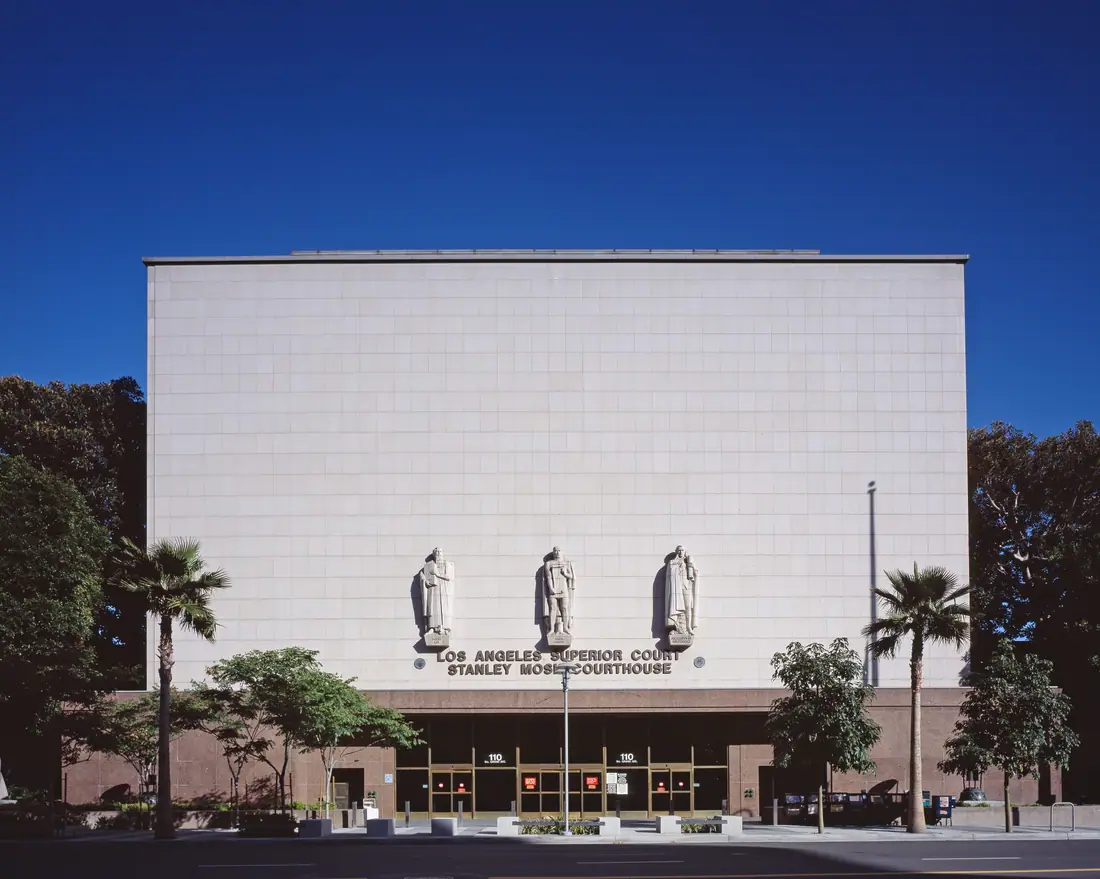
The case went to trial in May 2016 before Judge David J. Cowan. It lasted about a day.
“I want Manuela out of my life”
The dispositive evidence was Redstone's own videotaped deposition. In it he stated plainly that he wanted Herzer out of his life and wanted his daughter making his medical decisions.
On May 9, 2016, Cowan dismissed the case. His stated reasoning: Redstone is presumed to have capacity; the proceeding was not reasonably necessary to protect the patient's interests; and, as the judge put it, “Redstone's testimony has ultimately defeated her case.” The court declined to make general findings about his mental capacity, resting instead on the presumption and on what the man himself had said on camera.
That is the correct order of operations, and it is worth stating flatly because so much litigation in this area proceeds as though the opposite were true. Capacity is presumed. Frailty is not incapacity. A diagnosis is not a disqualification. The burden sits on the person asking a court to override a living adult's stated choice, and it is a real burden.
Herzer appealed and filed a fresh action alleging that Shari Redstone and others had interfered with her expected inheritance. In January 2019, days before trial, the parties settled: Herzer agreed to repay a reported $3.25 million in gifts and to withdraw her objection to her removal from the trust. No findings were made against anyone.
May 2016: two trustees are removed, and sue
Eleven days after Cowan's ruling, the second front opened. On May 20, 2016, Redstone's counsel sent notice removing Philippe Dauman, then Viacom's chief executive, and George Abrams, a longtime Viacom director, as trustees of the Sumner M. Redstone National Amusements Trust and as directors of National Amusements. They were replaced by NAI's general counsel Thaddeus Jankowski and Jill Krutick.
On May 23, 2016, Dauman and Abrams filed in the Probate and Family Court for Norfolk County, Massachusetts, seeking to invalidate the removals. Their filing alleged that the removals were the product of Redstone's incapacity, or of undue influence or other improper conduct. Parallel litigation ran in the Delaware Court of Chancery over control of the Viacom board.
So the same question — is he capable of signing this — was live in three jurisdictions at once, asked by different people, about different documents, with different burdens of proof. California had already answered it one way. Massachusetts and Delaware were being asked again.
It ended in a deal, not a ruling. A settlement effective August 18, 2016 terminated the Massachusetts and Delaware cases. Dauman left Viacom with a reported $72 million package.
December 2018: a guardian, for a man who was not incompetent
In December 2018, a Los Angeles judge found Redstone incapacitated by reason of a severe speech impairment and appointed attorney Samuel Ingham as an independent guardian for the litigation. The order expressly stated that the finding had no bearing on his mental competence.
That distinction is precise and easy to miss. A person can be unable to communicate a decision while remaining entirely able to make one. Courts appoint limited representatives for exactly that gap, and it is not the same thing as taking away someone's rights.
Redstone died on August 11, 2020, at 97. By then every dispute about his capacity had been settled or dismissed, and the trust his father's drive-in theatres eventually paid for became operative in the ordinary way — because he had died, not because a court had said he could no longer decide.
Timeline
- Pre-2015Redstone's roughly 80% voting stake in National Amusements is held for an irrevocable trust with seven trustees, for the benefit of his five grandchildren, to become operative on his death or incapacity.
- Oct 2015Redstone, 92, removes Manuela Herzer as his designated health care agent and names his daughter Shari Redstone instead.
- Nov 2015Herzer petitions the Los Angeles Superior Court to void the removal, alleging incapacity.
- Feb 2016Redstone resigns the chairmanships of Viacom and CBS.
- May 9, 2016After roughly a day of trial, Judge David J. Cowan dismisses the petition, holding Redstone is presumed to have capacity and that his videotaped deposition defeated the case.
- May 20–23, 2016Philippe Dauman and George Abrams are removed as trustees and NAI directors, and sue in the Norfolk County (MA) Probate and Family Court alleging incapacity or undue influence. Related litigation proceeds in the Delaware Court of Chancery.
- Aug 18, 2016Settlement terminates the Massachusetts and Delaware cases. Dauman departs Viacom with a reported $72 million package.
- Dec 2018A Los Angeles judge finds Redstone incapacitated by reason of a severe speech impairment and appoints an independent guardian, expressly noting no bearing on mental competence.
- Jan 4, 2019Herzer settles days before trial, agreeing to repay a reported $3.25 million and withdraw her objection to removal from the trust.
- Aug 11, 2020Redstone dies at 97. Control passes under the trust.
What actually went wrong
- “Incapacity” was used as a trigger without defining it. A trust that activates on incapacity needs to say precisely who decides and how — two named treating physicians, a written certification, a defined standard. Left undefined, the trigger is an invitation to litigate a diagnosis.
- Fiduciaries who were also executives of the controlled companies. When a trustee's day job depends on the outcome of a trust decision, every trustee vote is also a job-security vote. The conflict is structural, not personal, and it should have been managed in the instrument.
- A health care directive treated as an afterthought. The document that started four years of litigation was not the trust. It was the form naming who could speak to his doctors. It is usually two pages and it is usually free.
- Enormous lifetime gifts, undocumented. Gifts to companions running into the millions, with no contemporaneous record of purpose, are the easiest facts in the world to re-characterise later. The January 2019 settlement returned a reported $3.25 million of them.
- No mechanism to change trustees without a fight. Removal by notice from an ageing settlor is the most contestable method available. A named protector with removal power produces a signature; a unilateral notice produces a Massachusetts docket.
Would it have gone that way in Florida?
Same starting point — Florida presumes capacity too — but Florida gives you far better tools to keep the question out of court in the first place.
Begin where Judge Cowan began. Florida agrees with him. An adult is presumed to have capacity, and the burden falls on whoever asks a court to say otherwise. Under Ch. 744, Florida's guardianship chapter, incapacity is determined only through a formal proceeding: a petition, an examining committee of three members appointed by the court, and a judicial finding of which specific rights the person cannot exercise. Florida law also directs the court toward the least restrictive alternative — a limited guardianship removing only the rights actually lost, rather than a plenary one removing all of them.
That is a deliberately heavy process, and it should be. Losing legal capacity means losing the right to contract, to choose where you live, and in some cases to vote. Florida does not let anyone take that by allegation.
The better move is to make the guardianship process unnecessary. Chapter 765 governs advance directives, and lets you appoint a health care surrogate who can act when you cannot — including, since 2015, a surrogate authorised to act immediately, without any determination of incapacity at all, if the document says so. That single election removes the entire fight Herzer brought: if no incapacity finding is required for the agent to act, there is nothing to litigate. A durable power of attorney under Ch. 709 does the same work on the financial side, and Florida's version is durable from signing rather than springing on a doctor's letter — again, by design, to avoid the argument.
For the trust itself, the drafting lesson is the sharpest one in this case. If your trust changes hands on “incapacity,” define the word. Name the standard, name who certifies it — typically two licensed physicians, one of them the treating physician — require the certification in writing, and say what happens if the certification is later withdrawn. Florida courts will enforce what the instrument says; they cannot enforce what it left blank.
Then address the trustees. Fla. Stat. §736.0706 allows a court to remove a trustee for serious breach, for unfitness, or for lack of cooperation among co-trustees that substantially impairs administration — but that is a lawsuit. §736.1406 lets the instrument give a third party power to direct or replace trustees, which is a letter. §736.0703 governs how co-trustees act; with seven trustees voting by majority, the arithmetic works, but only if the instrument also says how a trustee is added or removed. And §736.0802 imposes the duty of loyalty that makes a trustee's outside employment by a controlled company a matter the drafter should have addressed on the page.
The practical instruction is short and applies to estates of every size. Sign a Florida health care surrogate designation that takes effect immediately, sign a durable power of attorney, and if any document of yours turns on the word “incapacity,” make it name the doctors. Those three steps cost a fraction of one hour of the litigation described above.
What people ask us about this.


Further reading
Third-party sites. Not ours, not endorsed, not kept current by us — just the places worth going next.
Sources
- Persuaded by deposition, judge pulls plug on Sumner Redstone competency trial — ABA Journal, May 2016
- Sumner Redstone wins fight with ex-girlfriend as judge tosses competency suit — The Washington Post, May 9 2016
- Viacom CEO Dauman sues over removal from Sumner Redstone's trust — CNBC / Reuters, May 23 2016
- Philippe Dauman asks Massachusetts court to block his removal from Redstone trust — Deadline, May 2016
- Viacom Inc. — Information Statement describing the trustee removals and related litigation — U.S. Securities and Exchange Commission, 2016
- Sumner Redstone settles long-running legal dispute with ex-companion — Variety, Jan 2019
- Sumner Redstone ruled incapacitated; independent guardian appointed — Fortune, Dec 17 2018
- Sumner Redstone announces new trustees, National Amusements board members — The Hollywood Reporter, 2016
If this is your situation
Free 30-minute consult. Plain English. No pressure.
Nearly every case in this archive turned on something ordinary — an unwitnessed page, a stale beneficiary line, a document nobody could find. Those are cheap to fix while you're alive and expensive to fix afterward.