Philip Seymour Hoffman
He signed a will when he had one child and never touched it again. Two more children arrived. He declined the trusts his accountant recommended, and he never married the mother of all three — which left the Internal Revenue Service a very clean shot at roughly $35 million.
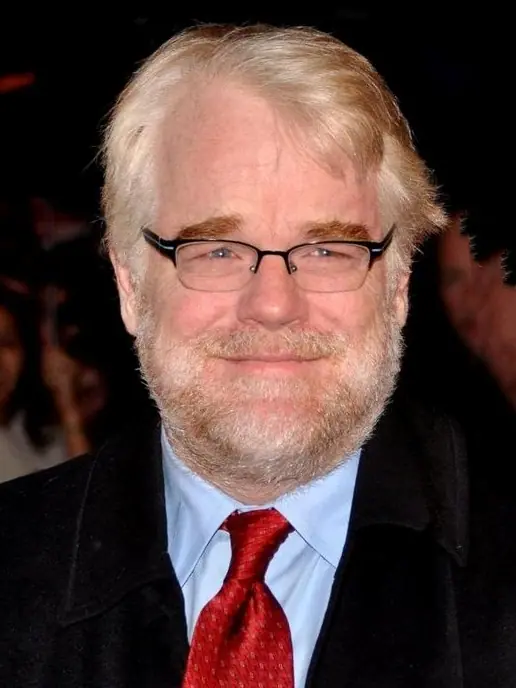
Philip Seymour Hoffman died in Manhattan on February 2, 2014, at 46. The medical examiner attributed the death to acute mixed drug intoxication.
He left a will. That already puts him ahead of Prince, Aretha Franklin, and Chadwick Boseman. The problem was its date.
Hoffman signed the will in October 2004. At that moment he had one child — his son Cooper, born in 2003 — with his longtime partner, the costume designer Marianne “Mimi” O'Donnell. Over the next four years the couple had two more children: Tallulah in 2006, Willa in 2008.
The document was never revised. When it was filed in Manhattan Surrogate's Court in February 2014, it named one of his three children.
“Trust fund” kids
In a July 18, 2014 filing in Manhattan Surrogate's Court, Hoffman's accountant, David Friedman, described conversations he had had with his client about the children's inheritance. Friedman had proposed setting money aside for them in trust. According to the filing, Hoffman declined, saying he did not want them to be “trust fund” kids.
That is a defensible instinct and a widely shared one. It is also, as an instruction to an estate planner, a category error — because a trust is not a synonym for an allowance. A trust is a container. What comes out of it, and when, and on what terms, is entirely the settlor's choice. You can build one that pays for tuition and medical care and nothing else. You can build one that releases nothing until 40. You can build one whose whole purpose is to keep money away from a child while keeping it away from the tax collector at the same time.
Refusing trusts to avoid producing trust-fund children is a bit like refusing a bank account to avoid becoming a spendthrift. The document does not have the personality; the terms do.
The will did include a trust for Cooper, with O'Donnell named as trustee and as his guardian — reported to distribute half the principal at 25 and the balance at 30. Tallulah and Willa were not mentioned, because in October 2004 they did not exist.

The most expensive missing document was a marriage certificate
Hoffman and O'Donnell were together for roughly fifteen years and had three children. They never married. The will treated her, in the words of the estate's own filing, in the same manner as if she were a spouse.
The federal estate tax does not.
The unlimited marital deduction — the rule that lets a decedent pass any amount to a surviving spouse with no federal estate tax at all — requires an actual surviving spouse. There is no long-term-partner version, no common-law workaround in New York, and no credit for fifteen years and three children. Everything Hoffman left to O'Donnell was a transfer to a non-spouse, taxable in full above the exemption.
The arithmetic reported at the time: an estate of roughly $35 million, a 2014 federal exemption of $5.34 million with a 40% rate above it, and a New York estate tax with a $1 million exemption and rates reaching 16%. Combined federal and state tax was reported at more than $15.1 million — a bill that would have been zero, deferred to O'Donnell's own death, on the same facts with a marriage licence.
Nobody should marry for the deduction. But if you are not going to marry, the plan has to do the work the marriage would have done: lifetime gifting, an irrevocable life-insurance trust to fund the tax, a credit-shelter structure, liquidity so the estate is not forced to sell. None of those things happen by themselves, and none of them can be done after death.
Manhattan, Chicago, or San Francisco
The passage everyone quoted was not about money. Hoffman wrote that it was his “strong desire, and not direction to my Guardian,” that Cooper be raised in or near the borough of Manhattan, or Chicago, or San Francisco — and that if that were not possible, he visit those cities at least twice a year, so that he would be exposed to the culture, arts and architecture that such cities offer.
Two things about that sentence are worth an estate lawyer's attention.
First, he flagged it himself: desire, not direction. That is precatory language — a wish, not a command, unenforceable by anyone, binding on no guardian, reviewable by no court. Hoffman knew exactly what he was writing and wrote it anyway, which is arguably the most sympathetic thing in the file.
Second, the entire world read it. A will admitted to probate is a public record. His private note to the person who would raise his son was reprinted in every newspaper in the English-speaking world within about seventy-two hours of the filing, alongside the estate's estimated value. A revocable trust would have carried the same wish to the same person and told nobody else.
Timeline
- 2003Son Cooper is born to Hoffman and Marianne “Mimi” O'Donnell.
- Oct 2004Hoffman signs his will. It leaves the estate to O'Donnell, names her executor, provides a trust for Cooper distributing at 25 and 30, and states his wish that Cooper be raised in Manhattan, Chicago, or San Francisco.
- 2006Daughter Tallulah is born. The will is not revised.
- 2008Daughter Willa is born. The will is not revised.
- Feb 2, 2014Hoffman dies in Manhattan at 46.
- Feb 2014The will is filed in Manhattan Surrogate's Court. Its contents — including the three-cities clause and the estate's estimated value — are reported worldwide.
- Jul 18, 2014A Surrogate's Court filing includes accountant David Friedman's account that Hoffman declined trusts for the children, saying he did not want them to be “trust fund” kids.
- 2014–2015Administration proceeds. Combined federal and New York estate tax is reported at more than $15.1 million on an estate of roughly $35 million.
What actually went wrong
- A ten-year-old will and two children born after it. The single most common failure in this archive, and the easiest to fix. Every birth is a redraft trigger.
- No marital deduction, and no substitute for it. An unmarried partner receives no spousal tax treatment. The plan needed lifetime gifting, insurance, or a credit-shelter structure to do that work, and had none.
- A trust refused on a misunderstanding. The objection was to spoiled heirs. The tool objected to is neutral — the terms decide everything, and Hoffman was the one writing the terms.
- Wishes with no mechanism. The three-cities clause was expressly precatory. If it mattered, it needed funding: money conditioned on schooling in those cities, or a trustee empowered to pay for it.
- A will, not a trust. Probate made the estate's value, the family's arrangements, and a father's private instruction to a guardian into a public document.
Would it have gone that way in Florida?
Different — and not in the way anyone guesses. Florida's pretermitted-child statute turns on “the other parent,” not on marriage.
The instinctive answer is that Florida would rescue the two daughters, because Florida protects children born after a will is signed. Read the statute and that answer flips.
Fla. Stat. §732.302 gives a child born or adopted after the will a share of the estate equal to what the child would have received had the testator died intestate — unless the will shows the omission was intentional, or the testator already had one or more children when the will was executed and devised substantially all the estate to the other parent of the pretermitted child, and that other parent survived and takes under the will. Every element of that second exception is present on these facts: Hoffman had a child (Cooper) when he signed in 2004; he devised substantially all of the estate to O'Donnell; O'Donnell is the other parent of Tallulah and Willa; she survived him and took under the will. Notice what the statute never mentions. It does not say “spouse.” It says the other parent. Florida wrote the exception around the family, not the marriage — so the very fact that generated the tax disaster would likely have defeated the daughters' pretermitted-child claim.
The honest caveat. Whether “substantially all” was devised to her is a question of fact, decided on the actual inventory, and non-probate assets can change the picture. If O'Donnell had predeceased him, or had renounced, the exception would fail and Tallulah and Willa would each take an intestate share under §732.103. The exception is a lucky landing, not a plan. No competent Florida lawyer would leave two children's inheritance resting on a statutory exception the client had never heard of.
The tax is where Florida genuinely helps. Florida imposes no state estate tax — Fla. Const. Art. VII, §5 forbids it beyond the old federal-credit pickup, which no longer exists. New York's separate estate tax, with its $1 million exemption and rates up to 16%, simply does not exist here. On the reported numbers, a Florida-domiciled Hoffman saves the entire New York layer. The federal 40% above the exemption remains, and remains unfixable after death, because the missing marital deduction is missing for federal purposes too.
One thing Florida takes away. Because the couple never married, O'Donnell would have had no elective share under §732.201 and no homestead protection as a surviving spouse. Florida's spousal safety net — 30% of the elective estate, reaching revocable trusts and joint accounts — is available only to a legal spouse. An unmarried partner in Florida gets exactly what the documents give her and nothing more. Here, the documents were generous. Where they are not, there is no statute to appeal to.
And the guardian. Hoffman's wish about where his son should live was unenforceable, but the guardianship itself need not be left to inference. Fla. Stat. §744.3046 lets a parent name a preneed guardian for a minor child by written declaration before two witnesses, filed with the clerk; when produced in a guardianship proceeding it creates a rebuttable presumption that the named person should serve. It is a separate document from the will, it is cheap, and most Florida parents have never heard of it.
The practical instruction: redraft on events, not on anniversaries. A birth, an adoption, a marriage, a divorce, a death, a move across a state line, and a change in the federal exemption are each a reason to reopen the file. If you are not married to your partner, say so out loud to whoever drafts the plan — that single fact changes the tax result more than anything else in the document.
What people ask us about this.

Further reading
Third-party sites. Not ours, not endorsed, not kept current by us — just the places worth going next.
Sources
- Philip Seymour Hoffman's will raises legal problems — Forbes, Feb 20 2014
- Court: Philip Seymour Hoffman didn't want “trust fund” kids — CBS News / AP, Jul 21 2014
- Philip Seymour Hoffman left estate to mother of his children — NBC News, Feb 2014
- Philip Seymour Hoffman's will: “strong desire” for son to live in New York, San Francisco or Chicago — TheWrap, Feb 2014
- Philip Seymour Hoffman's will: actor said son must grow up in one of three cities — The Hollywood Reporter, Feb 2014
- Philip Seymour Hoffman's will gives property to mother of his kids — CBS News, Feb 2014
- Philip Seymour Hoffman: another celebrity's will creates problems — Margolis Bloom & D'Agostino
- Fla. Stat. §732.302 — Pretermitted children — The Florida Senate
If this is your situation
Free 30-minute consult. Plain English. No pressure.
Nearly every case in this archive turned on something ordinary — an unwitnessed page, a stale beneficiary line, a document nobody could find. Those are cheap to fix while you're alive and expensive to fix afterward.