Marjorie Merriweather Post
She left Mar-a-Lago to the United States as a winter White House, Hillwood to the Smithsonian, and Camp Topridge to New York State. All three institutions handed the gifts back. The richest woman in America could not give her houses away.

Marjorie Merriweather Post inherited $20 million in 1914, at 27, when her father died and left her the Postum Cereal Company. She turned it into General Foods and spent much of the twentieth century as the wealthiest woman in the United States.
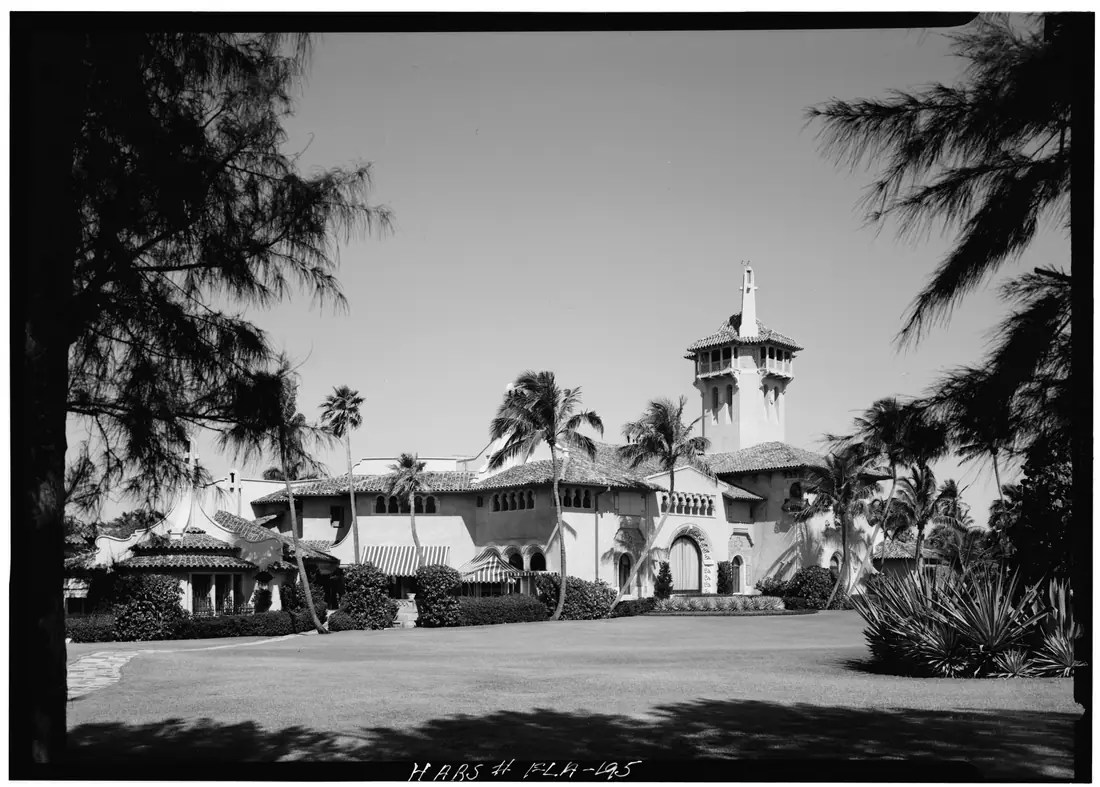
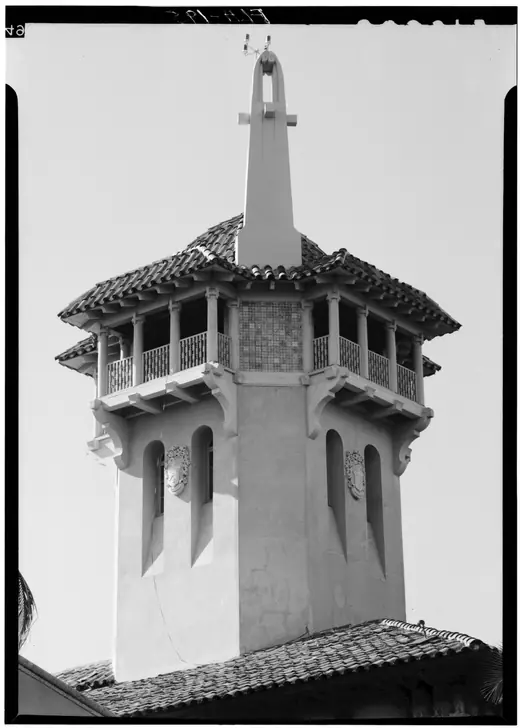
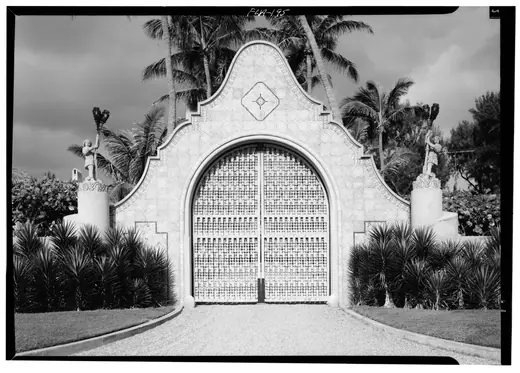
Between 1924 and 1927 she built Mar-a-Lago in Palm Beach — 126 rooms, 62,500 square feet, on 17 acres running from the Atlantic to the Intracoastal. It cost roughly $7 million, which is about $130 million today.
She died in Washington on September 12, 1973. The bulk of her estate went to her three daughters. But three of her houses were pointed somewhere else entirely, and this is where the case starts:
- Mar-a-Lago to the United States, to serve as a winter White House for presidents and visiting heads of state.
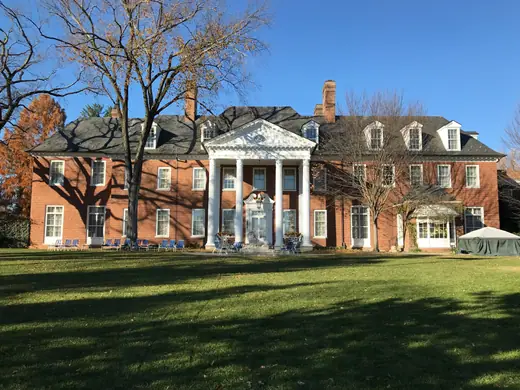
- Hillwood, her Washington estate and its French and Russian art collections, to the Smithsonian Institution — with a $10 million endowment to maintain it.
- Camp Topridge, a 207-acre Adirondack retreat with 68 buildings, to the State of New York.
Every one of those institutions gave the gift back.
The Smithsonian took two and a half years
Hillwood should have been the easy one. Post left the estate and $10 million — an endowment throwing off roughly $450,000 a year — to an institution whose entire business is running museums.
The Smithsonian declined to make the alterations required to convert the house into a public museum and concluded that $450,000 a year was not enough to maintain the property and the collection. By April 1976, Hillwood and most of the collection had been returned to the Marjorie Merriweather Post Foundation.
The foundation opened it as a museum itself in 1977, and it has run as one ever since. The plan worked. It just did not work through the institution she named.
Congress hands back a winter White House
Mar-a-Lago was a stranger proposition. A 126-room oceanfront estate is not a house; it is a small government facility with tapestries. The federal government took title and then confronted what the property actually required: the maintenance cost of a landmark twice the age of most federal buildings, and the security cost of protecting a president on 17 acres between an ocean and a public road in a dense resort town.
Neither Nixon nor Carter used it. The government held the deed and paid the bills for something no president wanted.
Congress ended it by statute. Public Law 96-586, approved December 23, 1980, returned the property to the Post Foundation. On the same date, Mar-a-Lago was designated a National Historic Landmark, cited as an exemplar of the baronial life the wealthy built during the Florida land boom.
That is an unusual pair of acts to occur on one day: the United States declared the house nationally significant and simultaneously declined to own it.
In 1985 the Post Foundation sold Mar-a-Lago to Donald Trump. Accounts of the price differ — commonly reported as $7 million for the property, with a combined figure of roughly $10 million once the furnishings were included, against an original asking price of $20 million.
New York keeps the woods and sells the camp
Camp Topridge went to the State of New York. The state kept part of what it wanted and disposed of the rest: the main lodge, most of the buildings, and 105 acres were offered for sale, while the remaining acreage went into the Adirondack Forest Preserve.
That is the most instructive of the three outcomes, because it is a partial acceptance. The state took the land, which cost nothing to keep, and sold the buildings, which cost a great deal.
The camp sold in 1985 for $911,000 to Roger Jakubowski, and passed in 1994 to Harlan Crow after Jakubowski's bankruptcy. It was listed on the National Register of Historic Places in 1986.
Three magnificent properties. Three institutional recipients chosen with care. Three refusals, in 1976, 1980, and shortly after. The only bequest that survived intact was the one to her own foundation — the entity whose entire purpose was to hold them.
Timeline
- 1914Post inherits roughly $20 million at 27 on her father's death. She will build Postum into General Foods.
- 1924–1927Mar-a-Lago is built in Palm Beach — 126 rooms, 62,500 square feet, 17 acres, about $7 million.
- Sep 12, 1973Post dies in Washington, D.C. Her will leaves Mar-a-Lago to the United States, Hillwood plus $10 million to the Smithsonian, and Camp Topridge to New York State.
- Apr 1976The Smithsonian returns Hillwood and most of the collection to the Post Foundation, having declined the conversion and called the endowment insufficient.
- 1977The Post Foundation opens Hillwood as a museum itself.
- 1973–1980The federal government holds Mar-a-Lago. Neither Nixon nor Carter uses it. Maintenance and security prove prohibitive.
- Dec 23, 1980Public Law 96-586 returns Mar-a-Lago to the Post Foundation. The same day, it is designated a National Historic Landmark.
- 1985Mar-a-Lago is sold to Donald Trump; reported figures range from $7 million for the property to roughly $10 million with furnishings. Camp Topridge sells for $911,000.
What actually went wrong
- A gift without a working endowment. Hillwood came with $10 million, and the Smithsonian still said the income would not cover it. Mar-a-Lago went to the United States on terms that left the carrying cost to the taxpayer. If you leave a building, leave the money to run it — calculated from an actual budget, not a gesture.
- A named recipient with no obligation to accept. Every devise is an offer. Nobody had promised Post that any of these institutions wanted her houses, and none of them was bound once she was gone.
- A use restriction the recipient could not deliver. “Winter White House” is a purpose only a sitting president can fulfill, and no president was obliged to. A condition whose satisfaction depends on a third party's discretion is not a condition; it is a wish.
- No stated alternative. The saving grace was her own foundation, which absorbed all three properties. Had it not existed, each failed devise would have dropped into the residue and gone to her daughters — a fine outcome for them, and the exact opposite of what she intended for the houses.
- No conversation before the will. All three refusals turned on facts an institution would have told her in a single meeting: what it costs to run, what alterations are required, what we are able to take on.
Would it have gone that way in Florida?
Same result in Florida — and Florida law says so in two sentences.
Mar-a-Lago is Florida real property, so the Florida rules governed it directly. Two statutes do all the work.
Fla. Stat. §739.104 — the Florida Uniform Disclaimer of Property Interests Act — provides that a person may disclaim, in whole or in part, conditionally or unconditionally, any interest in or power over property. It works even if the person who created the interest tried to restrict the right to disclaim. A disclaimer must be in writing, declare itself a disclaimer, describe the interest, be signed, and be witnessed and acknowledged the way a Florida deed is, then delivered or filed under §739.301. A fiduciary may disclaim with court approval.
So the answer to “can they refuse my house?” is yes, always, and there is nothing you can put in a will to stop it. The federal government did it by act of Congress because it had already taken title; a devisee who acts before accepting does it with one signed page.
Fla. Stat. §732.604 then answers where the property goes. If a devise other than a residuary devise fails for any reason, it becomes part of the residue. If a residuary devise fails, it passes to the other residuary devisees in proportion. So a refused specific gift does not go looking for a substitute recipient — it lands in your residuary clause, and whoever you named there receives a house they were never told about.
The honest caveat and the real drafting answer: name a gift-over. Write the alternative into the will or trust — if the named institution does not accept within twelve months of my death, this property shall pass to ___ — and the problem solves itself. Post's estate got there by accident, because her own foundation existed and could absorb what the institutions declined. Most estates have no such backstop.
Two more Florida rules worth knowing on facts like these. Homestead — under §732.4015 and Art. X, §4 of the Florida Constitution, the devise of a homestead is restricted only where the decedent is survived by a spouse or a minor child. Post was survived by adult daughters and no spouse, so nothing restricted where the Palm Beach property could go. And §736.0413 codifies cy pres: where a charitable purpose becomes unlawful, impracticable, impossible, or wasteful, a court may redirect the property to a purpose consistent with the settlor's intent — the equitable version of the gift-over clause you should have written yourself.
The practical instruction is unusually concrete. Before you leave real property to a charity, a museum, a church, a university, or a government: call them. Ask whether they will take it and on what terms, get the answer in writing, fund the carrying cost from a real budget rather than a round number, and name a gift-over for the day they say no. All four steps are cheaper than one probate proceeding about a building nobody wants.
What people ask us about this.
Further reading
Third-party sites. Not ours, not endorsed, not kept current by us — just the places worth going next.
Sources
- Mar-a-Lago — Wikipedia
- Marjorie Merriweather Post — Wikipedia
- Hillwood Estate, Museum & Gardens — Wikipedia
- Camp Topridge — Wikipedia
- Fla. Stat. §739.104 — Power to disclaim — The Florida Senate
- Fla. Stat. §732.604 — Failure of testamentary provision — The Florida Senate
- Fla. Stat. §736.0413 — Cy pres — The Florida Senate
If this is your situation
Free 30-minute consult. Plain English. No pressure.
Nearly every case in this archive turned on something ordinary — an unwitnessed page, a stale beneficiary line, a document nobody could find. Those are cheap to fix while you're alive and expensive to fix afterward.