Joe DiMaggio
DiMaggio died in Hollywood, Florida in 1999. The lawyer who had represented him for two decades was named personal representative, initial trustee, and the person who would control the licensing of his name — all in a will that lawyer's own office was involved in producing. Then came the books, the tapes, and a federal grand jury.
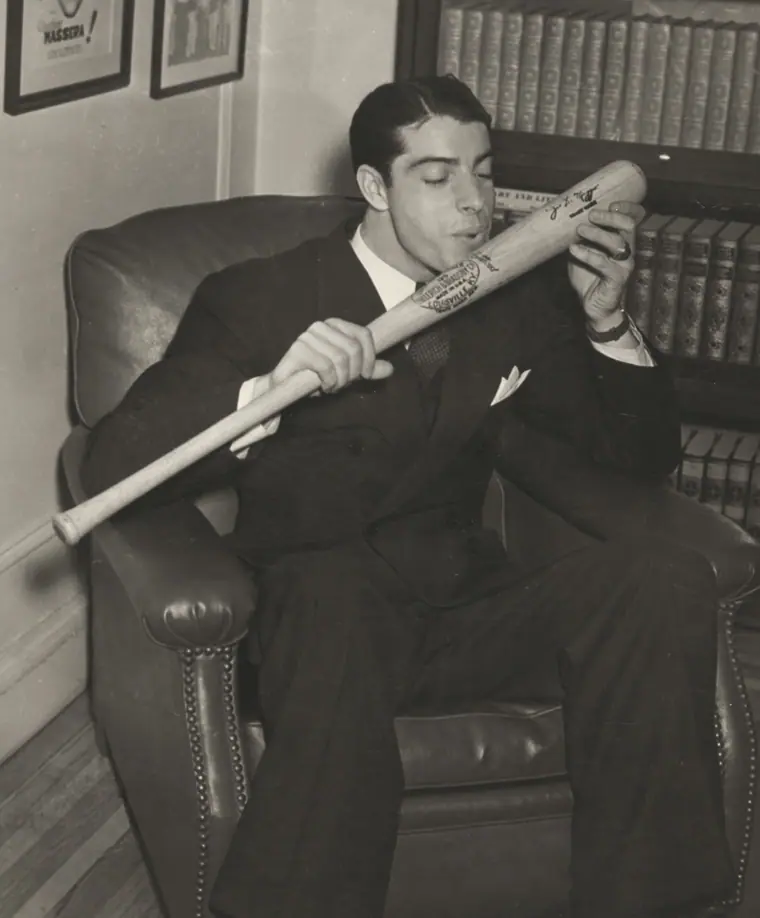
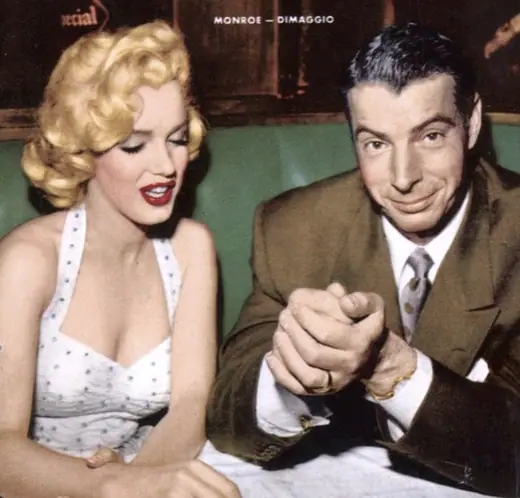
Joe DiMaggio hit safely in 56 consecutive games in 1941, married Marilyn Monroe, and spent the last forty years of his life being the most carefully managed brand in American sport. He was fanatical about his signature: what it went on, what it cost, who got one.
He died at his home in Hollywood, Florida, on March 8, 1999, at 84. His estate was reported at roughly $50 million, most of it built not from baseball salary but from four decades of appearances, endorsements, and autographs.
His will had been signed on May 21, 1996. It named Morris Engelberg — his attorney, his friend, and the man who had run his commercial affairs for years — as personal representative, as initial trustee, and as the representative who would control the licensing of DiMaggio's name, photograph, likeness, image, and facsimile signature.
One person. Three roles. All three of them in the same document.
45% to a son who did not outlive the probate
The dispositive terms were straightforward on their face. The residuary estate was divided into three trusts: 45% to a trust for his son, Joseph Paul DiMaggio Jr., 40% to a trust for his granddaughter Paula, and 15% to a trust for his granddaughter Kathie. Four separate trusts were funded for great-grandchildren — $250,000 each for two, $500,000 each for two — with distributions beginning at age 30.
The will provided that Engelberg would serve as personal representative without fees or commissions, and gave him authority as initial trustee to designate successors.
Then the largest share went sideways. Joe DiMaggio Jr. died on August 7, 1999, five months after his father, at 57, in Antioch, California. He had been estranged from his father for years and had struggled with addiction and periods of homelessness. He was a pallbearer at the funeral in March and dead by August.
A 45% residuary trust for a beneficiary who dies during the administration is not a drafting failure by itself — the instrument dictates what happens next, and this one used trusts rather than outright gifts precisely because DiMaggio wanted structure. But it is a vivid demonstration of why a will that names a single generation and stops is a will that has not been finished.
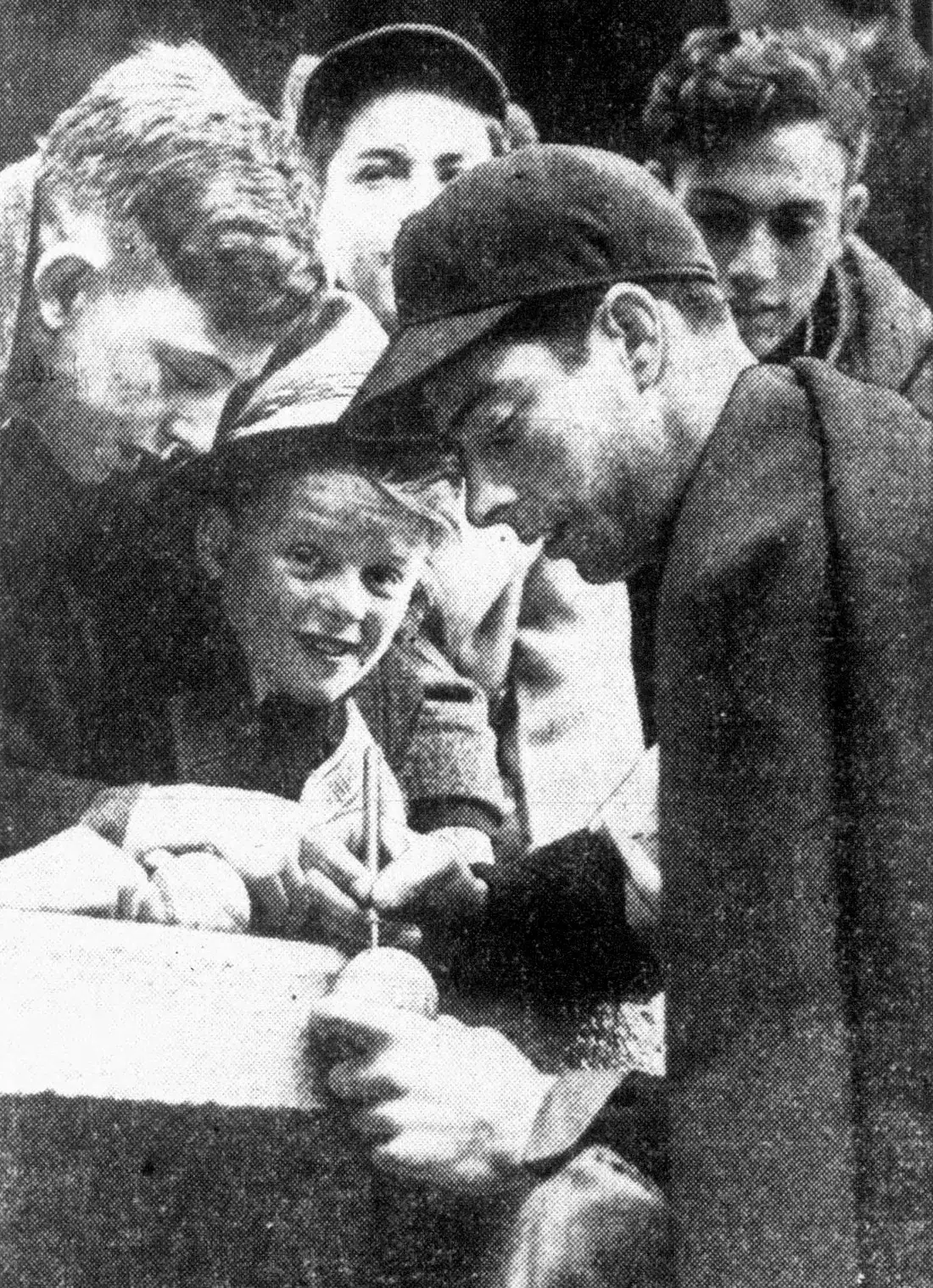
A book, a tape, and a grand jury
In October 2000, Richard Ben Cramer published Joe DiMaggio: The Hero's Life. Among other things, the book alleged that Engelberg and a memorabilia dealer, Scott DiStefano, had arranged for DiMaggio to sign roughly 2,000 commemorative baseballs and to sell them, splitting the proceeds, without DiMaggio's knowledge.
Recorded telephone conversations between Engelberg and DiStefano, made months before DiMaggio's death, were reported to have become part of a New York federal grand jury inquiry, with the Manhattan US Attorney's office and the FBI reported to be examining the dealings. An unfiled complaint was reported to have put the two men's potential take at around $400,000.
Several things must be said plainly, because this is a law firm's website and the distinction matters more than the story.
- The balls were never signed. Reporting on the episode is consistent that the arrangement never came off — DiMaggio's health failed, he slipped into a coma, and none of the baseballs were signed or sold.
- Engelberg denied wrongdoing, said DiMaggio had directed the purchase of the balls in writing, and published his own account of the relationship, DiMaggio: Setting the Record Straight, in 2003.
- We have located no reporting that Morris Engelberg was ever charged with a crime arising from the memorabilia investigation, and none that any court made a finding against him on these allegations.
- Allegations are not findings. Everything in this section is what was alleged, reported, or denied. Nothing in it is established fact about any person's conduct.
Separately, in December 2002, a South Florida attorney named Rick Leone sued Engelberg in Broward County for breach of contract and defamation arising out of the purchase of part of Engelberg's practice, and asserted in that suit that decisions about the estate had cost DiMaggio's heirs roughly $2 million in avoidable generation-skipping transfer tax. Engelberg denied the claims and said he had received a clean bill of health from the IRS. Again: claims, answered, not findings.
Suing San Francisco over a playground
The most revealing episode is also the smallest. In 2000, San Francisco moved to rename the North Beach Playground — where DiMaggio played as a boy — the Joe DiMaggio Playground.
A DiMaggio entity, acting through Engelberg, sued in federal court in Florida to stop it, on the theory that the name was a controlled commercial asset. The Chronicle's headlines from the period tell the arc without needing the docket: the city defied the executor, the suit was tossed out of the Florida court, and the heirs gave their assent and attended the renaming.
The playground bears DiMaggio's name today. But the case is the clearest illustration in this file of what happens when a dead person's name is treated as inventory. A right of publicity is a real, valuable, transferable property interest. It is also a thing that a family, a city, and a museum will each have a legitimate claim to talk about — and if the instrument gives one person unilateral control of it, the instrument has guaranteed the argument.
Timeline
- May 21, 1996DiMaggio signs his will. Morris Engelberg is named personal representative without fees, initial trustee, and the representative controlling licensing of the name, likeness, and facsimile signature.
- Sep 27, 1998DiMaggio Day at Yankee Stadium — the occasion around which roughly 2,000 commemorative baseballs were later alleged to have been intended for signature.
- Mar 8, 1999DiMaggio dies at his home in Hollywood, Florida, at 84. The estate is reported at roughly $50 million.
- Aug 7, 1999Joe DiMaggio Jr., beneficiary of the 45% residuary trust, dies in Antioch, California at 57 — five months after his father.
- 2000A DiMaggio entity sues in federal court in Florida to block San Francisco from renaming the North Beach Playground for DiMaggio. The suit is reported dismissed; the heirs assent and attend the renaming.
- Oct 2000Richard Ben Cramer's biography alleges an unconsummated arrangement between Engelberg and a memorabilia dealer. Engelberg denies it.
- May–Aug 2001The Manhattan US Attorney's office and the FBI are reported to be examining the memorabilia dealings; taped conversations are reported to be before a New York grand jury. No charge against Engelberg has been reported.
- Dec 2002A Broward County suit by attorney Rick Leone alleges breach of contract and defamation and asserts $2 million in avoidable estate tax. Engelberg denies the claims.
- 2003Engelberg publishes his own account, DiMaggio: Setting the Record Straight.
- Oct 1, 2013Fla. Stat. §732.806 takes effect, voiding most gifts to a lawyer who prepared the instrument — but not appointments of that lawyer as a fiduciary.
What actually went wrong
- One person held every role. Drafting counsel, personal representative, trustee, and licensing agent, all named in the same document. Each of those jobs exists partly to check the others; combined, they check nothing.
- The most valuable asset was the name, and the name had no governance. No standards for licensing, no family consultation requirement, no independent approval for a use that would affect reputation rather than revenue. That gap produced a lawsuit against a city over a playground.
- No contingent structure for a beneficiary who dies during administration. The 45% share was written for a man in poor health who was estranged and outlived his father by five months. Substitute takers and per stirpes language cost nothing to draft.
- Waiving the PR fee is not the same as waiving compensation. A lawyer who serves as personal representative for free may still be paid as attorney for the personal representative under a separate statute. If the intent is that the total is zero, the document has to say so.
- Fame makes the estate a publishing project. Two books, a grand jury, and years of coverage. None of that is avoidable by drafting — but a structure with an independent co-fiduciary would have given the family somewhere to take a question other than the newspaper.
Would it have gone that way in Florida?
This is a Florida estate, and Florida has since written a statute at this exact problem — but it is narrower than people think.
DiMaggio was a Florida resident who died in Broward County, so this was Florida probate law throughout. The question a reader will have is the obvious one: can a lawyer draft your will and then name himself to run your estate?
The answer in Florida today is yes to the job, no to the gift. Fla. Stat. §732.806 voids a gift in a written instrument to the lawyer who prepared or supervised its execution, unless the lawyer is related to the person making the gift. The section is deliberately strong — subsection (3) makes any waiver unenforceable, and subsection (5) requires an award of fees in an action brought under it. But subsection (2) says the section does not apply to a provision appointing the lawyer as a fiduciary. Drafting counsel may still name himself personal representative or trustee. He simply may not leave himself the silverware.
The timing caveat matters here: §732.806 applies only to instruments executed on or after October 1, 2013. DiMaggio's will was signed in 1996. The statute is what Florida law is now, not what governed this estate.
The compensation point is where families are most often surprised. A lawyer who serves as personal representative without a fee under §733.617 can still be paid as attorney for the personal representative under §733.6171, which sets a presumptively reasonable schedule — 3% of the next $900,000 above $100,000, 2.5% above $1 million, sliding down to 1% above $10 million — plus extraordinary services. On a $50 million estate the schedule alone produces a very large number. §733.6171 requires a written disclosure that the fee is not required by law and is negotiable, and without that disclosure compensation needs court approval or the written consent of all interested persons. Ask for the disclosure. Read it.
The name is its own asset, and Florida treats it that way. Fla. Stat. §540.08 protects the commercial use of a person's name, portrait, or photograph for 40 years after death, enforceable by the person the decedent designated or by surviving family. Forty years is a long time to leave one individual in unilateral control with no written standards. If your name has value, say in the instrument who controls it, what they may license, who must be consulted, and what happens when a city wants to put it on a playground.
Practical instruction: if your lawyer will serve as your personal representative, put a second, unrelated fiduciary beside them, and get the fee arrangement in writing before you sign. Both are ordinary requests. A lawyer who objects to either has answered a different, more useful question.
What people ask us about this.
Further reading
Third-party sites. Not ours, not endorsed, not kept current by us — just the places worth going next.
Sources
- Feds eye DiMaggio lawyer in memorabilia investigation — ESPN / Associated Press, May 2001
- DiMaggio memorabilia probed — Deseret News, Aug 2001
- Joe DiMaggio's longtime lawyer Engelberg under fire again — ESPN, Dec 2002
- Book: lawyer cheated DiMaggio — ABC News, 2000
- Di Maggio suit tossed out of Florida court — San Francisco Chronicle / SFGate
- DiMaggio heirs give their assent — family to attend playground renaming — San Francisco Chronicle / SFGate
- Yankee Clipper's only son dies at 57 — Deseret News / Associated Press, Aug 1999
- Joe DiMaggio dead at 84 — CBS News, Mar 1999
- Fla. Stat. §732.806 — Gifts to lawyers and other disqualified persons — The Florida Senate
If this is your situation
Free 30-minute consult. Plain English. No pressure.
Nearly every case in this archive turned on something ordinary — an unwitnessed page, a stale beneficiary line, a document nobody could find. Those are cheap to fix while you're alive and expensive to fix afterward.