Jimi Hendrix
He died at 27 without a will, so everything went to a father who had barely raised him. It took that father twenty-five years and a lawsuit to get the rights back — and then his own will started a second war between a son and an adopted daughter.
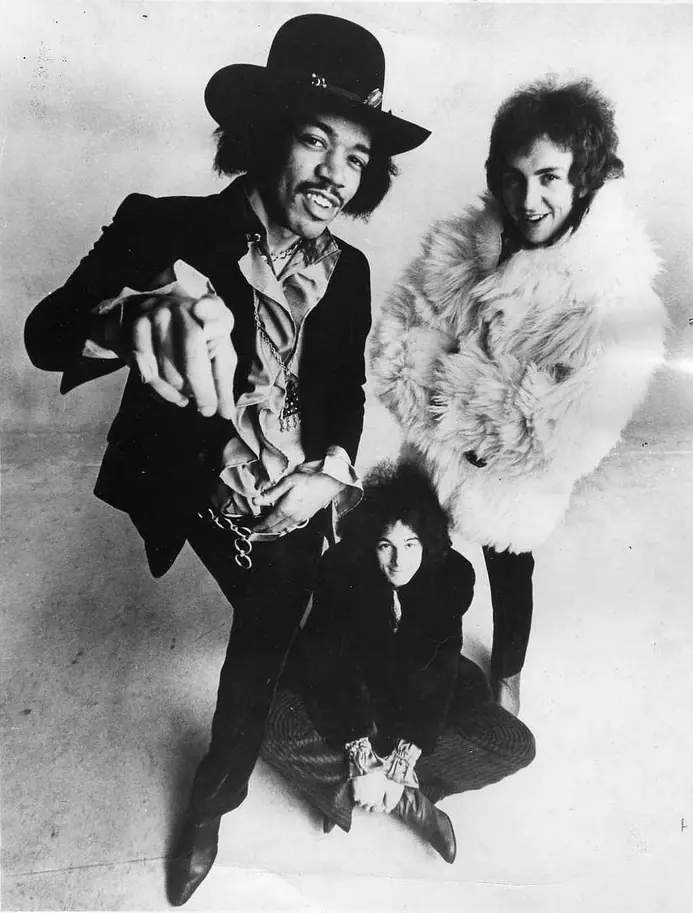
Jimi Hendrix died in London on September 18, 1970, at 27. The coroner returned an open verdict.
He had recorded three studio albums, headlined Woodstock, and become the most influential electric guitarist who has ever lived. He had no will, no trust, no spouse, and no children.
Under Washington's intestacy statute, that put the entire estate in one place: his father, James “Al” Hendrix, a Seattle gardener who had raised him in poverty and had not been part of his professional life. Jimi's younger brother Leon inherited nothing, because parents take before siblings and always have.
That is the first thing intestacy does. It picks one person by statute and hands them everything, without asking whether that person is equipped for what they are being handed.
Owning it and not controlling it
In 1971, Al Hendrix retained attorney Leo Branton Jr., a well-known civil rights lawyer, to manage the estate. Branton handled the Hendrix rights for the next two decades.
During the 1970s and 1980s, portions of the Hendrix catalogue and rights were sold. Al Hendrix later alleged he had not known about those transactions. In 1993 he sued Branton and associates, claiming his ownership rights had been mismanaged.
The suit was expensive in the way that suits against sophisticated defendants are expensive, and it was funded from an unexpected direction: Paul Allen, the Microsoft co-founder and a serious Hendrix collector, invested several million dollars in the litigation. Allen would later build Seattle's Experience Music Project in part as a Hendrix monument.
In July 1995, the case settled. Al Hendrix recovered control of his son's music and name, and formed Experience Hendrix LLC — the family company that has administered the legacy ever since.
He was 76 years old. He had owned the estate for twenty-five years before he controlled it.
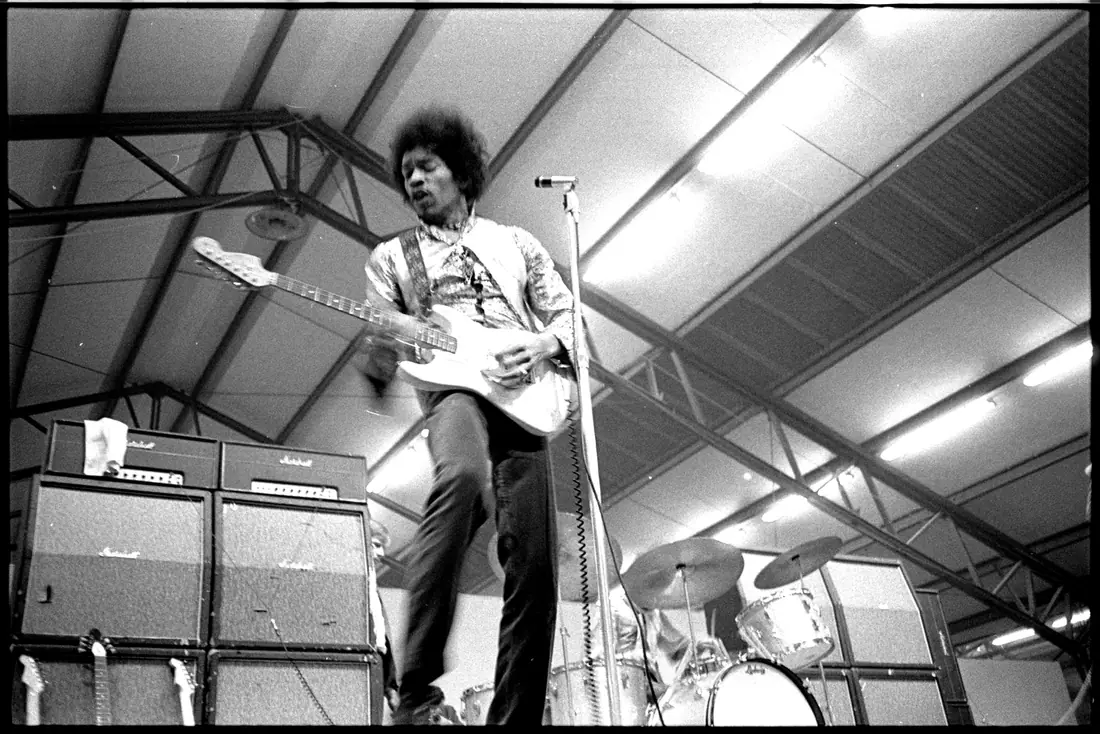
One gold record
Having spent a quarter-century recovering the estate, Al Hendrix then had to decide where it went. He did the responsible thing and made a plan. The plan produced its own decade of litigation.
A 1996 version of his will directed roughly 24% of the legacy to his son Leon and 38% to his adopted daughter Janie Hendrix, with the balance to other beneficiaries. In 1997 the will was rewritten. Leon was removed.
Al Hendrix died in April 2002, at 82. Control of the estate and of Experience Hendrix passed to Janie Hendrix, with Jimi's cousin Robert Hendrix. Leon Hendrix received one gold record.
Leon filed a will contest in King County Superior Court alleging undue influence — that Janie Hendrix had procured the 1997 change. The estate was valued at the trial at roughly $80 million.
September 24, 2004
Judge Jeffrey Ramsdell ruled on September 24, 2004, after a trial that ran through the summer.
He upheld the will. On the undue-influence claim, the evidence was that Al Hendrix had met alone with his estate-planning attorneys many times, that Janie Hendrix was not present when the will was signed, and that she was absent from most of the drafting meetings. The court found Al Hendrix had his own reasons for the 1997 change.
But the ruling was not a clean win. Ramsdell removed Janie Hendrix as trustee for certain other beneficiaries, finding she had breached fiduciary duties in her administration — the court's findings included two vehicles, a salary and bonus exceeding $700,000, and an interest-free home loan taken while declining assistance to relatives who had asked for it.
The Washington Court of Appeals affirmed unanimously in 2006. In June 2007 the Washington Supreme Court declined further review, ending the contest.
A 1970 death, litigated in 2014
The estate's third act was about the one asset Jimi Hendrix never wrote down and never assigned: his name and face.
Washington enacted a Personality Rights Act protecting a personality's name, voice, and likeness for 75 years after death, and amended it to reach personalities regardless of where they were domiciled when they died. Hendrix died a New York domiciliary, in a state that then recognized no postmortem right of publicity at all.
Experience Hendrix sued a competing merchandiser. In Experience Hendrix L.L.C. v. Hendrixlicensing.com Ltd., decided August 8, 2014, the Ninth Circuit held that the Washington statute was constitutional as applied — Washington had sufficient contacts with the dispute to satisfy due process — affirmed the trademark findings, and reversed the district court's reduction of a damages award exceeding $1.7 million, ordering a new trial on damages.
Forty-four years after the death, courts were still deciding who owned the guitarist's face. He had left no instruction on the subject, because in 1970 nobody had one to leave.
Timeline
- Sep 18, 1970Hendrix dies in London at 27 with no will. The coroner returns an open verdict.
- 1971Al Hendrix, sole heir under Washington intestacy, retains attorney Leo Branton Jr. to manage the estate. Rights are sold over the following two decades.
- 1993Al Hendrix sues Branton and associates, alleging his ownership rights were mismanaged. Paul Allen invests several million dollars in the litigation.
- Jul 1995The case settles. Al Hendrix recovers control and forms Experience Hendrix LLC — twenty-five years after inheriting.
- 1996–1997A 1996 will gives Leon Hendrix about 24% and Janie Hendrix about 38%. The 1997 rewrite removes Leon.
- Apr 2002Al Hendrix dies at 82. Janie Hendrix takes control of the estate; Leon Hendrix receives one gold record.
- Jun–Sep 2004Leon Hendrix's will contest is tried in King County Superior Court. The estate is valued at roughly $80 million.
- Sep 24, 2004Judge Jeffrey Ramsdell upholds the will, and removes Janie Hendrix as trustee for certain beneficiaries for breach of fiduciary duty.
- 2006–Jun 2007The Washington Court of Appeals affirms unanimously; the Washington Supreme Court declines review.
- Aug 8, 2014The Ninth Circuit upholds Washington's Personality Rights Act as applied to Hendrix and reverses a reduction of a $1.7M-plus damages award.
What actually went wrong
- No will at 27. Young people with valuable assets are the single largest under-planned group there is, and the intestacy statute does not care how old you were.
- No trust, so no successor management. The estate went to a 51-year-old gardener with no music-industry experience and no adviser he had chosen. The adviser was chosen after the fact, and the relationship ended in litigation twenty-two years later.
- No conversation with the family. Al Hendrix's 1997 change was a surprise to the son it removed. Surprises are the raw material of will contests; a letter of explanation costs nothing.
- Fiduciary and beneficiary in the same person. Naming the principal beneficiary as trustee for everyone else guarantees that every discretionary decision looks self-interested, whether or not it is.
- Nothing said about name and likeness. Right-of-publicity law barely existed in 1970. It exists now, and it is a separately owned, separately transferable, separately taxable asset that belongs in your documents.
Would it have gone that way in Florida?
Same first act. Very different second one — Florida shifts the burden of proof onto the person accused of procuring the will.
Act one is identical. Under Fla. Stat. §732.103, an intestate estate with no surviving spouse and no descendants passes to the decedent's parents, equally or to the survivor. Jimi Hendrix, dying at 27 in Florida with no will, no spouse, and no children, leaves everything to his father. His brother takes nothing. Siblings sit one rung further down §732.103 and only reach the money if no parent survives.
That is worth sitting with. Nothing in the Hendrix estate's first fifty years was a mistake by a court. It was the statute doing exactly what it says.
Act two is where Florida departs from Washington, and it is one of the most consequential differences in American probate.
In most states a will contestant carries the burden of proving undue influence from beginning to end. Florida does not. Fla. Stat. §733.107(2) provides that in a will contest, once the presumption of undue influence arises, it is a presumption that shifts the burden of proof to the proponent of the will. The presumption itself comes from In re Estate of Carpenter, 253 So. 2d 697 (Fla. 1971): a substantial beneficiary, who occupied a confidential relationship with the decedent, and who was active in procuring the will. Carpenter lists the procurement factors — presence at execution, presence when the will was discussed, recommending the attorney, knowing the contents beforehand, giving instructions to the drafter, securing the witnesses, safekeeping the will.
Apply that here and the litigation changes shape. In Washington, Leon Hendrix had to prove influence and could not. In Florida, if a contestant established the three Carpenter elements, the will's proponent would have to prove the absence of undue influence. The same evidence that defeated the claim in Seattle — Al Hendrix meeting his lawyers alone, Janie Hendrix absent from the drafting meetings and from the signing — is exactly the evidence that rebuts the presumption. Those meetings are not just good practice in Florida. They are the defense.
Two more Florida rules matter. §732.108 treats an adopted child as a descendant of the adopting parent for all purposes, so if Al Hendrix had died intestate in Florida, his adopted daughter and his biological son would have shared equally — the will is the only reason the outcome differed. And §736.0706 allows a Florida court to remove a trustee for a serious breach of trust or where hostility between a trustee and beneficiaries substantially impairs administration, which is the Florida route to the removal the Washington court ordered.
One last Florida wrinkle, and it cuts the other way. Fla. Stat. §540.08 protects a person's name and likeness for 40 years after death. Washington's statute runs 75. Hendrix died in 1970 — under Florida's statute, the postmortem publicity right in his image would have expired in 2010, four years before the Ninth Circuit case was even decided. A longer statute is not automatically better planning; it is simply a different asset with a different life.
The instruction is two sentences. If you are under forty and own anything that generates income, sign a will and name a trustee who is not also your largest beneficiary. And if you are changing a will in a way a child will not expect, sign it alone, in your lawyer's office, and write down why.
What people ask us about this.
Further reading
Third-party sites. Not ours, not endorsed, not kept current by us — just the places worth going next.
Sources
- Settlement reached in Jimi Hendrix lawsuit — UPI, Jul 26 1995
- Father gets rights to Hendrix's music — Baltimore Sun, Jul 26 1995
- Jimi Hendrix brother gets none of $80 million estate — The Seattle Times, Sep 25 2004
- Jimi Hendrix's stepsister wins one round in battle over estate — The Seattle Times
- Messy trial over Hendrix legacy begins — The Spokesman-Review, Jun 29 2004
- Experience Hendrix LLC v. Hendrixlicensing.com Ltd, No. 11-35858 (9th Cir. Aug 8, 2014) — US Court of Appeals for the Ninth Circuit, via Justia
- Experience Hendrix L.L.C. v. Hendrixlicensing.com Ltd. — Loeb & Loeb, Feb 2014
- RCW 63.60.040 — Personality rights, duration — Washington State Legislature
- Fla. Stat. §733.107 — Burden of proof in contests — The Florida Senate
If this is your situation
Free 30-minute consult. Plain English. No pressure.
Nearly every case in this archive turned on something ordinary — an unwitnessed page, a stale beneficiary line, a document nobody could find. Those are cheap to fix while you're alive and expensive to fix afterward.