Jack Kent Cooke
He left the Washington football club and its brand-new stadium to his own charitable foundation, with instructions to sell. Two years later the franchise went to a 34-year-old outsider for $800 million — then the most expensive transaction in sports. The widow he cut out of the will sued and reportedly took $20 million.
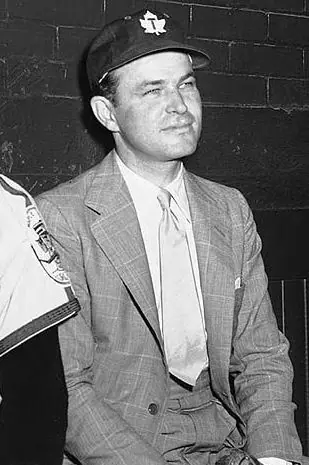
Jack Kent Cooke died of congestive heart failure on April 6, 1997, at 84. He had owned the Los Angeles Lakers, the Los Angeles Kings, the Forum in Inglewood, a chunk of a Canadian media business, and — at the end — the Washington NFL franchise and the new stadium he had built for it in Landover, Maryland.
His estate was reported at about $825 million. The bulk of it was directed into the Jack Kent Cooke Foundation, an education charity for gifted students of limited means, which began operations in 2000 and has since distributed hundreds of millions in scholarships and grants.
To fund it, the will did something most owners of a family franchise never contemplate. He left the team and the stadium to the foundation, with instructions to sell.
Two years, four bidding groups, and a 34-year-old
His son John Kent Cooke had been the club's president and continued to run it after his father's death. At the memorial service he announced the new stadium would carry his father's name.
The estate put the franchise on the market in the autumn of 1998. Contemporary reporting describes four groups forming to compete for it. The front-runners for a period were the New York developers Howard and Edward Milstein, whose bid the NFL declined.
Daniel Snyder, who had joined the Milstein group as a junior partner, then bid on his own. On May 25, 1999, NFL owners met in Atlanta and approved the sale 31–0. The price for the team and the stadium was $800 million — at the time the most expensive transaction in the history of professional sport. The sale closed with the Cooke family on July 13, 1999.
The stadium had been open for two seasons and still bore Jack Kent Cooke's name. The new owner sold the naming rights to a package-delivery company within months.

Five marriages, two of them to the same person
Cooke married five times. The first, to Barbara Jean Carnegie, lasted 45 years and ended in 1979 in a divorce settlement so large it is credited with prompting the sale of the Lakers, the Kings, and the Forum to Jerry Buss.
The second, to Jeanne Maxwell Williams, lasted about ten months. The third, to Suzanne Elizabeth Martin in July 1987, lasted 73 days, and a prenuptial agreement was enforced against her.
The fourth was to Marlene Ramallo Chalmers, in May 1990. They divorced in late 1993, remarried in 1995, and were still married when he died. She was therefore his widow.
The will cut her out entirely. It also left nothing to Suzanne Martin, in terms the will itself supplied — the document recited that she received nothing “because of her misconduct and behavior which were calculated to harm me.” Their daughter Jacqueline Kent Cooke received a $5 million trust.
Marlene Cooke sued the estate. About a year after his death, in April 1998, it was reported that the estate would pay her $20 million.
You can disinherit almost anyone. Almost.
Two rules of American succession law meet in this will, and they point in opposite directions.
The first is testamentary freedom, and it is close to absolute with respect to adult children, siblings, friends, and business partners. Cooke could leave his football team to a scholarship charity and instruct that it be sold, and no adult child had a right to stop him. A grown child's expectation is not a legal interest.
The second is the spouse's statutory share, and it is the one place the law overrides the document. Every common-law state gives a surviving spouse a claim against the estate that the will cannot defeat by silence or by hostility. Marlene Cooke was cut out of the will and was still, by force of statute, a person the estate had to deal with.
The instructive contrast is inside the same life. Suzanne Martin had signed a prenuptial agreement and it was enforced. Marlene Cooke's position produced a reported eight-figure settlement. The difference between those two outcomes is a document signed before a wedding.
There is a third lesson buried in the wording. Reciting the reason for a disinheritance in the will itself — misconduct calculated to harm me — is a choice with consequences. It is a permanent public statement, filed in a courthouse, readable by the person's child. Lawyers usually advise against it, and this is why.
Timeline
- 1979Cooke's 45-year first marriage ends in a divorce settlement credited with prompting the sale of the Lakers, the Kings, and the Forum.
- Jul–Oct 1987His third marriage, to Suzanne Elizabeth Martin, lasts 73 days. A prenuptial agreement is enforced.
- May 5, 1990Cooke marries Marlene Ramallo Chalmers. They divorce in late 1993 and remarry in 1995.
- Apr 6, 1997Cooke dies at 84. His estate is reported at about $825 million.
- May 1997The will is reported: the bulk of the estate to a new education foundation; the football team and stadium to the foundation with instructions to sell; $5 million in trust for his daughter Jacqueline; nothing for his widow.
- Apr 1998It is reported that the estate will pay Marlene Cooke $20 million to settle her claim.
- Autumn 1998The franchise goes on the market. Four groups compete; the NFL declines the Milstein bid.
- May 25, 1999NFL owners meeting in Atlanta approve the sale to Daniel Snyder, 31–0, for $800 million including the stadium.
- Jul 13, 1999The sale closes with the Cooke family.
- 2000The Jack Kent Cooke Foundation begins operations.
What actually went wrong
- An operating business left to a charity that could not operate it. Whatever the intent, a bequest of a football club to a scholarship foundation is a decision to sell the club. Anyone leaving a business to charity should be certain that liquidation is the outcome they want, because it is the outcome they will get.
- No spousal waiver with the wife who survived him. A prenuptial agreement was enforced against an earlier wife. There was no equivalent protection against the widow's claim, and the estate reportedly paid $20 million.
- The reason for a disinheritance written into the will. A recital that a beneficiary is excluded for misconduct becomes a public court filing forever. It rarely strengthens the document and it reliably wounds the family.
- A two-year gap between death and sale of the principal asset. The market knew the estate had to sell. Forced sellers do not get the best price, and every month of uncertainty was a month the business was managed by people who did not know who would own it.
Would it have gone that way in Florida?
Mostly the same — but in Florida the widow's claim has a number on it. Thirty percent of the elective estate, and it reaches the trust.
Take the same will to Florida and almost all of it stands. Testamentary freedom over adult children is real here. Florida imposes no forced share for adult descendants; a parent may leave everything to a charitable foundation and instruct the trustees to liquidate a business to fund it, and an adult child has no standing to object merely because they wanted the business.
The spouse is the exception, and Florida's version is unusually strong. Under Fla. Stat. §732.201 and §732.2035, a surviving spouse who is cut out may elect to take 30% of the elective estate. The critical feature is what the elective estate contains. It is not limited to what passes under the will. Section 732.2035 reaches into the decedent's revocable trust, pay-on-death accounts, joint accounts, certain life insurance cash values, property over which the decedent held a general power of appointment, and certain transfers made within a year of death. A Florida will cannot disinherit a spouse by moving the money into a trust, because the statute follows the money.
The election has a hard deadline. Fla. Stat. §732.2135 requires it within six months after service of the notice of administration, or two years after the date of death, whichever comes first. That is not a suggestion; the right evaporates. Anyone in that position should have it calendared the week the notice arrives.
The honest caveat is the whole other half of this case. Fla. Stat. §732.702 allows a spouse to waive elective share, homestead rights, family allowance, exempt property, and the right to serve as personal representative, by a written contract signed by the waiving party. The statute draws a line that surprises people: if the agreement is signed before the marriage, no financial disclosure is required. If it is signed after the marriage, fair disclosure of the other party's estate is required. Cooke's earlier prenuptial agreement was enforced. In Florida, a properly executed prenuptial agreement would have done the same work — which is precisely why the presence or absence of one is the single most consequential fact in a case like this.
Two smaller Florida points ride along. Homestead under Fla. Const. Art. X, §4 and Fla. Stat. §732.4015 restricts how a Florida residence may be devised if there is a surviving spouse or a minor child, independently of the elective share — a second constraint the will cannot override. And Fla. Stat. §732.517 makes no-contest clauses unenforceable, so a Florida version of this will could not have deterred the widow's claim by threatening to forfeit a bequest.
The practical instruction: if you intend to leave a spouse less than the statute gives them, the only reliable mechanism is a signed waiver under §732.702 — ideally before the wedding, with counsel on both sides and full disclosure whether or not the statute requires it. Wishing it in a will does not do it. And if you intend to leave a business to charity, say in the document whether you want it sold or kept, because if you do not say, the answer will be sold.
What people ask us about this.

Further reading
Third-party sites. Not ours, not endorsed, not kept current by us — just the places worth going next.
Sources
- Jack Kent Cooke — biography, marriages, will, and estate — Wikipedia (citing The Washington Post, The New York Times, Los Angeles Times, Orlando Sentinel)
- Jack Kent Cooke's will: index — The Washington Post, 1997
- Cooke bequeaths wealth to gifted and poor youths — The New York Times, May 9, 1997
- Cooke's will cuts out wife, keeps Redskins in the family — Los Angeles Times, May 8, 1997
- Cooke estate to pay $20 million to widow — Orlando Sentinel, Apr 14, 1998
- The Dan Snyder you don't know — Washingtonian, Sep 2006
- About the Jack Kent Cooke Foundation — Jack Kent Cooke Foundation
- Fla. Stat. §732.201 — Right to elective share — The Florida Senate
If this is your situation
Free 30-minute consult. Plain English. No pressure.
Nearly every case in this archive turned on something ordinary — an unwitnessed page, a stale beneficiary line, a document nobody could find. Those are cheap to fix while you're alive and expensive to fix afterward.