Gail Posner
A Miami Beach heiress left her waterfront mansion and a reported $3 million trust to three dogs, and roughly $26 million to the household staff who cared for them. Her son received $1 million and filed suit. The house sold for $8.4 million.

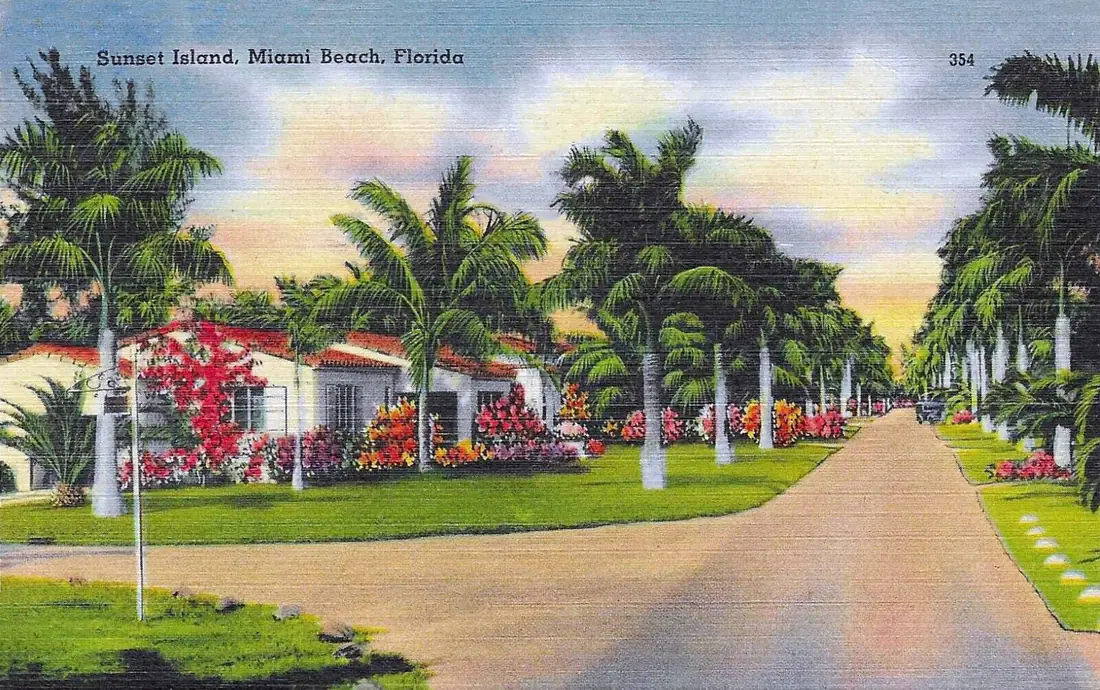
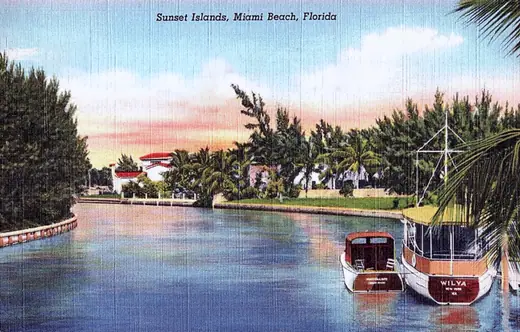
Gail Posner was the daughter of Victor Posner, the Miami corporate raider who spent the 1970s and 1980s assembling and dismantling companies and who is routinely described as one of the architects of the hostile takeover. She lived on Sunset Island in Miami Beach, in a nine-bedroom waterfront house at 1525 West 24th Street. She died in March 2010, at 67, of cancer.
She left three dogs. Conchita, a chihuahua, was the famous one. April Maria and Lucia were the other two — accounts differ on their breeds. Conchita had a publicist. In a 2007 interview with the Miami Herald, Posner described a $15,000 Cartier necklace and a $12,000 summer wardrobe. The dogs were reported to travel to weekly spa appointments in a gold Cadillac Escalade.
The will and trust documents did what people vaguely assume such documents cannot do. The dogs got the house — the right to live in it for the rest of their lives — plus a trust reported at $3 million. The household staff who cared for them, a group that included maids, bodyguards, and a personal trainer, received a total reported at roughly $26 million plus the right to live in the mansion rent-free while the dogs were alive. Charities took the remainder.
Her son, Bret Carr, received $1 million.
A petition, and what it alleged
In June 2010, three months after his mother's death, Bret Carr filed suit in Miami-Dade County challenging the 2008 changes to her will and trust arrangements.
His filings alleged that household staff had administered excessive pain medication to his mother, isolated her from family, and induced her to change her estate documents in their favor — and that the publicity campaign around Conchita, including the hired publicist and the “world's most spoiled dog” framing, was undertaken to make a large dog trust look plausible. These were allegations. No court finding of undue influence has been publicly reported, and the individuals named have never been found by any court to have done what the petition alleged.
The estate and its professionals denied wrongdoing. BNY Mellon Wealth Management, serving as trustee, said publicly that it believed it had acted appropriately and intended to defend itself.
The parties went to mediation in July 2011. In May 2012 the mansion was sold for $8.4 million, with public records listing the seller as the Estate of Gail Posner. No final judgment or settlement terms have been publicly reported. That is not unusual — the overwhelming majority of contested Florida estates end in an agreement nobody is required to publish, which is itself a fact worth knowing about this area of law.
What she actually built, and why it was hard to attack
Strip away the Escalade and the Cartier and this is a conventional, and quite well-armored, estate plan.
The dogs got a life estate in the house and a funded trust. The people who would have to feed, walk, and vet the dogs got money and housing — which converted them from employees hoping to be remembered into beneficiaries with an interest in the trust performing. Charities took the residue, which means a challenge to the dog provisions could not simply redirect the money to the son; it would have to get past a charitable remainder too. And a corporate trustee held the assets.
That last choice matters more than it sounds. A professional trustee keeps records, files accountings, and does not have a personal stake in the outcome. It makes a fiduciary-breach theory harder to run and gives a court an obvious neutral to ask.
The vulnerable joint was never the dogs. It was 2008 — the year the documents changed, near the end of her life, in favor of the people physically nearest to her. That is the fact pattern Florida undue-influence law was built to examine, and it is the fact pattern that produced the litigation.
- A pet trust, not a gift to a pet. Enforceable under §736.0408, with the trust terminating on the last animal's death.
- Caretakers as beneficiaries. Money plus housing, contingent on the dogs being alive and cared for.
- Charity as remainder. The residue went to charitable beneficiaries, so voiding a provision would not automatically route it to an heir.
- A corporate trustee. BNY Mellon Wealth Management, rather than a family member or a member of the household.
The mansion the dogs could not keep
A life estate for three small dogs sounds like a permanent arrangement. It is not. Small dogs live a decade or two, and the carrying cost of a 9,700-square-foot waterfront house in Miami Beach — taxes, insurance, staff, maintenance — runs into six figures a year against a trust reported at $3 million.
The arithmetic is the same one that shows up in every archive case where a house is left to someone who cannot pay for it. A house is not an asset to a beneficiary with no income; it is a bill with a roof. Posner at least funded the bill. Many people do not.
In May 2012 the property sold for $8.4 million. Where the dogs went afterward was not reported. Conchita's press coverage, which had been considerable, stopped.
Timeline
- 2002Victor Posner dies. His daughter Gail inherits a substantial share of the family fortune.
- 2007Posner tells the Miami Herald about Conchita's $15,000 Cartier necklace and $12,000 summer wardrobe. A publicist is hired for the dog.
- 2008Posner's will and trust arrangements are changed — the year later placed at the center of her son's petition.
- Mar 2010Gail Posner dies of cancer at 67 at her Miami Beach home.
- Jun 2010Bret Carr files suit in Miami-Dade County challenging the 2008 documents and alleging undue influence by household staff. The allegations are denied.
- Jul 2011The parties attend mediation.
- May 2012The Sunset Island mansion sells for $8.4 million, with the Estate of Gail Posner listed as seller.
- After 2012No final judgment or settlement terms are publicly reported. The dogs' later whereabouts were not reported.
What actually went wrong
- Late-life amendments in favor of the people closest at hand. Changing an estate plan in the final years to benefit household staff is legal, common, and the single most litigated fact pattern in Florida probate. It is not evidence of anything by itself — but it guarantees the question gets asked.
- No independent record of capacity or intent. Nothing publicly reported shows a contemporaneous physician's letter, a videotaped signing, or a written explanation from the drafting attorney. Those documents cost little and defeat most contests before filing.
- Publicity as a planning input. A dog with a publicist and a $15,000 necklace makes for wonderful copy and terrible litigation posture. Every extravagance reported in 2007 became an exhibit in 2010.
- A house with a life estate and a maintenance bill. Three small dogs, a 9,700-square-foot waterfront property, and a reported $3M trust. The house was always going to be sold.
- A $1 million bequest to the only child. Large enough to give him standing and resources to litigate; small enough, next to $26 million to staff, to make him want to.
Would it have gone that way in Florida?
This one was already Florida — and Florida law is why the dog provisions were the strongest part of the plan.
Start with the part everyone assumes must be invalid. Fla. Stat. §736.0408 expressly authorizes a trust for the care of an animal alive during the settlor's lifetime. It is enforceable by a person named in the trust or by a person the court appoints. It terminates when the last covered animal dies, and the remainder passes as the settlor directed. Leaving a mansion and a seven-figure trust for three dogs is not eccentric under Florida law. It is a statutory transaction.
The one brake the statute carries is §736.0408(3): if a court determines the amount substantially exceeds what is required for the intended use, the excess passes to the remainder beneficiaries. That is the provision a Florida judge would use on a wildly overfunded pet trust — as a New York Surrogate effectively did to Leona Helmsley's $12 million. A trust sized to a real budget for three small dogs, with the residue going to charity, is a much harder target.
Next, the house. Readers who know Florida's homestead rule often assume a residence cannot be left to a trust for animals. Fla. Stat. §732.4015 and Art. X, §4 of the Florida Constitution restrict the devise of homestead only where the decedent is survived by a spouse or a minor child. Posner had neither — her son was an adult. With no spouse and no minor child, homestead devise restrictions do not apply, and the property can go wherever the documents say. Whether the property qualified as homestead at all is a separate question that turns on residency and acreage.
Now the part that was actually litigable. Florida has no forced share for adult children. An adult child can be left $1, or nothing. What an adult child can do is challenge the documents, and Florida gives real teeth to that challenge. §732.5165 voids a will procured by fraud, duress, mistake, or undue influence. §733.107(2) goes further than most states: once a contestant establishes the presumption of undue influence, the burden of proof — not merely the burden of producing evidence — shifts to the proponent of the will. And In re Estate of Carpenter, 253 So. 2d 697 (Fla. 1971), sets out the active-procurement factors courts weigh: presence at the execution, recommending an attorney, knowing the contents in advance, securing witnesses, safekeeping the document.
The honest caveat: none of that means Carr would have won. A presumption is a starting position, not a verdict, and a well-documented signing with an independent attorney and a contemporaneous capacity assessment rebuts it routinely. No court publicly found undue influence here.
One more Florida rule that shapes every case like this: §732.517 makes a no-contest clause unenforceable in a will, and §736.1108 does the same for trusts. Threatening to disinherit a challenger does not work here. If you want a plan that survives a disappointed child, you do not buy silence with a penalty clause — you build a record.
The practical instruction: if your plan gives significantly more to caregivers or staff than to your own children, do three things on the day you sign. Use an attorney who has no relationship with the caregivers, get a physician's contemporaneous note on capacity, and put your reasons in a signed letter that sits with the documents. It costs a few hours and it is the difference between a plan and a lawsuit.
What people ask us about this.


Further reading
Third-party sites. Not ours, not endorsed, not kept current by us — just the places worth going next.
Sources
- Gail Posner left a $3 million trust fund and mansion to her dogs, and her son is pissed — Miami New Times, Jun 2010
- Family dogged by lawsuits over inheritance — Deseret News / AP, Jun 25 2010
- Heiress Gail Posner leaves fortune to chihuahua Conchita — FindLaw, Jun 2010
- Gail Posner's home bequeathed to dog Conchita sells for $8.4M — HuffPost Miami, May 27 2012
- Estate of heiress Gail Posner sells Miami Beach mansion for $8.4M — Miami Condo Investments, May 2012
- Bret Carr battles chihuahua for $40 million (press release issued on behalf of Bret Carr — allegations, not findings) — PR Newswire, Jul 15 2011
- Fla. Stat. §736.0408 — Trust for care of an animal — The Florida Senate
- Fla. Stat. §733.107 — Burden of proof in will contests — The Florida Senate
If this is your situation
Free 30-minute consult. Plain English. No pressure.
Nearly every case in this archive turned on something ordinary — an unwitnessed page, a stale beneficiary line, a document nobody could find. Those are cheap to fix while you're alive and expensive to fix afterward.