Georgia O'Keeffe
A 27-year-old potter knocked on the door at Ghost Ranch looking for odd jobs. O'Keeffe was 85. Eleven years later a codicil moved the residuary estate — reported at $47.2 million — from charity to him. Her sister and her niece went to court, and the answer arrived as a settlement rather than a verdict.
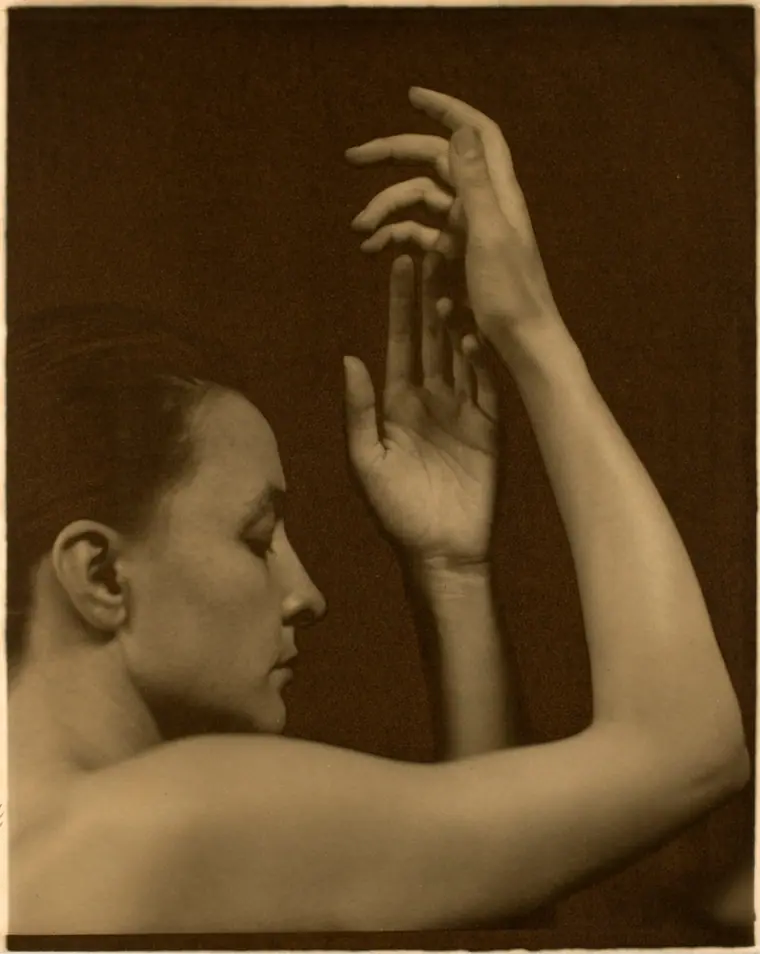
In 1973 a divorced 27-year-old potter named John Bruce “Juan” Hamilton was doing handyman work at Ghost Ranch, the Presbyterian Church property near Abiquiú, New Mexico. He knocked on the door of the house where Georgia O'Keeffe lived and asked whether she needed anything done. She had him pack a shipping crate.
She was 85. Her eyesight was failing. Her husband, Alfred Stieglitz, had been dead twenty-seven years. Her closest relatives lived a long way away.
Over the next thirteen years Hamilton became her assistant, her driver, her business manager, and — in the description used by nearly every account since — her gatekeeper. He handled her correspondence, her sales, her exhibitions, and her contact with the outside world. He held power of attorney. He was also, by the end, the principal beneficiary of a series of estate documents that grew steadily more favourable to him.
O'Keeffe died in Santa Fe on March 6, 1986, at 98. The litigation started almost immediately.
A will, and then two codicils
O'Keeffe executed a will in 1979, then codicils in 1983 and 1984.
The 1979 will directed the residue of the estate to charitable purposes — the work kept together and shown publicly. The 1984 codicil redirected that residue to Hamilton. Contemporaneous reporting described the residuary as 42 paintings worth roughly $47.2 million, meaning everything not already given by name to individuals or museums.
That is the whole legal story in two sentences. A charitable residuary clause, drafted when she was 91, replaced at 96 with a personal one.
The estate as a whole was reported at around $65 million.
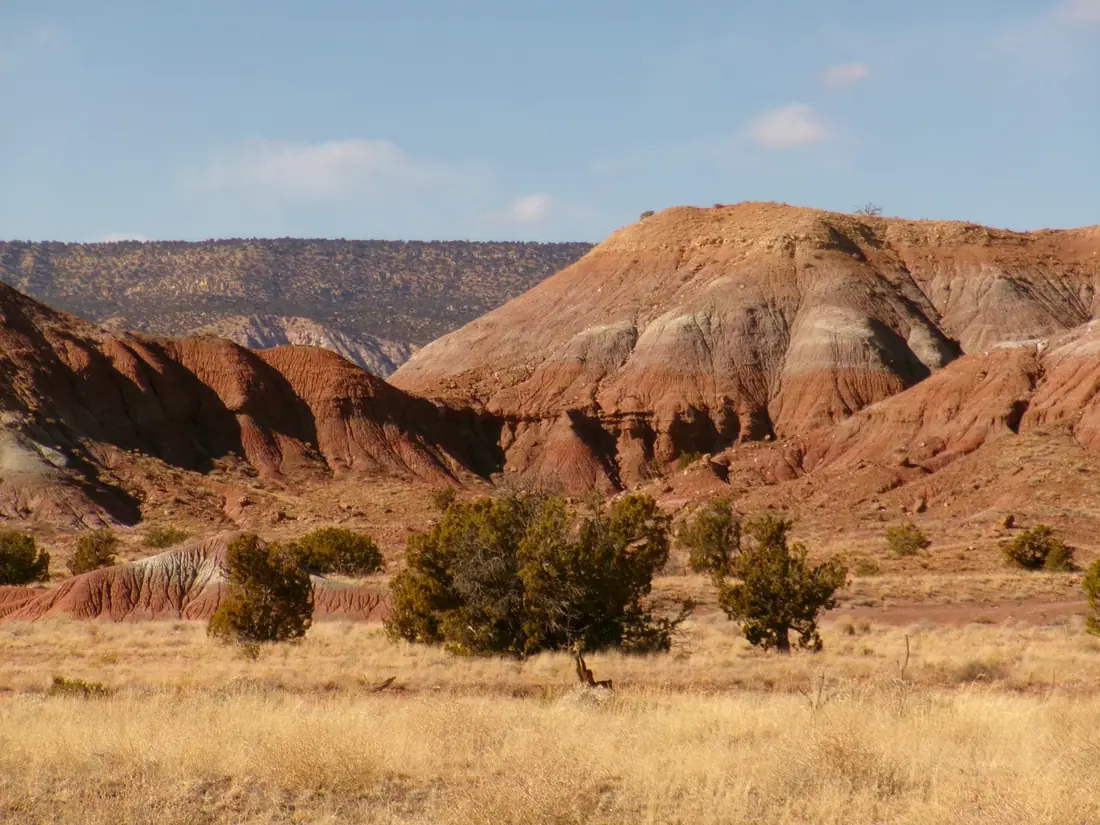
Her sister and her niece
Catherine Klenert, O'Keeffe's sister, and June O'Keeffe Sebring, her niece, filed to contest the will and the codicils in New Mexico. Their claim was undue influence — that the documents reflected the intent of the man who had managed her affairs for fourteen years rather than her own.
Hamilton's side of it, then and since, was that he was the person who actually took care of her, that the relationship was genuine, and that O'Keeffe knew exactly what she was signing. He was never found to have done anything improper, and no court ever ruled on the question.
In June 1987 the parties reached a tentative settlement; District Judge Patricio Serna approved it the following month. Per contemporaneous reporting, the terms ran roughly as follows.
- The 42 residuary paintings went to a newly formed Georgia O'Keeffe Foundation, to be distributed to museums — the outcome the 1979 will had pointed at.
- Hamilton kept a substantial but much reduced share: reported as 24 paintings, plus specified items including her last six paintings, fifteen drawings and watercolours, a Stieglitz photograph, her letters to Stieglitz, and the Ghost Ranch house.
- Klenert and Sebring each received about $1 million in art, with a reported $2 million more going to their lawyers.
- The family dropped the suit and, per reporting at the time, agreed to keep confidential what they had learned about the relationship.
Reporting put Hamilton's eventual share at roughly 10 percent of the estate. Nobody admitted anything. Nobody was found to have done anything. And the residuary clause ended up approximately where the 1979 document had left it — which is, in practice, what a challenger wins when the case is strong enough to be expensive and not certain enough to try.
Hamilton died at his home in Santa Fe on February 20, 2025, at 79.
What 400 O'Keeffes are actually worth
The contest ended in 1987. The estate's other fight ran five more years, and it produced something the will contest never did: a written decision.
About 400 works or groups of works remained unsold at O'Keeffe's death. Valued individually, they came to $72,759,000. The estate argued that number was fiction — you cannot put 400 O'Keeffes on the market at once without destroying the price — and claimed a blockage discount of 75%, reporting the collection at $18 million. The IRS proposed a tiered discount in the range of 10% to 50% and asserted a deficiency of $6,014,493.
In Estate of O'Keeffe v. Commissioner, T.C. Memo 1992-210, the Tax Court refused to treat the inventory as one undifferentiated block. It sorted the works by quality, uniqueness, and how quickly they could realistically be sold, applying a larger discount to the portion that would take years to move and a much smaller one to the readily salable portion. The result came out near $36.4 million — roughly half the undiscounted total.
The case is still cited whenever an estate holds a large concentrated position in anything. The principle travels: a warehouse full of one thing is worth less than the sum of the things in it, but not as much less as the estate would like.
Timeline
- 1946Alfred Stieglitz dies. O'Keeffe settles permanently in New Mexico, at Ghost Ranch and Abiquiú.
- 1973Juan Hamilton, 27, asks for work at Ghost Ranch. O'Keeffe, 85, hires him. He becomes her assistant, business manager, and gatekeeper.
- 1979O'Keeffe, 91, executes a will directing the residue of her estate to charitable purposes.
- 1983First codicil.
- 1984Second codicil redirects the residuary estate — reported as 42 paintings worth about $47.2 million — to Hamilton.
- Mar 6, 1986O'Keeffe dies in Santa Fe at 98. Her estate is reported at roughly $65 million.
- 1986–1987Her sister Catherine Klenert and niece June O'Keeffe Sebring contest the will and codicils, alleging undue influence.
- Jun–Jul 1987Settlement reached and approved by District Judge Patricio Serna. The residuary paintings go to a new Georgia O'Keeffe Foundation; Hamilton keeps a reduced share including the Ghost Ranch house; the relatives receive art and drop the suit. No findings are made.
- Apr 1992Estate of O'Keeffe v. Commissioner, T.C. Memo 1992-210: the Tax Court rejects a flat 75% blockage discount and values the roughly 400 remaining works near $36.4 million.
- Feb 20, 2025Juan Hamilton dies at his home in Santa Fe at 79.
What actually went wrong
- One person held every role. Caregiver, business manager, correspondent, gatekeeper, attorney-in-fact, and beneficiary. Any one of those is fine. Stacking them is what creates the presumption a challenger needs.
- Documents that moved in one direction. A 1979 will, a 1983 codicil, a 1984 codicil, each more favourable to the same person. A single amendment is a change of mind. A sequence looks like a trend, and a jury is allowed to notice.
- A charitable residuary clause removed late. Redirecting a charity's gift to an individual, five years on and at 96, invites exactly the scrutiny it received.
- No independent counsel and no contemporaneous capacity record. For a 96-year-old moving $47 million, an independent lawyer with no other relationship to the household, and a physician's assessment on the day, would have cost almost nothing relative to what the contest cost.
- Family with no contact and no explanation. She was entitled to leave them nothing. But a will that changes course without a written statement of why hands the excluded relatives their whole opening argument.
Would it have gone that way in Florida?
Stronger for the family here. Florida would have made Hamilton prove the codicil was clean, and if he could not, the 1979 will's charitable residuary would have stood.
New Mexico produced a settlement. Florida would probably have produced one too — but from a very different bargaining position, because of how this state allocates the burden.
The substantive rule is Fla. Stat. §732.5165: a will is void if procured by fraud, duress, mistake, or undue influence, and any part so procured is void while the rest of the instrument stands. That sentence matters enormously on these facts. A challenger attacking the 1984 codicil does not have to attack the 1979 will. Knock out the codicil — including the revocation clause inside it — and the earlier charitable residuary is what governs. In Florida the target can be one paragraph, not the whole plan.
Then the machinery. Under In re Estate of Carpenter, 253 So. 2d 697 (Fla. 1971), a presumption of undue influence arises where a substantial beneficiary who stood in a confidential relationship with the decedent was active in procuring the instrument. Carpenter lists non-exclusive indicators of active procurement, and they read like a checklist for a household run by one person: presence at execution; presence when the testator expressed a desire to make a will; recommending the attorney; knowing the contents beforehand; giving instructions to the attorney; securing the witnesses; and keeping the document afterwards.
And then the part that is genuinely Florida's. §733.107(2) provides that this presumption is a burden-shifting presumption under the Evidence Code — it shifts the burden of proof, not merely the burden of producing evidence. In most states a beneficiary defeats the presumption by offering any reasonable explanation. Here, once the presumption attaches, the beneficiary must prove the absence of undue influence. A defendant facing that at trial settles, and settles early. Which is roughly what happened in New Mexico anyway — Florida would simply have gotten there faster and cheaper.
Two side notes. A no-contest clause would have changed nothing: §732.517 makes them unenforceable in Florida wills, so a sister and a niece can challenge without forfeiting anything they were already given. And §733.106(4) lets a Florida court direct which part of the estate bears fees and costs — including charging them against a particular beneficiary's share — which is the tool a judge uses when one party's conduct ran up the bill.
One place Florida is simply better for the estate: there is no Florida estate tax at all (Fla. Const. Art. VII, §5). The federal blockage fight would have played out identically, but there would have been no second, state-level version of it.
The practical instruction, for anyone whose affairs are managed by one trusted person: let a lawyer with no other connection to your household draft the document, sign it with that person out of the building, get a same-day capacity note from your own physician, and write down in the file why the plan changed. If the change is genuinely yours, those four steps are what make it stick.
What people ask us about this.

Further reading
Third-party sites. Not ours, not endorsed, not kept current by us — just the places worth going next.
Sources
- Georgia on their minds — UPI Archives, July 24, 1987
- Museum to get O'Keeffe works — The Washington Post, July 27, 1987
- Juan Hamilton, sculptor and Georgia O'Keeffe protégé, dies at 79 — The Washington Post, March 2025
- Juan Hamilton, protégé and beneficiary of Georgia O'Keeffe, died at 79 — ARTnews, March 2025
- Unconventional relationship or undue influence? The Juan Hamilton and Georgia O'Keeffe case — Mandelbaum Barrett PC
- Blockage: Estate of Georgia O'Keeffe — Appraisal Course Associates
- Estate of O'Keeffe v. Commissioner, 63 T.C.M. 2699 (1992) — CourtListener
- Fla. Stat. §732.5165 — Effect of fraud, duress, mistake, and undue influence — The Florida Senate
If this is your situation
Free 30-minute consult. Plain English. No pressure.
Nearly every case in this archive turned on something ordinary — an unwitnessed page, a stale beneficiary line, a document nobody could find. Those are cheap to fix while you're alive and expensive to fix afterward.