Whitney Houston
She signed her will on February 3, 1993. Her daughter was born on March 4, 1993. Nineteen years and a divorce later, the document was still the one that governed — and it still described Bobby Brown as “my husband.”
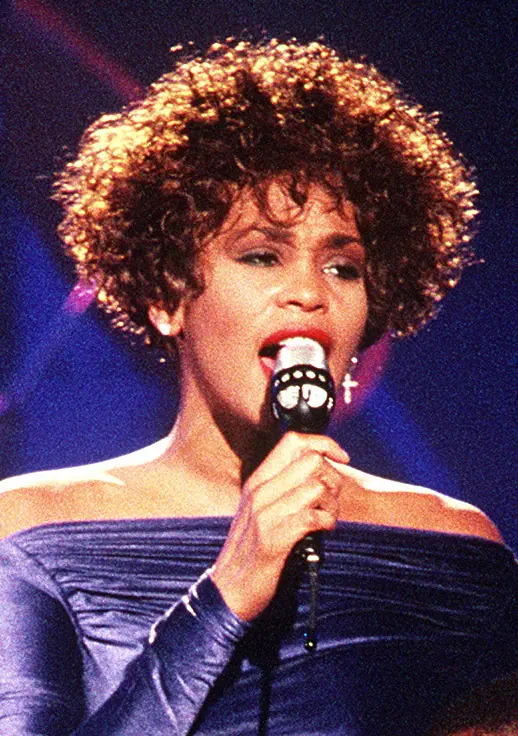
Whitney Houston died on February 11, 2012, at the Beverly Hilton in Beverly Hills. She was 48. The Los Angeles County coroner found the cause to be drowning, with the effects of atherosclerotic heart disease and cocaine use as contributing factors.
She left a will. That already puts her ahead of Prince, Hendrix, Marley, and Bono in this archive. The problem was not that the document did not exist. The problem was when it was written.
Houston executed the will on February 3, 1993. She was pregnant. Her only child, Bobbi Kristina Brown, was born March 4, 1993 — twenty-nine days later. The will was amended by codicil in 2000, and reportedly again in 2004, and then it sat.
By the time it was filed in Atlanta probate court in March 2012, it had been in force for nineteen years across a marriage, a divorce, a child growing to adulthood, and a career that changed value several times over. It still referred to “my husband, Robert B. Brown.” They had divorced in 2007.
Everything to one person, on a schedule
The plan was simple, and its simplicity was the design flaw. Bobbi Kristina took everything. Houston's mother, Cissy Houston, and her two brothers were named as contingent beneficiaries — they would take only if Bobbi Kristina did not.
The distributions were staged, held in a testamentary trust until the beneficiary reached 30:
- 10% at age 21.
- One-sixth of the balance at age 25.
- The remainder at age 30.
Staging is normally good practice. What makes this version notable is what it was staged around: a single beneficiary, receiving outright, at fixed ages, with no discretionary standard, no independent trustee judgment, and no protective provision that survived the birthday.
Bobbi Kristina turned 21 on March 4, 2014. She received her 10% — reported at roughly $2 million.
The other thing worth noticing is the venue. Houston used a will, not a funded living trust. A will has to be filed. Filed documents are public. Every term above was read into a Fulton County court record and reprinted worldwide within days of her funeral, along with the sentence describing her ex-husband as her husband.
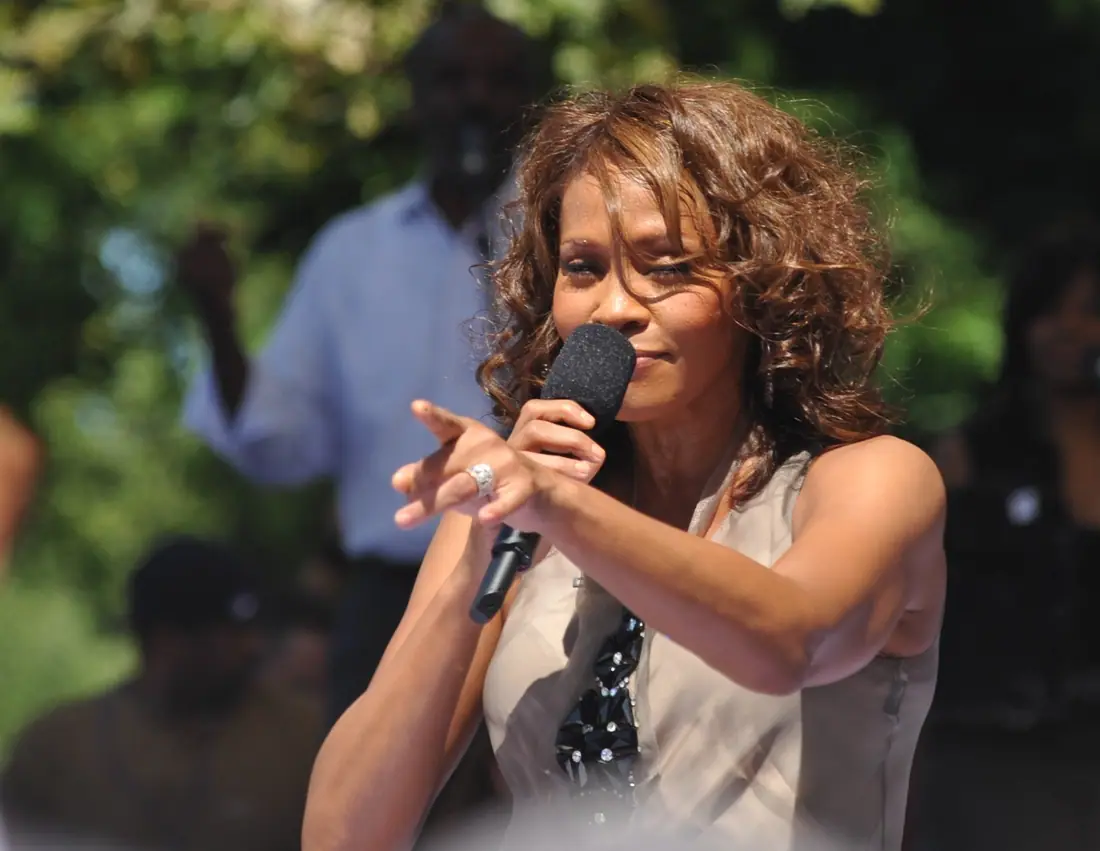
“My husband, Robert B. Brown”
Houston married Bobby Brown in 1992 and divorced him in 2007. The 1993 will, drafted while the marriage was new, referred to him by that title.
He received nothing. Reporting at the time explained why in the simplest possible terms: the will identified him as her husband, and by the date of death he was not. The gift failed on its own description.
That is a lucky outcome, not a designed one. It depended on a specific phrase in a specific document read by a specific judge. A great many stale designations do not fail so cleanly — an ex-spouse still named on a life insurance policy, a retirement account, or a payable-on-death bank account frequently collects, because the institution pays the name on the form and asks nothing else.
Twenty-two
Bobbi Kristina Brown was found unresponsive in a bathtub on January 31, 2015, and died on July 26, 2015, at 22.
She had received the 10% distribution. She had not reached 25. And she died without a will, unmarried and with no children.
Two separate estates resulted, and they went in opposite directions.
The remaining balance of Houston's estate — reported at roughly $18 million at the time — passed under Houston's own will to her contingent beneficiaries: her mother Cissy Houston and her two brothers. Bobbi Kristina had never reached the ages at which the later shares vested.
What Bobbi Kristina already owned passed by intestacy. Unmarried, no children, one surviving parent: her estate went to her father, Bobby Brown — the person the 1993 will had left out.
On November 17, 2016, a Fulton County judge entered judgment of approximately $36 million against Nick Gordon in a wrongful death action brought on behalf of her estate. The Houston estate itself has since been reported to have grown several times over its original estimated value, on the strength of a biopic, a hologram tour, and licensing — money the 1993 will had no way to anticipate and no structure to hold.
Timeline
- Feb 3, 1993Houston signs her will while pregnant. Bobbi Kristina is not yet born.
- Mar 4, 1993Bobbi Kristina Brown is born, twenty-nine days after the will is executed.
- Apr 14, 2000A codicil is executed. A further amendment is reported in 2004.
- 2007Houston and Bobby Brown divorce. The will is not rewritten.
- Feb 11, 2012Houston dies at 48 in Beverly Hills. The coroner finds drowning, with heart disease and cocaine use contributing.
- Mar 2012The will is filed in Atlanta probate court and becomes public. Pat Houston is appointed executor.
- Mar 4, 2014Bobbi Kristina turns 21 and receives the first distribution, reported at about $2 million.
- Jan 31 – Jul 26, 2015Bobbi Kristina Brown is found unresponsive in a bathtub and dies on July 26, at 22. She leaves no will.
- Nov 17, 2016A Fulton County judge enters judgment of about $36 million against Nick Gordon in the wrongful death action brought for her estate.
- May 2019The Houston estate sells a 50% stake in her publishing, masters income, name, and likeness to Primary Wave.
What actually went wrong
- Nineteen years without a review. A marriage, a divorce, a child, and a fortune all changed after the ink dried. The document did not.
- A will instead of a funded trust. Every term — the ages, the fractions, the family names — was filed with a court and published. A living trust is not filed.
- One beneficiary, no backstop below the top. Everything ran to a single person, with the family named only if she took nothing. There was no structure to handle the middle case, which is exactly the case that happened.
- Outright at 21. Two million dollars, delivered on a birthday to a 21-year-old, with no continuing trustee discretion and no spendthrift protection after distribution. The age was picked in 1993 for a person who did not yet exist.
- No plan for the daughter's own estate. Nobody had ever suggested Bobbi Kristina sign a will of her own. Her father — deliberately left out of the plan — inherited what she had by operation of a statute.
Would it have gone that way in Florida?
Florida deletes the ex-husband for you. It does not fix any of the rest.
Florida would have handled the stale spousal reference automatically, and would have handled it better than a lucky phrase.
Fla. Stat. §732.507(2) provides that any provision of a will affecting the testator's spouse is void upon dissolution of the marriage, and the will is then read as if the spouse had died at the time of the dissolution. No argument about wording, no reliance on the word “husband.” The gift is gone by statute unless the testator re-executed the will afterward, said otherwise in the document, or the divorce judgment says otherwise.
Fla. Stat. §732.703 does the same job outside the will, which is where most stale designations actually live. A beneficiary designation naming a former spouse on a life insurance policy, annuity, IRA, employee benefit plan, payable-on-death account, or transfer-on-death security is void on dissolution, and the asset passes as if the ex-spouse had predeceased. The exceptions are real and worth reading — federal preemption for ERISA plans, a designation signed after the divorce that names the ex on purpose, an obligation imposed by the divorce judgment, jointly held survivorship property — but the default has flipped in Florida, and that default has saved a great many families a great deal of litigation.
On the after-born child, Florida has a rule for the case Houston avoided by timing. §732.302 provides that a child born or adopted after the will is executed, and not provided for or intentionally omitted, receives a share equal to what they would have taken in intestacy. It does not apply where the will provides for the child, or where the testator had other children and left substantially everything to the other parent. Houston's will was treated as providing for the daughter born a month later; if it had not been, §732.302 is the statute that would have written her in.
On the trust design, Florida gives you the tools she did not use. A funded revocable trust avoids the public filing entirely. §736.0502 validates a spendthrift provision — restraining both voluntary and involuntary transfer, so that a beneficiary's creditors cannot reach the interest before it is actually distributed. That protection ends the moment money is handed over outright, which is the argument for a lifetime discretionary trust rather than a birthday.
And on the daughter's own estate, Florida ends up in the same place Georgia did. §732.103 passes an intestate estate with no spouse and no descendants to the parents. Bobbi Kristina's surviving parent was Bobby Brown, so what she owned went to him — the one person the plan had been written to exclude, arriving through a statute the plan never addressed.
The practical instruction is two things, and neither is expensive. Review the plan on every life event — marriage, divorce, birth, death, a move across a state line, a large change in what you own — and never fewer than every three to five years. And when you review it, pull the beneficiary designations too: the life insurance, the IRA, the 401(k), the POD account. Those forms transfer more American wealth than wills do, and almost nobody reads them twice.
What people ask us about this.
Further reading
Third-party sites. Not ours, not endorsed, not kept current by us — just the places worth going next.
Sources
- Who will inherit Whitney Houston's fortune following Bobbi Kristina's death — and what are the lessons? — ElderLawAnswers
- Whitney Houston's will was far from perfect — Kluger Kaplan (reprinting Forbes, Mar 2012)
- Last will and testament of Whitney E. Houston — simplicity at its worst — Dossey & Jones, Dec 2013
- Whitney Houston — Wikipedia — death and coroner findings
- Bobbi Kristina Brown — Wikipedia — birth date, inheritance schedule, and death
- Bobbi Kristina death: Nick Gordon ordered to pay $36 million — CNN, Nov 18 2016
- Fla. Stat. §732.507 — Effect of subsequent marriage, birth, adoption, or dissolution of marriage — The Florida Senate
- Fla. Stat. §732.703 — Effect of divorce, dissolution, or invalidity of marriage on disposition of certain assets at death — The Florida Senate
If this is your situation
Free 30-minute consult. Plain English. No pressure.
Nearly every case in this archive turned on something ordinary — an unwitnessed page, a stale beneficiary line, a document nobody could find. Those are cheap to fix while you're alive and expensive to fix afterward.